Skip the Airport Lines? How Remote TSA Checkpoints Work
There are airports in the United States where you can clear security before you ever set foot in the terminal. No shuffling through a crowded checkpoint, no fighting for a bin, no removing your shoes while strangers pile up behind you. The concept is called a remote or off-site TSA checkpoint, and while it hasn't gone mainstream, it's been quietly operating in select locations for years — and it's more interesting than most travel coverage gives it credit for.
What Is a Remote TSA Checkpoint, Exactly?
The Basic Idea
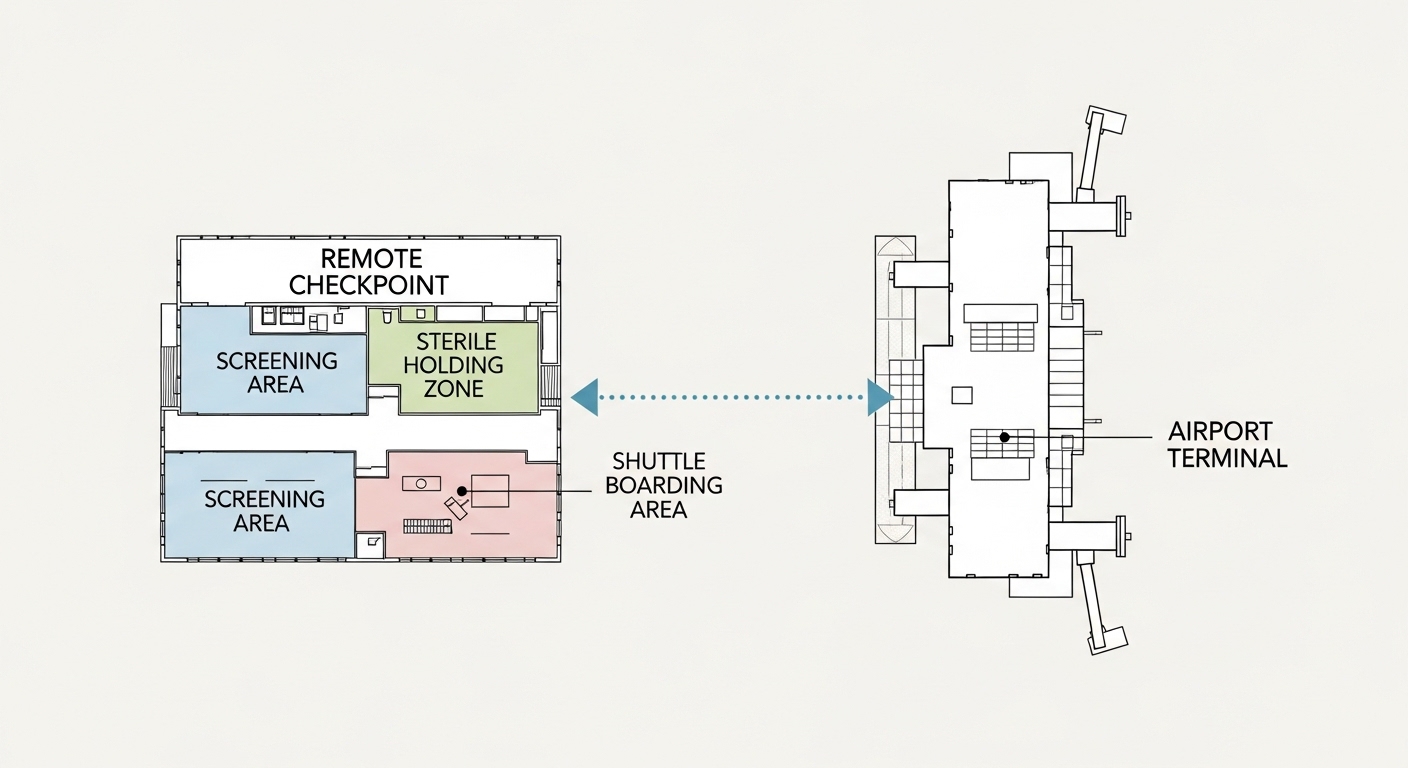
A remote TSA checkpoint is a federally staffed security screening location that sits physically apart from the main airport terminal. Travelers clear screening there — ID check, X-ray, body scanner, the whole process — and then board a shuttle, train, or dedicated connector to reach their gate. The checkpoint is operated by the Transportation Security Administration under the same federal standards as any in-terminal lane.
The key distinction is geography. Traditional checkpoints are bottlenecks because they sit at the single entry point into a secured concourse. A remote checkpoint offloads that bottleneck to a separate facility, sometimes miles away from the terminal itself. That physical separation is what creates the breathing room.
Where These Actually Exist
The most documented example is the remote checkpoint at Midway International Airport in Chicago, which has served passengers connecting from a nearby hotel complex. Another well-known case is the off-site screening facility tied to certain hotel and convention center partnerships near major hub airports. The setup isn't widespread — estimates suggest fewer than a dozen active or pilot-program remote checkpoints exist in the U.S. — but the concept has been tested seriously enough that the TSA has published operational guidance on it.
Outside the U.S., some international airports use remote or satellite screening buildings as a matter of standard design, particularly in airports that expanded faster than their terminal footprints could accommodate.
How a Remote Checkpoint Actually Works — Step by Step
The Screening Process Itself
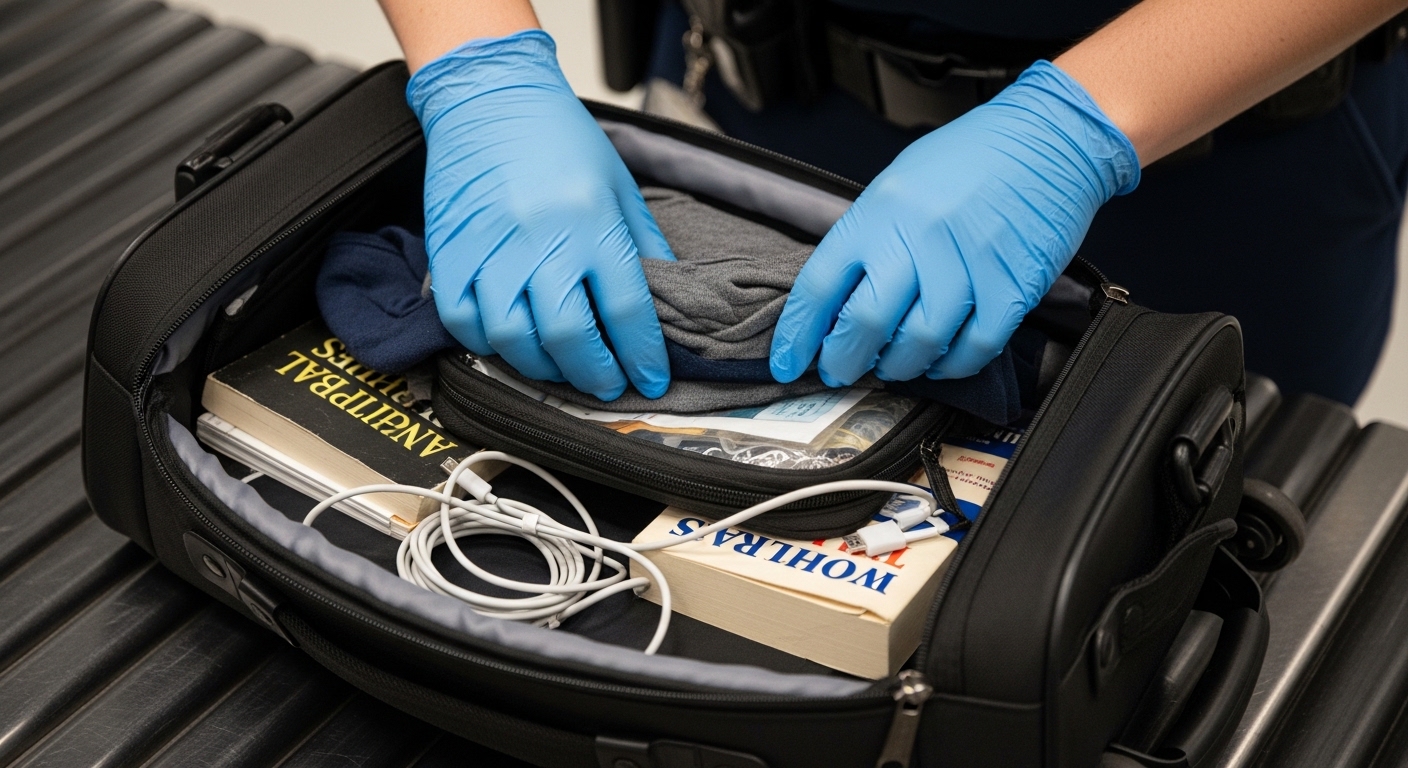
The screening at a remote checkpoint is functionally identical to what you'd experience inside a terminal. You present your boarding pass and ID, place your carry-ons through an X-ray machine, walk through a body scanner, and collect your belongings on the other side. TSA PreCheck and other trusted traveler programs apply exactly the same way — if you have PreCheck, you still get the expedited lane.
What's different is the environment. Because the facility is separate and typically serves a smaller, pre-selected passenger pool — often guests of a partnered hotel or attendees of a convention — the volume is lower. Lower volume means shorter lines, and shorter lines mean the whole process can take a fraction of the time of a busy in-terminal checkpoint on a Monday morning.
The Handoff to the Terminal
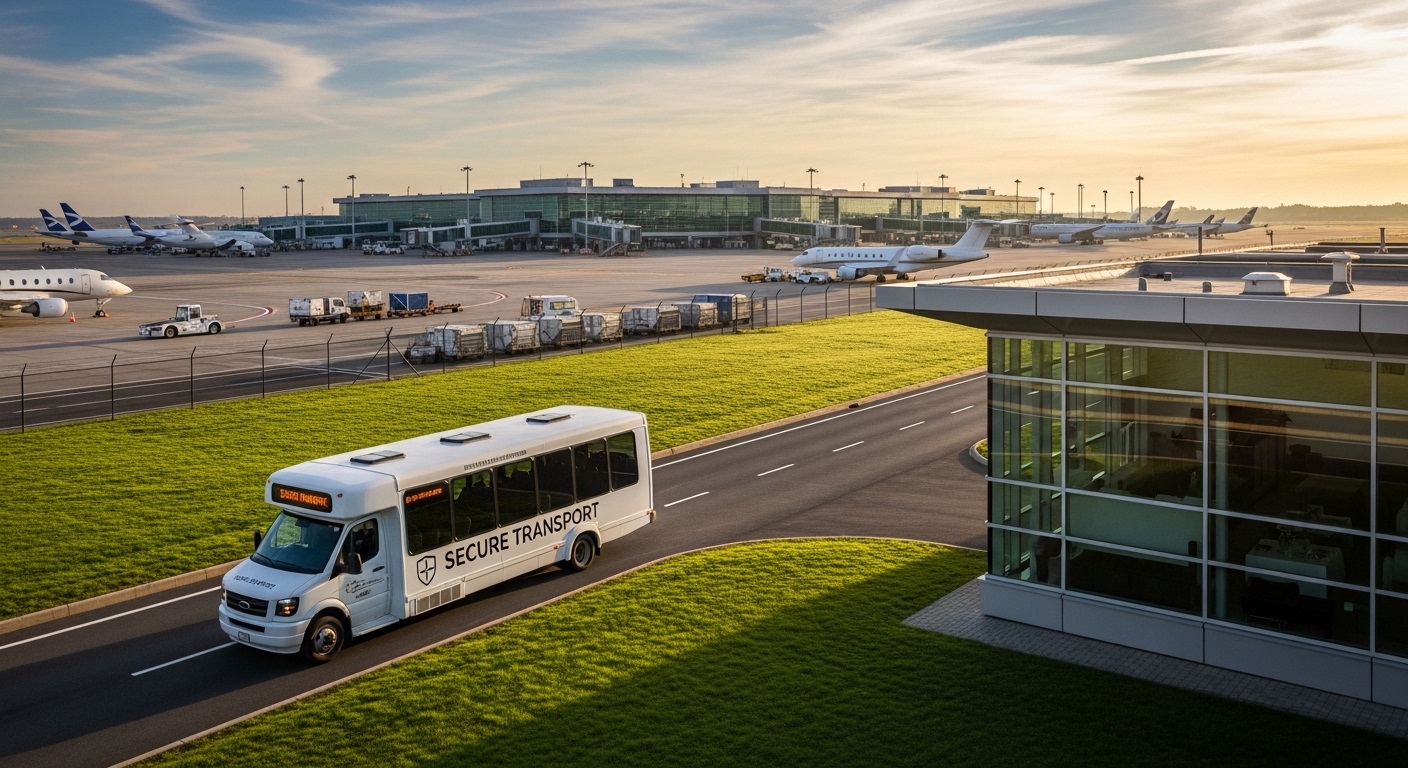
After clearing screening, passengers enter a secured holding area or sterile corridor. From there, a dedicated transport — usually a shuttle bus or, in some airport configurations, a people-mover train — carries them directly to the secured side of the terminal. The critical engineering constraint here is maintaining sterile status: once you've cleared screening, you cannot re-enter an unsecured area before boarding. The transport route itself has to be physically secured or continuously monitored to satisfy TSA requirements. That's not a trivial logistical problem, and it's one reason these facilities are expensive to build and operate.
The hardest part of a remote checkpoint isn't the screening — it's keeping the corridor between the checkpoint and the gate sterile. Break that chain once, and the whole security model collapses.
Who Manages the Coordination
The TSA handles the actual screening, but the airport authority and any private partner (a hotel, a convention center, a transit agency) handle the physical facility, the transport logistics, and the scheduling. That split responsibility is one reason remote checkpoints are slow to proliferate — you need federal buy-in, airport authority cooperation, and a private operator willing to fund the infrastructure. Getting all three aligned is genuinely difficult.
Real-World Examples — Where This Has Actually Been Tried
The Hotel-Integrated Model
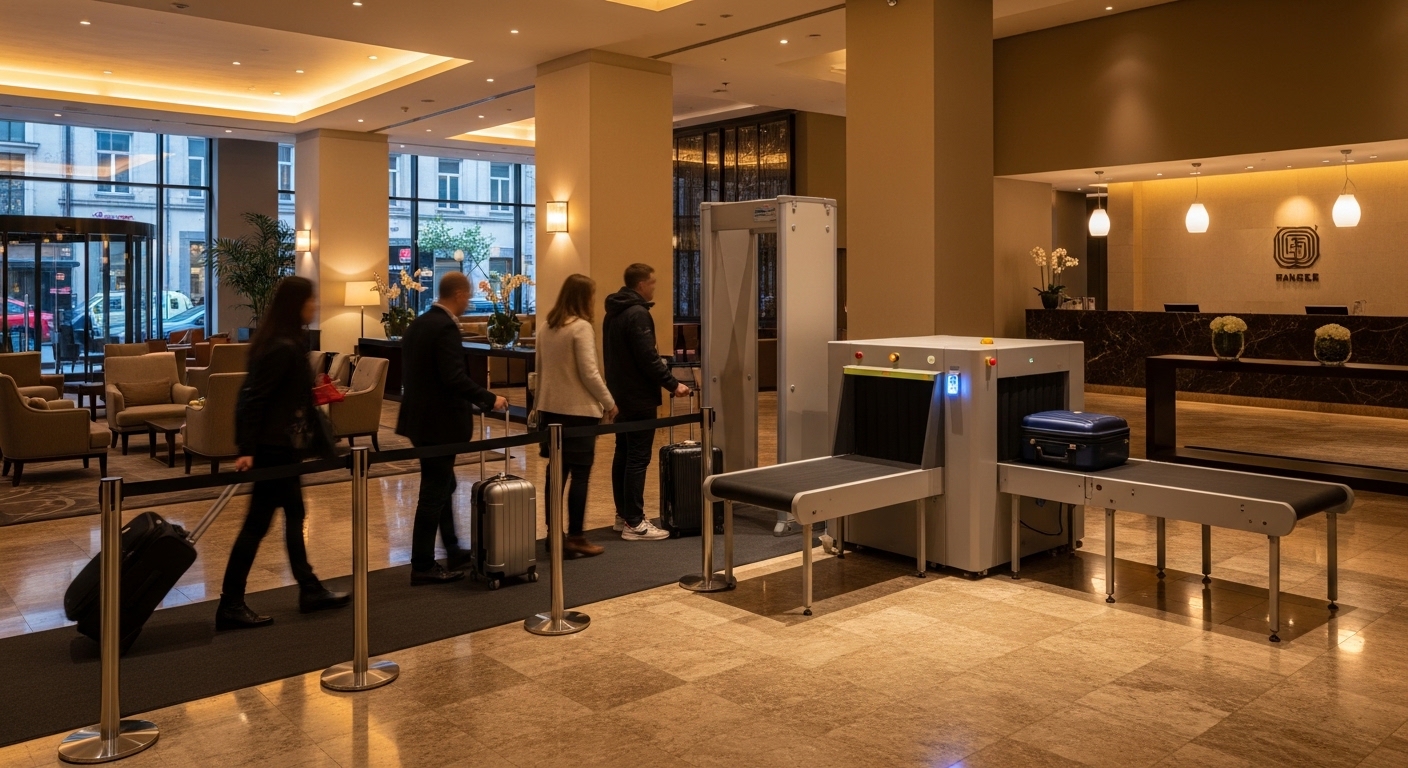
The most practical application so far has been hotel-integrated checkpoints, where a major airport-adjacent hotel offers guests the ability to clear security from the hotel lobby or a connected facility. The appeal is obvious: you check out of your room, roll your bag fifty feet, clear security, and board a shuttle. You've avoided the terminal entirely until you're already past the checkpoint. For business travelers catching early flights, this is genuinely transformative.
Chicago's Midway area has been the most cited example of this model in U.S. aviation discussions, though the specific operational status of any given facility can change based on funding and demand. Anyone who has caught a 6 a.m. flight after a conference knows exactly why this concept has appeal — the idea of not dragging luggage through a crowded terminal at dawn is hard to argue with.
Convention and Event-Based Screening
A less permanent version of the remote checkpoint idea shows up in event-based screening. For large conventions or sporting events near airports, temporary or semi-permanent screening facilities have been deployed to manage surges of travelers all departing at similar times. These aren't always full TSA checkpoints in the traditional sense, but they demonstrate the same underlying logic: move the screening away from the terminal chokepoint.
Spreading screening across multiple locations doesn't just reduce wait times — it reduces the single-point-of-failure risk that a crowded in-terminal checkpoint creates.
Why Remote Checkpoints Haven't Gone Mainstream Yet
The Cost and Coordination Problem
Building a remote checkpoint isn't cheap. You need a physical facility that meets TSA specifications, a secured transport link to the terminal, staffing at a location separate from the main airport, and ongoing coordination between at least three different entities. For most airports, the return on that investment only makes sense if there's a reliable, high-volume passenger stream feeding the remote location — and that usually means a large hotel, a transit hub, or a convention center with consistent demand.
Smaller regional airports don't have the passenger volume to justify it. Larger hub airports have so many terminals and checkpoints that the logistics of routing passengers from a remote site to the right concourse become genuinely complicated. The sweet spot is a mid-size airport with a major adjacent hotel or transit connection, and those situations are relatively rare.
The Security Liability Question
There's also a less-discussed issue around liability and accountability. When a security failure happens at an in-terminal checkpoint, the chain of responsibility is relatively clear. At a remote checkpoint operated in partnership with a private entity, questions about who is responsible for physical security of the facility, the transport corridor, and the handoff point get more complicated. Federal regulators have been cautious about expanding the model partly for this reason.
(Opinion: The liability hesitation feels like the kind of institutional caution that protects bureaucracies more than passengers. If the screening standard is identical and the sterile corridor is properly secured, the location of the checkpoint shouldn't matter — and the wait-time benefits for travelers are real enough to justify moving faster on this.)
What Remote Checkpoints Mean for the Future of Airport Security
Distributed Screening as a Design Principle
The broader idea behind remote checkpoints — distributing screening across multiple points rather than funneling everyone through one — is gaining traction in airport design circles. New terminal projects increasingly consider how to spread passenger load earlier in the journey. Some architects and transit planners have proposed integrating screening into train stations that feed directly into airports, so travelers clear security before they even board the airport connector train.
This isn't science fiction. Several international airports already use rail-integrated screening in some form, and the TSA has studied the concept in the context of U.S. airport rail links. The technical and regulatory hurdles are significant, but the direction of travel — so to speak — is toward earlier and more distributed screening, not toward bigger in-terminal checkpoints.
What This Means If You Travel Frequently
For now, the practical takeaway is narrow but real. If you're staying at a hotel that advertises remote TSA screening access, it's worth taking seriously — the time savings can be substantial, and the experience is genuinely less stressful. Check whether your TSA PreCheck status transfers (it does), confirm the shuttle schedule, and factor in that you'll need to be at the remote checkpoint earlier than you might expect, since the transport to the gate adds time.
The counterintuitive thing about remote checkpoints is that they require you to leave for the airport later in one sense — you skip the terminal chaos — but earlier in another, because you need buffer time for the shuttle. The net result is usually still a win, but it catches people off guard the first time.
Frequently Asked Questions
Does TSA PreCheck work at remote checkpoints?
Yes. Remote TSA checkpoints operate under the same federal standards as in-terminal checkpoints, which means all trusted traveler programs — including TSA PreCheck, Global Entry, and CLEAR — apply in the same way. If you have PreCheck, you'll still get the expedited lane with shoes on and laptop in your bag.
Can you use a remote checkpoint for any flight, or only certain airlines?
This depends on the specific facility and its agreements with the airport. Some remote checkpoints are tied to a particular terminal or set of gates, which may limit which airlines or concourses you can access after screening. Before using a remote checkpoint, confirm that your flight's gate is reachable via the secured transport from that facility — otherwise you may need to re-enter an unsecured area and screen again, which defeats the purpose.
Are remote checkpoints actually more secure than in-terminal ones?
The screening process is identical, so the per-passenger security level is the same. Some security researchers argue that distributed checkpoints are actually harder to compromise because there's no single high-value chokepoint. Others point out that the additional transport corridor introduces new variables that need to be managed. The honest answer is that the security equivalence is well-established, but the question of whether distribution adds or subtracts from overall system security is genuinely debated among aviation security professionals.
The real question isn't whether remote checkpoints work — they do, where they exist. It's whether the aviation industry and federal regulators are willing to treat the airport security experience as a design problem worth solving, rather than an inconvenience passengers should simply absorb. The technology and the operational model are already there. What's missing is the institutional will to scale it — and that gap says something about whose comfort the system is actually optimized for.


Comments
Post a Comment