The Big Question About Tiny Arms: What Were T. Rex's Arms Actually For?
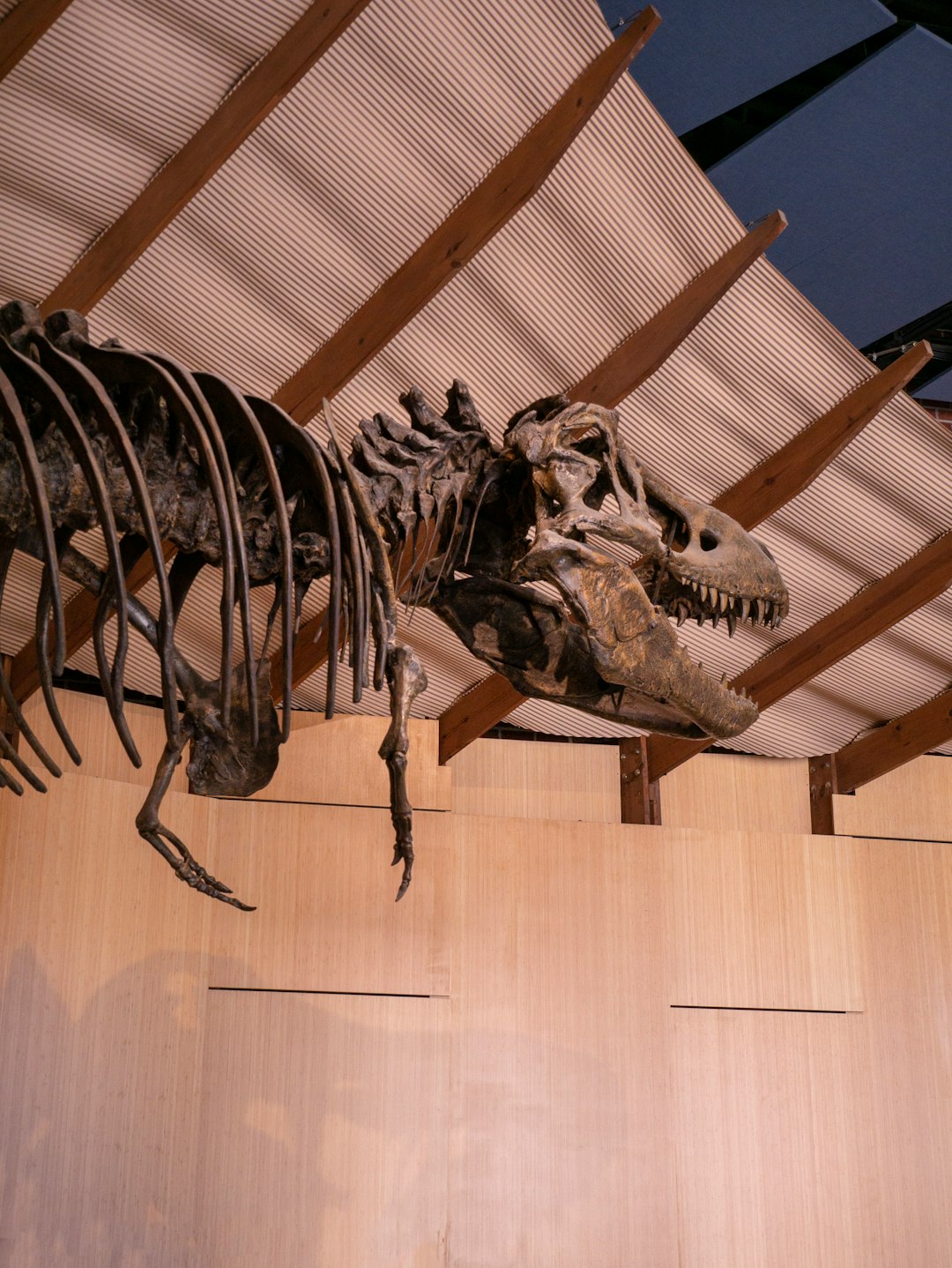
Tyrannosaurus rex had arms so short they couldn't reach its own mouth. On a fully grown adult — an animal stretching nearly 40 feet long and weighing upward of 8 tons — those forelimbs measured roughly 3 feet in length, tipped with two clawed fingers. Proportionally, they're among the most absurd-looking structures in the entire fossil record. And yet, they weren't vestigial. The bones were dense, the muscle attachment points were massive, and the claws were sharp. Something was happening with those arms. Paleontologists have been arguing about what, exactly, for decades.
What Do T. Rex's Arms Actually Look Like Up Close?
The Anatomy Behind the Joke
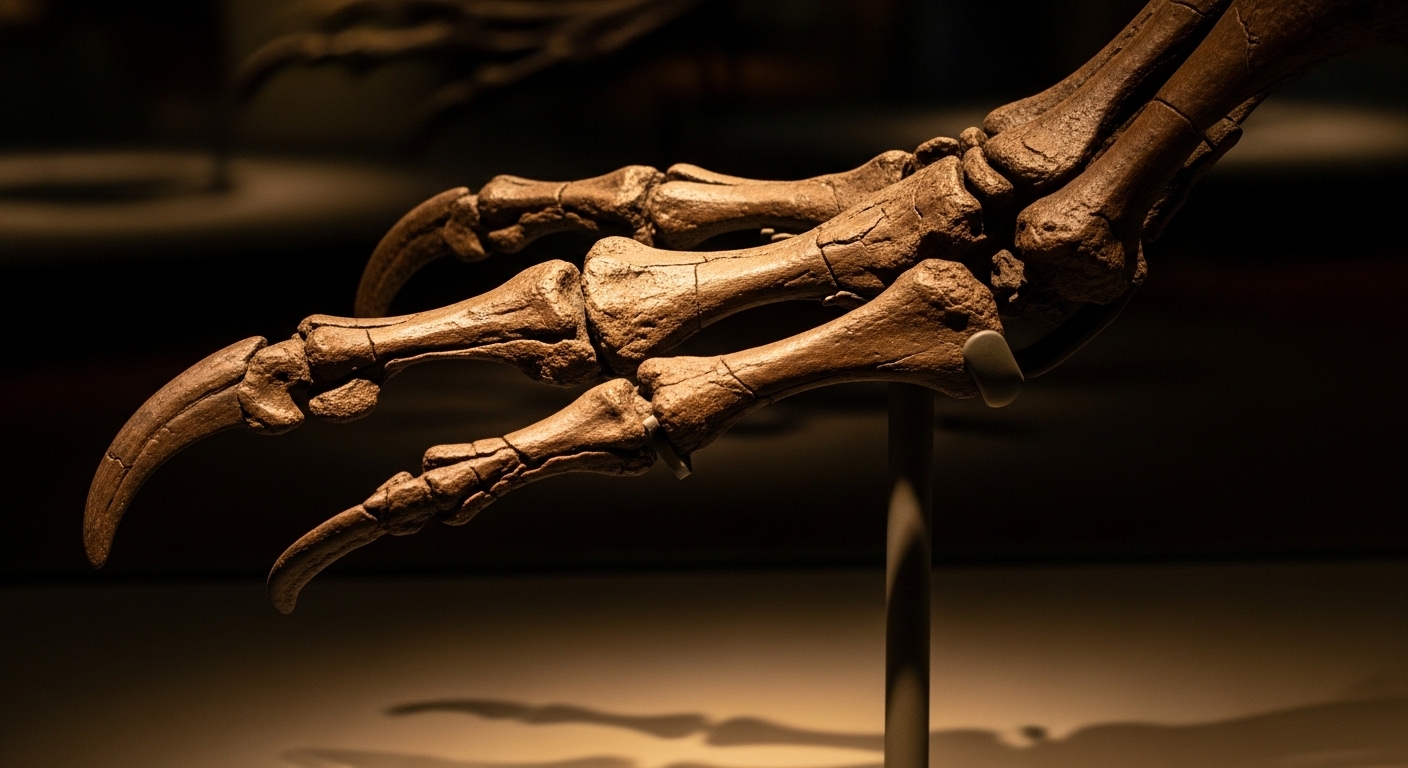
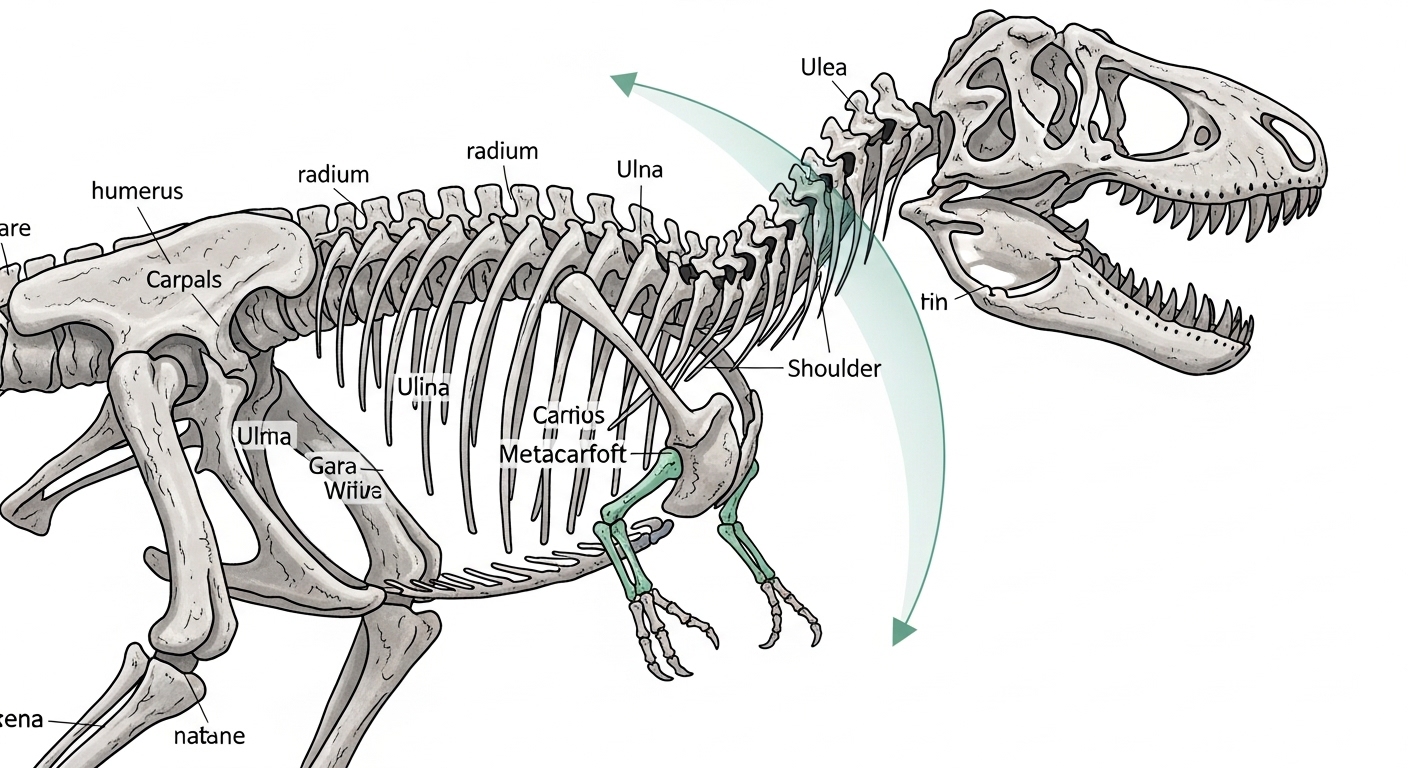
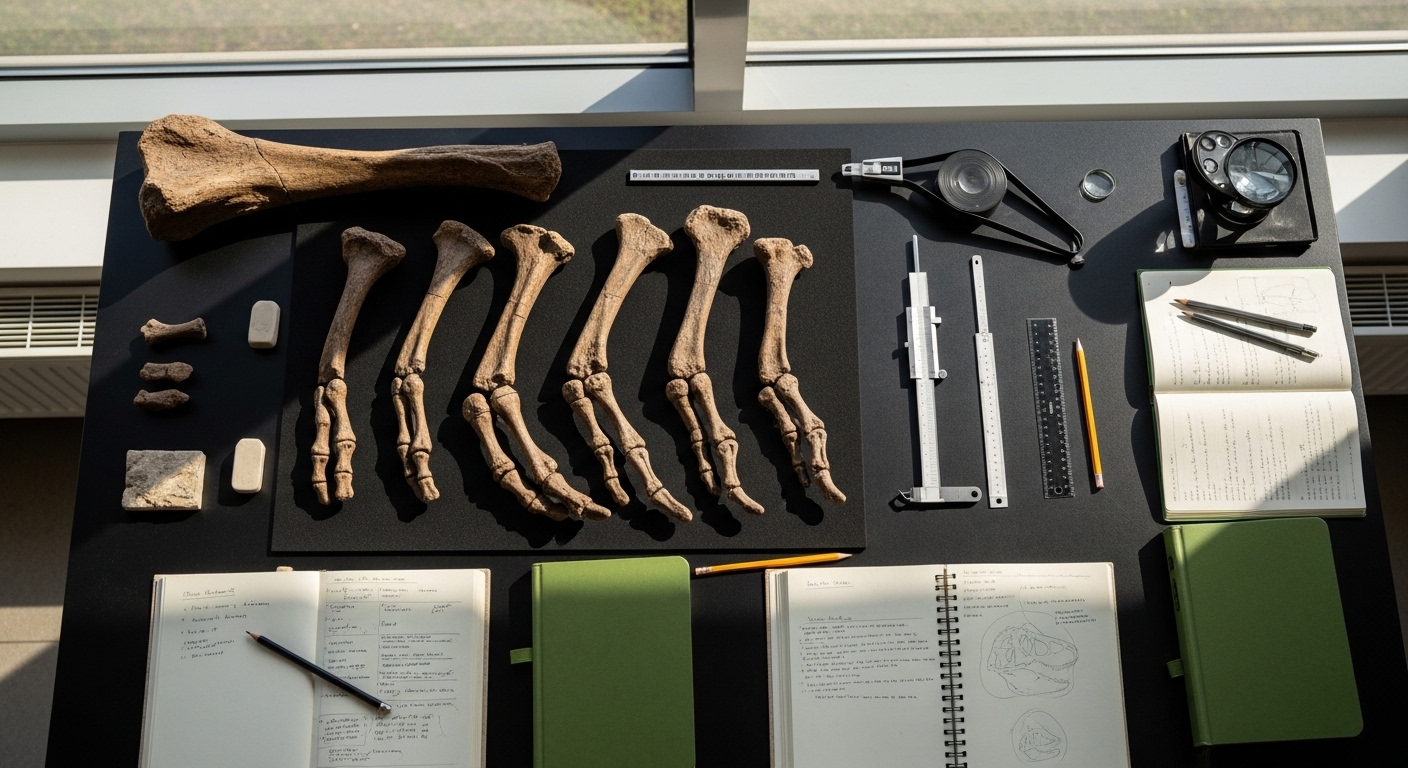
The forelimbs of T. rex were not just short — they were architecturally strange. The humerus (upper arm bone) was thick and robust, built to handle significant compressive force. The radius and ulna were fused in a way that severely limited rotation. In practical terms, T. rex could not supinate its wrist — it couldn't turn its palm upward. The arm moved in a limited arc, mostly pulling inward toward the body.
Each hand had two functional fingers, each tipped with a curved claw. A third, vestigial digit existed in some specimens, barely more than a stub. The claws themselves were not decorative — they showed wear patterns consistent with regular use, which tells us the animal was actually doing something with them, even if we're not sure what.
Here's the counterintuitive part: those stubby arms were extraordinarily strong for their size. Biomechanical estimates suggest the bicep alone could have exerted hundreds of pounds of force. That's not the profile of a limb on its way out. That's a limb doing a specific job.
Why Are T. Rex Arms So Small? The Leading Theories Explained
The "Vestigial Leftover" Argument
One long-standing idea is that the arms were simply evolutionary baggage — structures that had been useful to T. rex's ancestors but were gradually becoming irrelevant as the skull took over all the heavy lifting. Early tyrannosaurs, like Guanlong from the Jurassic period, had much longer arms with three fingers. Over tens of millions of years, as the head grew larger and the jaws became the primary weapon, the arms may have been under reduced selective pressure.
The problem with this explanation is that "reduced pressure" doesn't usually produce arms this muscular. Evolution tends to be economical — maintaining expensive tissue costs energy. If the arms were truly useless, you'd expect them to shrink further, not stay powerful.
The Mating and Gripping Hypothesis
Some researchers have proposed that the arms played a role in mating — specifically, that males used their claws to grip females during copulation, similar to how some modern reptiles use their forelimbs. It's plausible, but hard to test directly from fossils. The limited range of motion does fit a gripping function, and the inward-pulling arc of the arm would make sense for holding something close to the body.
The "Get Off the Ground" Theory
A more recent and genuinely interesting hypothesis, proposed by paleontologist Jack Conrad and discussed in published research, suggests the arms may have helped T. rex rise from a prone position. A 9-ton animal lying on its side faces a real mechanical problem getting upright. Short, powerful arms braced against the ground could provide just enough leverage to initiate the movement — like a push-up assist. It's unglamorous, but it's biomechanically coherent.
An arm too short to reach the mouth isn't necessarily useless — it might be perfectly sized for a completely different job the skull can't do.
Slashing During Close Combat
Another hypothesis frames the arms as close-quarters weapons. When T. rex locked its jaws onto struggling prey, the arms could have raked the animal's body, inflicting additional wounds. The limited reach would actually make sense here — you don't need long arms to slash something that's already pinned against your chest. Claw wear patterns on some specimens are consistent with this kind of use, though the evidence remains circumstantial.
What Fossil Evidence Actually Tells Us About T. Rex Forelimb Use
Reading the Bones
Paleontologists can infer behavior from bone stress marks, muscle scarring, and pathologies. Several T. rex specimens show healed injuries on the forelimbs — fractures that the animal survived. That matters. If the arms were never used, they'd rarely get injured. Healed breaks suggest the animal was putting real load through those limbs during its lifetime.
One well-documented specimen, sometimes referred to informally in the literature as "Sue" (now housed at the Field Museum in Chicago), shows extensive pathological evidence across the skeleton, including the forelimbs. The degree of bone remodeling suggests a long-lived, physically active animal — not one carrying dead weight on its chest.
Healed fractures are, in a strange way, proof of function. Bones that never bear load rarely break.
The Muscle Attachment Problem
The deltopectoral crest — the ridge on the humerus where major shoulder muscles attach — is pronounced in T. rex. Pronounced crests mean large muscles. Large muscles mean metabolic investment. Evolution doesn't maintain that investment without a return. This single anatomical detail is probably the strongest argument against the "pure vestige" interpretation.
Why the "Useless Arms" Story Persists — and What It Gets Wrong
The Skull Bias in Paleontology
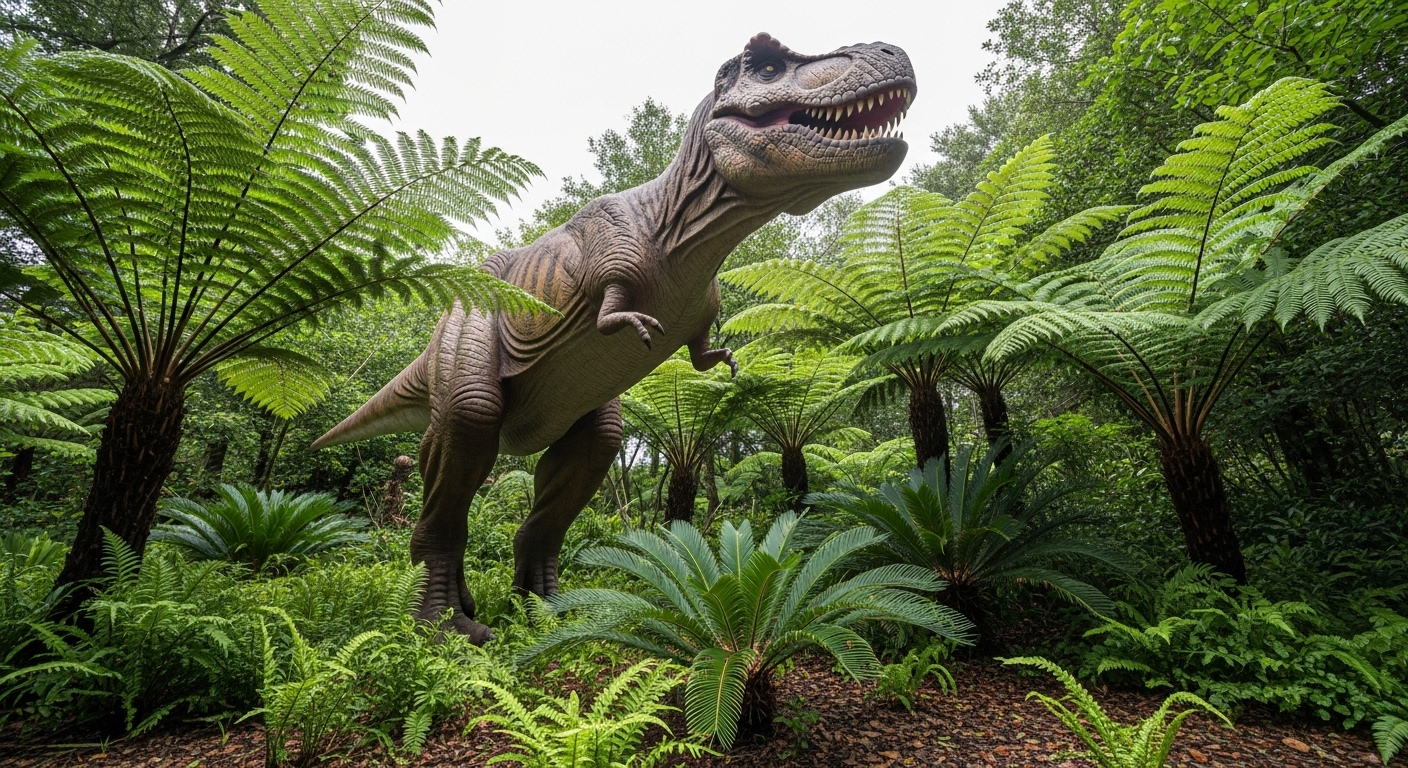
T. rex's skull is one of the most studied structures in paleontology. It's enormous, beautifully preserved in many specimens, and immediately dramatic. The arms, by contrast, are easy to overlook — literally and figuratively. Popular science coverage has leaned into the comedy of the tiny arms for so long that the question of their function rarely gets serious airtime outside specialist journals.
(Opinion: The "useless arms" framing has done real damage to public understanding of T. rex biology. It's a punchline that replaced a genuinely unresolved scientific question, and that trade-off isn't great for anyone trying to understand how this animal actually lived.)
Comparing to Living Relatives
Birds are the living descendants of theropod dinosaurs — the group that includes T. rex. Modern birds have forelimbs that became wings, a radical repurposing rather than an abandonment. Crocodilians, the other living archosaur group, use their stubby forelimbs actively during feeding and locomotion. Neither lineage suggests that reduced forelimbs automatically become useless. The pattern across archosaurs is actually one of persistent functional repurposing, not abandonment.
Frequently Asked Questions
Could T. rex actually use its arms at all, or were they completely immobile?
They were definitely mobile, just within a limited range. The elbow could flex and extend, and the arm could pull inward toward the body with considerable force. What T. rex couldn't do was rotate its wrist or extend its arms outward — the anatomy simply didn't allow it. Think of it less like a human arm and more like a powerful, fixed-direction hook.
Did all tyrannosaurs have tiny arms, or is this unique to T. rex?
Arm reduction is a trend across the tyrannosaur family, but T. rex takes it furthest. Earlier tyrannosaurs like Albertosaurus and Daspletosaurus had proportionally longer arms with three fingers. The extreme shortening seems to have intensified in the latest Cretaceous, specifically in the largest-bodied tyrannosaurs. Some researchers think the skull's growth effectively "traded" resources with the forelimbs over evolutionary time.
Is there any chance the arms were used for display, like a peacock's tail?
It's been suggested, but the evidence is thin. Display structures in living animals tend to be visually prominent — colorful, large, or positioned to be seen. T. rex arms were small, tucked close to the body, and probably not visible from most angles during normal behavior. That doesn't rule it out entirely, but it makes display a less compelling explanation than functional mechanical use.
The honest answer, after all the theorizing, is that we still don't know with certainty what T. rex used its arms for. What we do know is that the question is more interesting than the joke. An animal that dominated its ecosystem for millions of years was not carrying around two expensive, heavily muscled, claw-tipped appendages for no reason. The arms meant something. We just haven't figured out exactly what yet — and that gap in our knowledge says as much about the limits of fossil evidence as it does about the animal itself.


Comments
Post a Comment