How Scientists Track Asteroids and Near-Earth Objects: The Real Story Behind Planetary Defense
Most people assume that if a giant rock were heading toward Earth, someone would definitely know about it well in advance. The reassuring truth is that thousands of dedicated scientists, telescopes, and automated systems are watching the sky around the clock — but the full picture of how they do it is far more fascinating, and occasionally more unsettling, than the Hollywood version suggests. Asteroid tracking is one of the most quietly impressive feats of modern science, blending cutting-edge optics, orbital mathematics, and international cooperation into a system designed to give humanity its best shot at self-preservation.
What a Near-Earth Object Actually Is 🪨
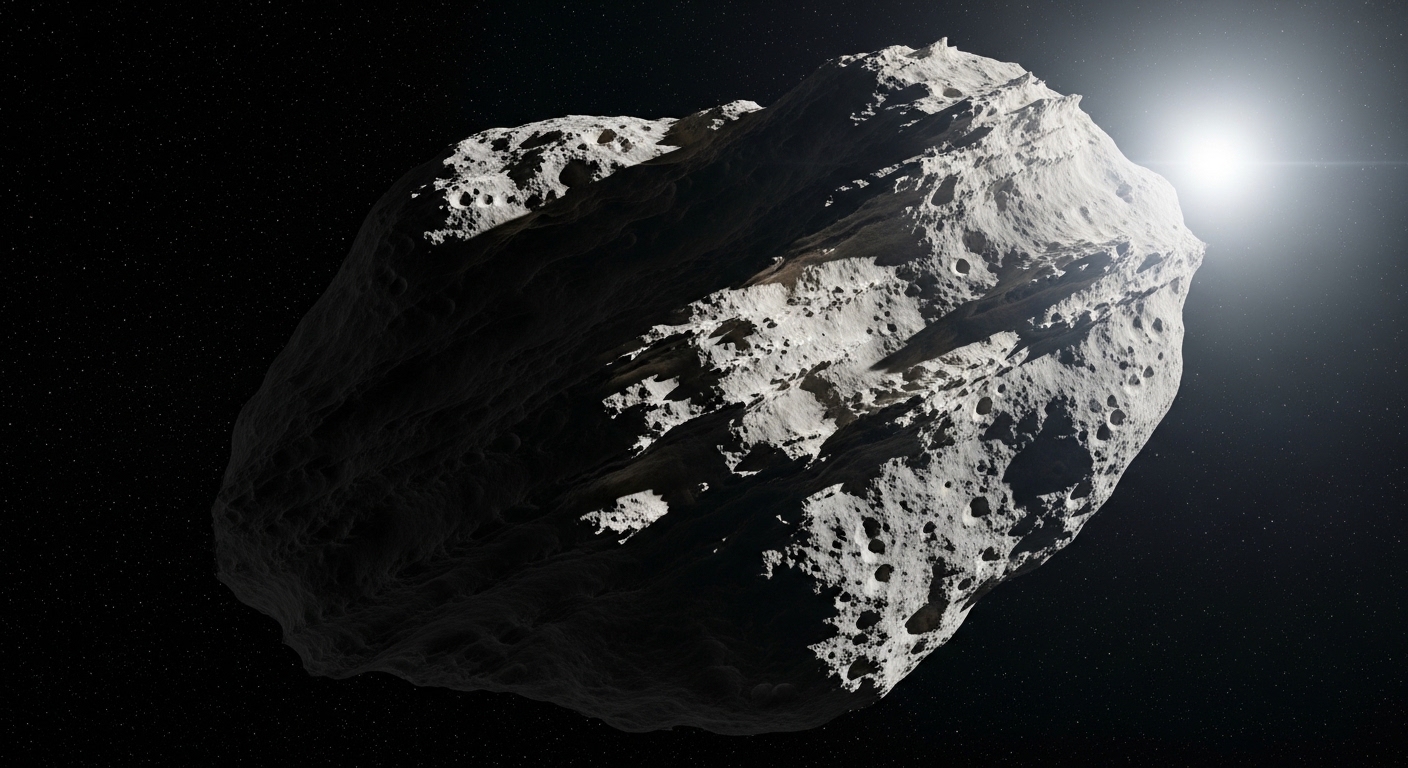
The term "near-Earth object" — or NEO — sounds alarming, but it simply refers to any asteroid or comet whose orbit brings it within roughly 1.3 astronomical units of the Sun. An astronomical unit is the average distance between Earth and the Sun, so we're talking about objects that pass through a fairly wide neighborhood around our planet. Most NEOs never come anywhere close to actually hitting us.
Within that broad category, scientists pay special attention to a subset called potentially hazardous asteroids (PHAs). These are objects larger than roughly 140 meters across that pass within about 0.05 astronomical units of Earth's orbit — close enough that small gravitational nudges over centuries could theoretically put them on a collision course. As of 2026, estimates suggest there are well over 2,000 known PHAs, though the actual number of undiscovered ones is likely higher.
Here's the counterintuitive part: size isn't always the most important factor. A 50-meter asteroid hitting at the right angle and composition could devastate a city, while a larger but more porous, loosely packed "rubble pile" asteroid might partially disintegrate in the atmosphere. The 2013 Chelyabinsk event in Russia — where a roughly 20-meter object exploded in the air and injured over a thousand people — was a sharp reminder that even relatively small objects demand attention.
The Telescopes and Systems Doing the Watching 🔭
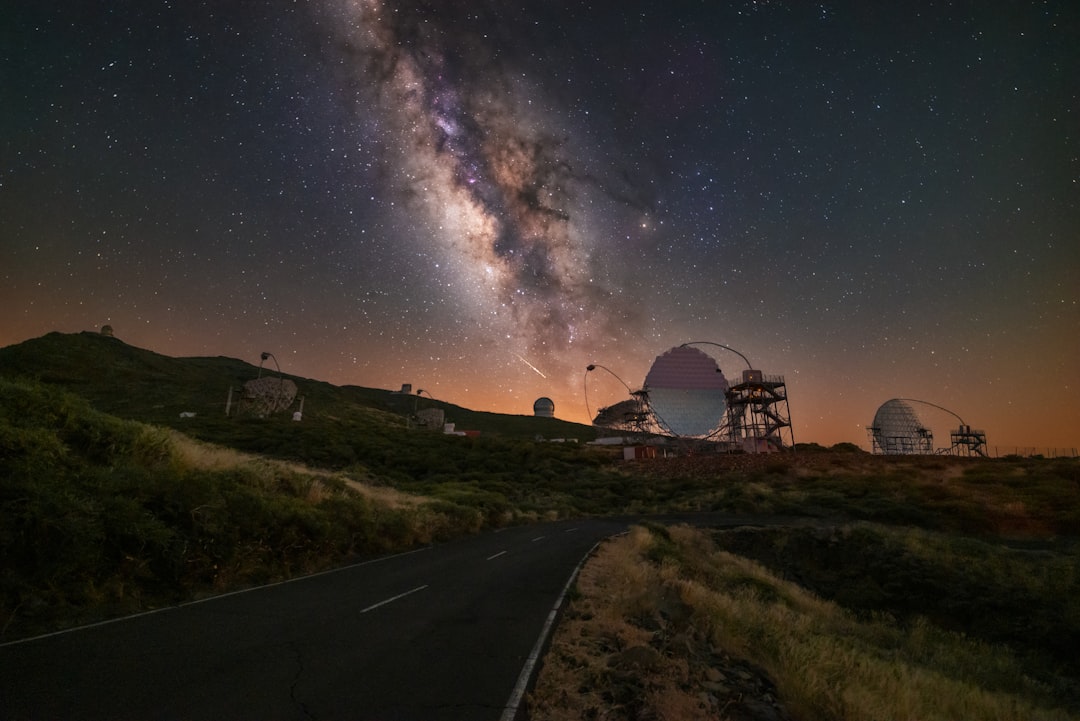
Asteroid detection is not a single telescope pointed at the sky — it's a distributed network of ground-based observatories, space-based sensors, and automated software pipelines working together. The backbone of the effort has long been programs funded by NASA's Planetary Defense Coordination Office, which coordinates detection, tracking, and response planning.
One of the most productive survey systems is the Catalina Sky Survey, operated out of Arizona, which has been responsible for discovering a large share of known NEOs. Another major contributor is the Pan-STARRS telescope system in Hawaii, which scans the sky repeatedly and flags anything that moves between images — because stars stay fixed while asteroids drift. The ATLAS (Asteroid Terrestrial-impact Last Alert System) network, also based in Hawaii with additional stations in other locations, is specifically designed for short-warning detection of smaller objects that might slip through earlier surveys.
In space, NASA's NEOWISE mission — a repurposed infrared space telescope — proved particularly useful because it detects heat signatures, allowing scientists to estimate an asteroid's actual size more accurately than visible-light observations alone. While NEOWISE's operational life wound down, the next generation of space-based detection is being developed, with the NEO Surveyor mission designed to find a much larger fraction of potentially hazardous objects than ground-based systems can manage.
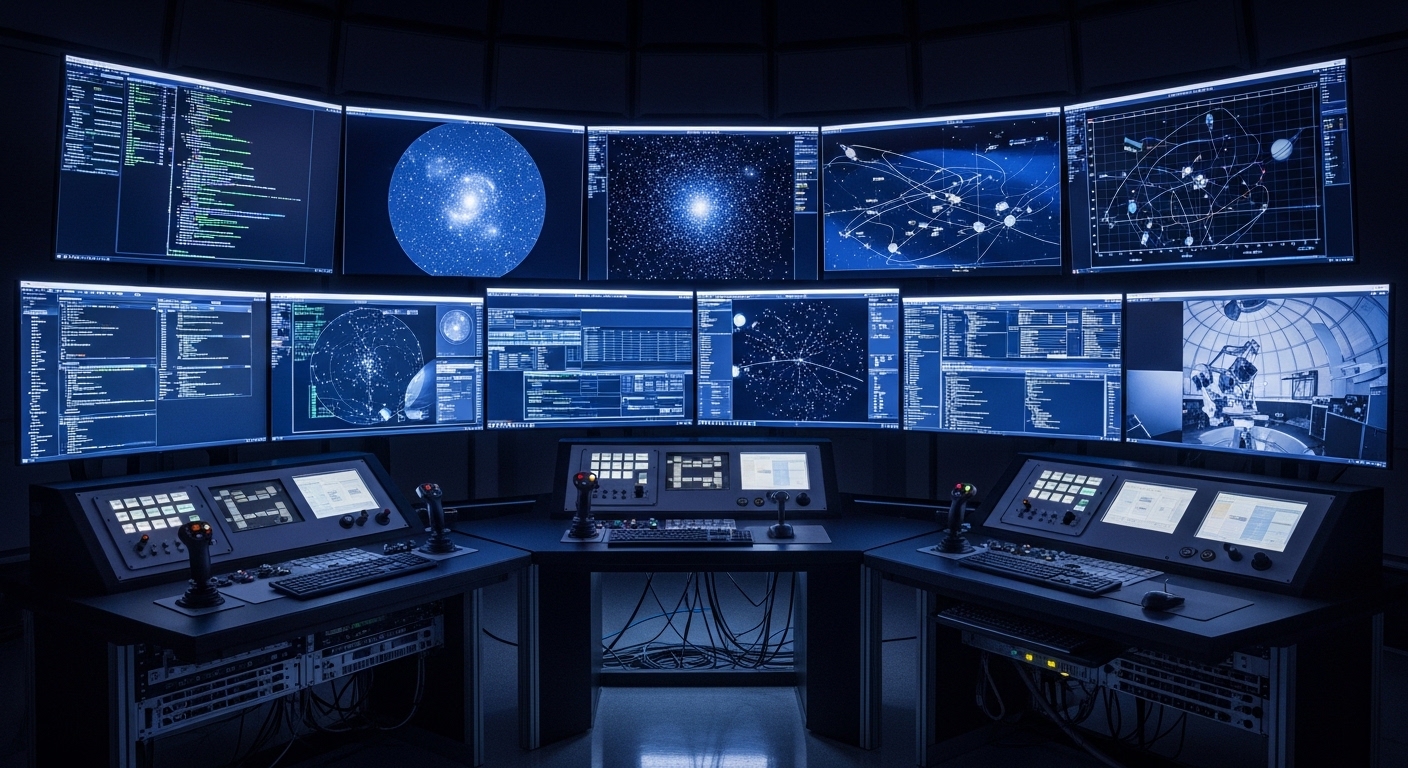
The process works like this: a telescope takes repeated images of the same patch of sky over a night. Software automatically compares those images and flags any point of light that has moved. Human reviewers — and increasingly, machine-learning algorithms — then confirm whether the moving object is a known asteroid, a new discovery, or something else entirely like a satellite or image artifact.
How Orbital Math Turns a Blip Into a Threat Assessment 📐
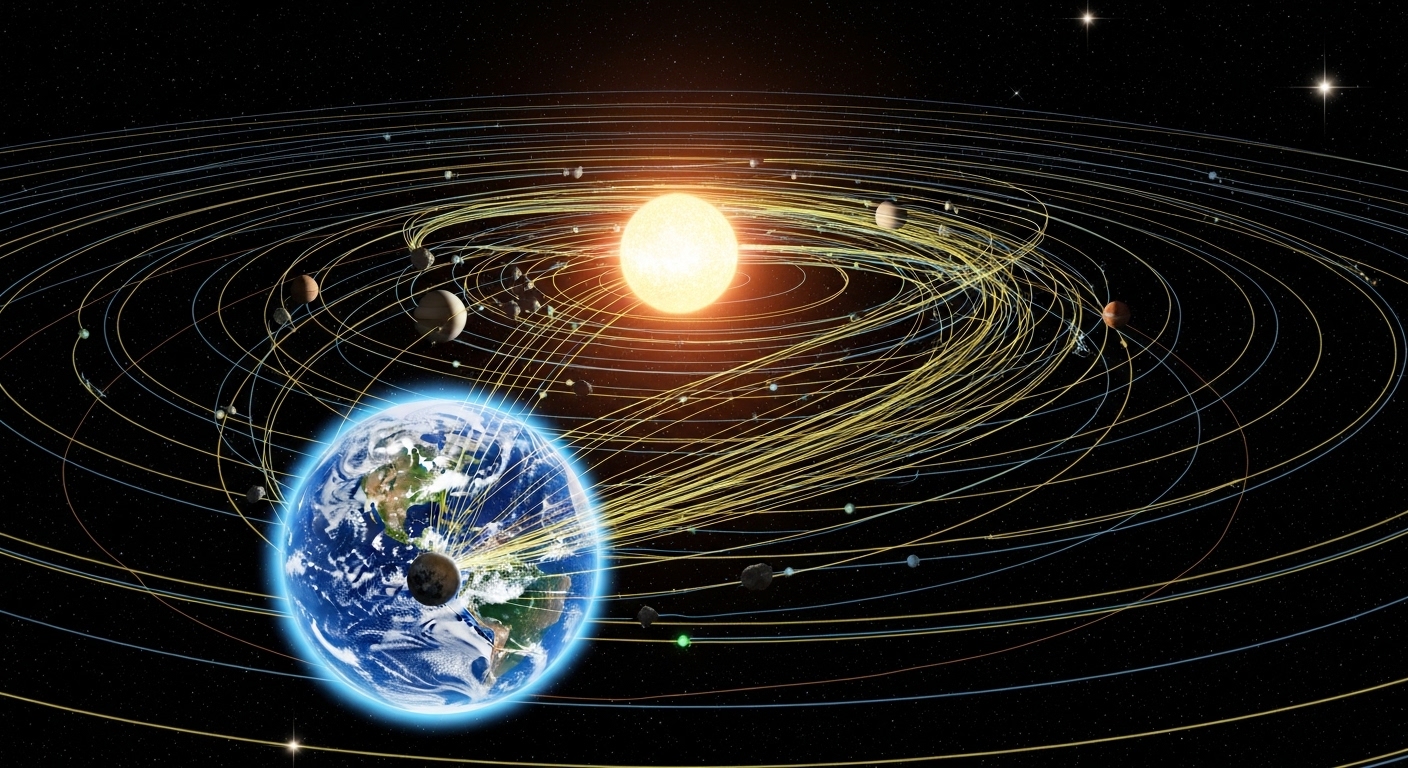
Spotting a moving dot in the sky is only the beginning. The real work is figuring out where that object is going — and whether it will still be going there in fifty years. This is where orbital mechanics becomes the hero of the story.
When a new object is detected, scientists submit the observations to the Minor Planet Center, an internationally recognized clearinghouse operated under the International Astronomical Union. The center catalogs the object and shares the data so that observatories worldwide can follow up. More observations mean a more refined orbit calculation.
NASA's Center for Near Earth Object Studies (CNEOS) at the Jet Propulsion Laboratory runs two key impact probability systems: Sentry and its updated successor Sentry-II. These systems automatically compute thousands of possible future orbital paths for each tracked object — accounting for gravitational influences from planets, the slight pressure of sunlight (called the Yarkovsky effect), and measurement uncertainties — and calculate the statistical probability that any of those paths intersects with Earth.
The Yarkovsky effect is one of the most surprising wrinkles in asteroid tracking. As an asteroid rotates in sunlight, it absorbs heat on its sunlit side and radiates that heat slightly later as the surface rotates into shadow. That tiny, asymmetric push acts like a miniature thruster over decades and centuries, gradually shifting the asteroid's orbit. Ignoring it can lead to wildly inaccurate long-range predictions, so scientists work hard to measure each asteroid's spin rate, shape, and surface properties to account for it.
A well-known real example: asteroid Apophis caused significant concern when it was first discovered in 2004, with early calculations suggesting a non-trivial chance of impact in 2029. Further observations and refined orbital calculations eventually ruled out any impact risk for the foreseeable future — a perfect illustration of how the system is supposed to work, even if the initial headlines were alarming.
Why This Matters More Than Most People Realize 🌍
Planetary defense is one of the few existential risks that humanity actually has the technology to address — if given enough warning. Unlike earthquakes or pandemics, a large asteroid impact is, in principle, preventable. The catch is time: deflecting an asteroid requires years or decades of lead time, not months.
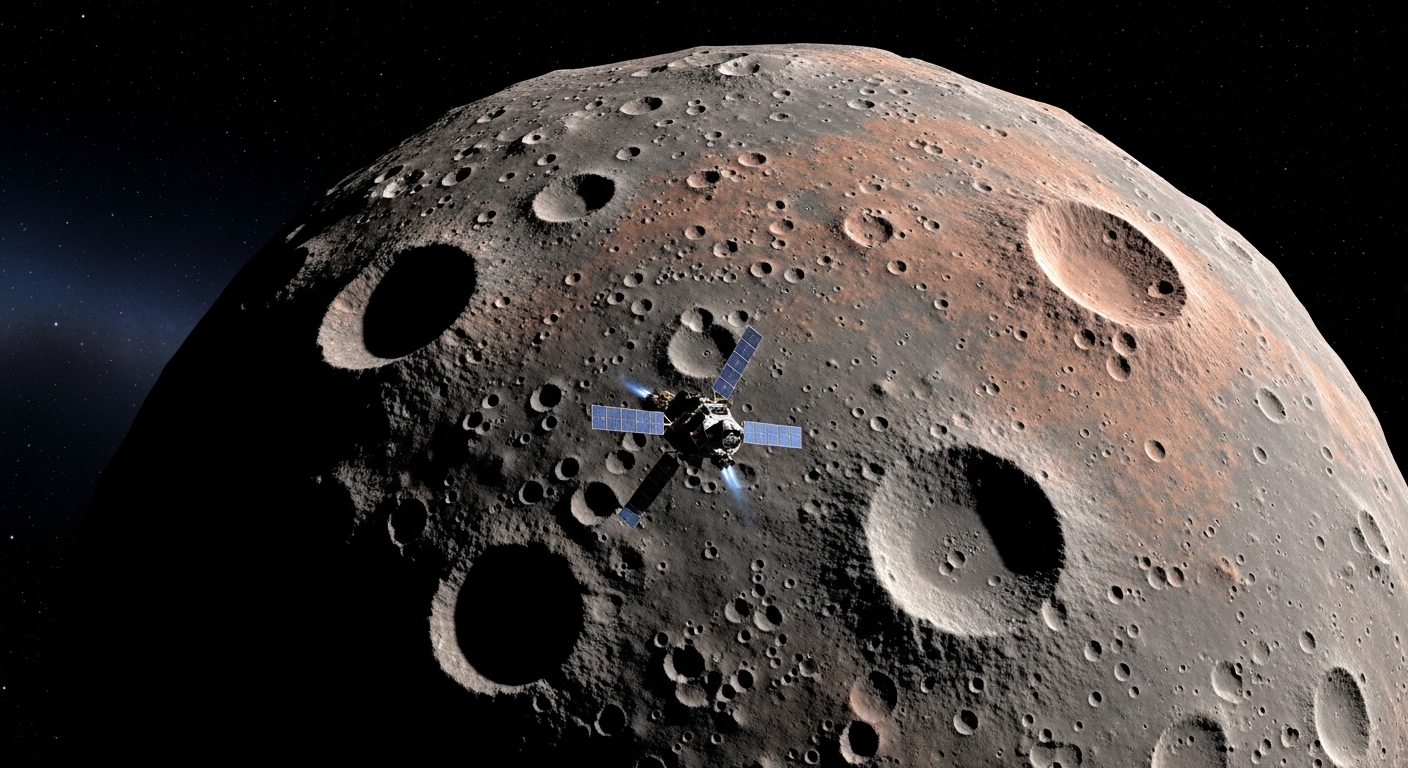
NASA's DART mission (Double Asteroid Redirection Test) demonstrated this in a landmark 2022 experiment. The spacecraft deliberately collided with Dimorphos, the small moonlet of asteroid Didymos, and successfully changed its orbital period by measurably more than scientists had predicted as their minimum threshold for success. It was the first time humanity intentionally and verifiably altered the motion of a natural celestial body — a genuinely historic moment that received far less public attention than it deserved.
The challenge now is coverage. Current surveys have cataloged the vast majority of the largest NEOs — those over roughly a kilometer in size — but estimates suggest that a significant fraction of medium-sized objects (140 meters to 1 kilometer) remain undiscovered. An object in that range hitting a populated area would cause regional to continental devastation. The goal of next-generation systems like NEO Surveyor is to close that gap substantially.
(Opinion: There's something quietly profound about the fact that planetary defense is one of the few areas where the entire scientific community, across competing nations, genuinely cooperates without much drama. The asteroid doesn't care about borders, and apparently neither do the astronomers tracking it. That kind of shared-stakes collaboration deserves far more public recognition than it gets.)
Frequently Asked Questions
How many near-Earth asteroids have been discovered so far?
As of 2026, scientists have cataloged well over 30,000 near-Earth asteroids, with the number growing steadily as survey programs improve. The vast majority pose no threat, but each new discovery is assessed for its orbital path and potential risk before being added to monitoring lists.
Could we actually stop an asteroid if one were heading toward Earth?
Research suggests that yes, deflection is technically feasible — but only with sufficient warning time, typically years to decades. The DART mission proved that a kinetic impactor can change an asteroid's orbit. Other proposed methods include gravity tractors and, in extreme cases, nuclear standoff detonations, though the latter remains theoretical and controversial.
How would the public be notified if a serious threat were identified?
NASA's Planetary Defense Coordination Office works with international partners and government agencies to establish communication protocols. Any object with a significant impact probability would trigger a coordinated scientific review before public announcement, to avoid false alarms — though the scientific community generally favors transparency once a credible threat is confirmed.
Asteroid tracking is one of those fields where the gap between public awareness and actual scientific achievement is almost comically wide. The people doing this work have built a global early-warning system for one of the oldest threats in Earth's history — and in 2026, that system is better than it has ever been, with more improvements on the way. The sky is being watched, carefully and continuously, and that's genuinely worth knowing.


Comments
Post a Comment