Why Do Workers Go on Strike? The Economics of Labor Disputes Explained
In the autumn of 2023, roughly 150,000 United Auto Workers members walked off the job at Ford, General Motors, and Stellantis simultaneously — the first time in UAW history that all three Detroit automakers faced a strike at once. The action lasted weeks, cost the companies billions in lost production, and ultimately ended with workers securing wage increases of roughly 25 percent over four years. That outcome wasn't an accident. It was the result of a very specific economic logic that has governed labor disputes for over a century.
What Is a Strike, and Why Do Workers Use It?
The Basic Definition — and the Leverage Behind It
A strike is a collective work stoppage organized by employees to pressure an employer into meeting their demands. The word "collective" is doing a lot of work in that sentence. One worker refusing to show up is just an absence. Hundreds or thousands doing it simultaneously is an economic weapon.
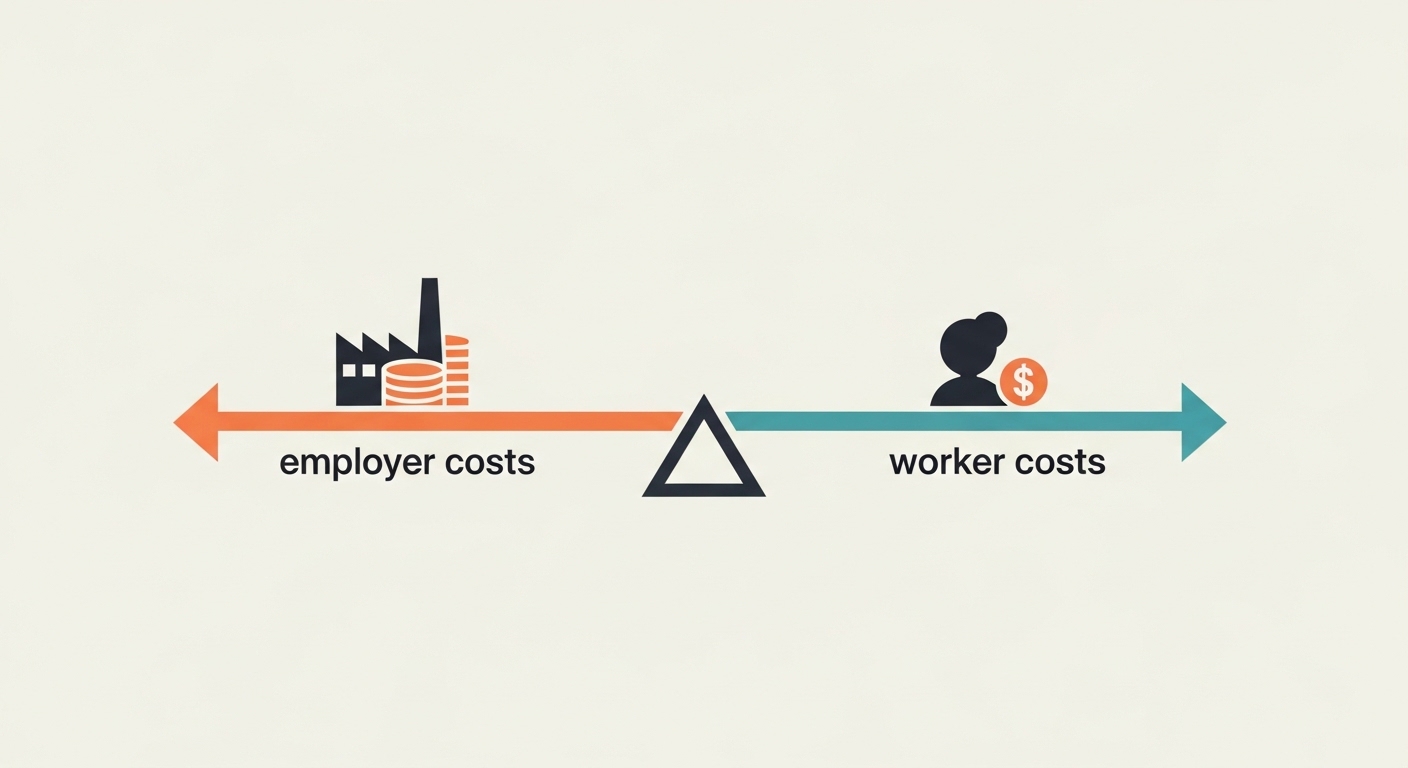
The core logic is straightforward: a business needs labor to generate revenue. When that labor disappears, so does the revenue. The longer the stoppage, the more pressure builds on the employer to negotiate. Workers, meanwhile, are betting that the employer's losses will outpace their own lost wages before they run out of resources to sustain the action.
Strikes are typically a last resort, not a first move. Before a walkout happens, there are usually months of failed negotiations, mediation attempts, and escalating public pressure. The strike itself is the point where one side decides the cost of continuing to negotiate without results exceeds the cost of open conflict.
What Workers Are Actually Demanding
Wages get the headlines, but strikes are rarely about a single issue. Common demands include better health benefits, safer working conditions, limits on mandatory overtime, job security provisions, and protections against outsourcing. In some industries — teachers, nurses, transit workers — staffing levels are a central issue, because workers argue that understaffing directly harms the people they serve.
How the Economics of a Strike Actually Work
The Bargaining Power Equation
Labor economists often describe strikes as a war of attrition. Both sides have a "reservation point" — the worst outcome they're willing to accept before walking away from the table. The gap between those two points is where a deal either gets made or doesn't.
Workers gain leverage when they're hard to replace. A skilled machinist who took years to train is far more difficult to substitute than a general laborer. This is why strikes in specialized industries — aerospace, semiconductor fabrication, longshore work — tend to extract larger concessions. The employer simply can't hire a replacement workforce overnight.
The harder you are to replace, the more your strike costs the employer per day — and that asymmetry is the entire foundation of collective bargaining power.
Timing matters enormously too. A strike at a package delivery company in November, right before the peak holiday shipping season, is a fundamentally different threat than the same strike in February. The 1997 UPS strike — which brought out roughly 185,000 workers — happened in August, a relatively quiet shipping period, yet still cost the company an estimated $700 million in lost business. Peak-season timing would have been catastrophic.
What It Costs Workers — and How They Survive It
Striking workers don't get paid by their employer. That's the whole point. Most unions maintain a strike fund — money accumulated from member dues over time — that pays out a weekly strike benefit. These amounts vary widely by union, but they're almost always well below a normal paycheck.
This is the financial reality that makes strikes genuinely risky for workers. A family living paycheck to paycheck can't sustain a long walkout on a fraction of their normal income. Strike funds can also be depleted if an action drags on for months. The 2019 GM strike lasted 40 days and drew down UAW strike fund reserves significantly, illustrating how even a well-funded union feels the strain of a prolonged dispute.
Some workers take part-time jobs during strikes. Others rely on community support, food banks organized by labor groups, or solidarity payments from other unions. It's a precarious situation by design — which is exactly why employers sometimes try to outlast a strike rather than negotiate quickly.
Why Strikes Don't Always Work — and When They Do
The Replacement Worker Problem
In the United States, employers have the legal right to hire permanent replacement workers during an economic strike — a fact that surprises many people and remains deeply controversial in labor law circles. This isn't true in most other wealthy democracies, where replacement hiring during a strike is either restricted or outright banned.
When employers successfully bring in replacement workers, the strike's leverage collapses. The business keeps running, revenue keeps flowing, and the striking workers watch their bargaining position erode. The Professional Air Traffic Controllers Organization (PATCO) strike in 1981 is the most famous example: President Reagan fired over 11,000 striking controllers and banned them from federal employment for life. The union was destroyed. The replacements — military controllers and supervisors — kept the skies open.
That outcome sent a chilling signal across the American labor movement that echoed for decades. Strike rates in the U.S. dropped sharply through the 1980s and 1990s, and only began recovering in the late 2010s.
When Strikes Succeed
Strikes tend to work best when three conditions align: the workforce is hard to replace, the employer is financially exposed to the timing, and public sympathy is with the workers. Teacher strikes, for example, often generate significant public support because parents and communities directly experience the disruption — and many instinctively side with educators over school administrators or government officials.
Public sympathy isn't just a moral bonus — it creates political pressure that can force settlements even when the pure economic math might favor the employer holding out.
The 2018 and 2019 wave of teacher strikes across states like West Virginia, Oklahoma, and Arizona succeeded partly because they were impossible to ignore. Schools closed. Parents scrambled. And the image of underpaid teachers walking out resonated with a public that had watched education budgets shrink for years.
The Broader Economic Impact of Strikes — Beyond the Workplace
Ripple Effects Through Supply Chains
A major strike rarely stays contained to the company involved. When West Coast port workers slow operations or walk out, the effects ripple through retail supply chains within days. Retailers can't receive inventory. Manufacturers can't ship finished goods. The longer the disruption, the wider the economic damage spreads.
The 2002 West Coast port lockout — technically a management lockout rather than a strike, but economically similar — lasted 10 days and was estimated to have cost the U.S. economy roughly $1 billion per day. That figure came from disrupted agricultural exports, delayed auto parts, and retailers unable to stock shelves ahead of the holiday season.
What Strikes Do to Wages Over Time
Here's the counterintuitive part: strikes benefit workers who never go on strike. When a union wins a significant wage increase through collective action, it shifts the benchmark for what employers in that industry must offer to attract and retain workers. Non-union employers often raise wages preemptively to reduce the appeal of unionization. Economists call this the "union wage premium" effect, and research consistently finds it extends beyond unionized workplaces into the broader labor market.
This is why the decline in strike activity over several decades correlates — imperfectly, but meaningfully — with the period of wage stagnation that many middle-income workers experienced. Fewer credible threats of collective action meant less pressure on employers to share productivity gains.
(Opinion: There's something telling about the fact that the most significant wage gains for American workers in recent memory came during a period of renewed strike activity. The economics were always there. What changed was workers' willingness to use the leverage they had.)
Frequently Asked Questions
Can workers be fired for going on strike?
In the United States, workers engaged in a legal strike over wages, hours, or working conditions — called an "economic strike" — can be permanently replaced but not technically fired for striking. The distinction matters legally but is often cold comfort in practice. Workers involved in an "unfair labor practice" strike, where they're protesting illegal employer conduct, have stronger protections and cannot be permanently replaced.
Do strikes always end with the workers getting what they wanted?
No, and this is where the economics get uncomfortable. Some strikes end with workers accepting terms close to what the employer originally offered, having lost weeks of wages in the process. Others end with significant gains. The outcome depends on the relative staying power of both sides, the availability of replacement workers, public pressure, and the broader economic environment. A strike during a labor shortage hits differently than one during high unemployment.
Why do some industries strike more than others?
Industries with high unionization rates, specialized skills, and concentrated workforces — like auto manufacturing, longshore work, and healthcare — tend to see more strike activity. Industries with fragmented, easily replaceable workforces and low union density see far less. There's also a legal dimension: some public employees, including certain federal workers, are prohibited by law from striking at all, regardless of their grievances.
The most striking thing about labor disputes — if you'll forgive the word — is how much they reveal about who actually holds power in an economy. A company's valuation can run into the billions, but if the people running the machines, writing the code, or caring for the patients decide collectively to stop, that valuation becomes theoretical almost overnight. Strikes are a reminder that capital and labor need each other, and that the terms of that relationship are never permanently settled — they're renegotiated, sometimes loudly, generation after generation.



Comments
Post a Comment