How Do Underwater Volcanoes Work? Exploring the Secrets of the Seafloor
There are more active volcanoes beneath the ocean than on all of Earth's land surface combined. Estimates suggest roughly 75 percent of all volcanic activity on the planet happens underwater — mostly unobserved, mostly unmapped, and until fairly recently, almost entirely unknown. The seafloor is, in geological terms, one of the most violent places on Earth.
What Is an Underwater Volcano, Exactly?
The Basic Definition — and Why It's More Complicated Than You'd Think
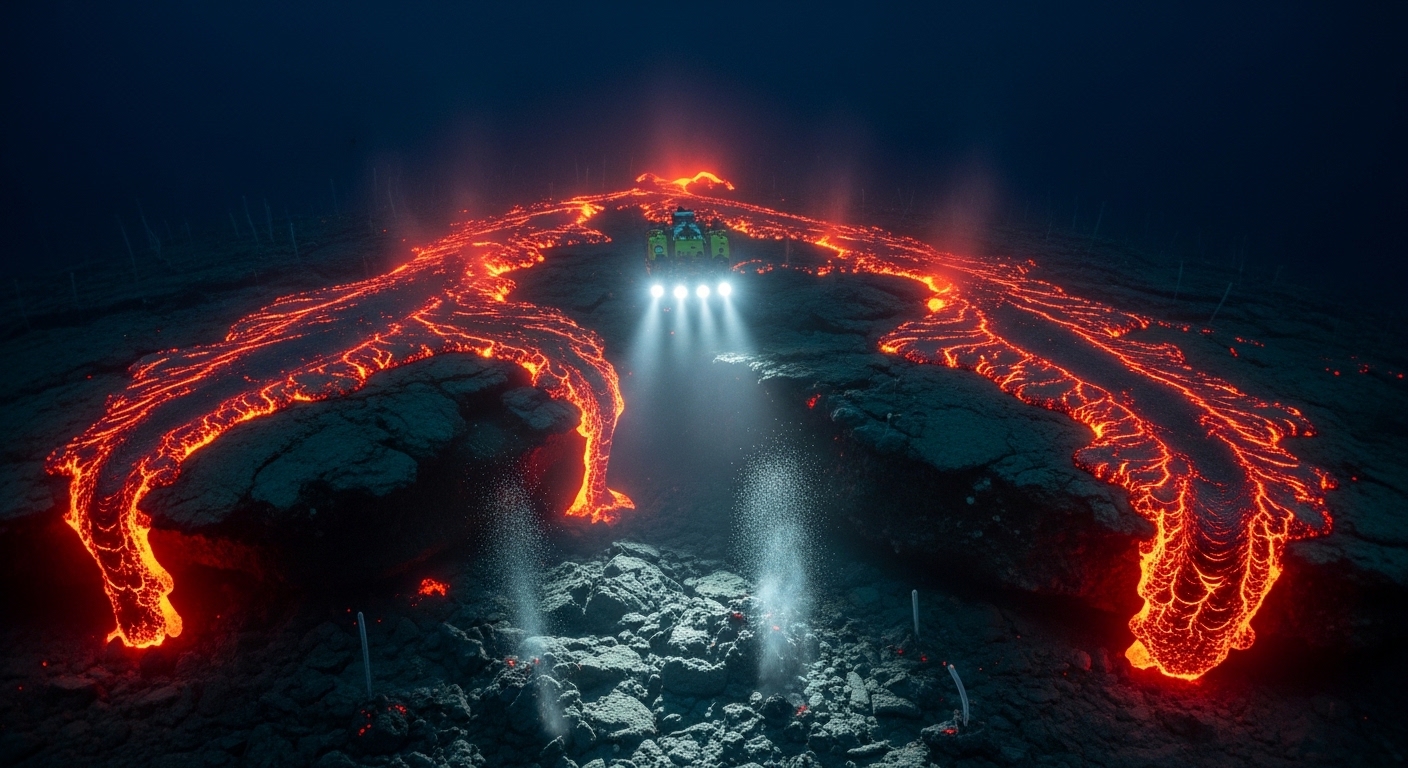
An underwater volcano, also called a submarine volcano, is a vent or fissure in the Earth's crust located beneath the ocean surface through which magma, gases, and superheated fluids escape. They range from shallow coastal vents — some close enough to the surface that eruptions break through as steam columns — to massive structures sitting more than two miles below sea level where the pressure is crushing.
The term covers a surprisingly wide range of structures. Some are isolated seamounts, essentially underwater mountains built up over thousands of years of repeated eruptions. Others are long, linear fissures running for hundreds of miles along mid-ocean ridges. A few are calderas — collapsed summit craters — that sit quietly for centuries before releasing enormous volumes of material in a single event.
Where They Form
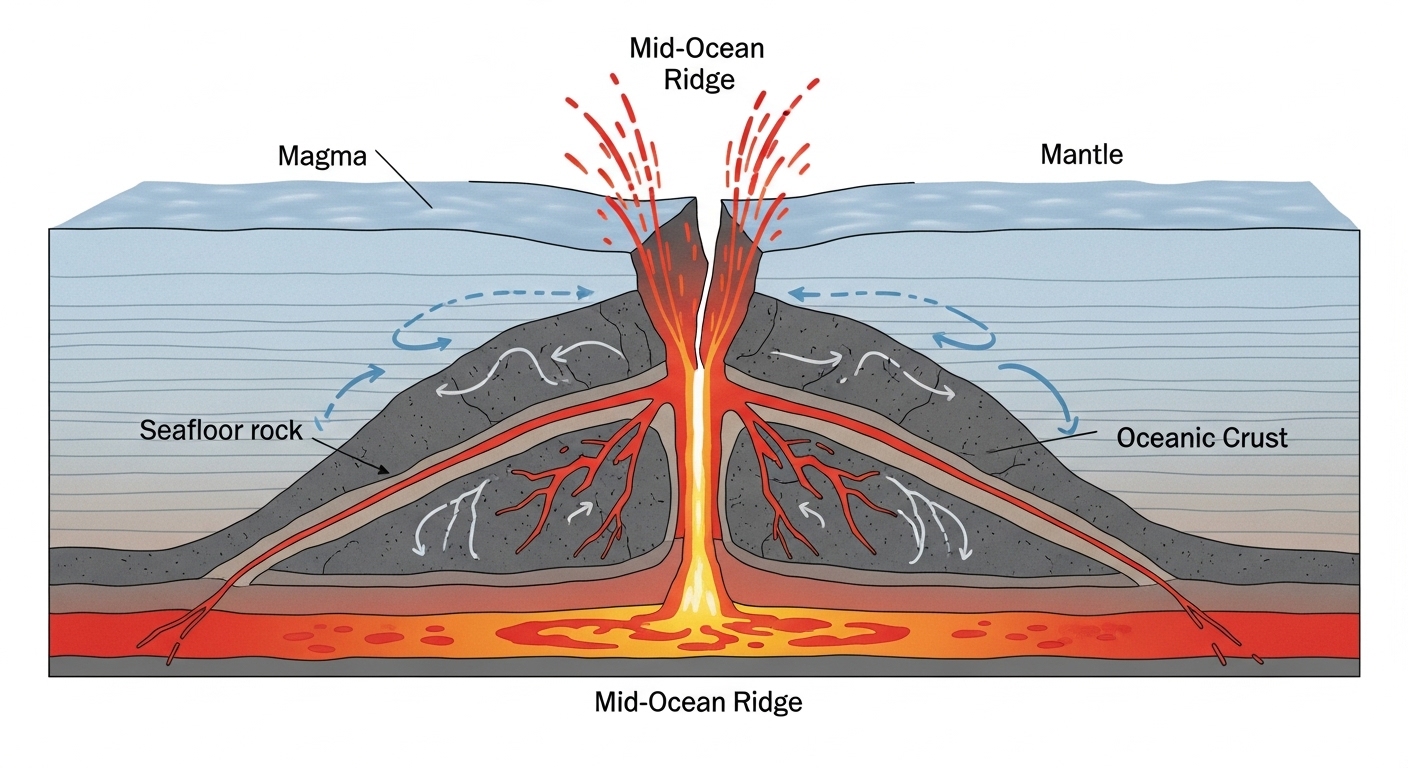
Most submarine volcanoes cluster along tectonic plate boundaries. The Mid-Atlantic Ridge is a classic example: a continuous underwater mountain chain running roughly north to south through the Atlantic Ocean, where the North American and Eurasian plates are slowly pulling apart. As the gap widens, magma wells up to fill it, creating new seafloor constantly. Iceland is actually the part of this ridge that has grown tall enough to poke above the waterline.
Hotspot volcanoes are a different category entirely. These form far from plate edges, above unusually hot plumes of mantle material. The Hawaiian island chain is the surface expression of a hotspot — but for every Hawaiian island you can stand on, there are dozens of submerged seamounts in the chain that never quite made it to the surface.
How Does an Underwater Eruption Actually Work?
Pressure Changes Everything
Here is the counterintuitive part: at great depth, underwater volcanoes often erupt very differently from their land-based counterparts, and the reason is pressure. At depths below roughly 2,500 meters, the water pressure is so intense that it suppresses the explosive release of dissolved gases from magma. On land, those gases expand violently as lava reaches the surface — that is what drives the explosive eruptions you see in news footage. Deep underwater, the pressure essentially keeps a lid on that process.
At sufficient ocean depth, pressure transforms what would be a catastrophic explosion on land into something closer to a slow, oozing lava flow — the ocean itself acts as a pressure valve.
The result is a distinctive type of lava formation called pillow lava. As magma oozes out of a deep-sea vent, the outer surface chills almost instantly on contact with near-freezing water, forming a glassy skin. The interior stays molten and keeps pushing forward, eventually breaking through the skin and forming another rounded lobe. Over time, these stack up into formations that look exactly like a pile of enormous pillows — and geologists find them in ancient rock formations on land as a reliable indicator that those rocks were once on the seafloor.
Shallower Eruptions Are a Different Story
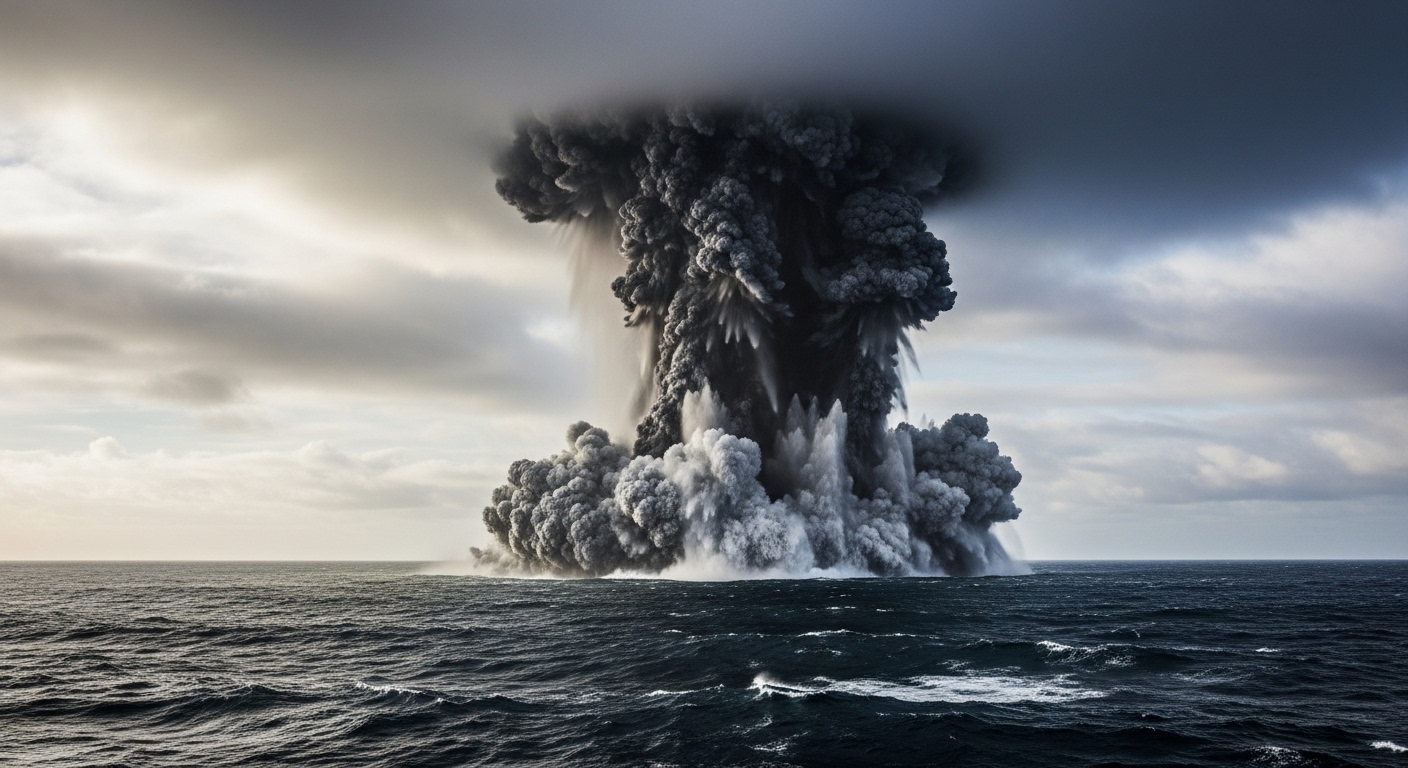
Submarine volcanoes in shallower water — say, less than 500 meters down — can still produce explosive eruptions. The 2022 eruption of Hunga Tonga-Hunga Ha'apai in the South Pacific is the most dramatic recent example. That event generated one of the largest atmospheric shockwaves recorded in modern history, sent a tsunami across the Pacific, and injected an extraordinary amount of water vapor into the stratosphere. The volcano's caldera sat at a depth where the pressure was not enough to contain the explosion.
The Hunga Tonga event also reminded researchers how little warning time shallow submarine eruptions can give. Monitoring land volcanoes is already difficult; monitoring ones that sit under hundreds of meters of water is a different problem entirely.
Hydrothermal Vents — the Unexpected Bonus
What Happens When Seawater Meets Magma
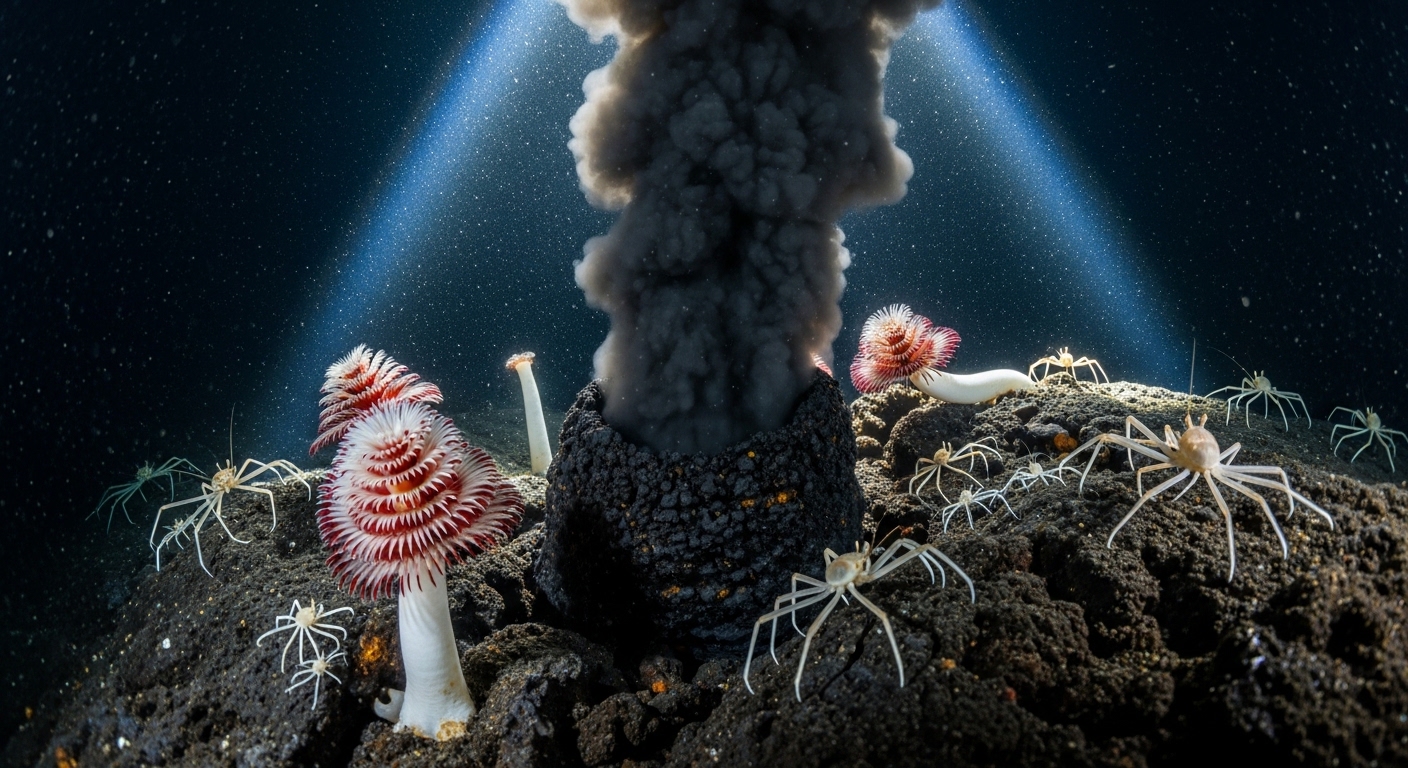
Submarine volcanoes do not just erupt lava. They also drive one of the most remarkable systems on Earth: hydrothermal vents. Cold seawater seeps down through cracks in the ocean floor, gets superheated by the magma below, picks up dissolved minerals, and then shoots back up through vent openings at temperatures that can exceed 400 degrees Celsius. The water does not boil at these depths because the pressure is too high.
When this superheated, mineral-rich fluid hits the cold surrounding water, the dissolved minerals precipitate out instantly, forming towering chimney structures. Black smokers — named for the dark plumes of iron and sulfide particles they emit — can grow several meters tall and host ecosystems that run entirely on chemical energy rather than sunlight. Tube worms, blind shrimp, and chemosynthetic bacteria thrive in conditions that would be lethal to almost any other organism.
Hydrothermal vent ecosystems were discovered in 1977 and immediately forced biologists to rewrite the rules — life, it turned out, does not need the sun.
Why This Matters Beyond Biology
Hydrothermal vents are also where significant quantities of metals accumulate. Copper, zinc, gold, and rare earth elements concentrate in vent deposits over geological time. This has attracted serious commercial interest in recent years, with several companies and national programs exploring deep-sea mining. The ecological implications of disturbing vent ecosystems are still poorly understood, which makes this one of the more contested environmental debates in ocean science right now.
Why Studying Submarine Volcanoes Is So Difficult
The Monitoring Problem
Catching an underwater eruption in real time is genuinely hard. Most of the ocean floor has never been directly observed. Researchers rely on hydrophone arrays — networks of underwater microphones originally built to detect submarine activity during the Cold War — to pick up the distinctive acoustic signals of submarine eruptions. These T-phase waves travel efficiently through the ocean and can be detected thousands of miles from the source.
Even when an eruption is detected acoustically, getting eyes on it requires deploying a research vessel and a remotely operated vehicle, which takes days at minimum. By the time a team arrives, the most active phase is often over. The 1993 eruption on the Juan de Fuca Ridge off the Pacific Northwest coast was one of the first caught relatively quickly, and even then researchers arrived to find fresh lava fields but no active flows.
What New Technology Is Changing
Autonomous underwater vehicles have changed the pace of discovery significantly. These robotic systems can be pre-programmed to survey large areas of seafloor, collect water samples to detect chemical signatures of recent volcanic activity, and return data without requiring a human-crewed ship overhead the entire time. Ocean observatories — permanent sensor arrays cabled to shore — now provide near-real-time seismic and chemical data from a handful of well-studied ridge segments.
Still, the total area of monitored seafloor is a tiny fraction of what exists. The deep ocean floor is, in a very practical sense, less mapped than the surface of Mars.
(Opinion: The disparity between how much we know about Mars and how little we know about our own ocean floor is one of the stranger priorities in modern science. Planetary exploration is genuinely valuable, but the seafloor is right here, actively shaping the planet's chemistry and climate, and it remains largely a blank.)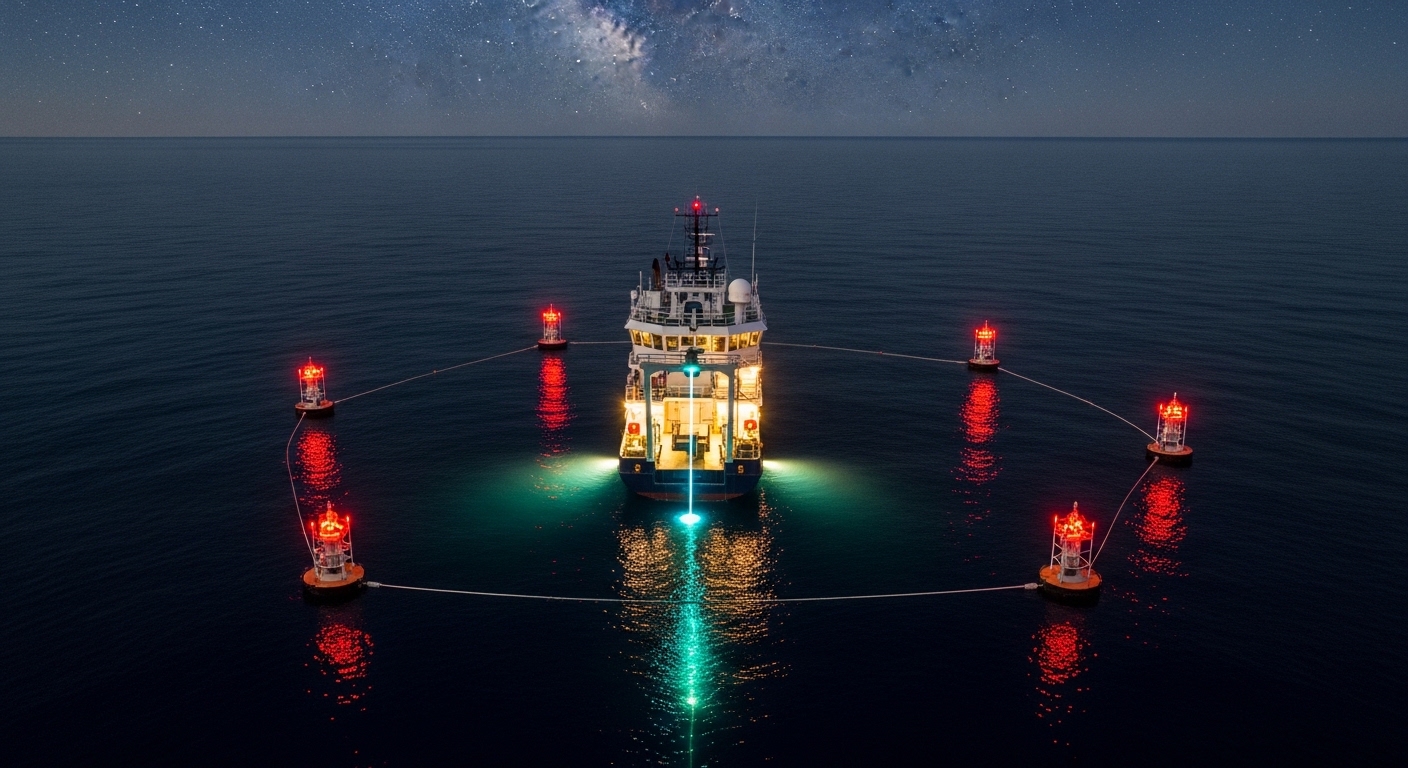
Frequently Asked Questions
Can an underwater volcano cause a tsunami?
Yes, though the mechanism matters. A submarine eruption itself rarely generates a major tsunami directly. More commonly, the danger comes from associated events: a large underwater landslide triggered by volcanic activity, or the sudden collapse of a volcanic caldera displacing enormous volumes of water. The 2022 Hunga Tonga eruption produced a tsunami through a combination of the shockwave and seafloor displacement, which was unusual enough that researchers are still studying the exact mechanics.
Is there any oxygen near underwater volcanoes?
The water surrounding submarine volcanoes contains dissolved oxygen, but the vent fluids themselves are typically anoxic — meaning they carry no oxygen and are instead rich in hydrogen sulfide, methane, and other reduced compounds. The organisms that live directly at vents have adapted to use these chemicals for energy through a process called chemosynthesis, bypassing the need for oxygen-based metabolism entirely.
Could a submarine volcano ever build an island?
It happens regularly. Surtsey, off the coast of Iceland, emerged from the ocean in 1963 after a submarine eruption and is now a protected natural laboratory for studying how life colonizes new land. In the Pacific, a small island briefly appeared near Tonga in 2015 after a submarine eruption, though it eroded within a few years. Whether a new volcanic island survives depends on whether the eruption rate outpaces wave erosion — most do not make it.
The seafloor is not a passive, inert place waiting to be discovered. It is being created and destroyed continuously, venting heat and chemicals that influence ocean chemistry, seeding ecosystems that operate on entirely alien energy sources, and occasionally reminding coastal populations — as Tonga learned in 2022 — that what happens miles underwater does not stay there. The next major submarine eruption is already building somewhere in the dark, and the odds are good that no instrument is watching it.


Comments
Post a Comment