What Causes the Northern Lights? The Science of the Aurora Explained
On the night of May 10, 2024, people as far south as Texas and northern Mexico stepped outside and saw the sky turn crimson and green — a geomagnetic storm so powerful it pushed the aurora borealis to latitudes it rarely visits. Social media flooded with photos from people who had never seen anything like it and had no idea what they were looking at. The northern lights are one of those phenomena that feel almost too dramatic to be real, yet the mechanism behind them is surprisingly logical once you understand the chain of events that produces them.
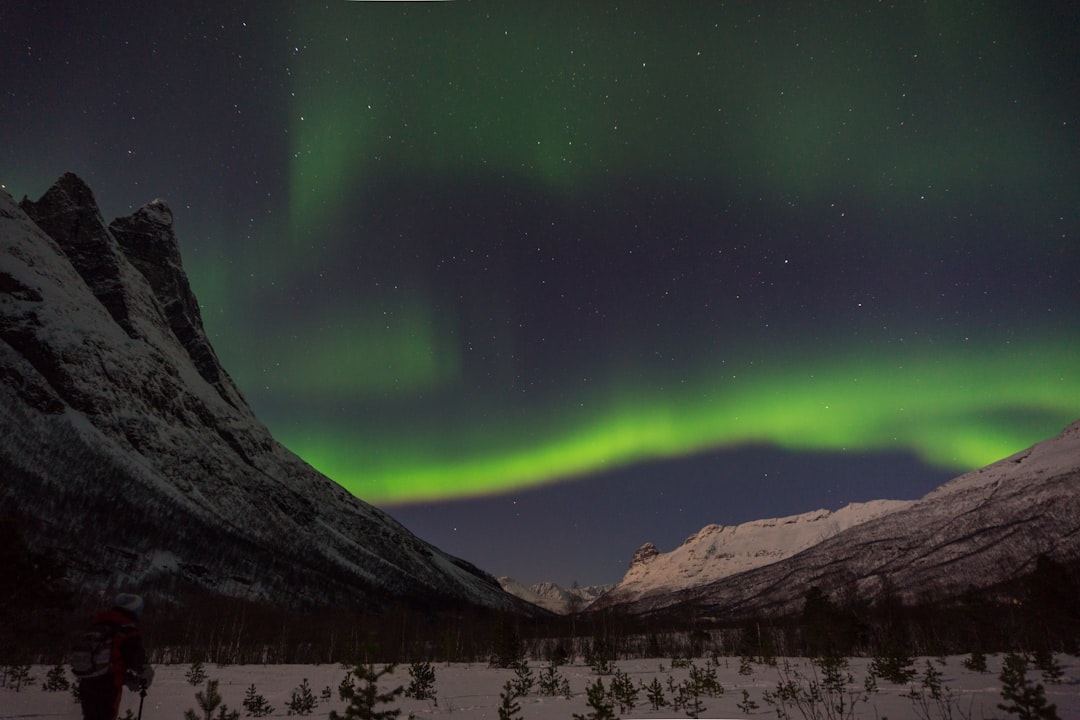
What Is the Aurora Borealis, Exactly?
More Than Just Pretty Lights
The aurora borealis — and its southern counterpart, the aurora australis — is a natural light display that occurs in the upper atmosphere, typically between 100 and 300 kilometers above Earth's surface. It is not a reflection of sunlight off ice crystals, not a product of moonlight, and not related to temperature. It is, at its core, a collision event happening at the edge of space.
The word "aurora" comes from the Roman goddess of dawn, and "borealis" from the Greek word for north wind. The name has stuck for centuries, but the scientific explanation only came together in the 20th century as researchers developed a clearer picture of the solar wind and Earth's magnetic field.
Where Does It Happen?
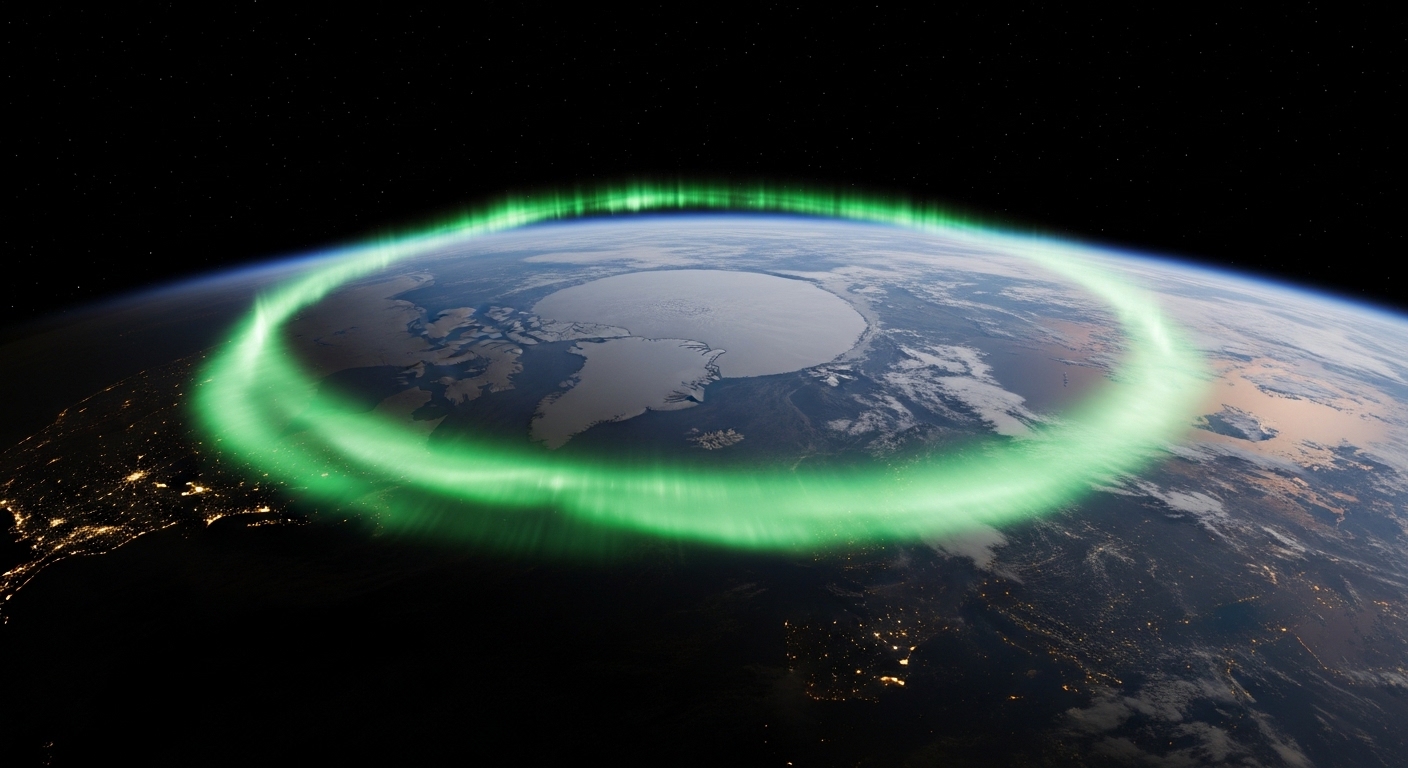
Auroras appear in oval-shaped bands centered on Earth's magnetic poles — not the geographic poles, but the magnetic ones, which sit at a slight offset. This is why places like northern Norway, Iceland, Alaska, and northern Canada are prime viewing spots. The oval shifts and expands during intense solar activity, which is exactly what happened during that May 2024 storm.
How Does the Sun Trigger the Northern Lights?
The Solar Wind — A Constant Invisible Pressure
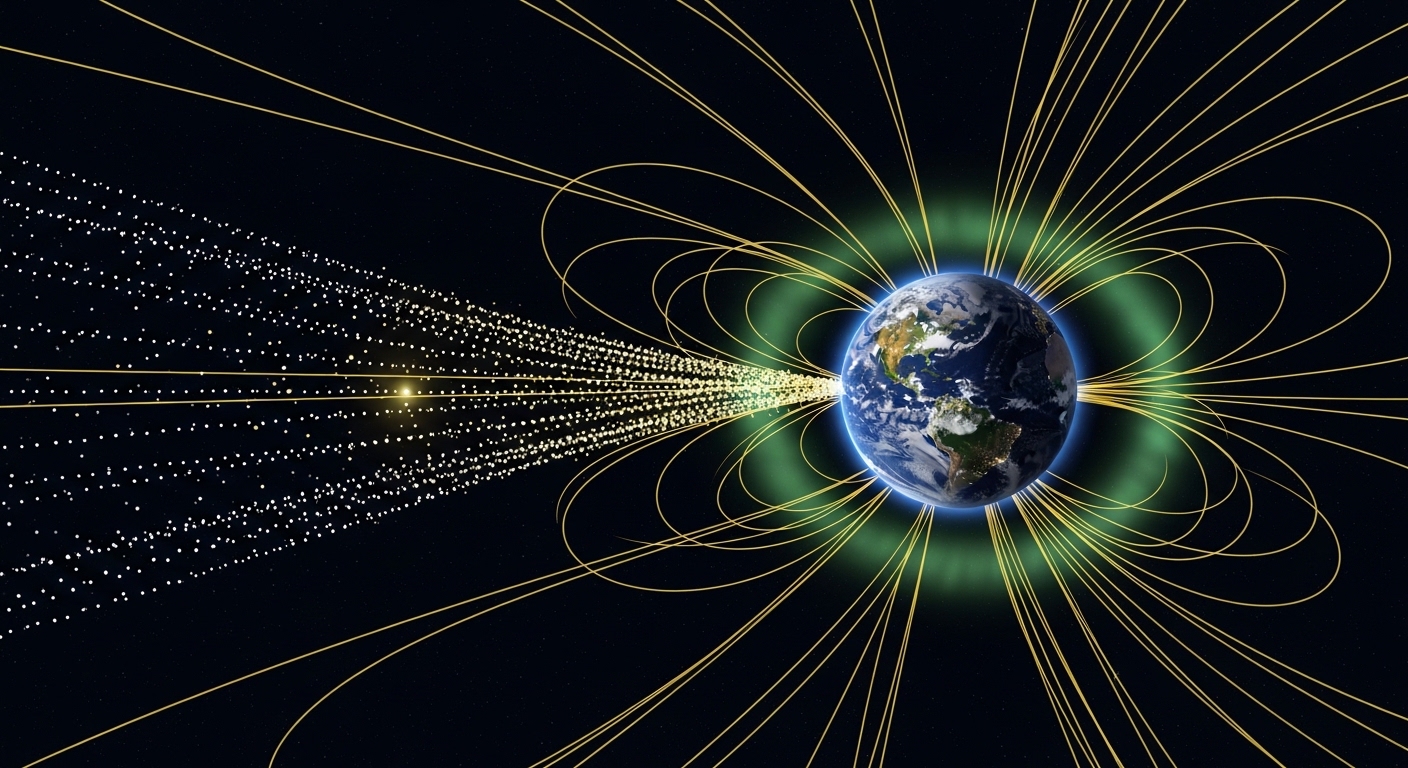
The sun constantly sheds a stream of charged particles — mostly electrons and protons — called the solar wind. This stream travels at roughly 400 to 800 kilometers per second and reaches Earth in one to three days. Under normal conditions, Earth's magnetic field deflects most of it, bending the stream around the planet like water around a stone.
But the magnetic field is not a perfect shield. At the poles, the field lines converge and dip toward Earth's surface, creating entry points where charged particles can funnel in. This is the fundamental reason auroras appear near the poles and almost nowhere else.
Solar Flares and Coronal Mass Ejections
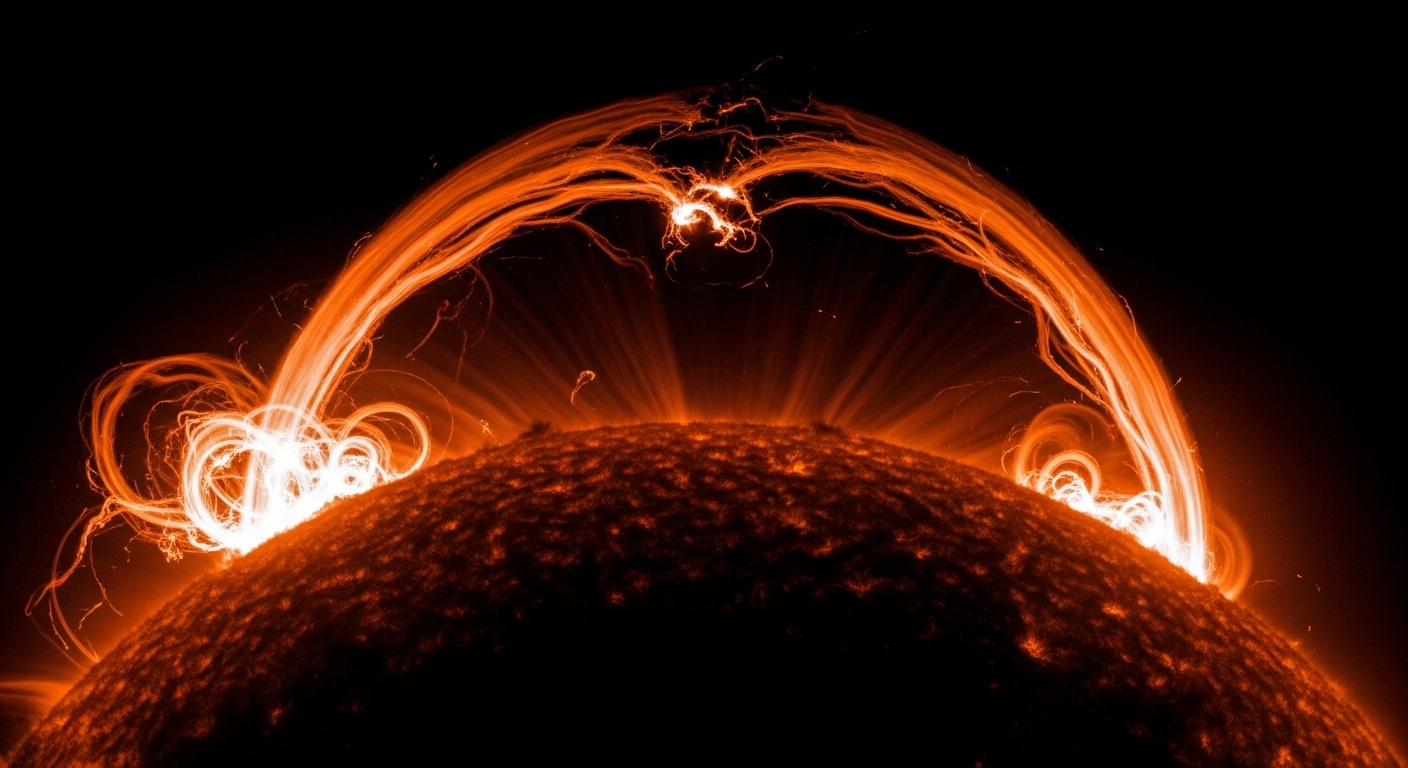
The really spectacular auroras — the ones that reach Texas — come from a different beast: coronal mass ejections, or CMEs. These are enormous eruptions from the sun's surface that hurl billions of tons of magnetized plasma into space. A CME is not the same as a solar flare, though the two often happen together. A flare is a burst of radiation; a CME is a physical cloud of matter.
When a CME hits Earth's magnetic field, it can compress and distort it dramatically. If the CME's magnetic field happens to point southward — opposite to Earth's own field — the two fields can partially cancel out in a process called magnetic reconnection. That's when the shield weakens and particles pour in at far lower latitudes than usual.
Magnetic reconnection is the key that unlocks the door. Without it, even a powerful CME would mostly bounce off Earth's field and produce only a modest aurora.
What Actually Makes the Colors?
Atmospheric Collisions at the Atomic Level
Here is where the physics gets genuinely elegant. When charged particles from the solar wind funnel into the upper atmosphere, they collide with gas molecules — primarily oxygen and nitrogen. Those collisions excite the electrons in the gas atoms, bumping them to higher energy states. When the electrons drop back down to their normal state, they release that extra energy as light.
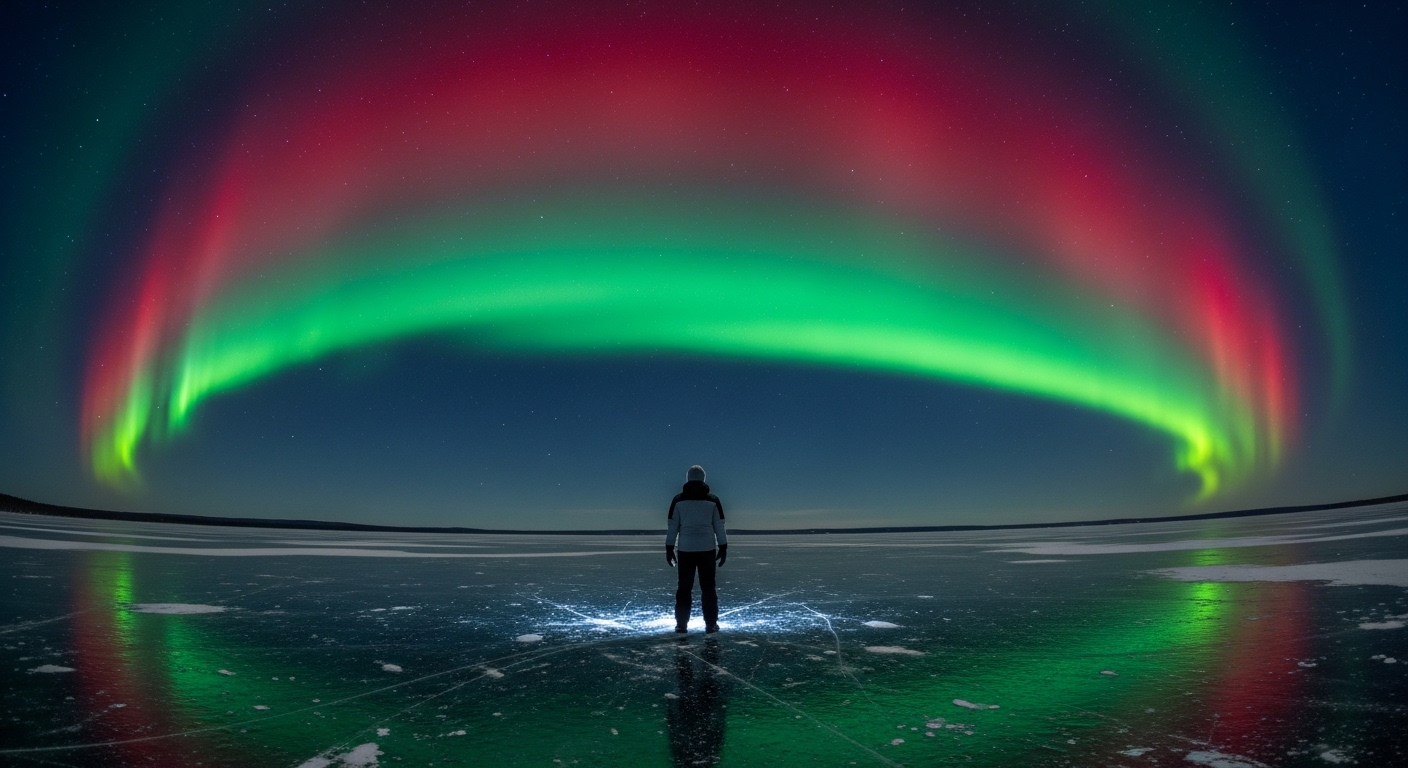
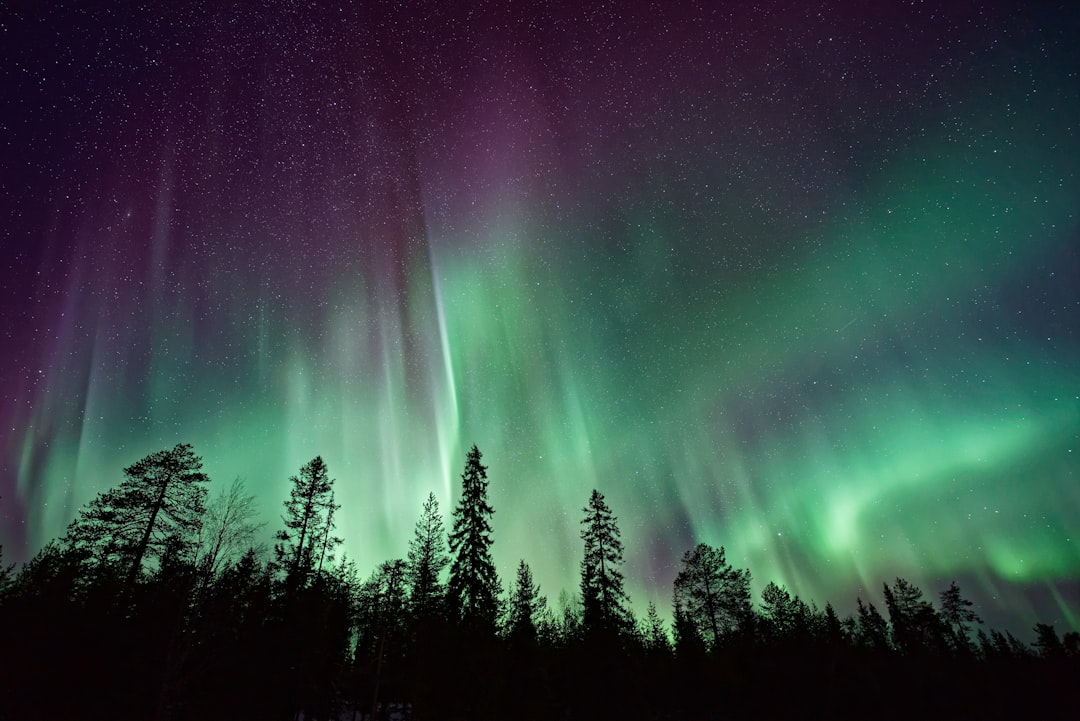
The color of that light depends on which gas is involved and at what altitude the collision happens. Oxygen at around 100 to 150 kilometers altitude produces the most common aurora color: green. Oxygen at higher altitudes — above 200 kilometers — produces red, which is rarer and requires more energetic conditions. Nitrogen tends to produce blue and purple hues, often visible at the lower edges of an aurora display.
Why Red Auroras Are Special
Red auroras are counterintuitive to most people because red typically signals low energy in everyday contexts. But high-altitude red auroras actually require more energetic particles to reach that far up. During the May 2024 storm, the red hues visible at low latitudes were caused by oxygen atoms at extreme altitudes being excited by an unusually intense particle bombardment. People who saw crimson skies over the American Midwest were witnessing something that hadn't happened at that scale in roughly two decades.
Green is the aurora's default setting. Red means something exceptional is happening — the sun sent an unusually powerful punch, and the upper atmosphere is absorbing it at altitudes where oxygen is sparse.
Why the Aurora Moves and Shimmers
The Curtain Effect
One of the most striking things about the aurora is that it doesn't sit still. It ripples, pulses, and folds like a curtain caught in a slow wind. That motion reflects real-time changes in the flow of charged particles and fluctuations in the local magnetic field. The "curtain" appearance comes from the fact that particles travel along magnetic field lines, which are not flat but three-dimensional — so you're seeing a thin sheet of glowing gas edge-on from certain angles.
Rapid pulsing — where the aurora flickers on and off over seconds — is linked to wave activity in the magnetosphere, the region of space dominated by Earth's magnetic field. Researchers are still working out the precise mechanisms that cause different pulsation patterns, which is a reminder that for all its visual familiarity, the aurora is still an active area of scientific research.
The Surprising Connection to Radio Blackouts
The same geomagnetic storms that produce spectacular auroras also disrupt high-frequency radio communications and can interfere with GPS accuracy. During major storms, the ionosphere — the electrically charged layer of the upper atmosphere where auroras occur — becomes turbulent enough to scatter radio signals unpredictably. Pilots and maritime navigators who rely on HF radio during polar routes know this trade-off well: the prettier the sky, the worse the comms.
Frequently Asked Questions
Can you predict when the northern lights will appear?
To a limited degree, yes. Space weather agencies — including NOAA's Space Weather Prediction Center — monitor solar activity and issue aurora forecasts, sometimes with one to three days of advance notice when a CME is detected heading toward Earth. Short-term forecasts using real-time solar wind data from satellites can narrow the window to hours. But the aurora is still difficult to predict with precision because the critical variable — the orientation of the CME's magnetic field — often isn't known until the cloud is nearly at Earth.
Why don't we see auroras at the equator?
Earth's magnetic field lines run roughly parallel to the surface near the equator, which means charged particles streaming in along those lines don't get directed downward into the atmosphere — they get deflected sideways and away. Only near the poles do the field lines curve sharply enough toward Earth's surface to funnel particles in. During extreme geomagnetic storms, the auroral oval expands significantly, which is why mid-latitude sightings happen during major events but equatorial sightings remain essentially unheard of under any conditions.
Is the aurora dangerous to people on the ground?
No — the particles themselves are stopped by the atmosphere long before reaching the surface, and the light produced is harmless. The real-world risks from geomagnetic storms are to technology: power grids, satellites, GPS systems, and radio communications can all be disrupted. A historically large storm in 1989 caused a widespread power outage across Quebec by inducing electrical currents in transmission lines. People on the ground watching the aurora were perfectly safe; the grid was not.
The aurora is ultimately a window into a system most of us never think about: the constant electromagnetic relationship between Earth and the sun. Every second of every day, the solar wind is pressing against Earth's magnetic field, and Earth is pushing back. The northern lights are what that negotiation looks like when the sun decides to press harder than usual. The fact that we can stand in a field in Norway — or, on a rare night, in a backyard in Tennessee — and watch that process unfold in real time is one of those details that makes the universe feel both enormous and oddly accessible.


Comments
Post a Comment