How Food Supply Chains Work: From Farm to Grocery Store
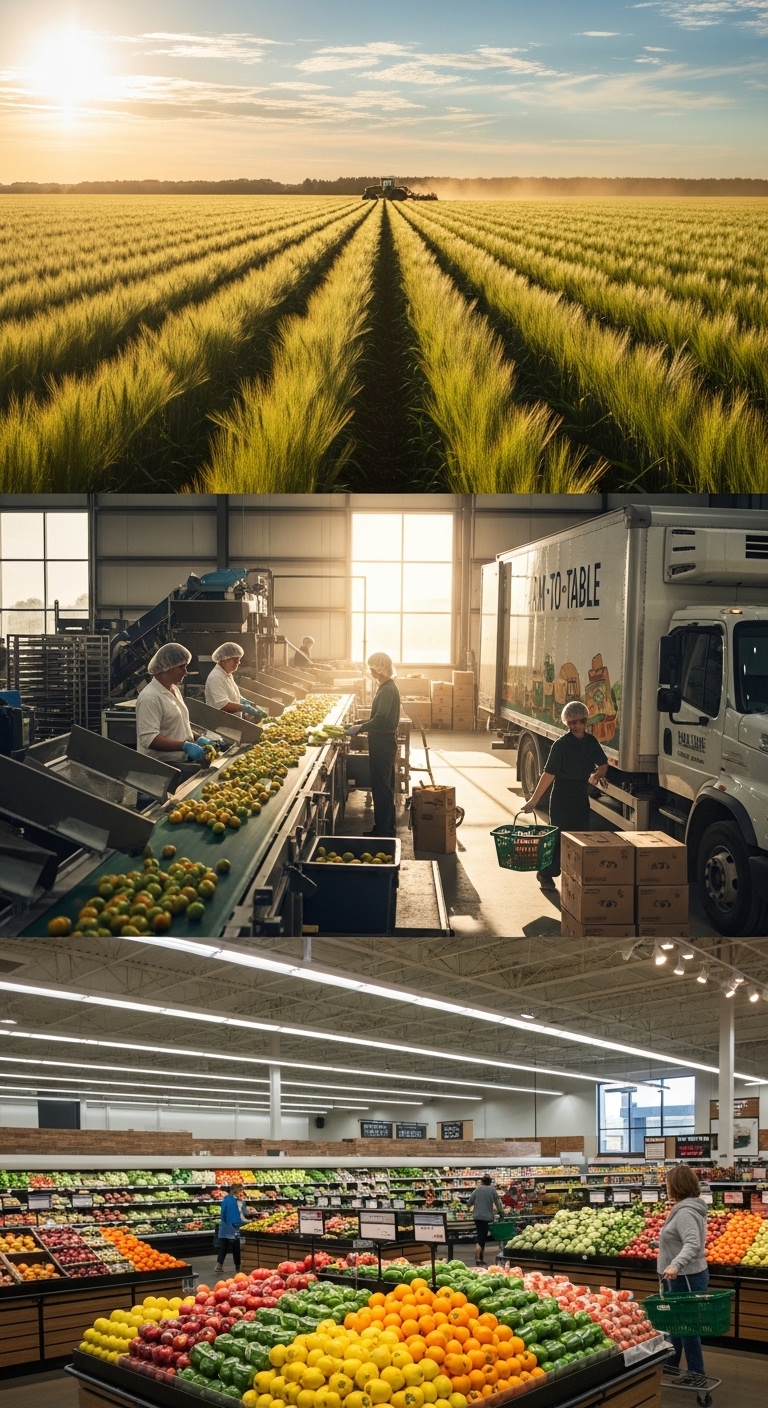
A single strawberry on a grocery store shelf may have passed through seven or more separate hands before you picked it up. Most people think of food supply chains as a simple A-to-B journey, but the reality is a tightly choreographed network of growers, processors, distributors, logistics companies, and retailers — all racing against a biological clock. Understanding how that system works explains a lot about why food costs what it does, why shortages happen, and why your local store sometimes runs out of something as basic as eggs.
What Is a Food Supply Chain? A Plain-Language Definition
The Basic Structure
A food supply chain is the full sequence of steps that moves food from the point of production — a farm, fishery, or ranch — to the point of consumption, which is usually your kitchen. It includes growing, harvesting, processing, packaging, storing, transporting, and retailing. Each step adds cost, time, and the risk of spoilage or disruption.
The chain is rarely a straight line. A bag of frozen peas might be grown in one country, blanched and frozen in a processing facility in another, shipped to a regional distribution center, and then trucked to individual stores. By the time it reaches the freezer aisle, it has traveled thousands of miles and touched dozens of systems.
Who Are the Key Players?
The main actors are farmers and producers, food processors and manufacturers, wholesalers and distributors, logistics and transportation companies, and retailers. There are also supporting players: input suppliers who sell seeds and fertilizer to farmers, food safety inspectors, customs brokers for international shipments, and cold-chain specialists who manage temperature-sensitive goods. Each player operates on thin margins, which is why a disruption at any single node can ripple outward quickly.
How Food Actually Moves From Farm to Processing Plant
Harvesting and First-Mile Logistics
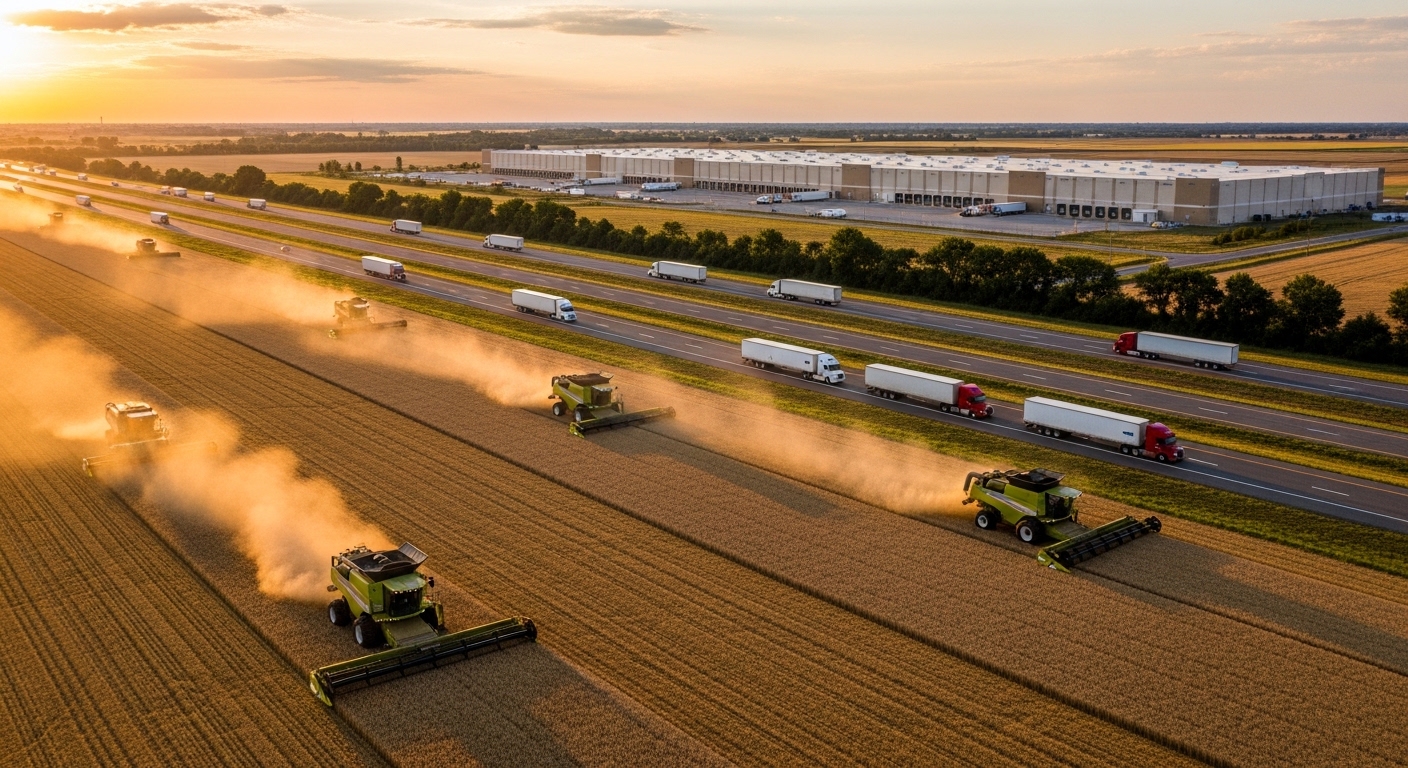
The journey begins at harvest. For large commodity crops like wheat or corn, mechanical harvesters collect the product and it moves almost immediately to grain elevators or storage silos. For more delicate produce — think tomatoes, berries, or leafy greens — hand-picking is still common, and the window between harvest and refrigeration is measured in hours, not days.
This first mile is often the most fragile part of the chain. A breakdown in a refrigerated truck, a sudden heat wave, or a labor shortage at harvest time can destroy an entire season's yield before it ever reaches a processor. In 2021, widespread labor shortages across North American and European agriculture left significant quantities of produce unharvested in fields — a well-documented example of first-mile vulnerability.
Processing and Transformation
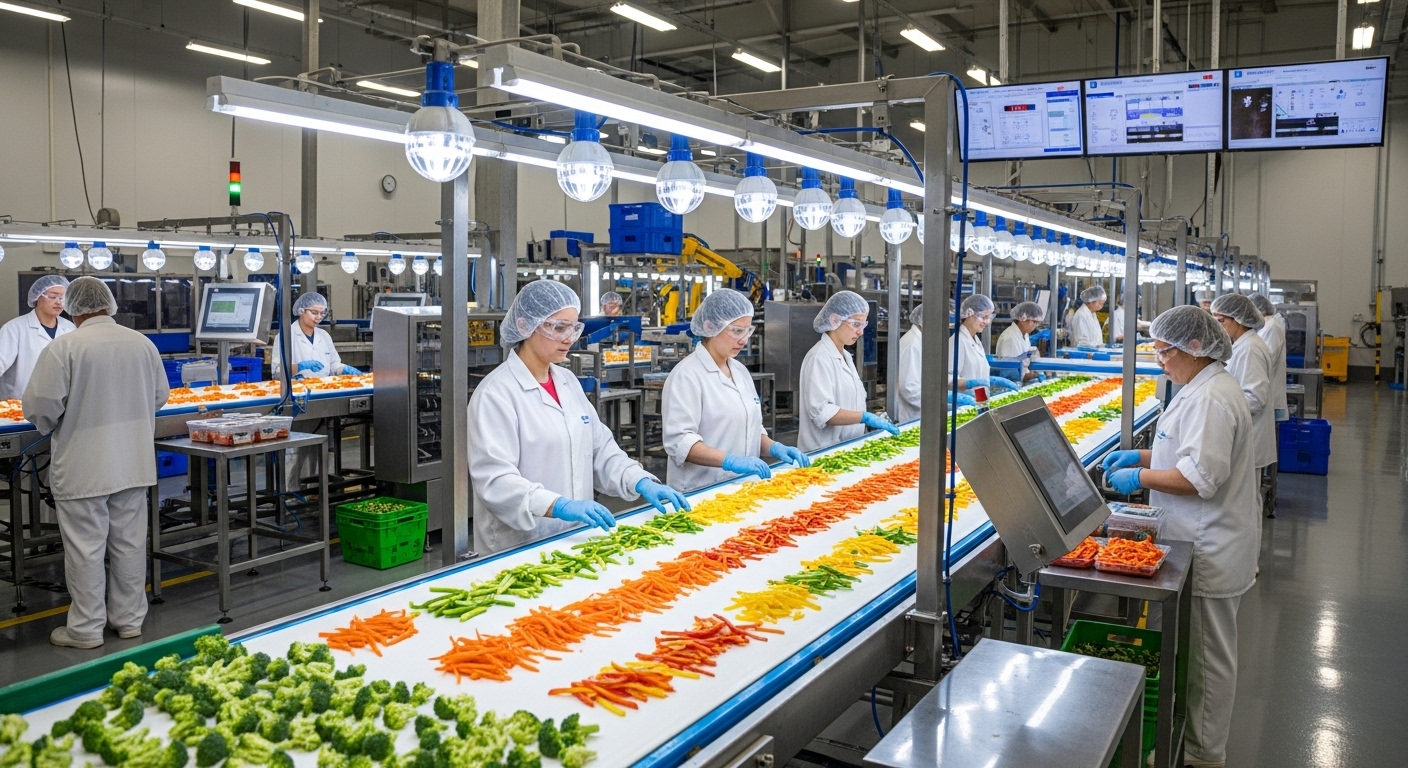
Most food doesn't go directly from farm to store shelf in its raw form. It passes through a processing stage where it is cleaned, sorted, cut, cooked, preserved, or packaged. A tomato might become canned diced tomatoes, pasta sauce, or ketchup — three entirely different supply chains branching from the same raw ingredient.
Processing also extends shelf life dramatically, which is the economic engine that makes global food trade possible. Without pasteurization, canning, freezing, and modified-atmosphere packaging, the geography of food would be radically local. The counterintuitive truth here: heavily processed food is often more reliably available and less wasteful at the system level than fresh food, even if it scores lower on nutrition.
Roughly one-third of all food produced globally is lost or wasted — and the majority of that loss happens before the food ever reaches a consumer, in the farm-to-processor segment of the chain.
How Distribution Centers and Logistics Keep Shelves Stocked
The Role of the Distribution Center
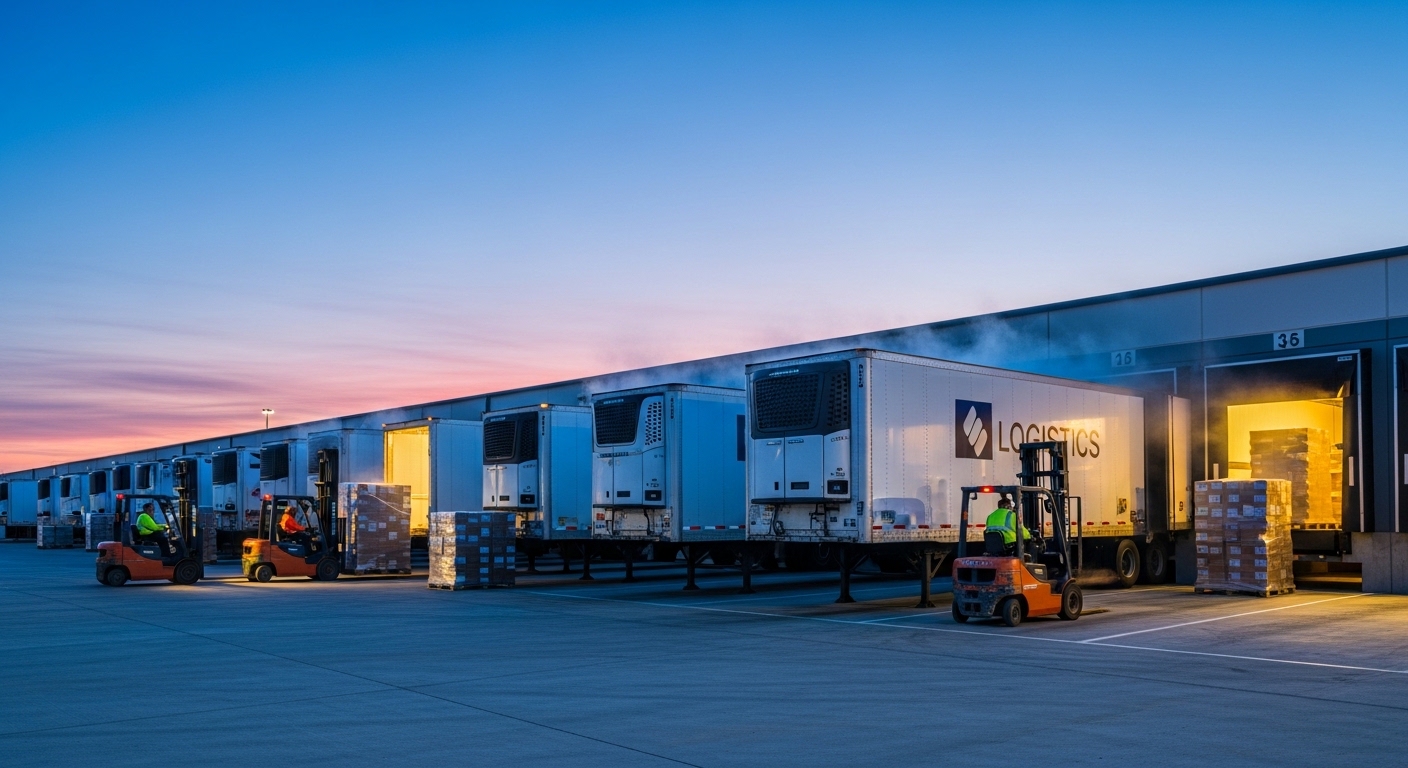
Distribution centers (DCs) are the nerve centers of the food supply chain. A major grocery retailer might operate dozens of regional DCs, each serving hundreds of stores. Products arrive from multiple suppliers, get sorted and consolidated onto store-specific pallets, and are dispatched — often within 24 hours of arrival. The goal is to minimize the time product sits idle while still maintaining enough buffer stock to absorb supply disruptions.
Modern DCs are increasingly automated. Robotic picking systems, conveyor networks, and warehouse management software have replaced much of the manual labor that once defined these facilities. Walmart, for instance, has publicly described its investment in automated distribution infrastructure as a core competitive strategy — faster throughput means fresher product and lower labor costs.
Cold Chain Logistics — The Invisible Infrastructure
For perishables, the cold chain is everything. This refers to the unbroken sequence of refrigerated storage and transport that keeps products within a safe temperature range from processor to store shelf. A single temperature breach — a refrigeration unit failing overnight in a truck — can render an entire load unsellable and create a food safety risk.
Cold chain logistics is one of the most capital-intensive parts of the food system. Refrigerated warehousing, specialized trucks, and continuous temperature monitoring all add cost. This is a major reason why fresh food in remote or low-income areas is more expensive and less available — the infrastructure cost per unit is simply higher when volumes are lower.
How Grocery Retailers Manage the Final Link in the Chain
Inventory Management and Just-in-Time Ordering
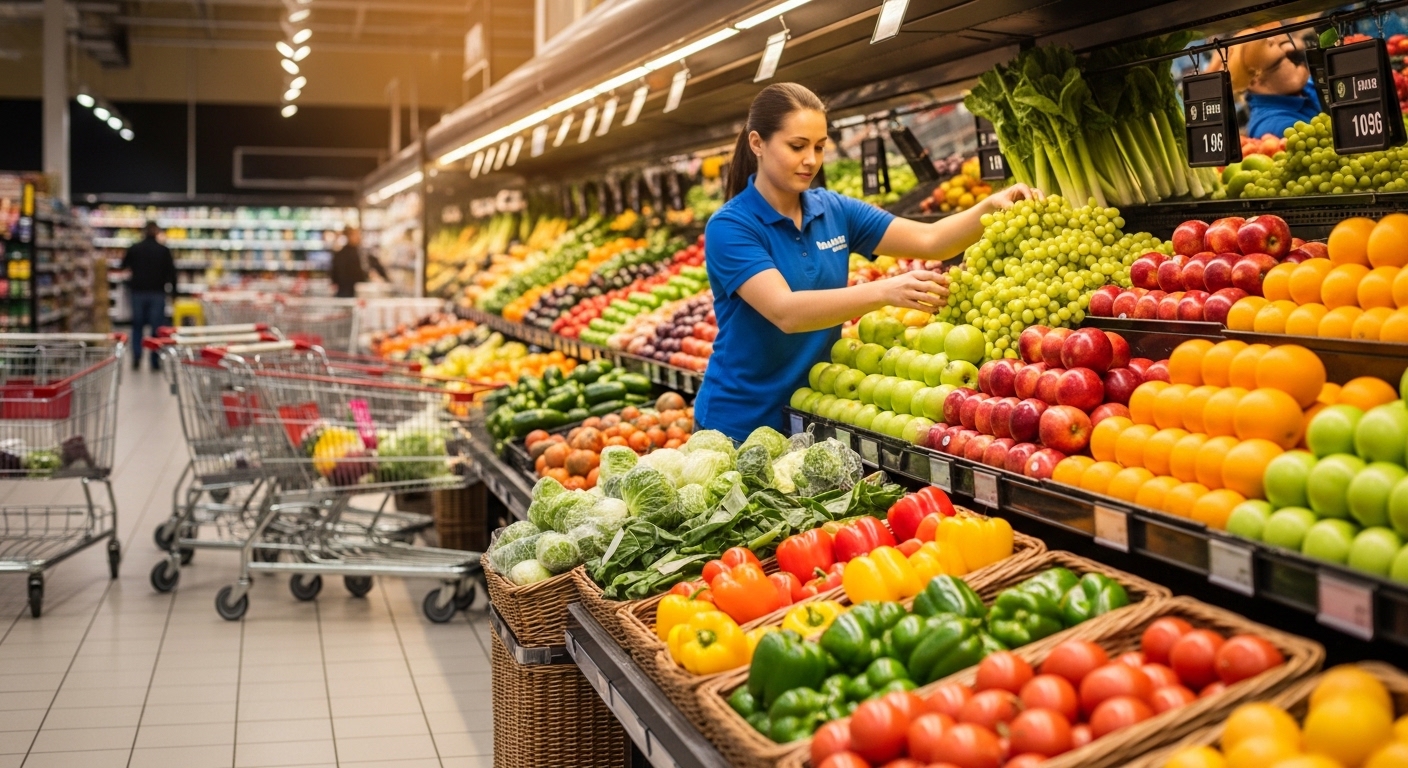
Grocery retailers operate on a just-in-time model for most perishables. Rather than holding large back-stock inventories, they rely on frequent deliveries — sometimes daily for high-turnover items like bread and dairy — to keep shelves full without accumulating waste. This works beautifully under normal conditions and becomes a liability the moment the supply chain hiccups.
The COVID-19 pandemic made this vulnerability visible to millions of people for the first time. When consumer buying patterns shifted suddenly in early 2020, just-in-time systems couldn't adapt fast enough, and empty shelves became a global phenomenon. The underlying supply of food hadn't disappeared — the system for moving it had simply been calibrated for predictable, steady demand.
Private Label vs. National Brand Supply Chains
One detail most shoppers don't think about: the store-brand pasta sauce and the national-brand pasta sauce on the shelf next to it are often made in the same facility. Retailers increasingly source private-label products directly from manufacturers who also produce name brands, cutting out a layer of the supply chain and improving margins. This is why private-label products are almost always cheaper — not because they're lower quality, but because the supply chain is shorter.
A grocery store's profit margin on food is typically in the low single digits — which means supply chain efficiency isn't just an operational concern, it's the difference between a profitable store and a failing one.(Opinion: The just-in-time model that dominates modern food retail is a marvel of efficiency and a genuine systemic risk at the same time. The pandemic exposed what supply chain professionals had warned about for years: lean systems are brittle. A modest increase in buffer stock across the chain would cost money, but it would also make the food system meaningfully more resilient — and that seems like a trade worth making.)
Why Food Supply Chains Break Down — and What's Being Done About It
The Most Common Points of Failure
Supply chain disruptions in food tend to cluster around a few predictable vulnerabilities. Weather events — droughts, floods, late frosts — affect the production end. Labor shortages hit harvesting, processing, and trucking. Port congestion and fuel price spikes affect international and long-haul logistics. Disease outbreaks, both in livestock and among human workers, can shut down processing facilities almost overnight.
A less obvious vulnerability is concentration. The processing of certain foods has become highly consolidated — a handful of large facilities handle a disproportionate share of national output for products like beef, pork, and poultry. When one of those facilities goes offline, the impact is felt across the entire country almost immediately. This was clearly demonstrated during the 2020 meatpacking plant closures in the United States.
Technology and Transparency as Solutions
The food industry has been investing heavily in supply chain visibility tools. Blockchain-based traceability systems, real-time GPS tracking of shipments, and AI-driven demand forecasting are all being deployed at scale by major retailers and food companies. The goal is to know exactly where every product is at every moment and to anticipate disruptions before they become shortages.
Shorter, more regional supply chains are also gaining traction as a resilience strategy. The growth of regional food hubs — facilities that aggregate products from multiple local farms and distribute them to local buyers — represents a structural shift away from the ultra-long supply chains that dominate today. These systems are typically less efficient per unit but far more resilient to global disruptions.
Frequently Asked Questions
How long does it take for food to go from farm to grocery store?
It varies enormously by product. Fresh produce like lettuce or berries might reach a store shelf within two to four days of harvest if sourced regionally. Imported or processed goods can take weeks or even months to travel through the full chain. Frozen and shelf-stable products often have the longest journeys, sometimes crossing multiple continents before reaching a store.
Why do food prices rise when there's a supply chain disruption?
When a disruption reduces supply or increases the cost of moving food — through higher fuel prices, labor shortages, or transportation bottlenecks — those extra costs get passed along at each stage of the chain. Because grocery retailers operate on thin margins, even a modest increase in input costs can translate into noticeable price increases at the shelf. Demand doesn't drop as quickly as supply, which pushes prices up further.
What does "farm to table" actually mean in supply chain terms?
"Farm to table" typically refers to food sourced directly from a producer with minimal intermediary steps — often a local farm selling to a restaurant or farmers market without passing through a processor or large distributor. In supply chain terms, it means a shorter, more transparent chain with fewer handoffs. It generally results in fresher product but higher per-unit cost, since the efficiencies of scale that large distributors provide are absent.
The food supply chain is one of the most complex logistical systems humans have ever built — and most of it runs invisibly, humming along in the background until something goes wrong. The next time a shelf is bare or a price jumps unexpectedly, you'll know it's not random: somewhere in that long chain from field to store, a link stretched or snapped. Understanding the system doesn't just satisfy curiosity — it helps you make smarter choices about where you shop, what you buy, and why food security deserves more public attention than it usually gets.


Comments
Post a Comment