What Are XR Smart Glasses? The Future of AR and VR Explained
A pair of glasses that overlays turn-by-turn directions onto the street in front of you, translates a foreign-language menu in real time, or lets a remote surgeon guide your hands through a procedure — none of this is science fiction anymore. XR smart glasses are the hardware category quietly collapsing the boundary between the physical world and digital information, and the pace of development has accelerated sharply in the last few years. The term gets used loosely, though, and that looseness causes real confusion about what these devices actually are, what they can do today, and where the hard limits still sit.

What XR Smart Glasses Actually Are — A Plain-Language Definition
Breaking Down the Alphabet Soup: XR, AR, VR, MR
XR stands for "extended reality" — it's an umbrella term that covers augmented reality (AR), virtual reality (VR), and mixed reality (MR). Smart glasses sit at the AR and MR end of that spectrum. Unlike a VR headset that replaces your entire field of view with a synthetic environment, smart glasses layer digital content on top of the real world you're already looking at. The distinction matters practically: you can walk down a hallway, hold a conversation, and still see the digital overlay at the same time.
Mixed reality goes one step further than basic AR. In MR, digital objects are spatially anchored — a virtual coffee cup placed on your actual desk stays there as you move around it, rather than floating in a fixed screen position. This spatial anchoring requires the glasses to continuously map the environment using onboard sensors, which is one reason these devices are so computationally demanding.
What Makes Them "Smart" vs. Just Wearable Displays
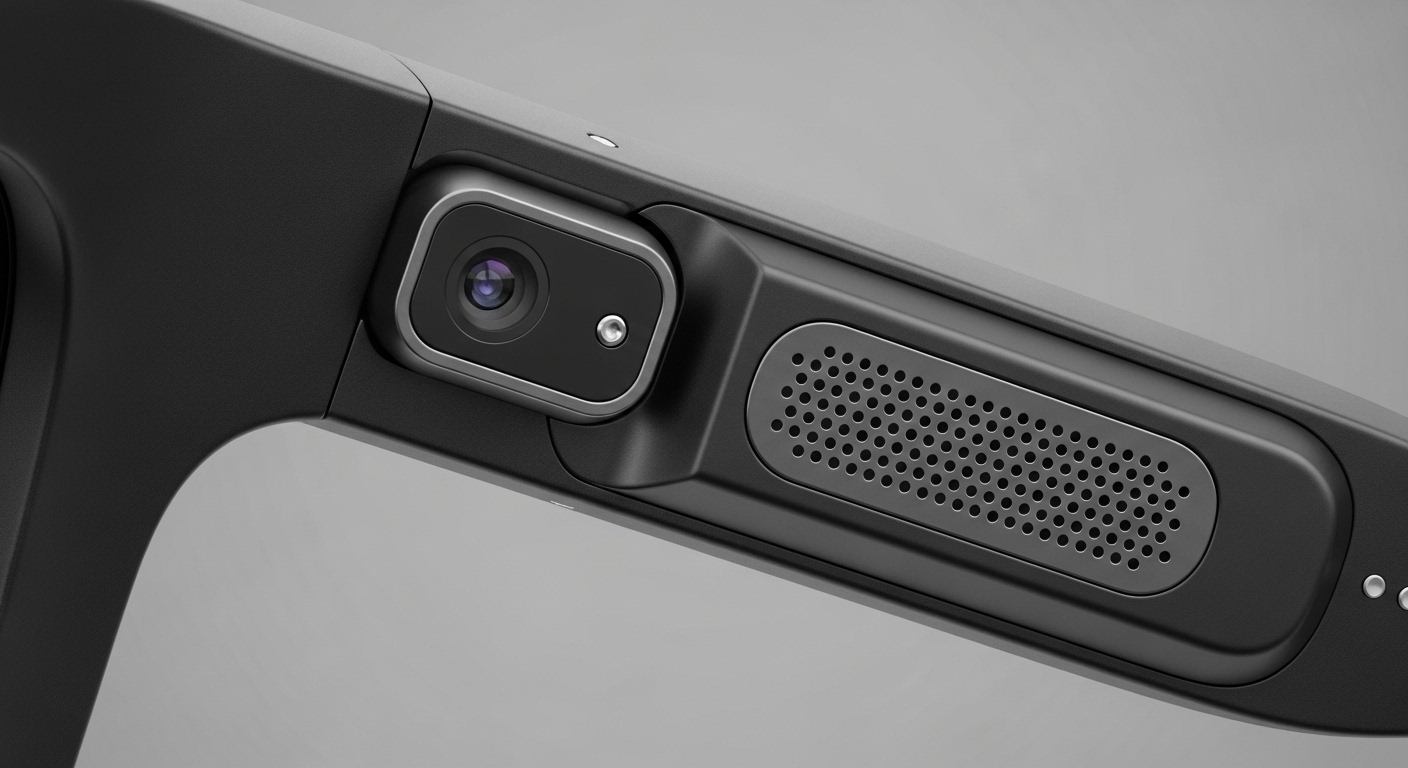
A simple heads-up display — like the kind fighter pilots have used for decades — projects static or semi-static information onto a lens. Smart glasses do something fundamentally different: they process the world around you in real time. Onboard cameras, depth sensors, microphones, and accelerometers feed data into processors that interpret your environment and respond to it. The result is a device that can recognize objects, understand voice commands, track your gaze, and adapt its display based on context.
The surprising part? The most commercially successful XR glasses right now are not the most technically advanced ones. Devices with minimal displays but solid audio and cameras — essentially stylish frames with a connected assistant — have outsold full holographic headsets by a wide margin. The market rewarded comfort and battery life before it rewarded raw capability.
How XR Smart Glasses Work — The Technology Inside the Frame
Optics: The Hardest Engineering Problem in the Category
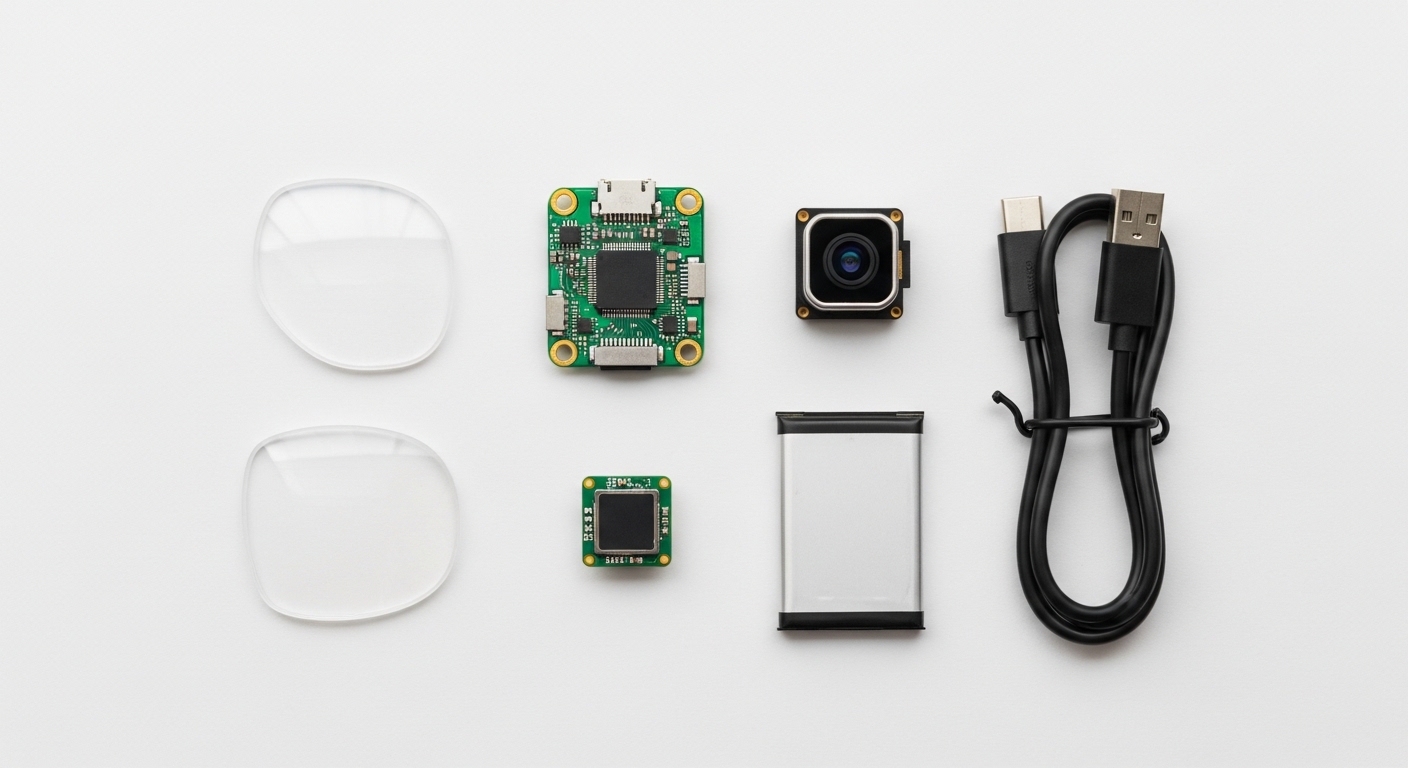
Getting a bright, sharp digital image to appear in front of your eye without blocking your natural vision is genuinely one of the hardest problems in consumer optics. The dominant approaches right now are waveguide displays and birdbath optics. Waveguide displays use a thin piece of glass etched with microscopic gratings that redirect light from a tiny projector into your eye — they're thin enough to look like normal lenses, but manufacturing them at scale with consistent quality is notoriously difficult and expensive.
Birdbath optics use a partially reflective curved mirror to bounce an image from a small display into the eye. They produce brighter, higher-contrast images than waveguides, but the geometry makes the lens noticeably thicker — which is why some enterprise-focused devices look bulkier than consumer products. There's no free lunch in optics: brightness, field of view, lens thickness, and power consumption all trade off against each other.
The waveguide lens in a pair of AR glasses can contain more than a thousand microscopic grating structures per millimeter — and a single defect in that pattern can ruin the entire optical path.
Spatial Mapping and the Role of SLAM
Most capable XR glasses use a technique called Simultaneous Localization and Mapping, or SLAM. The device builds a 3D map of the room while simultaneously tracking its own position within that map — in real time, at low latency. This is what allows a digital object to appear anchored to a physical surface rather than drifting around your field of view. SLAM was originally developed for robotics, and the fact that it now runs on a device you wear on your face is a genuine engineering achievement.
Latency is the enemy here. If the digital overlay lags even 20 milliseconds behind your head movement, the brain notices the mismatch and many users experience discomfort or nausea. Keeping motion-to-photon latency below that threshold while running spatial mapping, rendering, and wireless communication simultaneously is what drives the thermal and battery constraints that still limit how long you can wear these devices.

Where XR Smart Glasses Are Already Being Used
Industrial and Enterprise Applications Leading the Way
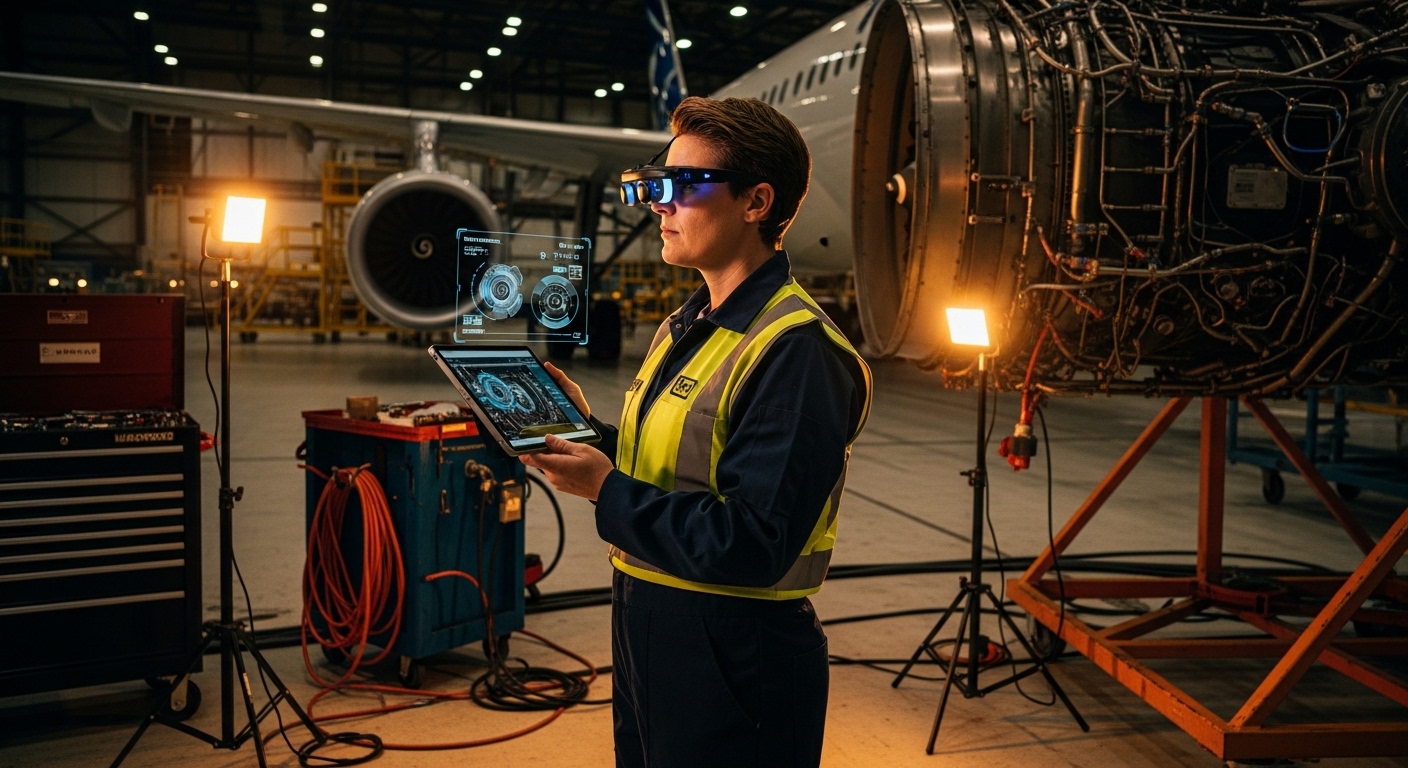
The most mature deployments of XR smart glasses are not in consumer living rooms — they're on factory floors, in aircraft hangars, and in hospital operating suites. Boeing has publicly documented using AR glasses to guide technicians through wiring harness assembly, a task that involves hundreds of individual wire connections in a specific sequence. Workers following AR-guided instructions made significantly fewer errors than those using traditional paper diagrams, according to the company's own reported findings.
Field service technicians at companies across the energy and manufacturing sectors use smart glasses to pull up equipment schematics hands-free while physically working on machinery. The value proposition is simple: your hands stay on the equipment, not on a tablet. Remote expert assistance — where a specialist in another city sees exactly what the on-site technician sees and can annotate the view in real time — has become one of the most compelling enterprise use cases.
Consumer Products: Where Things Get Interesting
On the consumer side, the category has split into two distinct tracks. One track is full mixed-reality headsets — powerful, expensive, and still primarily used for specific tasks rather than all-day wear. The other track is lightweight "audio-first" glasses that add a camera and a voice assistant to what looks like a normal pair of frames. The second track has found a real audience, particularly for navigation, quick information lookup, and hands-free photography.
Anyone who has tried to check a map while carrying groceries understands the appeal immediately. The friction of pulling out a phone, unlocking it, and opening an app is small in isolation but adds up across a day. Glasses that respond to a voice command and speak directions into your ear solve a genuinely annoying everyday problem without requiring you to stare at a holographic display.
Enterprise adoption of XR glasses has consistently outpaced consumer adoption — not because the technology is better suited to work, but because businesses can absorb the cost and tolerate the awkwardness that consumers won't.
Why XR Smart Glasses Matter — and What's Still Missing
The Platform Shift Argument
The reason major technology companies have invested heavily in this category is not just about selling hardware. Smart glasses represent a potential platform shift — the same kind of shift that moved computing from desktops to laptops to smartphones. Each transition created entirely new categories of software, services, and business models. If glasses become the primary interface for digital information, the company that controls the operating system and app ecosystem for those glasses controls something enormously valuable.
(Opinion: The platform argument is compelling, but it has been compelling for over a decade without fully materializing. The graveyard of prematurely launched smart glasses products is a useful reminder that predicting the timing of platform shifts is much harder than predicting their eventual direction.)
The Gaps That Still Hold the Category Back
Battery life remains the most stubborn constraint. Running spatial mapping, a display, wireless connectivity, and onboard AI processing simultaneously drains batteries fast — most capable devices today offer between one and three hours of active use. That's fine for a focused work task; it's not enough for all-day wear as a smartphone replacement.
Privacy is the other unresolved tension. A device with outward-facing cameras that you wear on your face in public raises questions that society hasn't fully worked through yet. Early attempts to launch camera-equipped glasses in public spaces generated significant backlash, and the norms around what's acceptable to record, store, and share from a first-person perspective are still being negotiated — legally and socially. The technology is ahead of the social contract, which is an uncomfortable place to be.
Frequently Asked Questions
What is the difference between AR glasses and VR headsets?
AR glasses overlay digital content onto your real-world view, so you can still see and interact with your physical surroundings. VR headsets replace your entire field of vision with a synthetic environment, cutting you off from the physical world. Smart glasses are almost always AR or MR devices — they're designed for use while you're moving through the real world, not sitting in a chair in a simulated one.
Do XR smart glasses work without a smartphone?
It depends on the device. Some higher-end XR glasses have onboard processors powerful enough to run core functions independently. Many consumer-focused glasses still rely on a paired smartphone for processing-heavy tasks like navigation, AI queries, and app logic. The trend is toward more onboard processing as chip efficiency improves, but full standalone operation at high capability levels is still a premium feature.
Are XR smart glasses safe to wear while driving?
This is an area of active legal and safety debate. Most manufacturers explicitly advise against using AR overlays while driving, and several jurisdictions have moved to classify heads-up wearable displays under existing distracted-driving regulations. Research on driver distraction from AR displays is still limited, but the general consensus among safety researchers is that any visual overlay competes for attentional resources that driving requires. Audio-only modes are generally considered lower risk, though not risk-free.
The most telling sign of where this category is heading may not be the flashiest headset announced at a tech conference — it's the fact that major eyewear manufacturers and semiconductor companies are now treating XR optics as a core business line, not a side experiment. When the people who make the lenses and the chips both decide this is where the money goes, the timeline tends to compress faster than anyone predicted. The question of whether smart glasses replace the smartphone is probably the wrong frame. The more interesting question is what new behaviors become possible when the interface disappears into something you're already wearing.



Comments
Post a Comment