The High Price of Intelligence: Uncovering the Hidden Costs of AI
Running a single query through a large language model can consume roughly ten times the electricity of a standard web search. That gap — invisible to the person typing the prompt — is where the real cost of AI begins. Businesses racing to integrate AI tools into their operations are discovering that the sticker price of a software subscription is often the smallest line item on the final bill.

Breaking Down the Real Costs of AI Adoption
Licensing and API Fees Are Just the Beginning
Most businesses start their AI budget conversation with licensing costs — a monthly fee per seat, or a per-token charge for API access. These numbers are easy to find and easy to forecast. What catches finance teams off guard is how quickly usage scales once employees actually start relying on the tools.
A mid-sized marketing agency might sign up for an AI writing assistant at a flat monthly rate, then discover that their team's actual usage triggers overage charges that double the original invoice. API pricing models, in particular, reward low-volume experimentation and quietly punish production-level deployment. The jump from prototype to real workload is where the budget math breaks down.
There's also the question of model selection. Using a frontier model — the most capable, most expensive option — for every task is like hiring a specialist surgeon to take your blood pressure. Many organizations are starting to learn that routing simpler tasks to smaller, cheaper models can cut inference costs dramatically, but building that routing logic requires engineering time that itself has a price tag.
Infrastructure and Compute: The Bill Behind the Bill
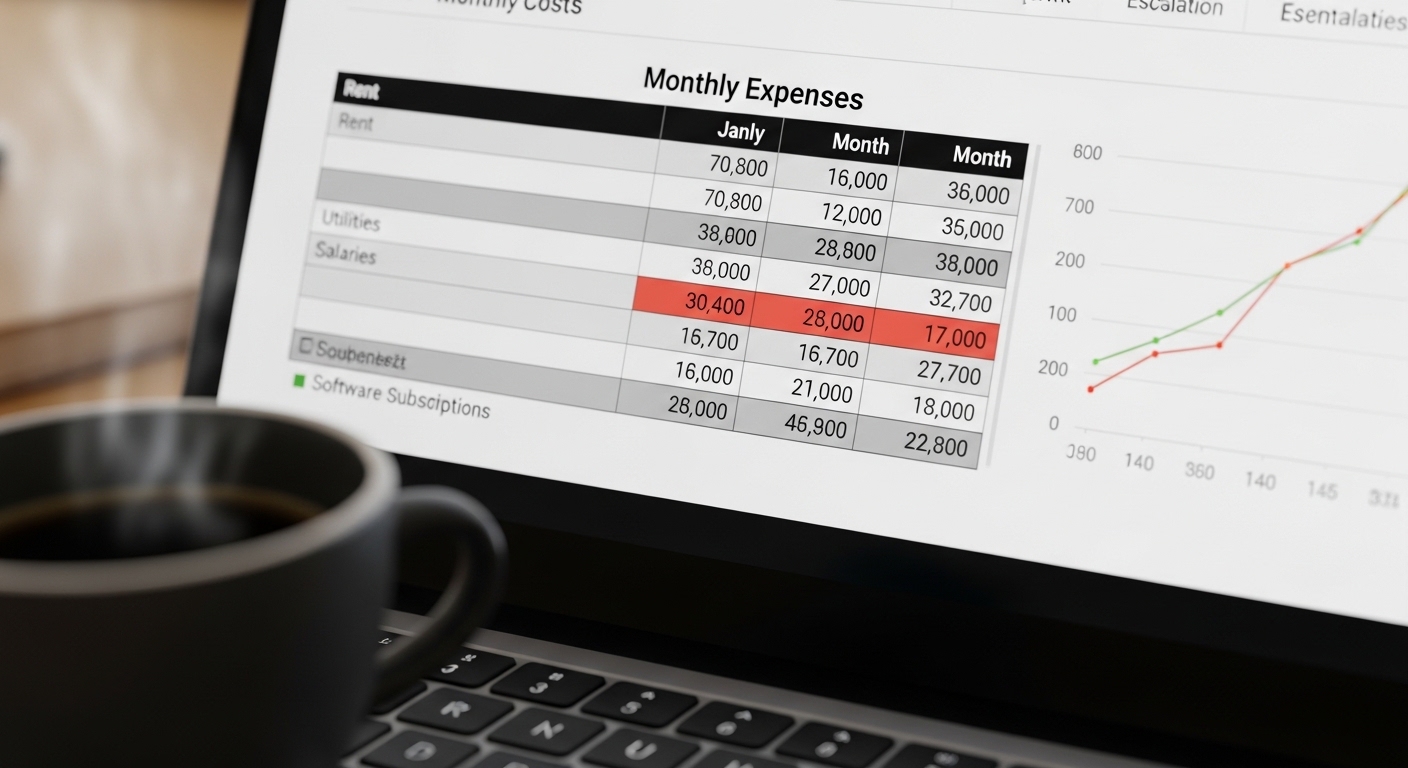
Companies building proprietary AI models — rather than renting access to someone else's — face a different cost structure entirely. Training a large model from scratch requires significant GPU compute time, and cloud GPU pricing can run into hundreds of thousands of dollars for a single training run. Even fine-tuning an existing open-source model on company-specific data requires meaningful compute spend.
Then there's inference — the ongoing cost of actually running the model every time a user makes a request. Training is a one-time expense; inference is a recurring one that scales with adoption. For high-traffic applications, inference costs can dwarf the original training budget within months.
Training a model is the capital expense. Inference is the operating expense that never stops growing — and most cost projections only account for the first one.
Hidden Costs and What People Miss
Data Preparation: The Unglamorous Budget Killer
Ask any data scientist what the most time-consuming part of an AI project is, and almost none of them will say "building the model." It's the data — cleaning it, labeling it, structuring it, and making sure it's actually representative of the real-world problem you're trying to solve. Estimates vary, but data preparation routinely accounts for the majority of total project time on applied AI work.
For a concrete example: imagine a hospital system trying to build an AI tool to flag unusual billing patterns. The model itself might take weeks to train. But assembling a clean, labeled dataset of historical billing records — scrubbing out errors, resolving inconsistencies across different legacy systems, getting legal sign-off on data usage — can take months and require a dedicated team. That labor cost rarely appears in the initial AI budget proposal.
Human Oversight, Retraining, and Drift
AI models don't stay accurate forever. The real world changes — customer behavior shifts, regulations update, language evolves — and a model trained on last year's data will quietly degrade in performance over time. This phenomenon, called model drift, is well-documented but chronically underbudgeted.
Catching drift requires monitoring infrastructure and human reviewers who can spot when outputs start going sideways. Fixing it requires retraining or fine-tuning cycles, which bring back compute costs. For regulated industries like finance or healthcare, there's an additional layer: compliance teams need to audit model behavior on an ongoing basis, which is a specialized skill set that commands a premium salary.
A model that isn't monitored is a liability, not an asset — and the cost of monitoring is rarely in the original pitch deck.

Talent: The Scarcest Resource in the Equation
Qualified machine learning engineers, AI researchers, and data scientists remain expensive to hire and difficult to retain. The supply of people who can build, evaluate, and maintain production AI systems has not kept pace with demand. Salary benchmarks for senior ML engineers at established tech companies have been consistently high, and that pressure has spread to industries that never previously competed for this talent.
There's a subtler talent cost that gets even less attention: training non-technical staff to work effectively alongside AI tools. Prompt engineering, output evaluation, and knowing when not to trust an AI response are skills that require deliberate investment. Organizations that skip this step often find that their AI adoption produces confident-sounding wrong answers that nobody catches.

How to Decide — A Simple Framework for AI Cost Planning
Total Cost of Ownership, Not Just Subscription Price
The most useful mental shift for any organization evaluating AI spend is moving from "what does this tool cost?" to "what does this capability cost to operate at scale?" That means accounting for compute, data work, integration engineering, ongoing monitoring, compliance overhead, and staff training — not just the vendor invoice.
A practical starting point: build a cost model with three scenarios — low adoption, expected adoption, and high adoption. Most organizations only model the middle case, which means they're unprepared when a tool succeeds and usage spikes. Paradoxically, a successful AI rollout can create a budget crisis if the cost-per-query math wasn't stress-tested at volume.
Build vs. Buy vs. Rent
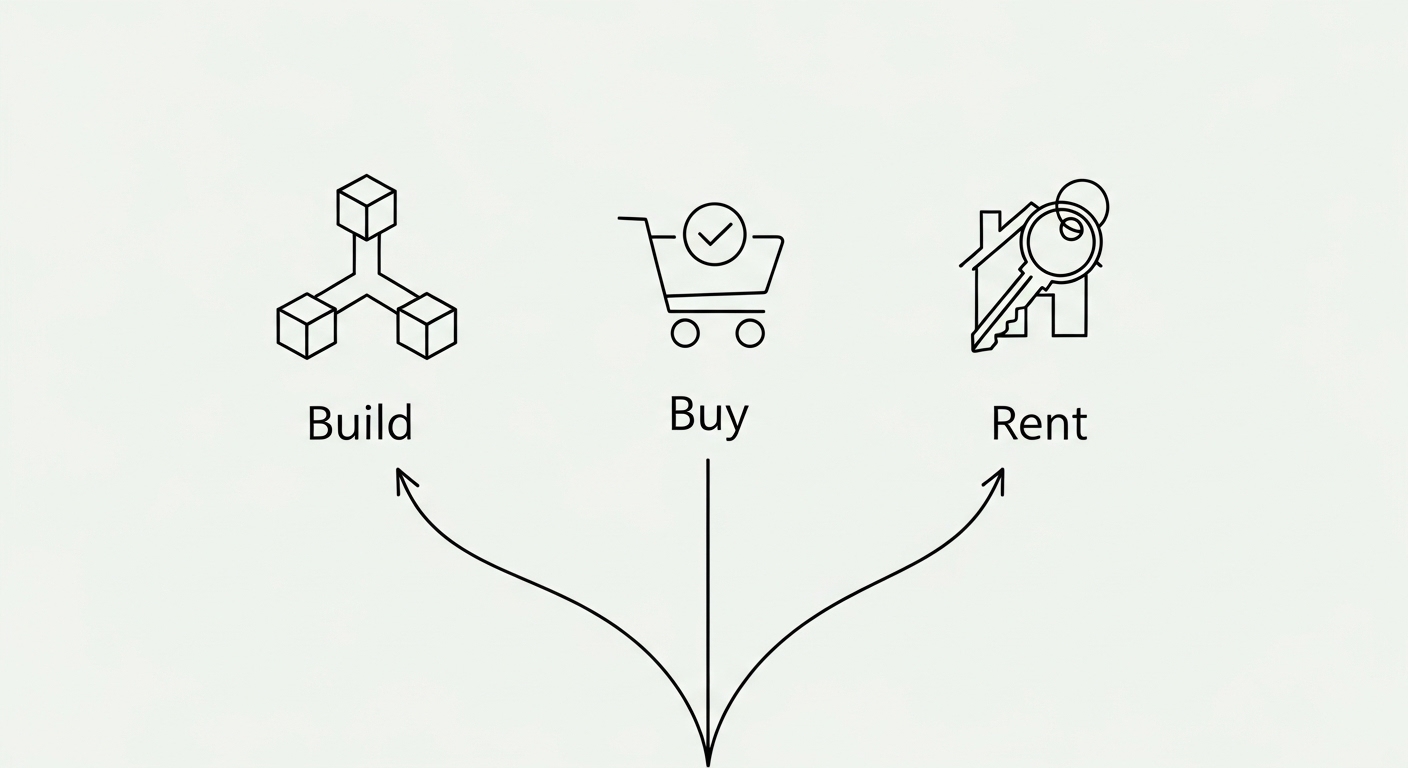
The classic build-vs-buy question has a third option in AI: renting inference from a foundation model provider via API. Each path has a different cost profile. Building gives you control and potentially lower long-run costs, but requires significant upfront investment and ongoing talent. Buying a packaged solution is faster but often inflexible. Renting via API is the lowest barrier to entry but can become expensive at scale and creates dependency on a vendor's pricing decisions.
The right answer depends heavily on how central AI is to your core business. A company whose competitive advantage is the AI model itself should probably build. A company using AI to automate a back-office function probably shouldn't.
(Opinion: The vendor-lock-in risk of API-dependent AI strategies is being systematically underweighted right now. When a major provider changes its pricing model or deprecates an API version — and they will — organizations with no internal capability will have very little negotiating leverage.)
Real-World Examples and Rules of Thumb for AI Budgeting
The 10x Rule and Other Rough Guides
One rule of thumb that has circulated among AI practitioners: budget roughly ten times your initial compute estimate for a production deployment. This accounts for the gap between a working prototype and a system that handles real users, edge cases, monitoring, redundancy, and iteration. It sounds extreme until you've watched a proof-of-concept balloon into a full engineering project.
Another useful benchmark: data preparation and integration work typically costs more than the model development itself. If your AI vendor or internal team is quoting you a project budget where the model training is the biggest line item, that's a red flag — it usually means the data work hasn't been fully scoped yet.
The Energy Cost Nobody Talks About
Here's the counterintuitive part that most cost analyses skip entirely: the environmental and energy costs of AI are beginning to translate into real financial exposure. Data centers running AI workloads consume substantial electricity, and as energy prices fluctuate and carbon pricing expands in various jurisdictions, this operational cost is becoming harder to ignore. Some large cloud providers have started passing energy cost variability through to customers in ways that weren't common a few years ago.
For companies with public sustainability commitments, there's also a reputational accounting to do. Running energy-intensive AI workloads while simultaneously publishing net-zero targets creates a tension that investors and regulators are increasingly inclined to scrutinize.

Frequently Asked Questions
What is the biggest hidden cost of AI that businesses overlook?
Data preparation is consistently the most underestimated cost. Cleaning, labeling, and structuring data for AI training often takes more time and money than building the model itself. Most project proposals focus on compute and licensing costs, leaving data work vaguely scoped until it becomes a budget problem mid-project.
Is it cheaper to build your own AI model or use an API?
At low to moderate usage volumes, renting via API is almost always cheaper upfront. At high volumes, the math can flip — but only if you have the engineering talent to build and maintain a proprietary system. The real risk with APIs is vendor dependency: pricing changes and deprecations are outside your control, and switching costs can be substantial.
Do AI tools actually save money, or do they just move costs around?
Both, depending on the use case. AI genuinely reduces labor costs for well-defined, repetitive tasks — document processing, certain customer service functions, code review assistance. For complex or judgment-heavy work, the savings are less clear, and the cost of human oversight to catch errors can offset the efficiency gains. The honest answer is that ROI varies enormously by application, and many organizations are still in the process of finding out which category their use cases fall into.
The organizations that will get the most value from AI aren't necessarily the ones that spend the most — they're the ones that go in with a clear-eyed accounting of what production AI actually costs to run, maintain, and govern. The gap between a compelling demo and a sustainable deployment is where most AI budgets quietly collapse. And the companies that learn that lesson from a spreadsheet rather than a surprise invoice will be the ones still using these tools five years from now.


Comments
Post a Comment