How Manual Transmissions Work: The Mechanics Explained
Most drivers who've never learned to drive a stick shift assume it's some kind of dark art — a mysterious dance of feet and hands that only gearheads truly understand. But here's the thing: once you see what's actually happening inside that gearbox, it clicks into place with surprising elegance. Manual transmissions are one of the most satisfying mechanical systems ever put into a car, and understanding how they work makes you appreciate every gear change in a completely new way.
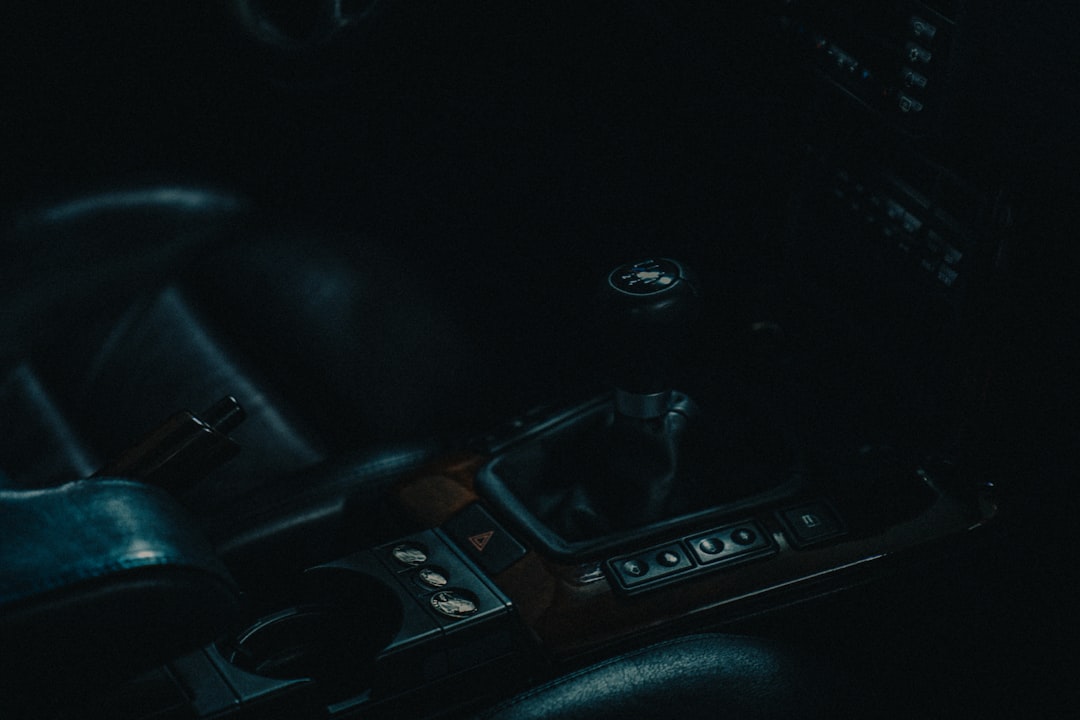
What a Manual Transmission Actually Is 🔧
A manual transmission — also called a standard transmission or a gearbox — is a mechanical device that transfers power from the engine to the wheels, letting the driver choose which gear ratio to use at any given moment. That might sound dry, but the key word is ratio. An engine produces power within a relatively narrow band of speeds (measured in RPM, or revolutions per minute). A transmission's job is to match that power band to whatever the car needs to do — whether that's crawling out of a parking spot or cruising at highway speed.
Think of it like the gears on a bicycle. In a low gear, you pedal fast but move slowly — great for climbing hills. In a high gear, one pedal stroke moves you much farther — perfect for flat, open road. A car's gearbox works on exactly the same principle, just with a lot more metal and a lot more force involved.
The counterintuitive part? First gear isn't the "weakest" gear — it's actually where the engine produces the most torque multiplication at the wheels. You're trading speed for force, which is exactly what you need to get a heavy vehicle moving from a dead stop.
How It Works — The Mechanism Step by Step ⚙️
There are three main players in a manual transmission system: the clutch, the gearbox itself, and the driveshaft. Here's how they work together.
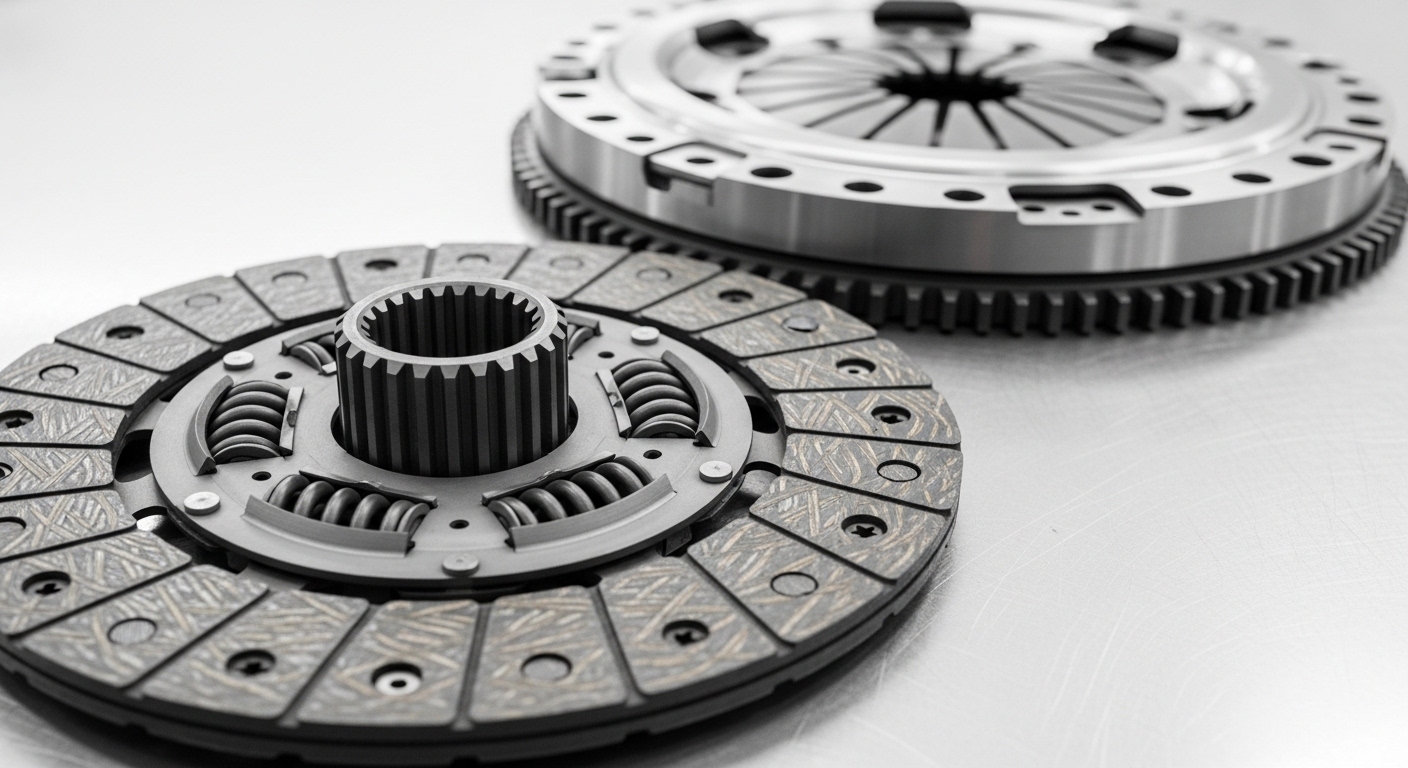
The Clutch: The clutch is a friction disc sandwiched between the engine's flywheel and the transmission's input shaft. When you press the clutch pedal, you're pulling these two surfaces apart — disconnecting the engine from the gearbox so you can change gears without grinding metal against spinning metal. When you release the pedal, the friction surfaces re-engage, and power flows again. The art of smooth driving is in how gradually you let that pedal out.
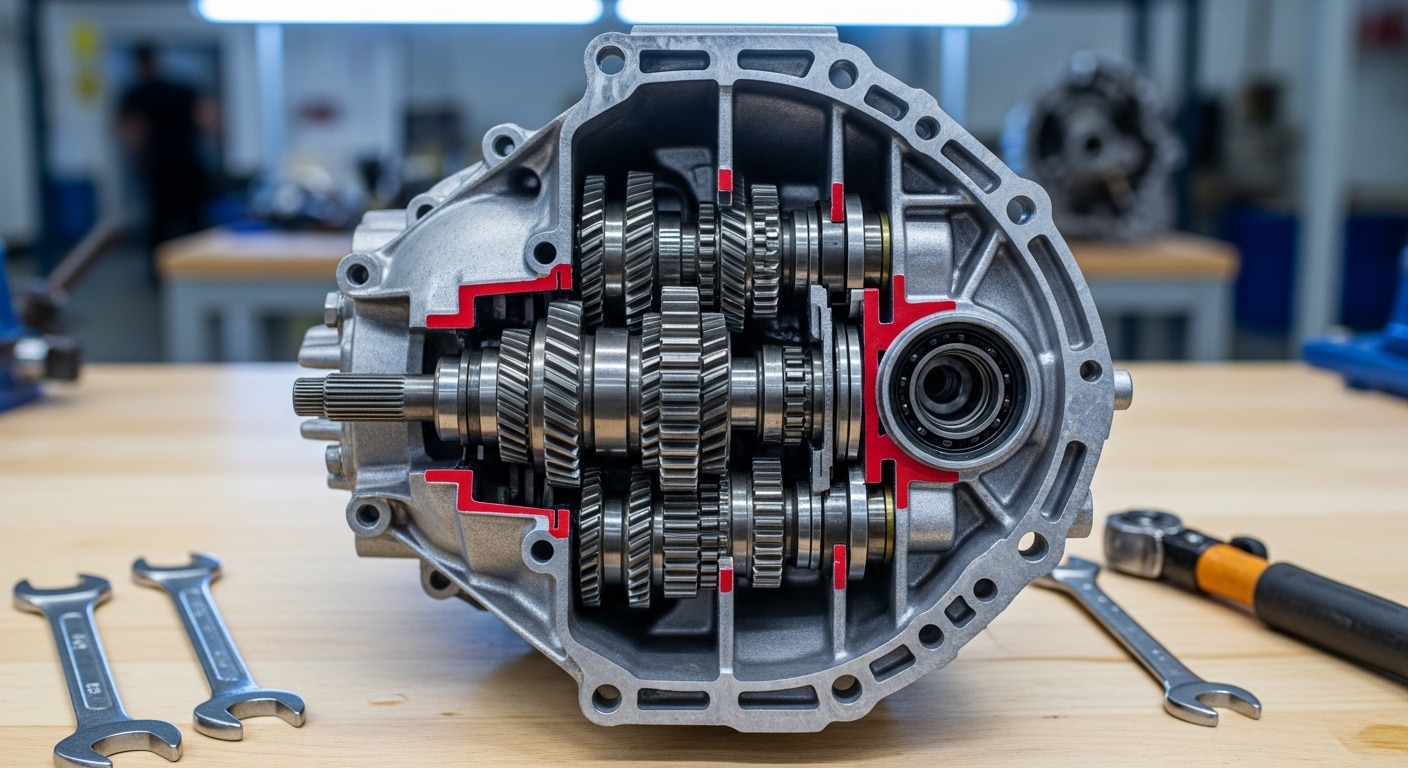
Inside the Gearbox: Most manual gearboxes contain two main shafts running in parallel — an input shaft (connected to the clutch) and an output shaft (connected to the driveshaft). Attached to these shafts are sets of gears of different sizes. When you move the gear lever, you're sliding a device called a synchronizer (or synchro) along the output shaft to lock a specific gear pair into place. The synchronizer's job is to match the spinning speeds of the two gear surfaces before they engage — which is why modern gearboxes don't grind the way old "crash gearboxes" did before synchronizers were widely adopted.
Gear Ratios in Practice: In first gear, a small gear on the output shaft meshes with a large gear on the input shaft — so the output shaft spins much slower than the engine, but with much more torque. As you move up through the gears, the ratio gets progressively closer to 1:1. Many modern manual gearboxes include an overdrive gear (often fifth or sixth) where the output shaft actually spins faster than the engine input — reducing engine RPM at highway speeds and improving fuel efficiency.
A well-known real-world example of this engineering in action: the classic Volkswagen Golf GTI, across multiple generations, has been celebrated by driving enthusiasts specifically for the precise, mechanical feel of its gearbox — the short throws and well-defined gate are a direct result of careful synchronizer and linkage design.
Real-World Examples — Where You See This Every Day 🚗
Manual transmissions aren't just a car thing. The same basic principles show up in motorcycles, trucks, tractors, and even some industrial machinery. On a motorcycle, the gearbox works identically in principle — you use a hand lever for the clutch and a foot lever to select gears. The ratios are tuned differently because motorcycles rev much higher than car engines, but the synchronizer-and-shaft arrangement is essentially the same.
In heavy trucks and semi-trailers, manual gearboxes get significantly more complex. A typical 18-wheeler uses what's called a range-splitter gearbox — essentially two gearboxes stacked together, giving the driver access to 10, 13, or even 18 forward gears. Professional truck drivers learn to "float" gears, meaning they change gears without using the clutch at all by precisely matching engine RPM to road speed — a skill that demonstrates just how mechanical and learnable this system really is.
Closer to home, if you've ever driven a go-kart, you've experienced a simplified version of the same concept — a direct drive with a fixed gear ratio. The reason go-karts don't need a gearbox is that their small engines produce usable power across a wide RPM range. Car engines are less flexible, which is exactly why the gearbox exists.
(Opinion: There's something genuinely satisfying about driving a manual that no automatic can replicate. It's not nostalgia — it's the feeling of being mechanically connected to the machine. Automatics are undeniably more convenient, and modern dual-clutch transmissions are faster, but the tactile feedback of a well-engineered manual gearbox is one of those small joys that makes a commute feel less like a chore.)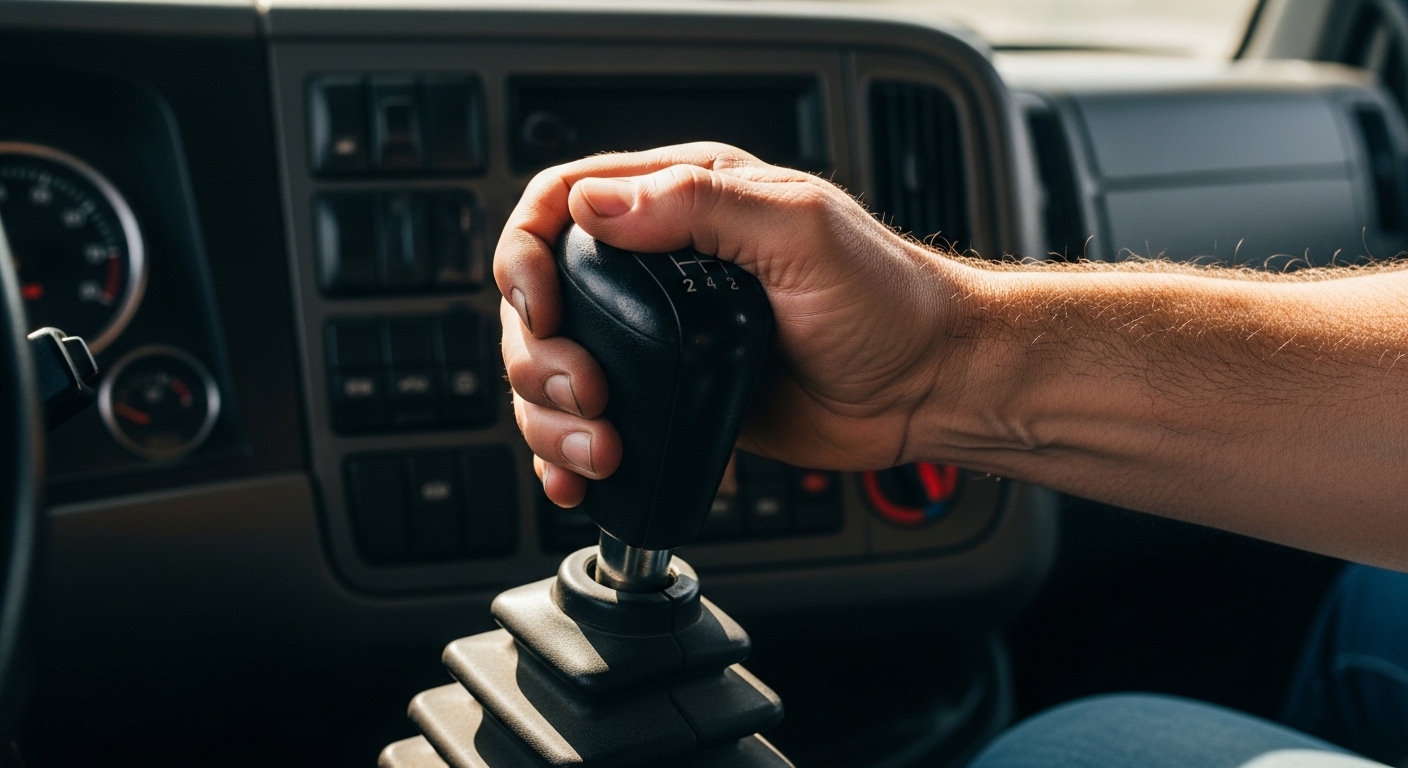
Why This Still Matters to You in 2026 🌍
With electric vehicles and automatic transmissions dominating new car sales, you might wonder why any of this is relevant. A few reasons it still matters more than you'd think.
First, a huge portion of the global car fleet is still manual. In many parts of Europe, Latin America, and Asia, manual transmissions remain the default for entry-level and mid-range vehicles. If you travel internationally and need to rent a car, knowing how a manual works — even theoretically — could save you from a very awkward situation at the rental counter.
Second, understanding how a manual gearbox works gives you a much clearer picture of how all transmissions work, including automatics and dual-clutch units. An automatic transmission does the same job — it just uses hydraulic pressure and a torque converter to select ratios automatically instead of relying on the driver. Once you understand the manual version, the automatic version makes much more intuitive sense.
Third, manual transmissions are still the choice in many performance and enthusiast contexts. Track days, sports cars, and driver-focused vehicles often offer or even require a manual option. Porsche, for instance, has continued offering manual gearboxes in its sports cars specifically because a vocal segment of buyers demands the engagement they provide.
Here's the surprising fact worth holding onto: research into driver attention suggests that driving a manual transmission may actually increase driver engagement and reduce the kind of passive, distracted driving that contributes to accidents on familiar routes. The physical demands of the gearbox keep your brain more actively involved in the task of driving.
Frequently Asked Questions
Is it hard to learn to drive a manual transmission?
Most people get the basics within a few hours of practice, though genuine smoothness takes longer to develop. The trickiest part for beginners is the clutch-throttle coordination when pulling away from a stop — especially on a hill. Once that muscle memory forms, the rest follows naturally.
Does driving a manual save fuel compared to an automatic?
It depends on the transmission. Older automatic gearboxes were notably less efficient than manuals, but modern automatics — especially continuously variable transmissions (CVTs) and dual-clutch automatics — are often more fuel-efficient than a manual driven by an average driver. A skilled driver in a manual can still match or beat those figures, but the gap has largely closed.
What's the difference between a manual and a dual-clutch transmission?
A dual-clutch transmission (DCT) uses two separate clutches — one for odd gears and one for even gears — so the next gear is always pre-selected and ready to engage in milliseconds. It's essentially a manual gearbox operated by a computer rather than a human. The mechanical principles inside are very similar; the difference is in who (or what) does the shifting.
Manual transmissions are a masterclass in mechanical problem-solving — a system that takes the raw, unruly power of an engine and turns it into something a human can actually use and control. Whether you drive one every day, learned on one years ago, or have never touched a clutch pedal in your life, there's something worth appreciating in the elegant simplicity of gears, shafts, and friction working together in perfect sequence — a design that has remained fundamentally unchanged for over a century, even as everything around it has transformed.


Comments
Post a Comment