The Science of Shine: Why Gold Doesn't Rust or Tarnish
A gold coin pulled from a shipwreck after four centuries on the ocean floor comes up gleaming. No rust, no green crust, no pitting — just the same warm metallic surface it had the day it sank. Almost every other metal you can name would be unrecognizable after that kind of treatment. So what makes gold different?

What Gold Actually Is — Beyond the Price Tag
Gold's Place on the Periodic Table
Gold is element 79, symbol Au — from the Latin aurum. It sits in the transition metals section of the periodic table, nestled among elements like platinum, silver, and copper. But its neighbors behave very differently when exposed to air and moisture. Copper turns green. Silver goes black. Iron becomes a crumbling pile of orange flakes. Gold just sits there, unchanged.
The key difference isn't magic — it's electron configuration. Gold has a completely full d-orbital subshell, which makes it extraordinarily reluctant to give up or share its electrons with other atoms. Chemical reactions almost always involve electron transfer. If an element resists that transfer, it resists reacting. Gold resists it better than almost anything else on Earth.
Noble Metals and What That Actually Means
Chemists call gold a "noble metal" — a term that predates modern chemistry and originally just meant metals that didn't corrode. Today it has a more precise meaning: metals with filled d-bands and high ionization energies, making them thermodynamically stable in their elemental form. Gold, platinum, and iridium are the most extreme examples. Silver is noble too, but less so — which is why your silverware eventually tarnishes while your gold jewelry doesn't.

How Rust and Tarnish Actually Form — and Why Gold Skips Both
The Oxidation Problem Other Metals Can't Escape
Rust is iron oxide — what happens when iron atoms lose electrons to oxygen and water molecules. The resulting compound is chemically stable but physically weak and flaky, which is why rust doesn't protect the metal underneath. It just keeps peeling away and exposing fresh iron to the same process. Steel bridges, car bodies, and old tools all suffer from this relentless cycle.
Tarnish is a related but slightly different process. Silver reacts with sulfur compounds in the air — hydrogen sulfide, for instance, which exists in trace amounts almost everywhere — to form silver sulfide, a dark gray compound. That's the black film on old silverware. Copper reacts with oxygen, carbon dioxide, and moisture to form copper carbonate, the green patina you see on old statues and rooftops.
Gold's ionization energy is so high that oxygen and sulfur simply don't have enough chemical "pull" to strip electrons away from its surface atoms — the reaction that would start corrosion never gets off the ground.
Gold's Electrochemical Advantage
There's a measurable way to rank how reactive metals are: the electrochemical series, sometimes called the activity series. Metals at the top — like potassium and sodium — react violently with water. Metals at the bottom — gold, platinum — barely react with anything. Gold has one of the highest standard reduction potentials of any metal, meaning it strongly prefers to stay in its elemental metallic state rather than form compounds.
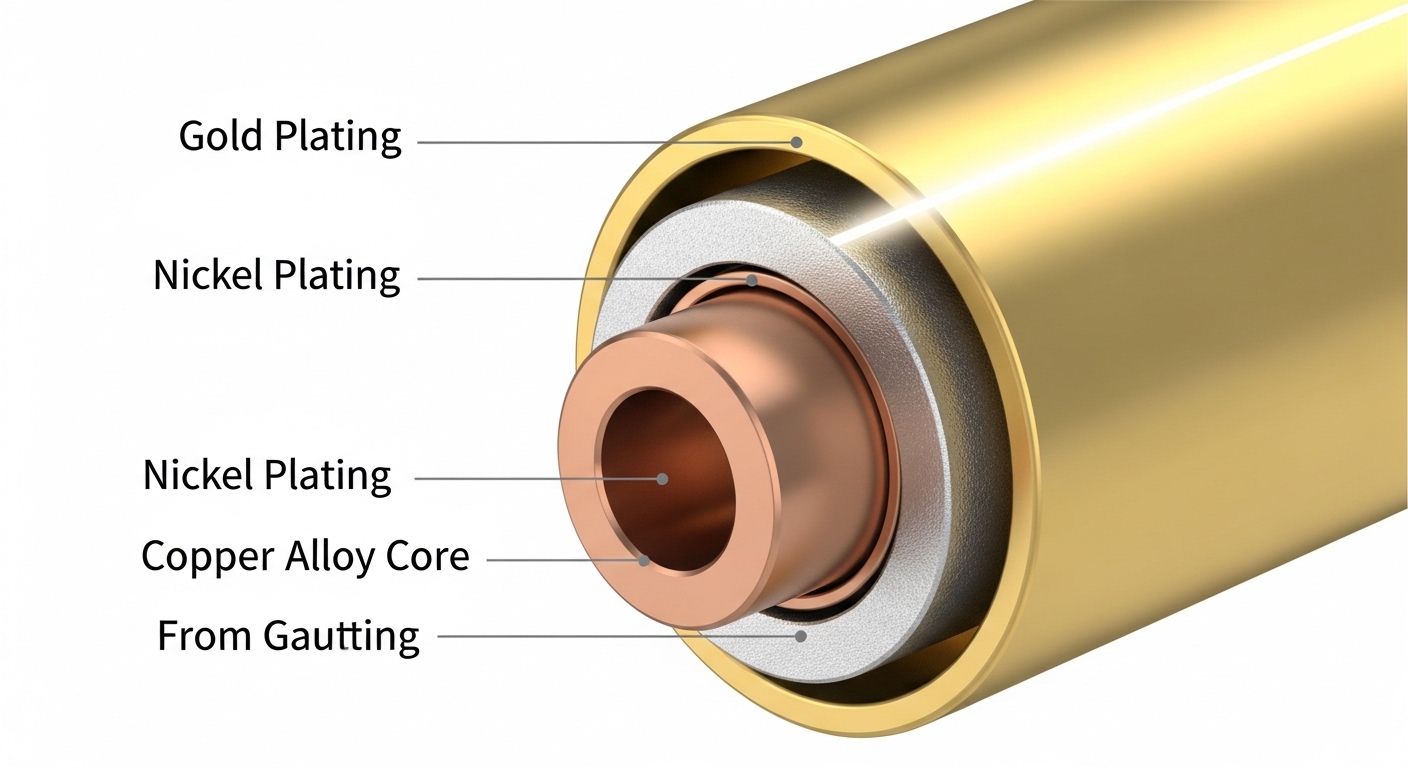
This isn't just a theoretical property. It has real engineering consequences. Gold is used to plate electrical connectors in aerospace and high-reliability electronics precisely because a corroded connector can fail at the worst possible moment. A thin layer of gold over a copper contact keeps the surface conductive for decades, even in humid or chemically aggressive environments.
The One Thing That Can Actually Dissolve Gold
Aqua Regia — The "Royal Water" Exception
Here's the counterintuitive part: gold isn't completely indestructible. There is a substance that dissolves it — a fuming, highly corrosive mixture of concentrated nitric acid and hydrochloric acid in roughly a 1:3 ratio, called aqua regia. The name is Latin for "royal water," coined because it could dissolve the "royal" metals that nothing else could touch.
What makes aqua regia work is a chemical tag-team. The nitric acid oxidizes gold atoms, and the hydrochloric acid immediately forms a stable complex ion — tetrachloroaurate — that pulls the oxidized gold into solution before it can revert. Neither acid alone can do this. Nitric acid alone can't dissolve gold because the gold oxide that would form is unstable and the reaction stalls. Hydrochloric acid alone doesn't have enough oxidizing power to start the process.
During World War II, physicist Niels Bohr dissolved his Nobel Prize gold medal in aqua regia to hide it from Nazi occupation forces, storing the orange solution in a flask on a laboratory shelf. After the war, the gold was recovered from the solution and recast into a new medal. That's a well-documented historical incident — and a remarkable demonstration of gold's chemistry in both directions.
Aqua regia works not because it's stronger than gold, but because it exploits a two-step chemical trick that gold's single-acid resistance can't defend against.
What About Fluorine and Cyanide?
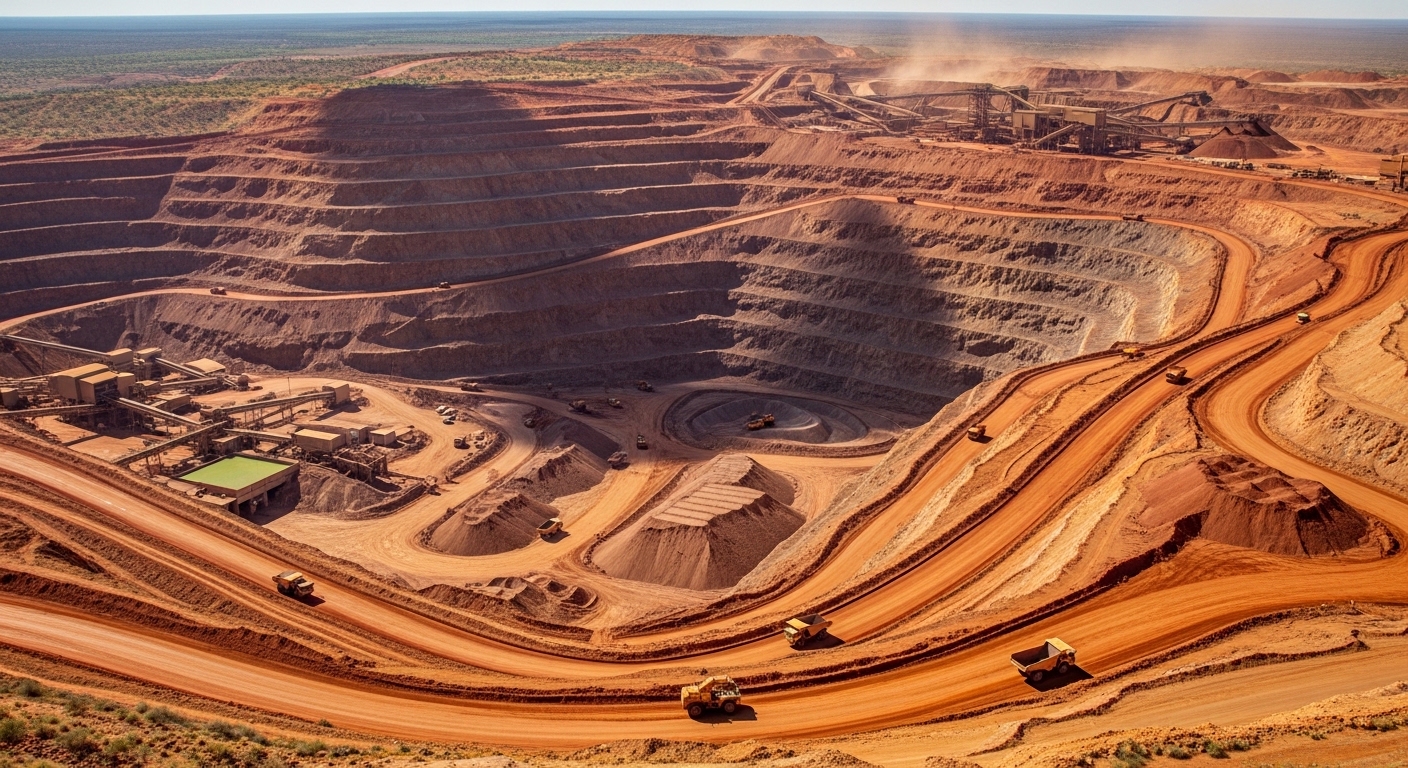
Fluorine gas, the most reactive element on the periodic table, can also attack gold at high temperatures — but this is a laboratory curiosity, not something you'll encounter in daily life. Cyanide solutions are used industrially to extract gold from ore, forming a soluble gold-cyanide complex. This is actually how most of the world's gold mining works at an industrial scale, and it's one reason gold mining operations require careful environmental management.
Why Gold Looks the Way It Does — The Color Isn't Random
Relativistic Effects and That Distinctive Yellow Hue
Most metals are silvery-gray. Gold is not. The reason comes from a genuinely surprising corner of physics: Einstein's theory of special relativity. Gold's nucleus is large enough — 79 protons — that the innermost electrons orbit at speeds approaching a significant fraction of the speed of light. At those speeds, relativistic effects cause the electrons to behave differently than classical physics predicts.
Specifically, the inner electron orbitals contract and become more tightly bound. This shifts the energy gap between gold's electron orbitals into the visible light range. Gold absorbs blue and violet light and reflects yellow and red wavelengths — which is exactly what we see. Silver and platinum don't have a large enough nucleus for this effect to be significant, so they reflect all visible wavelengths roughly equally and appear gray-white.
Without relativistic effects, theoretical calculations suggest gold would look silver, like most other metals. The distinctive warm color that humans have prized for thousands of years is, at its root, a consequence of Einstein's equations applied to electron behavior.
Purity, Alloys, and Why 24-Karat Gold Is Soft
Pure gold — 24 karats — is remarkably soft for a metal. You can scratch it with a fingernail if you press hard enough. This is why most gold jewelry is alloyed with copper, silver, or palladium to add hardness. The karat system measures gold content: 18-karat gold is 75% gold by mass, 14-karat is about 58%. Adding copper shifts the color toward rose gold. Adding palladium or nickel creates white gold.
(Opinion: The fact that gold's color is a relativistic effect feels like it should be more widely known. It's one of those cases where physics reaches into everyday aesthetics in a way that's genuinely strange — and it makes gold feel less like a simple material and more like a physical curiosity that humans happened to find beautiful.)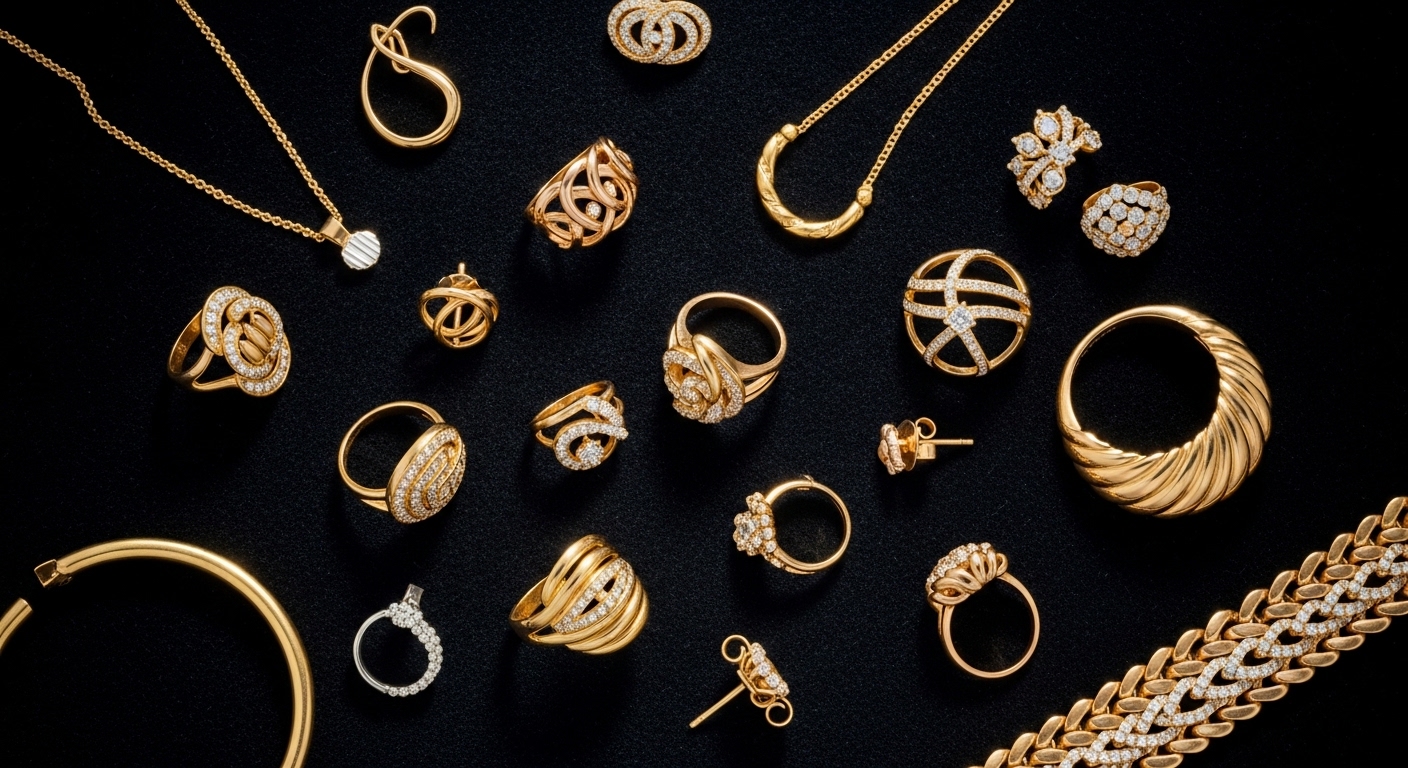
Frequently Asked Questions
Does gold ever tarnish at all?
Pure gold essentially does not tarnish under normal conditions. However, gold alloys — like 14-karat or 10-karat gold — contain enough copper, silver, or other metals that those components can oxidize or react with sulfur compounds over time, producing a slight darkening. The tarnish you sometimes see on gold-colored jewelry is almost always coming from the alloyed metals, not the gold itself.
Why is gold used in electronics if it's so expensive?
Gold's corrosion resistance makes it uniquely reliable for electrical contacts. A corroded connector increases resistance and can cause intermittent failures — catastrophic in aerospace, medical devices, or military hardware. The amount of gold used per connector is tiny, so the cost is justified by the reliability gain. Many consumer electronics also use thin gold plating on connector pins for the same reason, though the layer is often thinner than a human hair.
Is white gold actually gold?
Yes — white gold is a real gold alloy, typically gold mixed with palladium, nickel, or silver to produce a pale color. Most white gold jewelry is also rhodium-plated on the surface to enhance the bright white appearance, since the alloy itself can have a slightly yellowish or grayish tint. Over time, that rhodium plating wears away and the piece may need re-plating, which is a routine jewelry service.
The shipwreck coin and the Nobel Prize dissolved in a flask are really the same story told from opposite ends: gold is stable enough to survive centuries of seawater, yet soluble enough to be hidden in a jar of acid and recovered without loss. That combination — near-total resistance to the ordinary world, vulnerability only to the extraordinary — is what makes gold chemically unique. And the fact that its famous color is a side effect of relativistic electron physics means every gold ring you've ever seen is, in a quiet way, a demonstration of Einstein's equations sitting on someone's finger.



Comments
Post a Comment