What Is a Quasar? A Beginner's Guide to the Brightest Objects in the Universe
A single quasar can outshine an entire galaxy of 100 billion stars — by a factor of roughly a thousand. These aren't exotic theoretical objects; they're real, they've been catalogued by the thousands, and the light from some of them left its source before Earth even existed. If you've heard the word "quasar" and assumed it was something only astrophysicists needed to care about, this guide will change that.
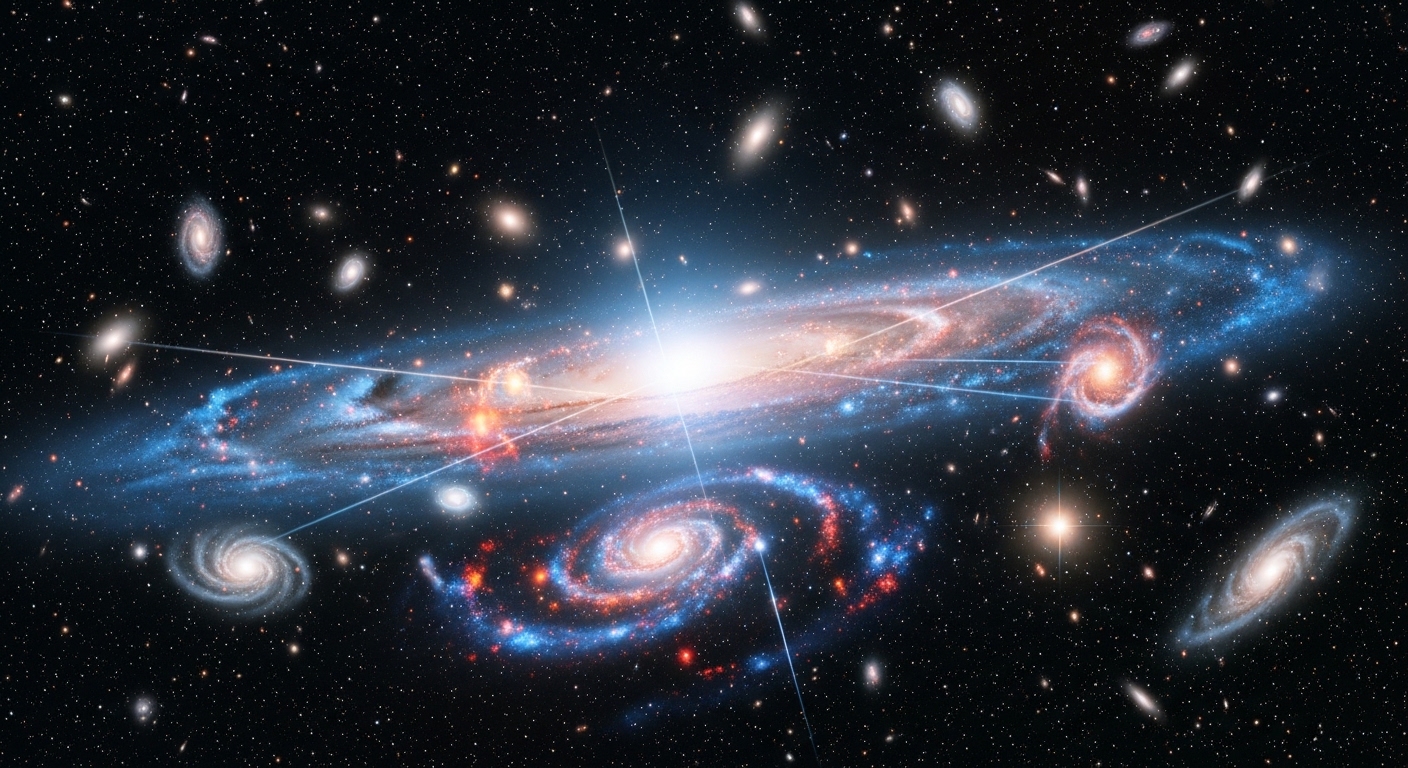
Key Concepts You Need to Know First
What Does "Quasar" Actually Mean?
The word is a contraction of "quasi-stellar radio source" — a name that dates back to the early 1960s when astronomers first detected these objects and couldn't figure out what they were. Through optical telescopes, they looked like faint stars. But their radio emissions were far too powerful for any known star, and their light showed redshifts so extreme they had to be billions of light-years away.
That naming confusion is actually a useful clue. Quasars weren't identified by what they are, but by what they puzzled people into calling them. The "quasi-stellar" part just means "star-like in appearance." The reality turned out to be far stranger.
The Role of Supermassive Black Holes
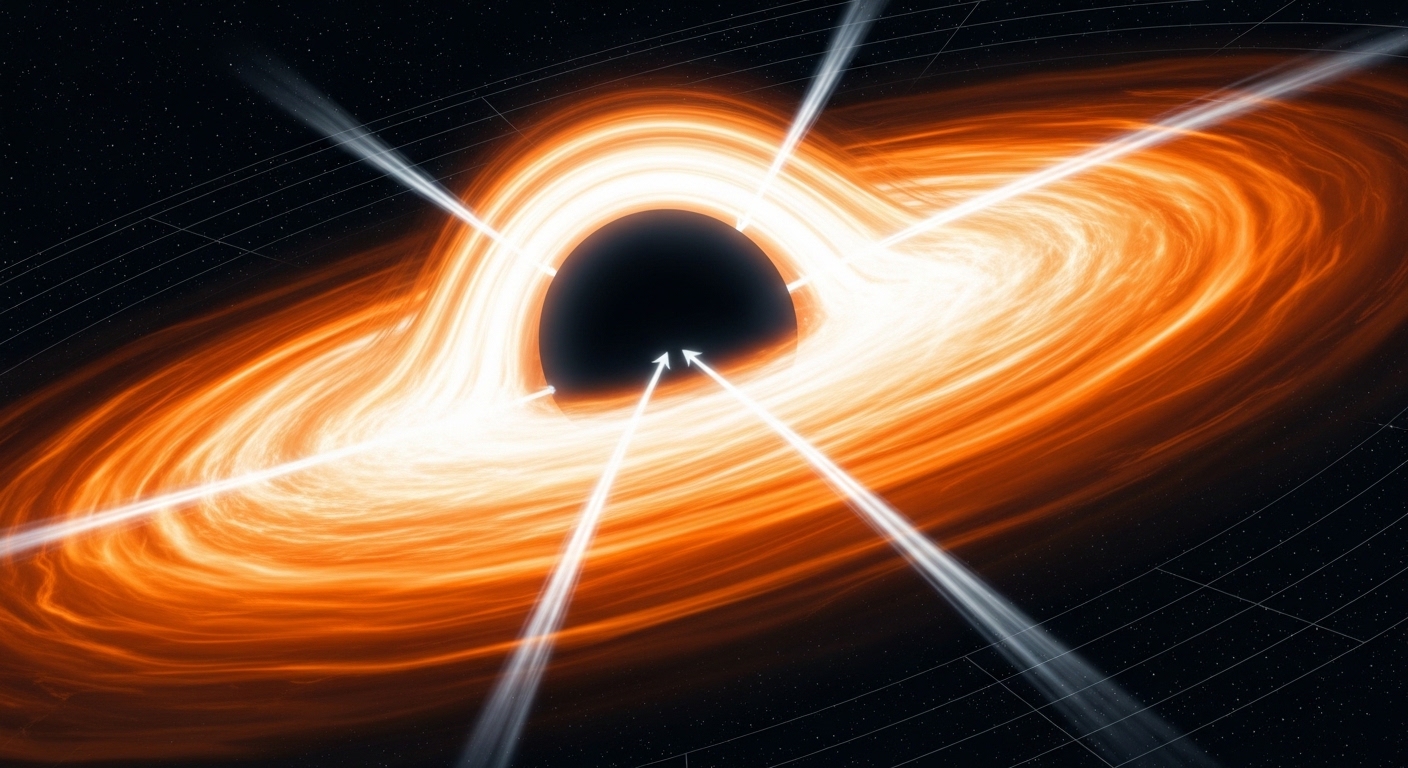
At the center of every quasar is a supermassive black hole — typically millions to billions of times the mass of our Sun. On its own, a black hole emits nothing detectable. The fireworks happen in the accretion disk: a swirling mass of gas, dust, and plasma spiraling inward. Friction and magnetic forces heat this material to extreme temperatures, causing it to radiate across the entire electromagnetic spectrum, from radio waves to X-rays.
The energy output isn't coming from the black hole itself — it's coming from the material just before it crosses the point of no return. That distinction matters. A quasar is essentially a black hole's feeding frenzy made visible across billions of light-years.
A quasar isn't the black hole — it's the inferno surrounding it. The black hole just provides the gravity well; the accretion disk does the glowing.
Your First Steps — Getting to Know Quasars
How Far Away Are They?
Most known quasars are extraordinarily distant — many are seen as they existed when the universe was less than two billion years old, out of its roughly 13.8-billion-year lifespan. That distance is not a coincidence. Quasars were far more common in the early universe, when galaxies were younger and their central black holes had more raw material to consume.
The closest confirmed quasar to Earth is Markarian 231, located roughly 600 million light-years away. That sounds enormous, and it is — but on a cosmic scale, it's practically a neighbor. When astronomers first measured its distance in the 1960s, the number seemed so large it was initially treated with suspicion.
What Makes Them So Bright?
The brightness of a quasar comes down to one brutal efficiency statistic: accretion onto a spinning black hole can convert up to roughly 40% of infalling mass directly into energy. Nuclear fusion in stars — the process that powers our Sun — converts less than 1%. Quasars are, in that sense, the most energy-efficient engines in the known universe.
Some quasars also produce relativistic jets: focused beams of plasma fired perpendicular to the accretion disk at close to the speed of light. When one of those jets happens to point almost directly at Earth, we see an even more intensely bright version called a blazar. The same object, different viewing angle, wildly different apparent brightness.
Most Common Beginner Mistakes When Learning About Quasars
Thinking Quasars Are a Separate Type of Object
One of the most persistent confusions is treating quasars, blazars, Seyfert galaxies, and active galactic nuclei (AGN) as completely different things. They're not. They're all variations of the same phenomenon — a supermassive black hole actively feeding at a galaxy's center — observed under different conditions, from different angles, or at different activity levels.
Astronomers use the term "AGN" as the umbrella category. A quasar is simply an AGN that's luminous enough to outshine its host galaxy entirely. Think of it like this: the same fire, seen from different distances and angles, gets called different names.
Assuming Our Galaxy Has Nothing Like This
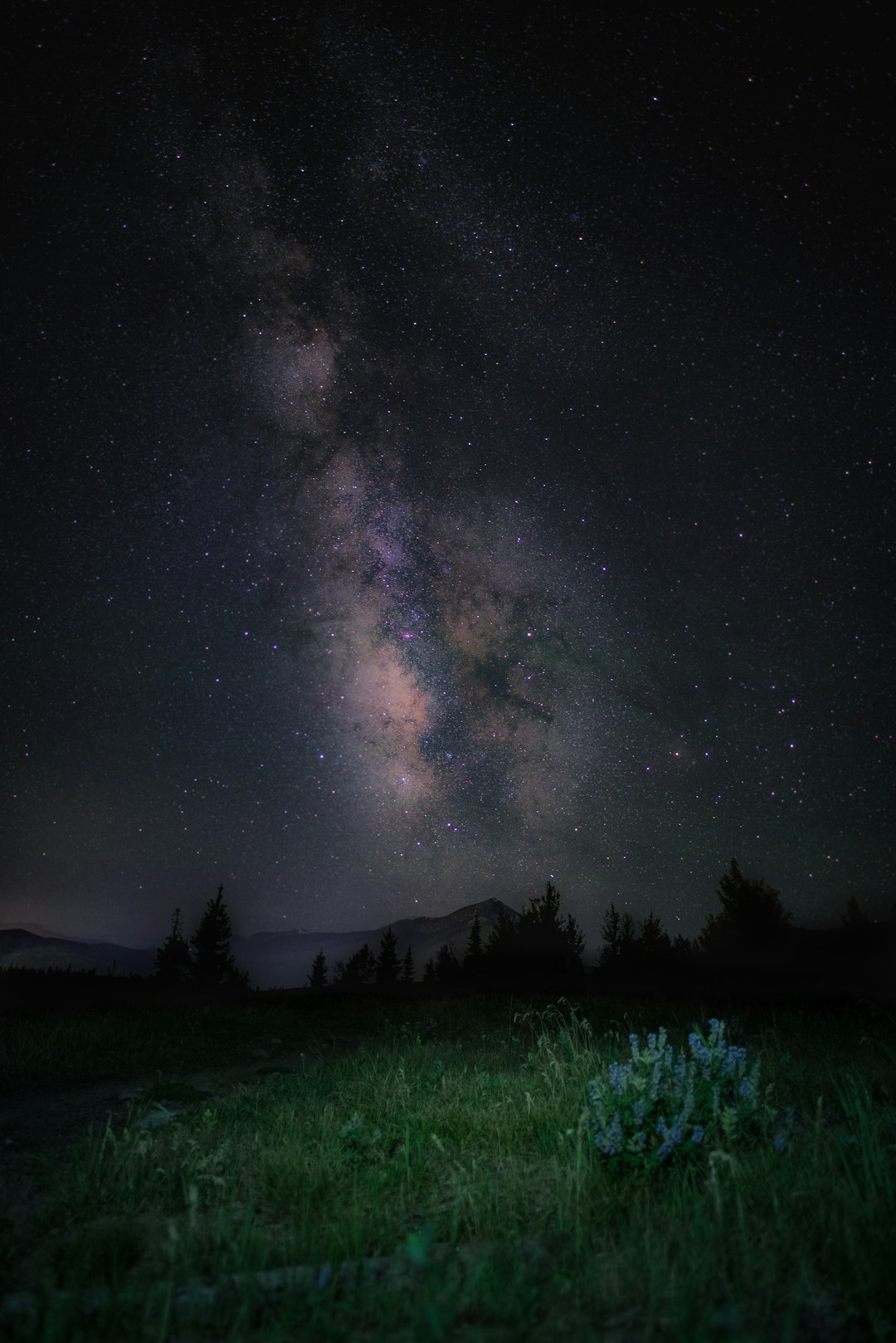
The Milky Way has a supermassive black hole at its center — Sagittarius A*, with a mass of roughly 4 million solar masses. Right now, it's quiet. But there's strong evidence it went through active phases in the past, and some researchers believe it may have briefly qualified as a low-luminosity AGN within the last few million years. Our galaxy almost certainly hosted something quasar-like at some point in its history.
That's the counterintuitive part most casual overviews skip: quasars aren't alien anomalies. They're what ordinary galaxies look like when their central black holes are eating well.
The Milky Way's central black hole isn't dead — it's dormant. The difference between our galaxy's quiet core and a blazing quasar may just be a matter of available fuel.
Confusing Brightness With Proximity
Because quasars appear as bright points of light, beginners sometimes assume they must be relatively close. The opposite is true. Their apparent brightness, even across billions of light-years, is a testament to just how violent the energy output actually is. A quasar that appears as a faint smudge in a telescope image might be releasing more energy per second than our entire galaxy does in a year.
What to Learn Next After Understanding Quasars
The Quasar Epoch and Galaxy Evolution
The period roughly 10 to 12 billion years ago is sometimes called the "quasar epoch" — a time when the universe was dense enough with gas and young enough that supermassive black holes had abundant fuel. Studying quasars from that era gives cosmologists a window into how galaxies formed and evolved. The light reaching us from a distant quasar is, in a very real sense, a fossil record of the early universe.
There's an ongoing debate about whether quasar activity actually shaped the galaxies around them — whether the energy output from an active nucleus can heat surrounding gas enough to suppress star formation. Some researchers believe quasar feedback is one of the key mechanisms that stopped large galaxies from growing indefinitely. That's a live research question, not a settled one.
Gravitational Lensing and Quasar Twins
Because quasars are so distant and so bright, they make ideal targets for observing gravitational lensing — the bending of light by massive objects between us and the quasar. In some cases, a galaxy sitting between Earth and a quasar bends the quasar's light into multiple images. Astronomers have observed quasars that appear as two, three, or even four separate points of light in the sky, all images of the same single object.
This isn't just a curiosity. The time delay between those multiple images — caused by slightly different path lengths — can be used to measure the expansion rate of the universe. Quasars have become precision instruments for cosmology, not just spectacular light shows.
Tools That Made Quasar Science Possible
The discovery of quasars depended on the development of radio astronomy in the mid-20th century. Optical telescopes alone couldn't have flagged these objects as unusual — they just looked like dim stars. It was the radio surveys, particularly work done at observatories in the UK and Australia in the late 1950s and early 1960s, that identified sources worth investigating more closely.
Today, space-based observatories and large spectroscopic surveys have catalogued hundreds of thousands of quasars. The sheer volume of data has shifted quasar research from "what is this thing?" to "what can this tell us about the structure of the universe?"
(Opinion: The quasar story is one of the best examples of science working exactly as it should — an observation that didn't fit any existing category, resisted easy explanation for years, and ultimately rewrote our understanding of galactic evolution. That messy, decades-long process is worth appreciating more than the tidy textbook version suggests.)
Frequently Asked Questions
Can quasars be seen with the naked eye?
One quasar — 3C 273, located roughly 2.4 billion light-years away — is technically within range of a good amateur telescope under dark skies, appearing around magnitude 12.9. No quasar is visible to the naked eye. Their extraordinary intrinsic brightness is offset by their extreme distance, making even the nearest ones too faint for unaided vision.
Are quasars dangerous to Earth?
No. The closest known quasar is hundreds of millions of light-years away, and even the most energetic quasar radiation is so diffuse by the time it reaches us that it poses no measurable threat. The concern about radiation from energetic cosmic objects is generally focused on much closer phenomena, like gamma-ray bursts within our own galaxy — and even those are only dangerous at relatively close range.
If quasars are so old, does that mean they no longer exist?
When we observe a distant quasar, we're seeing it as it was billions of years ago — not as it is "now." Many of those same galaxies likely have quiet, dormant black holes at their centers today, having exhausted their fuel supply. The quasar phase appears to be a stage in a galaxy's life, not a permanent state. Whether any of those specific galaxies still host active quasars in the present moment is something we can't directly observe — the light showing us their current state won't arrive for billions of years.
The strangest part of quasar science isn't the energy output or the distances involved — it's the implication that our own galaxy went through something similar. Every time you look at a photograph of the Milky Way's serene spiral arms, you're looking at a structure that may have once blazed across the visible universe, a lighthouse that burned out long before anything on Earth was around to notice it.


Comments
Post a Comment