How Space Telescopes Get Power Millions of Miles Away
The James Webb Space Telescope sits roughly 1 million miles from Earth — about four times the distance to the Moon — and yet it runs on electricity generated by sunlight, just like a rooftop solar panel. No batteries swapped out, no extension cords, no fuel deliveries. The engineering that keeps a billion-dollar observatory humming in the cold void of space is one of the quieter miracles of modern science.
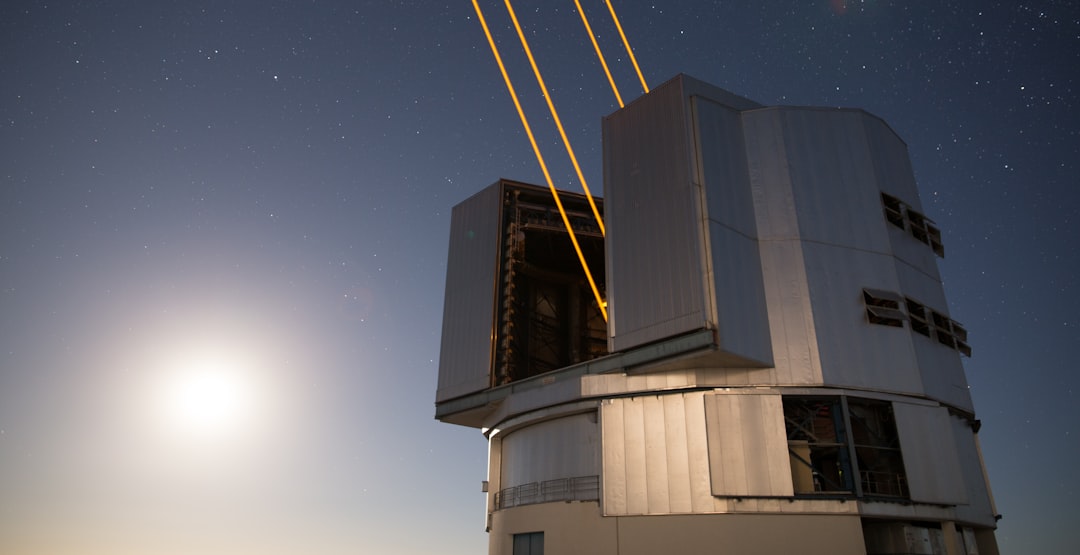
What Actually Powers a Space Telescope?
Solar Power as the Default Answer
The short answer for most space telescopes is solar panels — flat arrays of photovoltaic cells that convert sunlight directly into electricity. This works remarkably well in space because there is no atmosphere to scatter or absorb the sun's energy. A solar panel in Earth orbit receives sunlight that is more intense and more consistent than anything you'd get on the ground.
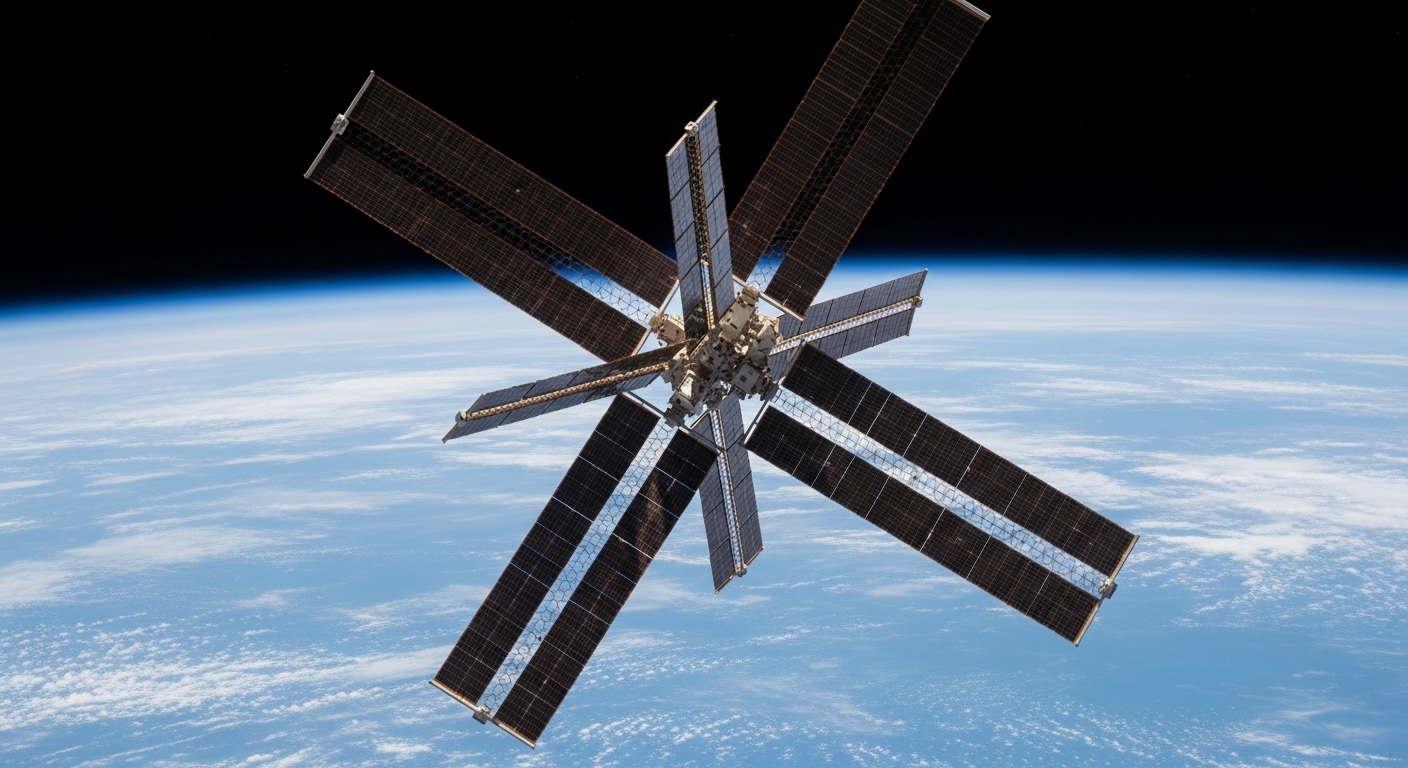
The Hubble Space Telescope, orbiting about 340 miles above Earth, uses two large solar array wings to generate roughly 5,500 watts of power at peak output. That's enough to run a few desktop computers and keep the telescope's instruments, gyroscopes, and communications systems alive. Most of that power also gets stored in onboard batteries for the roughly 36 minutes per orbit when Hubble passes through Earth's shadow.
The James Webb Space Telescope takes a different approach to its orbit, which changes the power equation entirely. Webb sits at a gravitational balance point called L2, about 1 million miles from Earth in the direction away from the Sun. From that position, the Sun, Earth, and Moon are always on the same side, so Webb's single solar array always faces sunlight — and the telescope itself stays in permanent shadow, which is exactly what its infrared instruments need.
When Solar Panels Won't Work
Farther out in the solar system, sunlight becomes too faint to be useful. At Jupiter's distance, sunlight is roughly 25 times weaker than at Earth. By the time you reach Pluto, it's about 1,600 times weaker. Solar panels at those distances would need to be enormous — impractically so for a spacecraft that needs to be launched on a rocket.
That's where a completely different power source enters the picture: nuclear energy in the form of radioisotope thermoelectric generators, or RTGs. These devices use the natural radioactive decay of plutonium-238 to generate heat, which is then converted into electricity through a process called the Seebeck effect. No moving parts, no sunlight required, and a lifespan measured in decades.
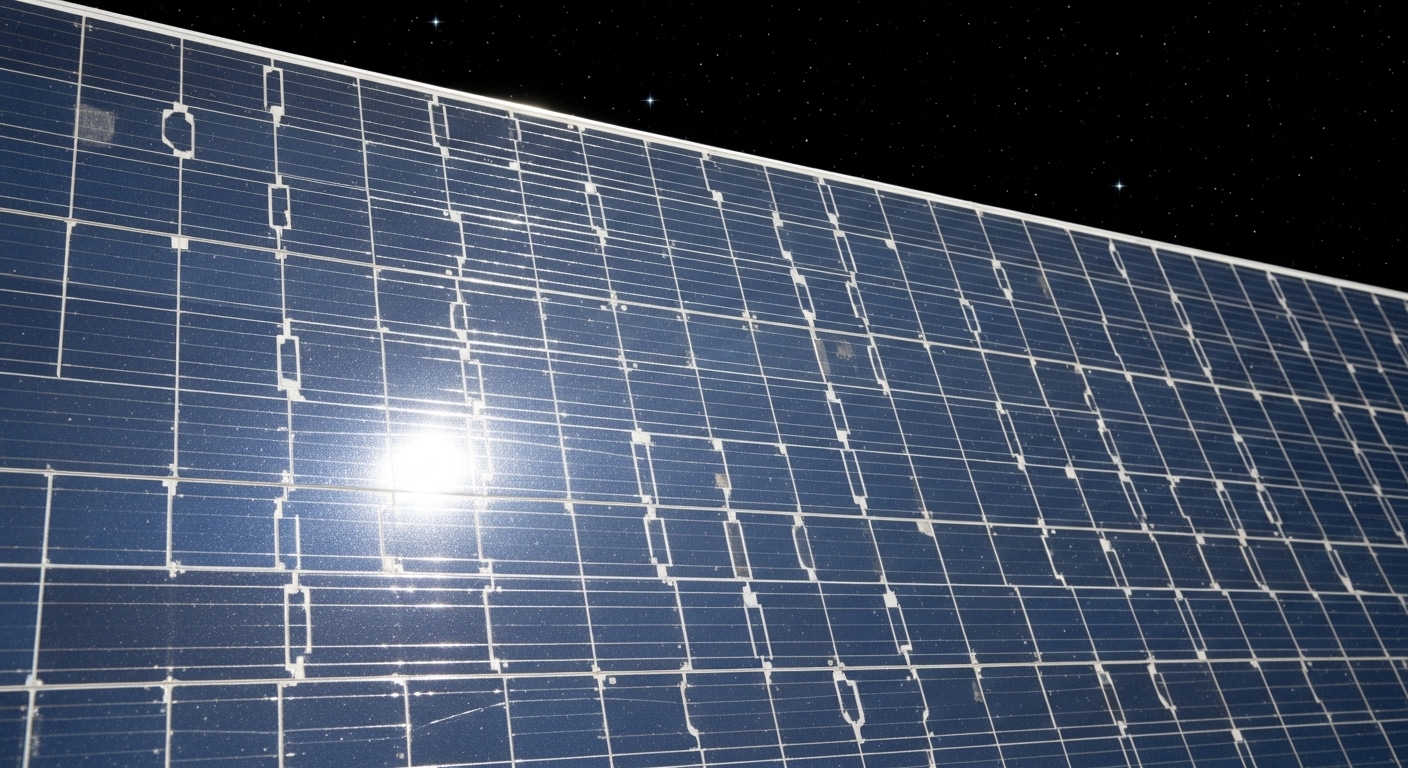
How Solar Arrays in Space Are Engineered to Last
The Extreme Conditions Solar Panels Must Survive
Space is brutal on hardware. Temperatures can swing from roughly plus 250 degrees Fahrenheit in direct sunlight to minus 250 degrees Fahrenheit in shadow — sometimes within a single orbit. Solar cells in space also face constant bombardment from high-energy particles, cosmic rays, and micrometeorites. On Earth, your rooftop panels degrade slowly over decades; in space, that degradation is accelerated and more complex.
Engineers design space solar arrays using specialized multi-junction solar cells that are far more efficient than typical commercial panels. These cells stack multiple semiconductor layers, each tuned to absorb a different wavelength of sunlight. Research suggests efficiencies above 30 percent are achievable in space conditions — roughly double what most ground-based panels manage.
In space, a solar panel receives sunlight with no atmospheric filtering — making it significantly more productive per square meter than the same panel sitting on a rooftop in Arizona.
Deployment, Pointing, and Power Management
Solar arrays on spacecraft are rarely fixed in place. Most are mounted on motorized gimbals that track the Sun as the spacecraft moves, maximizing the angle of incidence and therefore the power output. On the International Space Station, the solar arrays rotate continuously to follow the Sun across each orbit. This kind of active tracking can dramatically increase the total energy collected over a mission lifetime.
Power management electronics regulate the flow of electricity from the panels to the instruments and batteries. These systems prevent overcharging, handle the transition between sunlight and shadow, and prioritize power to critical systems during low-generation periods. The entire power chain — from photon hitting a solar cell to data transmitted back to Earth — is engineered with multiple redundancies because there is no repair crew available.
How RTGs Power Deep-Space Telescopes and Probes
The Physics Behind Nuclear Power in Space
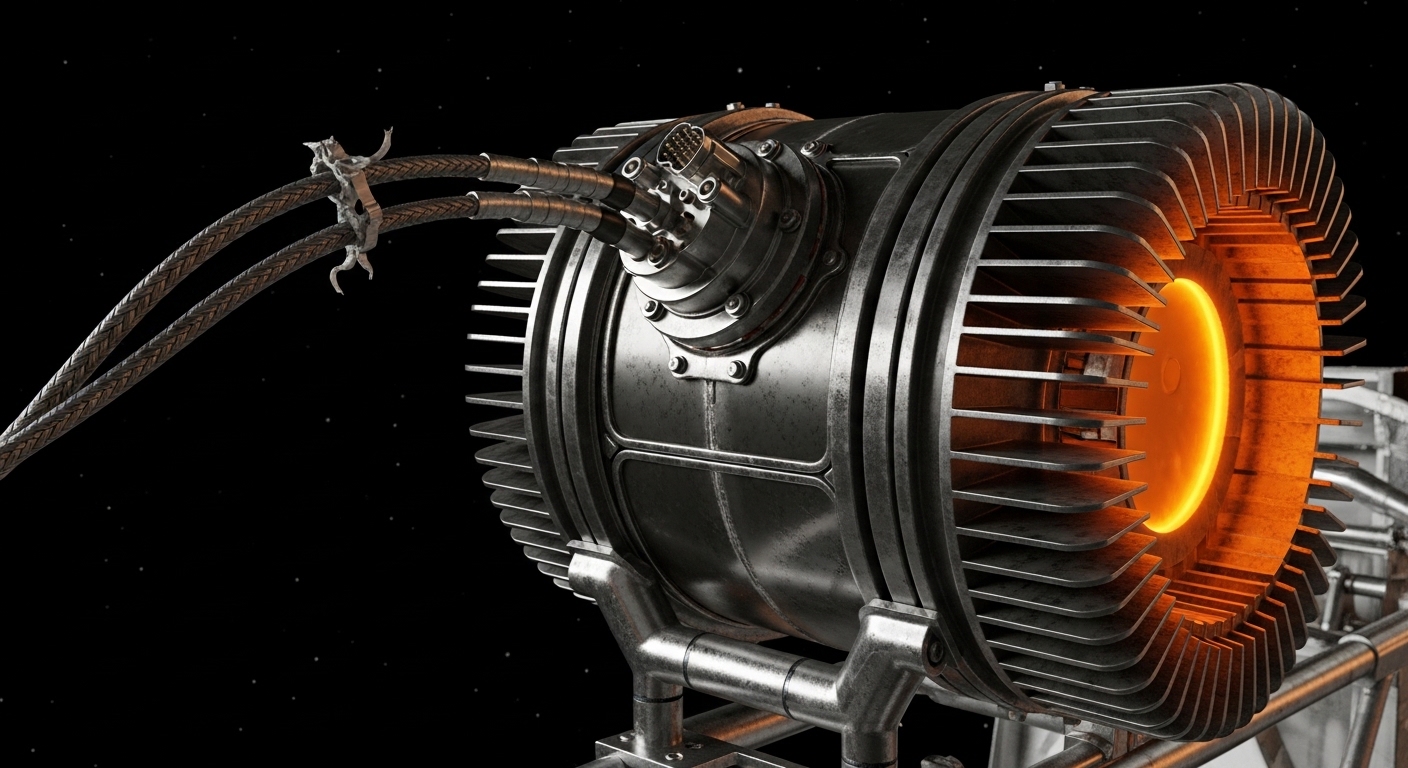
Plutonium-238 decays by emitting alpha particles, which produce heat as they are absorbed by surrounding material. An RTG surrounds a plutonium core with thermoelectric couples — pairs of dissimilar semiconductors that generate a voltage when one end is hot and the other is cold. In space, the cold end radiates heat into the vacuum, maintaining the temperature difference that drives electricity generation.
The output is modest by terrestrial standards — the RTGs on the Voyager probes each produced a few hundred watts at launch. But for a spacecraft with no other power option, a few hundred watts is everything. The Voyager probes, launched in 1977, were still transmitting data back to Earth decades later, powered entirely by RTGs whose output had declined gradually as the plutonium decayed.
Safety and the Challenge of Plutonium-238
Plutonium-238 is not the same isotope used in nuclear weapons, and RTGs are not reactors — there is no fission chain reaction. The fuel is encased in multiple layers of protective material designed to survive a launch failure or atmospheric reentry without releasing radioactive material. NASA and other agencies have conducted extensive safety analyses before every RTG-powered mission.
The counterintuitive fact here is that plutonium-238 is actually quite rare and difficult to produce. For a period, the United States had to rely on aging stockpiles, and restarting domestic production became a priority for future deep-space missions. Without a steady supply of Pu-238, missions to the outer solar system become significantly harder to plan.
RTGs have no moving parts and require no sunlight — the Voyager probes have been running on nuclear decay heat for nearly five decades, now billions of miles from Earth.
Why Power Management Defines What a Telescope Can Actually Do
The Link Between Watts and Science
Every scientific instrument on a space telescope competes for a limited power budget. Detectors, heaters that keep components from freezing, reaction wheels that point the telescope, computers that process data, and transmitters that send it home — all of them draw from the same pool of electricity. Mission planners spend years optimizing these trade-offs before a telescope ever leaves the ground.
The James Webb Space Telescope's total power budget is roughly 2,000 watts — about the same as a household hair dryer. Within that budget, engineers had to fit everything from the mirror actuators that fine-tune the 18-segment primary mirror to the cryocooler that keeps one of Webb's instruments at temperatures near absolute zero. Every watt saved in one system is a watt available for science.
What Happens When Power Gets Tight
When a spacecraft enters an unexpected shadow, experiences a solar panel degradation, or has an instrument draw more power than expected, the onboard computer enters a safe mode — shutting down non-essential systems to protect the most critical ones. Safe mode events have interrupted observations on virtually every major space telescope at some point, including Hubble. Recovery can take days or weeks.
For telescopes at L2 like Webb, there is no shadow problem — the geometry of the orbit guarantees continuous sunlight on the solar array. But that same geometry means any failure in the power system has no easy workaround. The engineering margins built into Webb's power system reflect just how unforgiving that environment is.
(Opinion: The most underappreciated engineering achievement in space telescope design isn't the optics or the detectors — it's the power system. Getting a few thousand watts of reliable electricity to an observatory a million miles away, with no possibility of maintenance, is the quiet foundation that makes all the science possible.)
Frequently Asked Questions
Do space telescopes ever run out of power?
Solar-powered telescopes like Hubble and Webb don't run out of power in the traditional sense, but their solar cells do degrade over time, gradually reducing output. RTG-powered spacecraft see their power supply slowly decline as the radioactive fuel decays. Mission planners account for this degradation and design instruments to operate within shrinking power budgets over the mission lifetime.
Why doesn't the James Webb Space Telescope use nuclear power?
Webb operates at L2, about 1 million miles from Earth, where sunlight is still strong enough for solar panels to work efficiently. RTGs are reserved for missions where solar power is genuinely impractical — typically beyond the asteroid belt. Using solar panels also avoids the complexity and regulatory requirements associated with launching nuclear material.
How do space telescopes store power when there's no sunlight?
Most Earth-orbiting telescopes use rechargeable nickel-hydrogen or lithium-ion batteries to store power during the portions of each orbit spent in Earth's shadow. The batteries charge during the sunlit portion of the orbit and discharge during the shadow period. Telescopes at L2, like Webb, experience continuous sunlight and don't need this kind of energy storage buffer.
The next time you see an image from Hubble or Webb — a galaxy cluster billions of light-years away, or the atmosphere of a distant exoplanet — remember that the whole thing runs on a few thousand watts of carefully managed electricity, generated by sunlight or nuclear decay, with no one around to flip a switch if something goes wrong. That the pictures keep coming is a testament to engineering as much as astronomy.



Comments
Post a Comment