How Does End-to-End Encryption Actually Work? A Simple Explanation
Every time you send a message through WhatsApp, Signal, or iMessage, your phone performs a small mathematical miracle before the text ever leaves your device. End-to-end encryption — often abbreviated E2EE — scrambles your message in a way that only the intended recipient can unscramble it. Not the app company, not your internet provider, not a government agency with a court order. Just the two people in the conversation.
That's a genuinely remarkable claim. And it holds up — when implemented correctly. Here's how it actually works.
What End-to-End Encryption Actually Is — and Isn't
The Difference Between Encrypted in Transit and End-to-End Encrypted
Most people assume that if a website uses HTTPS, their data is private. That's only partially true. HTTPS encrypts the connection between your device and the server — meaning nobody can intercept the data while it's traveling. But once it arrives at the server, the company can read it. They hold the decryption key.
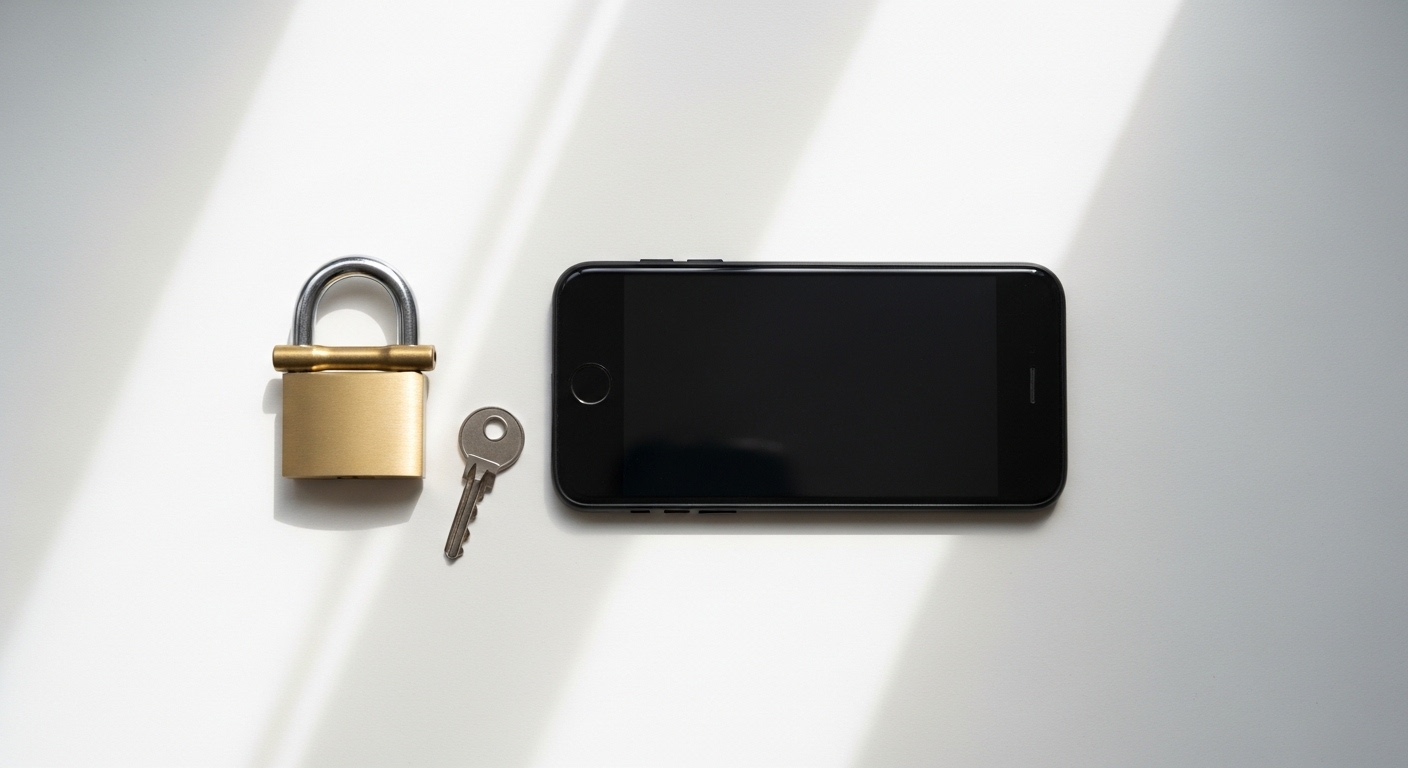
End-to-end encryption is different. The encryption happens on your device, and the decryption only happens on the recipient's device. The server in the middle — the company's infrastructure — only ever sees scrambled data it cannot decode. Think of it as sealing a letter inside a lockbox before handing it to the postal service. The postal workers carry the box, but they can never open it.
This distinction matters enormously in practice. When a company gets a subpoena for user messages, a service with only transit encryption can hand over readable content. A properly implemented E2EE service can only hand over encrypted gibberish.
How the Math Behind End-to-End Encryption Works
Public Keys, Private Keys, and Why You Can't Reverse the Math
The core mechanism is called asymmetric cryptography, and it relies on a beautifully counterintuitive idea: you can have two mathematically linked keys where one can encrypt data that only the other can decrypt. Your device generates a key pair — a public key and a private key. The public key is shared openly with anyone who wants to send you a message. The private key never leaves your device.
When someone sends you a message, their app uses your public key to encrypt it. The resulting ciphertext is mathematically impossible to reverse without your private key. Even the person who encrypted it can't decrypt it. Only your device, holding that private key, can unlock the message.
The security of this system rests on a class of mathematical problems that are trivially easy to compute in one direction and astronomically hard to reverse. Multiplying two large prime numbers together takes milliseconds. Factoring the result back into its original primes — given a number with hundreds of digits — would take current computers longer than the age of the universe. That asymmetry is the entire foundation.
The lock is public. The key is private. And the math ensures that knowing the lock tells you nothing useful about the key.
The Role of Key Exchange — Solving the Chicken-and-Egg Problem
There's an obvious problem: how do two strangers agree on encryption keys without ever meeting in person, over a channel that might be monitored? This was considered an unsolved problem in cryptography for most of modern history. The breakthrough came in the 1970s with the Diffie-Hellman key exchange protocol, which allows two parties to establish a shared secret over a public channel without ever transmitting the secret itself.
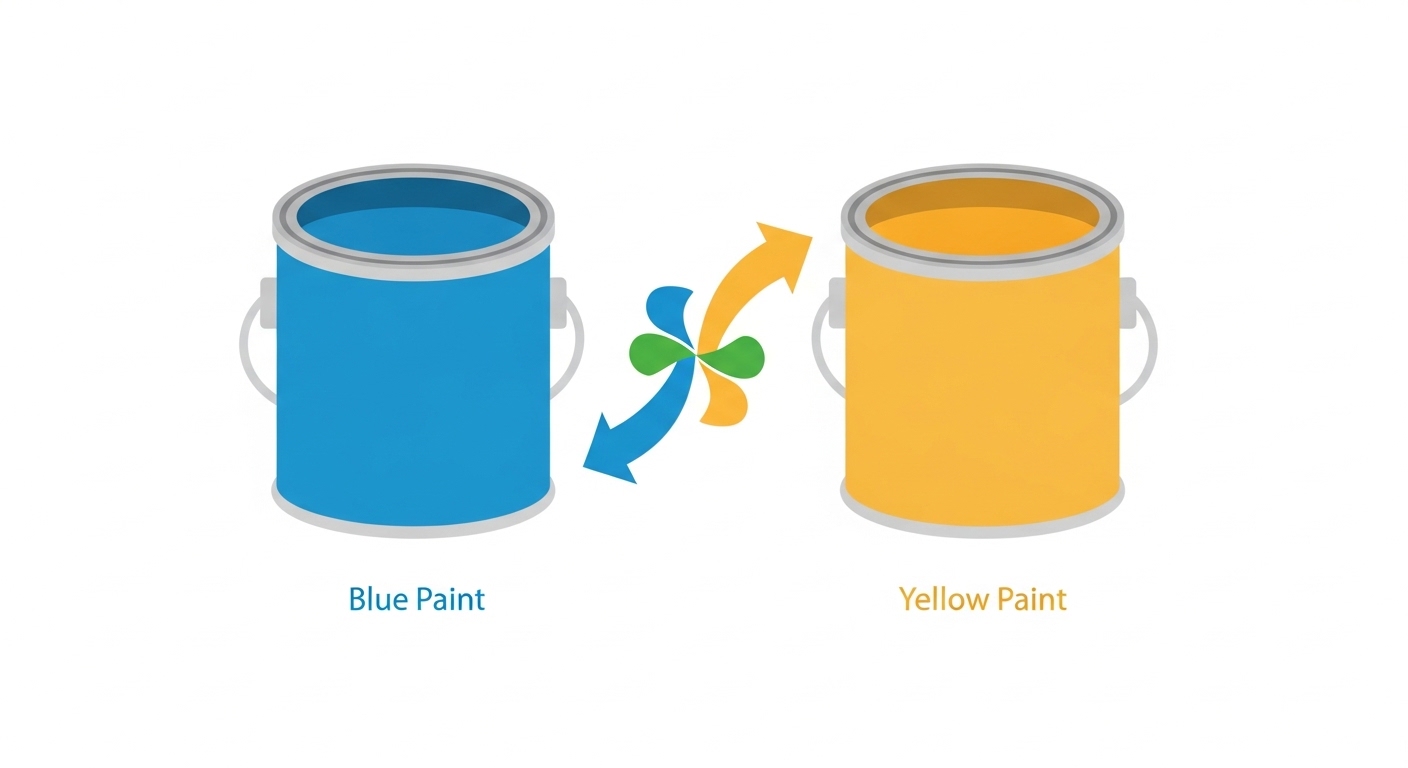
The analogy that actually works: imagine you and a friend each pick a secret color. You both start with the same public color — say, yellow. You each mix your secret color into the yellow and exchange the resulting mixtures publicly. Anyone watching sees two muddied colors. But when you each add your own secret color to the mixture you received, you both arrive at the same final color — a shared secret that nobody watching the exchange could reconstruct.
Modern messaging apps like Signal use an evolved version of this, called the Signal Protocol, which also rotates encryption keys with every single message. That means even if an attacker somehow obtained one session's key, they couldn't decrypt past or future messages. This property is called forward secrecy, and it's one of the reasons security researchers consistently recommend Signal over alternatives.
Where End-to-End Encryption Shows Up in Real Life
Messaging Apps, Email, and the Gaps You Might Not Expect
Signal is the gold standard — open source, audited by independent researchers, and built around the protocol that most other apps now license or imitate. WhatsApp uses the Signal Protocol for its message encryption, which gives it strong technical credentials, though the app's metadata collection (who you talk to, when, how often) remains a legitimate privacy concern separate from message content.
iMessage encrypts end-to-end between Apple devices, but with a notable asterisk: if you have iCloud backups enabled, Apple stores a copy of your messages on its servers in a form it can access. The encryption protects messages in transit; the backup undoes some of that protection at rest. Anyone who has ever switched iPhones and had all their messages magically reappear has experienced exactly this tradeoff — convenient, but not fully private.
Email is the glaring weak spot. Standard email — even over HTTPS — is not end-to-end encrypted. Services like ProtonMail offer E2EE between users on the same platform, but the moment you email someone on Gmail or Outlook, the encryption breaks at the boundary. PGP (Pretty Good Privacy) has existed since the early 1990s and technically solves this, but its usability is notoriously terrible, which is why almost nobody outside of security professionals uses it.
End-to-end encryption protects the message. It says nothing about the metadata — and metadata alone can reveal an enormous amount about your life.
Why End-to-End Encryption Matters — and Where It Has Real Limits
The Genuine Protections It Provides
For journalists communicating with sources, activists in authoritarian countries, lawyers discussing privileged information, or anyone who simply values private conversation, E2EE provides meaningful, documented protection. There are well-documented cases of journalists using Signal to communicate with sources in environments where interception was a real threat, and the encryption held.
It also protects against a threat most people don't think about: data breaches. If a messaging company's servers are compromised and they only store encrypted ciphertext, the attacker gets nothing useful. This is not hypothetical — breaches of large platforms have exposed user data precisely because those platforms stored readable content.
What It Cannot Protect Against
E2EE protects data in transit. It does not protect data once it's decrypted on a device. If someone installs malware on your phone, they can read your messages as they appear on screen — the encryption is irrelevant at that point. Law enforcement agencies are well aware of this, which is why device seizure and forensic extraction are far more common investigative tools than attempting to break encryption mathematically.
There's also the endpoint problem. If the app itself is compromised — either through a vulnerability or because the company was compelled to push a malicious update — the encryption can be bypassed at the source. This is the attack vector that concerns security researchers most, and it's one reason open-source implementations matter: anyone can audit the code.
(Opinion: The debate around governments demanding encryption backdoors has been running for decades, and the technical community's position has remained consistent — a backdoor for law enforcement is a backdoor for everyone. There is no such thing as a vulnerability that only good actors can exploit. Policymakers who argue otherwise are either misinformed or hoping the public is.)
Frequently Asked Questions
Can end-to-end encryption be broken by a sufficiently powerful computer?
Current E2EE implementations using modern key lengths are not practically breakable by any existing computer, including the most powerful supercomputers. Quantum computing poses a theoretical future threat to some encryption methods, and cryptographers are actively developing quantum-resistant algorithms in response. For now, the math holds.
If WhatsApp uses the Signal Protocol, why do privacy advocates still prefer Signal?
The encryption itself is comparable. The difference is in what surrounds it. WhatsApp collects substantial metadata — contact lists, usage patterns, device identifiers — and shares data with its parent company. Signal collects almost none of this. The message content may be equally protected, but the broader privacy picture is not the same.
Does end-to-end encryption protect group chats the same way it protects one-on-one messages?
Yes, though the key management becomes more complex. In a group chat, the app must manage encryption keys for every participant simultaneously. Well-implemented systems like Signal handle this automatically, encrypting messages so that each recipient's device can decrypt them individually. The protection is equivalent — it just requires more cryptographic overhead behind the scenes.
The most unsettling thing about end-to-end encryption isn't that it might fail — it's that it works exactly as advertised, and that still isn't enough to guarantee privacy in any complete sense. The encryption protects the content of your words. Everything around those words — who you spoke to, when, for how long, from where — remains visible, collectible, and in many jurisdictions, legally accessible without a warrant. The message is sealed. The envelope is not.



Comments
Post a Comment