Kessler Syndrome Explained: The Science Behind a Space Junk Cascade
There are roughly 27,000 tracked pieces of debris orbiting Earth right now — and for every fragment large enough to catalog, estimates suggest hundreds of thousands more are too small to detect but still large enough to destroy a satellite. That asymmetry is what makes Kessler Syndrome one of the most quietly urgent problems in modern science. It is not a distant hypothetical. The physics that could trigger it are already in motion.
What Is Kessler Syndrome? A Plain-Language Definition
The Core Idea in Simple Terms
Kessler Syndrome describes a self-sustaining chain reaction of collisions in Earth's orbit. One collision produces debris. That debris collides with other objects, producing more debris. Those new fragments collide with yet more satellites and rocket bodies, and the cycle accelerates — not because we launch anything new, but purely because of what is already up there.
The concept was formally described by NASA scientist Donald Kessler in a 1978 paper co-authored with Burton Cour-Palais. Their argument was straightforward: once orbital debris density crosses a critical threshold, collisions become statistically inevitable regardless of human activity. The cascade becomes self-fueling.
What makes this particularly unsettling is the timescale. Debris in low Earth orbit — roughly below 2,000 kilometers altitude — can take decades or even centuries to naturally re-enter the atmosphere and burn up. A cascade triggered today could render certain orbital shells unusable for generations.
Why "Syndrome" Is the Right Word
Calling it a syndrome rather than an event is deliberate. It is not a single catastrophic moment but a slow-building condition, a runaway feedback loop that worsens over time. Think of it less like an explosion and more like a disease that spreads through a population — each new infection creating more vectors for further spread.
How the Kessler Cascade Actually Works — The Physics Explained
Orbital Velocity Makes Everything a Bullet
Objects in low Earth orbit travel at roughly 7 to 8 kilometers per second. At those speeds, even a paint fleck carries enough kinetic energy to pit a spacecraft window — a phenomenon that has been documented on Space Shuttle missions. A centimeter-sized fragment can disable a satellite entirely. A ten-centimeter piece can shatter one.
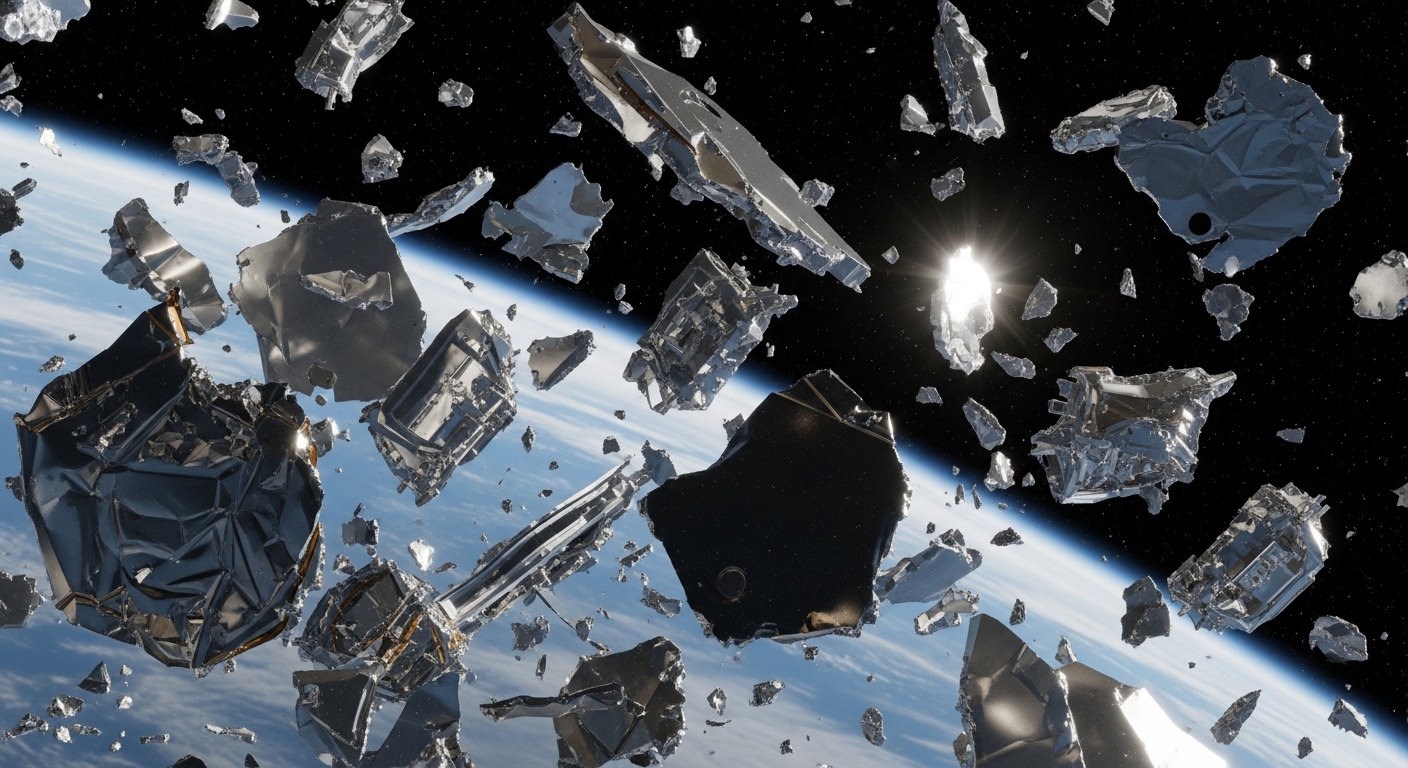
When two objects collide at orbital velocities, the energy released is not just destructive — it is generative. A single collision between two sizable objects can produce thousands of new trackable fragments, each of which then occupies its own orbital path. The 2009 collision between the operational Iridium 33 satellite and the defunct Russian Cosmos 2251 satellite is the clearest documented example: it produced over 2,000 cataloged debris pieces and an unknown number of smaller fragments.
At orbital velocities, a collision does not just destroy two objects — it manufactures thousands of new projectiles, each capable of triggering the next collision in the chain.
The Role of Orbital Shell Density
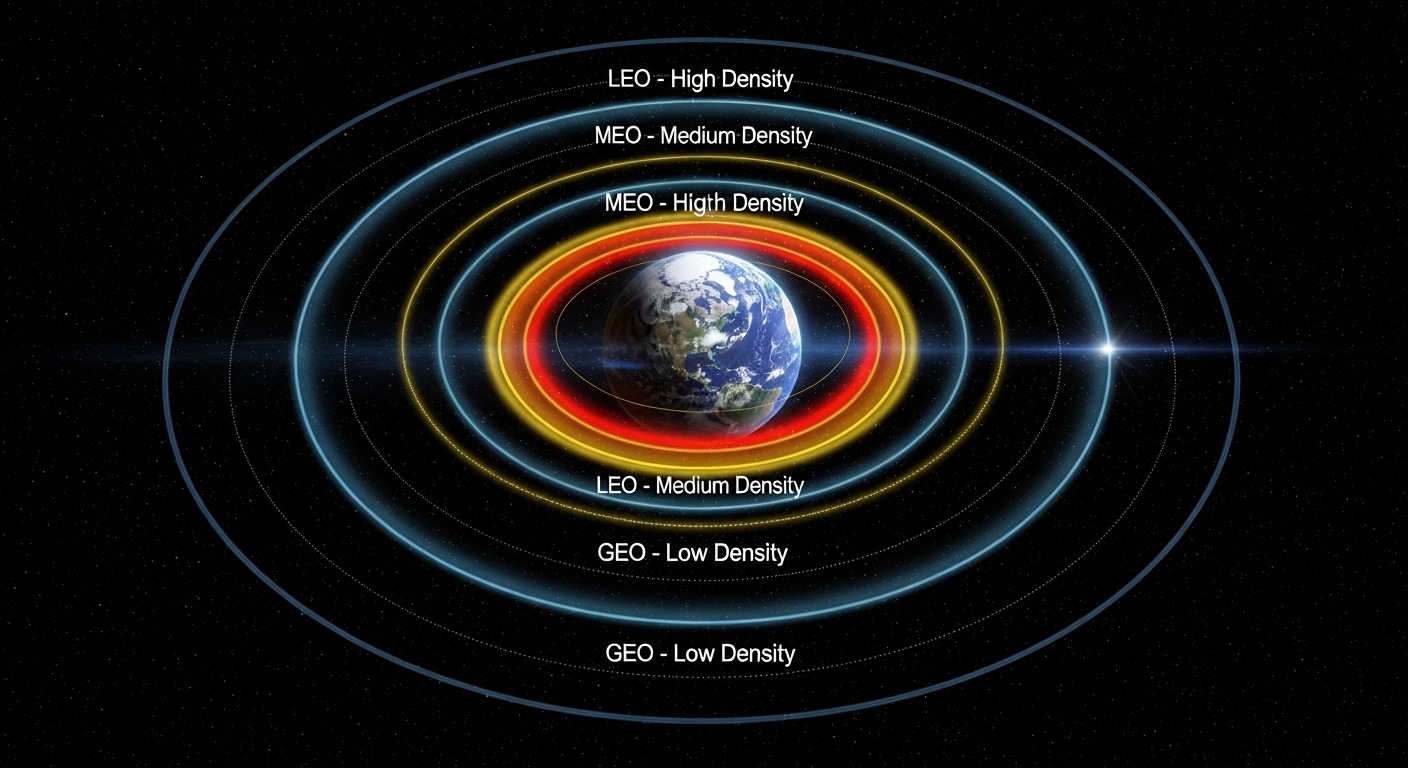
Not all orbits are equally at risk. The most congested and therefore most vulnerable region is low Earth orbit, particularly the bands between roughly 400 and 1,200 kilometers altitude. This is where the International Space Station operates, where most Earth-observation satellites fly, and where large commercial constellations like Starlink have deployed thousands of spacecraft.
Kessler's original model treated orbital shells like a gas — the more particles packed into a given volume, the higher the probability of collision per unit time. As collision probability rises, so does debris density, which raises collision probability further. The feedback loop is baked into the geometry of the problem.
Why Debris Does Not Just Fall Away
A common intuition is that debris will eventually fall back to Earth and burn up. That is true — but the timeline varies enormously with altitude. At 400 kilometers, atmospheric drag is significant enough to pull debris down within months to a few years. At 800 kilometers, that same fragment might persist for decades. Above 1,000 kilometers, orbital lifetimes can stretch into centuries. The debris from China's 2007 anti-satellite missile test, which destroyed the Fengyun-1C weather satellite at roughly 850 kilometers altitude, is still largely present in orbit as of 2026.
Key Events That Have Already Pushed Us Closer to the Threshold
The Iridium-Cosmos Collision of 2009
On February 10, 2009, Iridium 33 — an active commercial communications satellite — collided with Cosmos 2251, a defunct Russian military satellite, over Siberia at an altitude of approximately 790 kilometers. It was the first accidental hypervelocity collision between two intact satellites ever recorded. The event was a proof of concept for the Kessler scenario: two objects that had been tracked but not maneuvered to avoid each other produced a debris cloud that persists to this day.
Deliberate Destructions and Their Lasting Damage
Anti-satellite weapons tests have added significant debris loads to already crowded orbits. China's 2007 Fengyun-1C test is widely cited as the single largest debris-generating event in orbital history, producing estimates of over 3,000 trackable fragments. India conducted a similar test in 2019, though at a lower altitude where debris re-entry was faster. Russia conducted an anti-satellite test in late 2021 that generated a debris cloud large enough to force International Space Station crew members to shelter in docked spacecraft as a precaution.
The Fengyun-1C destruction in 2007 added more trackable debris to low Earth orbit in a single moment than had accumulated from all sources in the preceding decade.
The Megaconstellation Factor
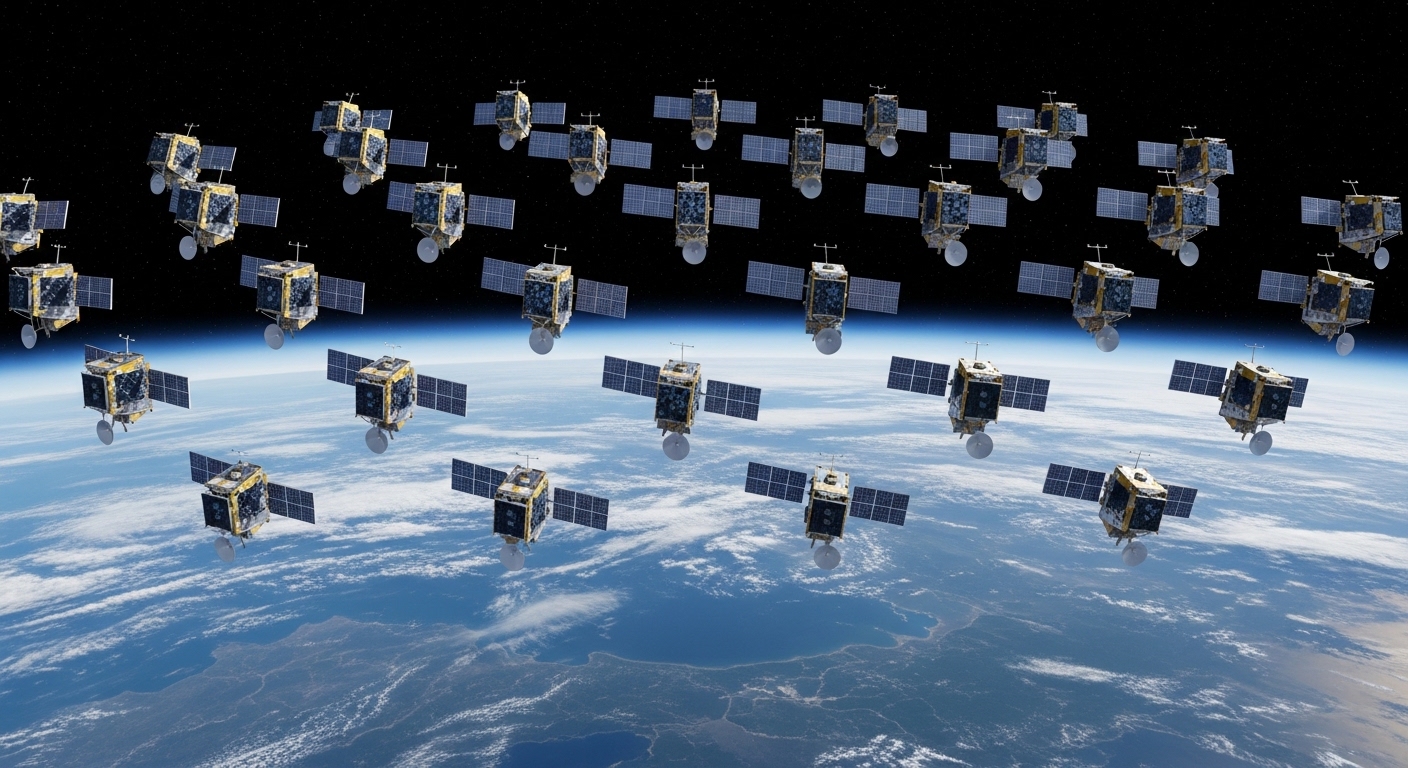
The rise of large commercial satellite constellations introduces a new variable that Kessler's original 1978 model did not fully account for. As of 2026, thousands of commercial broadband satellites occupy low Earth orbit, with approved plans for tens of thousands more. Even with responsible deorbit planning, the sheer number of objects increases the statistical probability of collision — and not every operator maintains equal standards of debris mitigation.
Why Kessler Syndrome Matters Beyond Satellite TV
The Infrastructure We Would Lose
Modern GPS navigation, weather forecasting, financial transaction timing, agricultural monitoring, and military communications all depend on satellites in Earth's orbit. A Kessler cascade that rendered low Earth orbit inaccessible would not just inconvenience consumers — it would disrupt critical infrastructure that most people never think about until it stops working. Estimates of economic damage from a major orbital disruption vary widely, but figures in the trillions of dollars have appeared in policy discussions.
There is also a longer-term consequence that rarely gets discussed: if a cascade made certain orbital shells permanently hazardous, humanity's ability to launch future missions — including crewed missions to the Moon or Mars — would be severely complicated. You cannot safely launch through a debris field without dramatically increased risk.
What Is Being Done About It in 2026
Several approaches are actively being developed. Ground-based laser ranging systems can track smaller debris than radar alone. Active debris removal missions — where a spacecraft physically captures and deorbits a piece of junk — have moved from concept to early demonstration phase, with a handful of missions having attempted controlled approaches to debris objects. The European Space Agency's ClearSpace-1 mission, targeting a specific piece of rocket hardware, represents one of the most concrete steps toward operational debris removal.
International guidelines from bodies like the Inter-Agency Space Debris Coordination Committee recommend that satellites in low Earth orbit be deorbited within 25 years of end of mission. The challenge is that these are guidelines, not enforceable laws, and compliance is uneven across national space programs and commercial operators.
(Opinion: The 25-year deorbit guideline feels increasingly inadequate given the pace of constellation deployment in 2026. What made sense as a standard when annual launch rates were in the dozens looks dangerously permissive when hundreds of satellites go up in a single year. The international community needs binding agreements, not voluntary best practices, before the threshold is crossed rather than after.)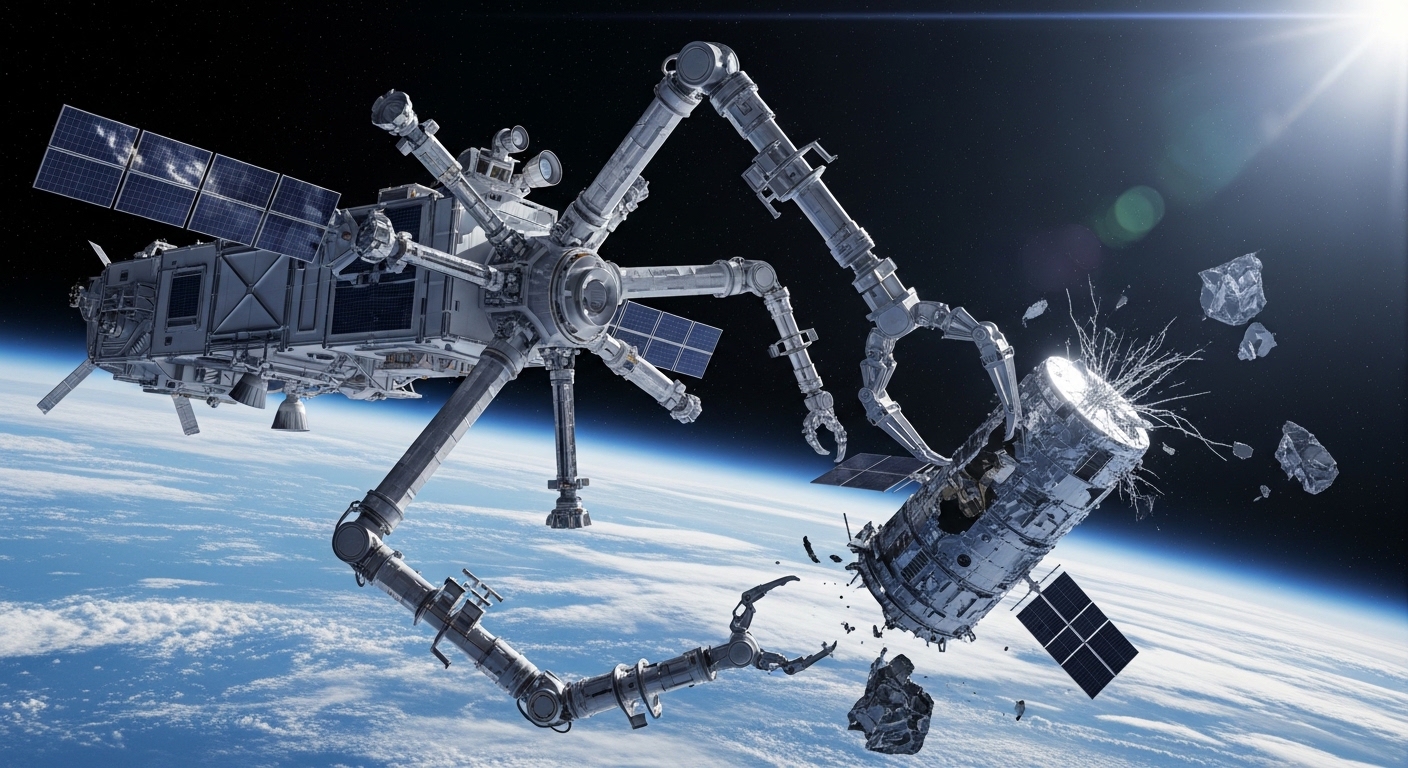
Frequently Asked Questions
Has Kessler Syndrome already started?
Most space debris researchers believe we have not yet crossed the critical threshold for a self-sustaining cascade, but we are in a region where the risk is no longer negligible. Some scientists argue that certain orbital bands — particularly around 800 to 1,000 kilometers altitude — may already be dense enough that collisions will continue to increase debris even if no new objects are launched. The situation is serious but not yet irreversible.
How long would a Kessler cascade take to unfold?
Unlike a Hollywood disaster scenario, a true Kessler cascade would likely unfold over decades rather than hours. The initial collision rate would rise gradually, producing more debris, which would slowly increase collision probability further. The most dangerous outcome is not a sudden catastrophe but a slow degradation of orbital usability that becomes apparent only after the tipping point has been passed.
Can we clean up orbital debris once a cascade starts?
Active debris removal is technically feasible for large, trackable objects, but fragments smaller than roughly 10 centimeters are currently impossible to track with enough precision to target for removal. A full cascade would produce millions of such fragments. Prevention — through better deorbit compliance, responsible constellation design, and a ban on destructive anti-satellite tests — is far more practical than cleanup after the fact.
The counterintuitive truth about Kessler Syndrome is that the most dangerous version of it does not look like a disaster — it looks like a slow, statistical drift toward a point of no return. The debris is already up there. The physics are already running. What happens next depends almost entirely on decisions made on the ground, by governments and companies that often prioritize launch schedules over long-term orbital stewardship. The ceiling above us is not infinite, and treating it as though it were is a bet with consequences that extend far beyond any single satellite operator's business plan.


Comments
Post a Comment