How Internet Data Centers Work to Keep the Web Running
Every time you stream a video, send an email, or load a webpage, a request races across fiber-optic cables to a building filled with thousands of humming servers — a data center. These facilities are the physical backbone of the internet, yet most people never think about them. Understanding how they work explains a lot about why the web is fast, why it rarely goes down, and why it consumes so much energy.
What Is a Data Center? A Plain-Language Definition
More Than Just a Room Full of Computers
A data center is a purpose-built facility that houses computing hardware — servers, storage systems, and networking equipment — along with all the infrastructure needed to keep that hardware running continuously. Think of it as a highly engineered environment designed around one goal: keeping machines online 24 hours a day, 365 days a year.
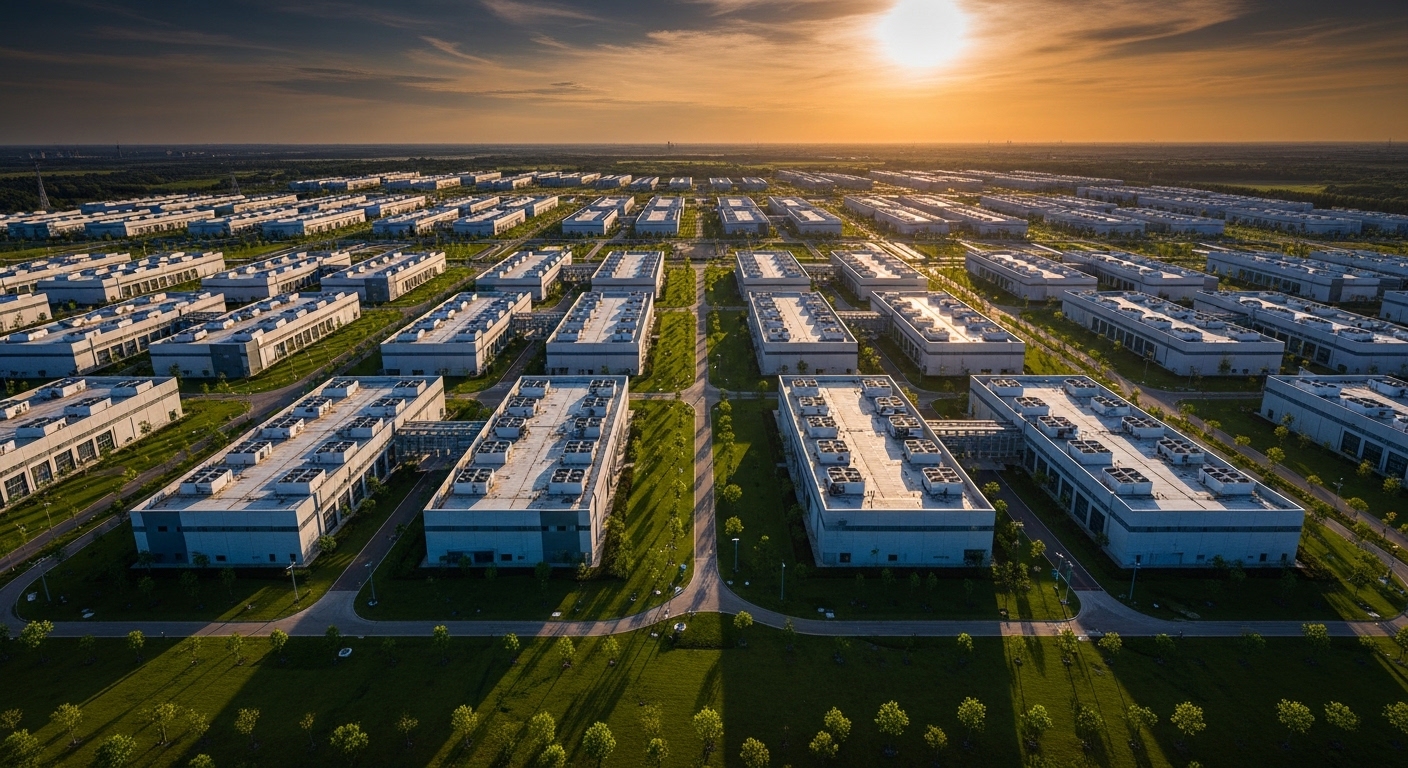
The scale varies enormously. A small business might run a "data center" in a single locked closet. Hyperscale facilities operated by major cloud providers can span hundreds of thousands of square meters and contain hundreds of thousands of individual servers. The internet as we know it depends almost entirely on the latter category.
Data centers are classified by "tier" ratings — a standardized way of measuring reliability. A Tier 1 facility offers basic redundancy, while a Tier 4 facility is designed so that no single failure of any component can cause downtime. Most mission-critical services aim for Tier 3 or Tier 4.
How a Data Center Actually Works — Power, Cooling, and Connectivity
The Power Chain: From the Grid to the Server
Electricity enters a data center from the utility grid, passes through a substation on-site, and then flows through a series of redundant systems before it ever reaches a server. Uninterruptible Power Supplies (UPS) — essentially giant battery banks — bridge the gap if grid power flickers. Diesel or natural gas generators stand ready to take over within seconds if the outage lasts longer.
Power is distributed through redundant paths, so if one circuit fails, another carries the load without interruption. Large hyperscale facilities can draw hundreds of megawatts of power — enough to supply a small city. This is why data center operators spend enormous effort negotiating with utilities and, increasingly, building their own renewable energy sources.
Cooling: The Constant Battle Against Heat
Servers generate heat as a byproduct of computation, and heat is their enemy. Without cooling, a server rack can reach temperatures that cause hardware failures within minutes. Cooling systems typically account for roughly 20 to 50 percent of a facility's total power consumption, depending on design efficiency — making it one of the largest operational costs after the servers themselves.
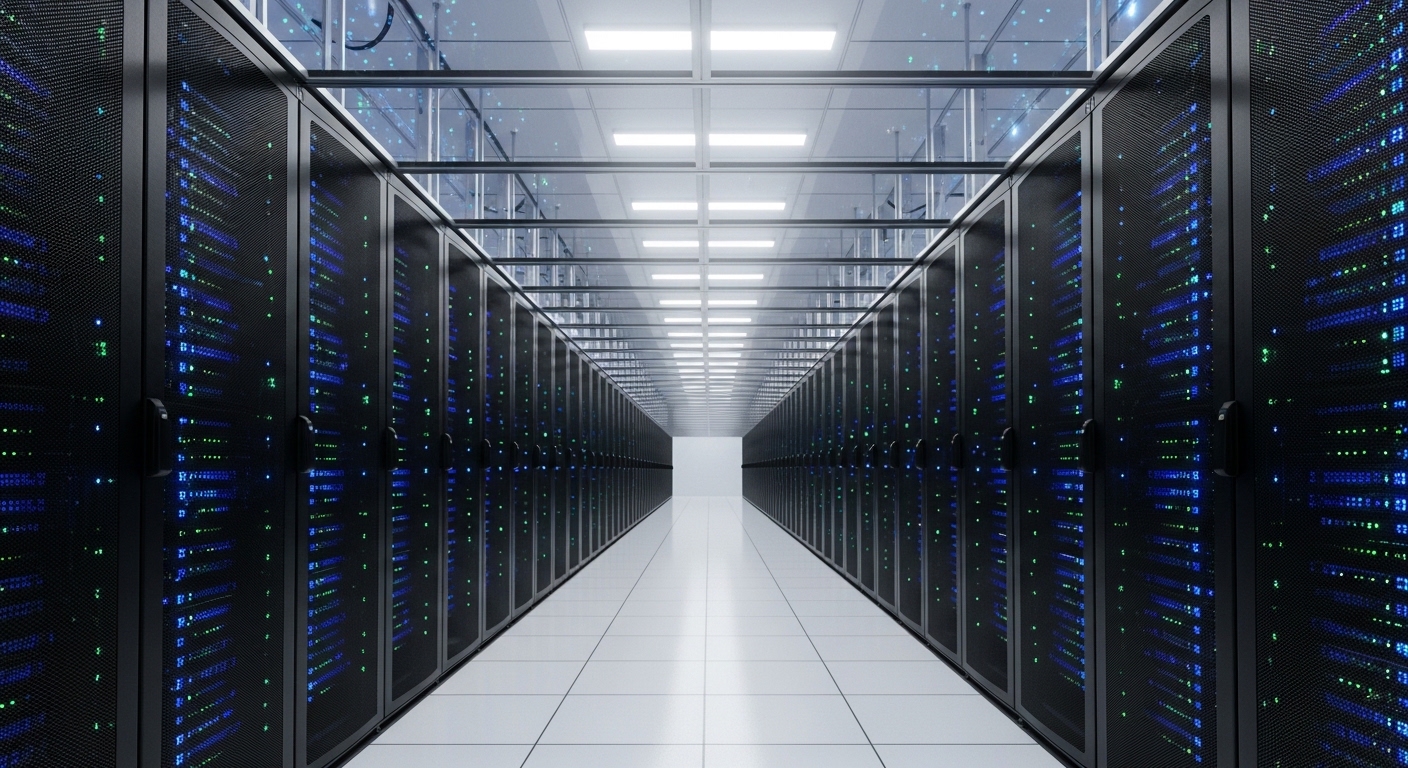
The most common approach uses a "hot aisle / cold aisle" layout. Racks are arranged so that server fronts face cold air supply aisles, and server exhausts face hot air return aisles. Raised floors or overhead ducts channel chilled air precisely where it is needed. More advanced facilities use liquid cooling, where water or a specialized fluid runs directly through server components, removing heat far more efficiently than air alone.
A data center's Power Usage Effectiveness (PUE) ratio tells you how efficiently it uses energy — a PUE of 1.0 would be perfect; the industry average has been falling steadily toward 1.2–1.5 as cooling technology improves.
Connectivity: The Network That Ties It Together
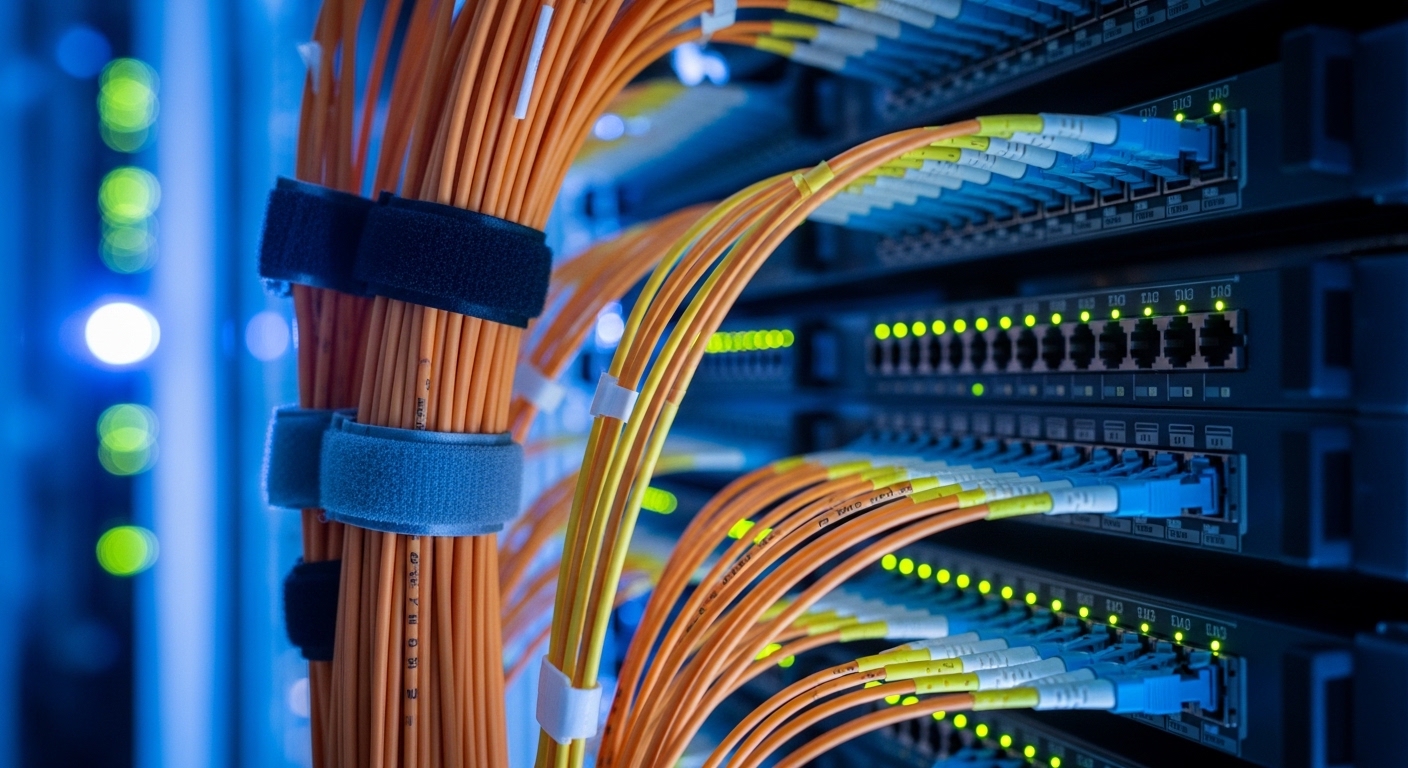
A data center without fast, redundant network connections is useless. Facilities connect to the internet through multiple independent fiber-optic links from different providers — a practice called carrier diversity. If one provider's cable is cut, traffic automatically reroutes through another. Inside the building, high-speed switches and routers move data between servers at speeds measured in terabits per second.
Many large data centers are co-located at or near internet exchange points (IXPs), where different networks physically interconnect. This proximity dramatically reduces the distance data must travel, cutting latency for end users.
How Data Centers Prevent Downtime — Redundancy and Security
Redundancy: Building in Failure Tolerance
The core design philosophy of a serious data center is that any single component can fail without taking the whole system down. This is achieved through redundancy at every layer — dual power feeds, backup generators, multiple cooling units, and network links that automatically failover. The notation "N+1" means there is always one more unit than the minimum required, so one can fail while the rest cover the load.
Software adds another layer of resilience. Cloud providers distribute workloads across multiple data centers in different geographic regions. If a fire, flood, or power failure knocks out one facility, traffic shifts to another within milliseconds. A well-known real-world example of this working as intended: major cloud platforms regularly survive regional outages without users noticing, because traffic is automatically rerouted to healthy regions.
Redundancy is not a luxury — it is the reason a single backhoe cutting a fiber cable in one city does not take down a global service.
Physical and Cyber Security
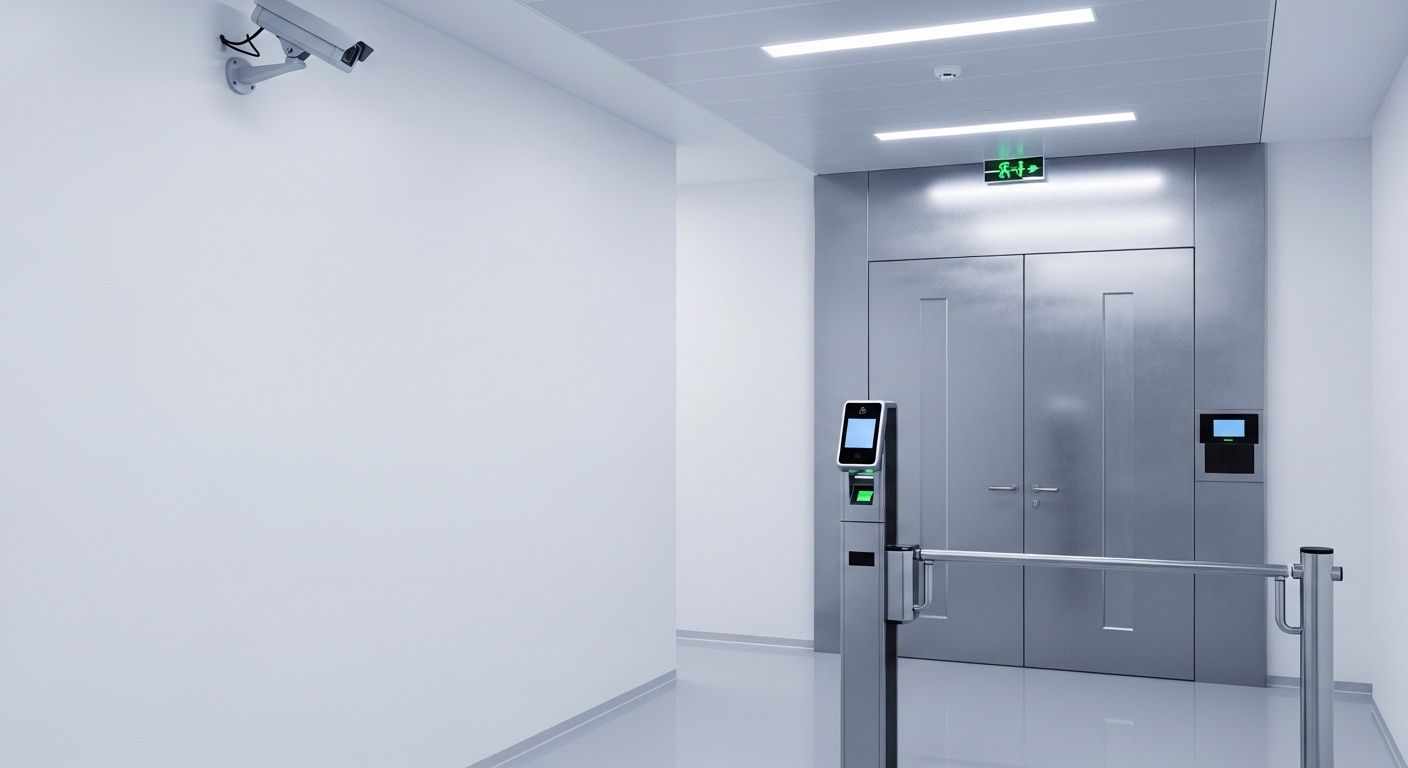
Physical access to a data center is tightly controlled. Entry typically requires multi-factor authentication — a keycard plus a biometric scan, for example — and access logs record every entry and exit. Security cameras monitor all areas continuously, and many facilities use "man-trap" vestibules that prevent tailgating.
On the cyber side, data centers run sophisticated firewalls, intrusion detection systems, and DDoS mitigation services. The network perimeter is monitored around the clock by security operations teams. For the largest facilities, this is a full-time operation involving hundreds of people.
Why Data Centers Matter — Energy, Environment, and the Future of the Web
The Energy Footprint Is Significant — and Changing
Data centers collectively consume a substantial share of global electricity — estimates vary, but figures in the range of 1 to 2 percent of worldwide electricity use are commonly cited by researchers, with some projections suggesting growth as AI workloads expand. That number sounds small until you realize it is comparable to the electricity consumption of entire countries.
The industry has responded with aggressive efficiency improvements and renewable energy procurement. Many large operators have committed to running on 100 percent renewable energy, and the average PUE of new facilities has improved significantly over the past decade. Some facilities in cold climates — Iceland and northern Scandinavia, for example — use outside air for free cooling for much of the year, dramatically cutting energy use.
The Surprising Counterintuitive Truth About Data Centers
Here is the part most people miss: moving computing to large, efficient data centers has actually reduced total energy consumption compared to the alternative. Before cloud computing, every business ran its own servers — often in poorly cooled, underutilized rooms. Consolidating those workloads into hyperscale facilities with 90 percent or higher server utilization rates is far more efficient than thousands of small, half-empty server rooms running at 10 to 20 percent utilization.
(Opinion: The conversation around data center energy use tends to focus on the consumption side while ignoring the efficiency gains. A single well-run hyperscale facility replacing hundreds of corporate server closets is almost certainly a net environmental win — and that story deserves more attention than it gets.)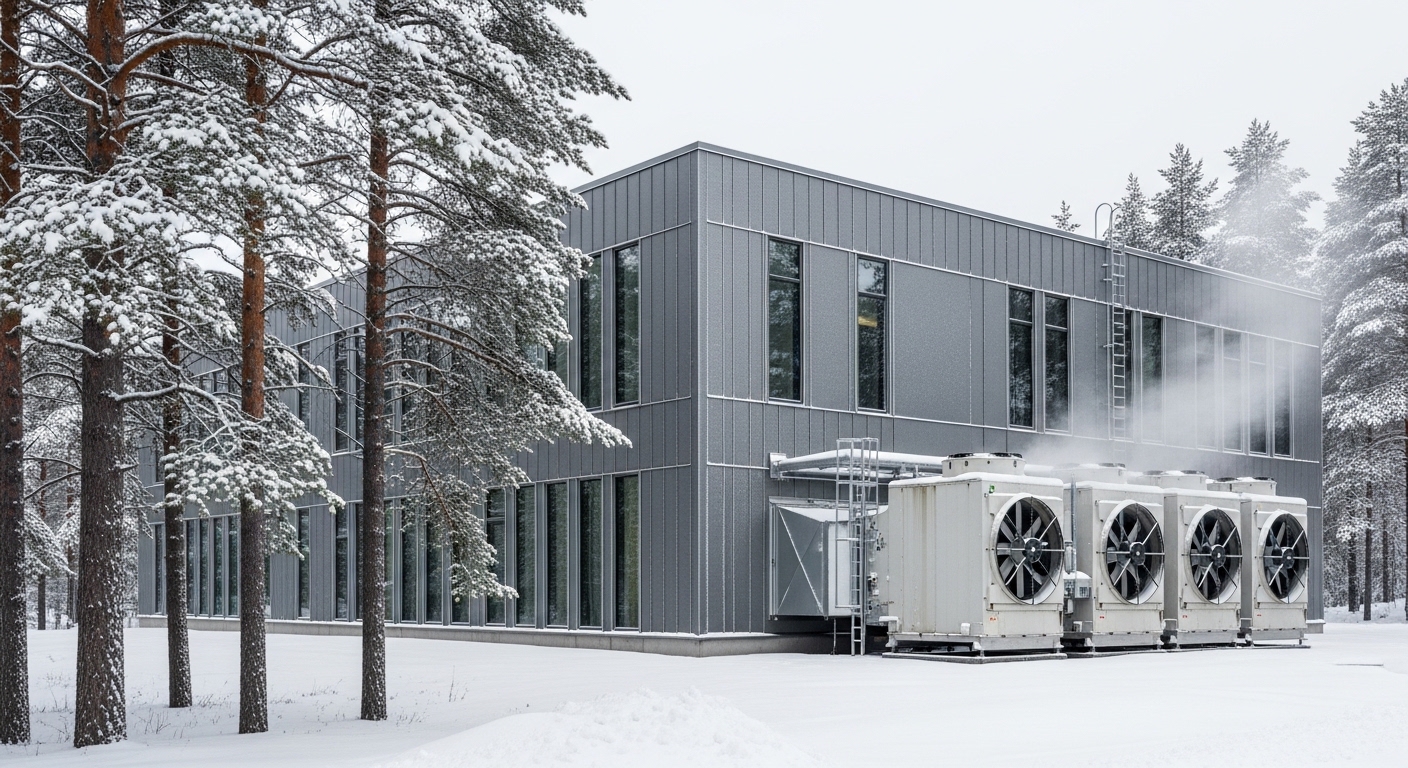
Frequently Asked Questions About Data Centers
How many data centers exist in the world?
Estimates vary widely depending on how you define a data center, but figures commonly cited suggest there are thousands of large commercial facilities globally, with the United States hosting the largest concentration. When you include smaller enterprise server rooms, the number runs into the millions. The hyperscale segment — the giant facilities run by major cloud providers — numbers in the hundreds but handles a disproportionately large share of global internet traffic.
What happens to a data center during a power outage?
A well-designed facility transitions seamlessly. UPS battery systems kick in within milliseconds to bridge the gap, while diesel or gas generators spin up and take over the load — typically within 10 to 30 seconds. Tier 3 and Tier 4 facilities are designed so that this entire process is invisible to users. The servers never lose power because the handoff between systems is automatic and continuous.
Why are data centers often built in remote locations?
Several factors push data centers away from city centers: cheaper land, access to large amounts of power, cooler climates that reduce cooling costs, and lower risk of natural disasters in some regions. Proximity to renewable energy sources — hydroelectric dams, wind farms — is an increasingly important factor. That said, latency requirements for some applications mean facilities serving dense urban populations still need to be relatively close to major cities.
Data centers are easy to take for granted precisely because they work so well. The next time a webpage loads in under a second from a server on the other side of the world, that speed is the result of decades of engineering refinement — redundant power, precision cooling, fiber-optic networks, and software that routes around failure automatically. They are, in a very literal sense, the buildings that hold the internet together.


Comments
Post a Comment