How Airline Overbooking Works: The Math Behind Your Flight
Every time you book a flight, there's a quiet calculation happening behind the scenes — one that assumes you might not actually show up. Airlines routinely sell more seats than their planes have, and for most passengers, nothing goes wrong. But occasionally, someone gets bumped, a gate agent looks flustered, and suddenly the whole system is visible. Overbooking isn't a glitch or a scam. It's a deliberate, mathematically grounded strategy that has shaped commercial aviation for decades — and understanding it changes how you think about every ticket you buy.
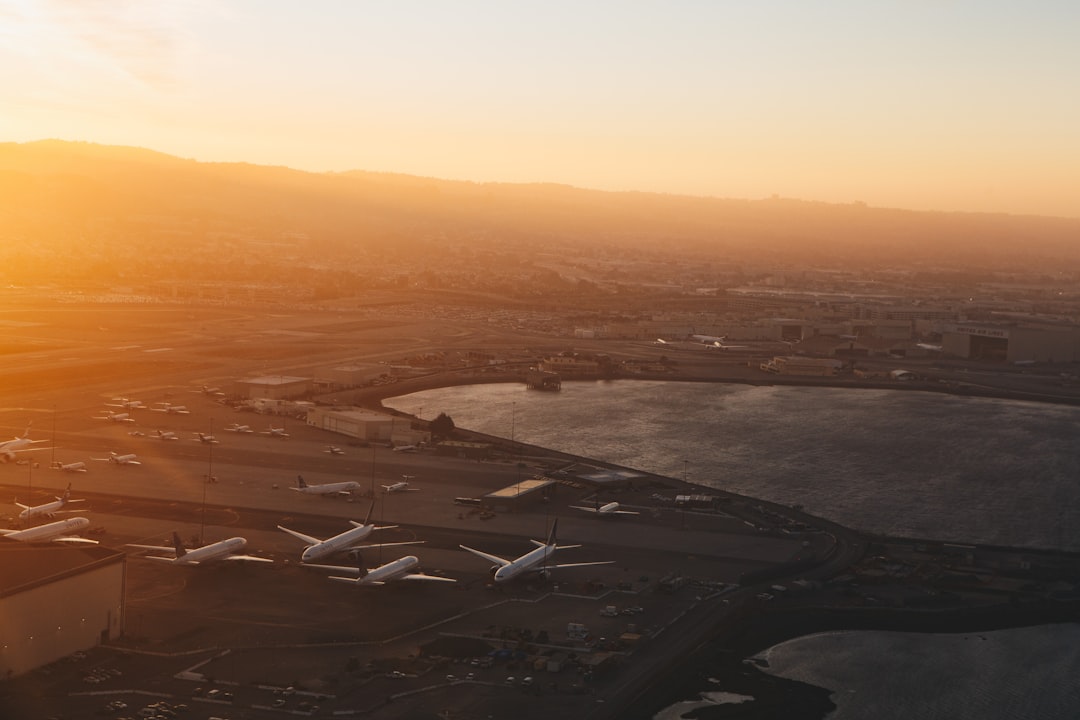
What Airline Overbooking Actually Is 🎟️
Overbooking means selling more tickets for a flight than there are physical seats on the plane. If a Boeing 737 has 180 seats, an airline might sell 190 tickets for a given departure. The logic rests on one simple assumption: not everyone who buys a ticket will show up.
This isn't a fringe practice. It's standard across virtually every major commercial airline in the world. The airline industry operates on notoriously thin margins — estimates vary, but profit per passenger on many routes can be just a few dollars. Leaving seats empty because passengers didn't show up is a direct hit to the bottom line. Overbooking is the industry's answer to that problem.
The key term you'll hear is the no-show rate — the percentage of passengers who hold confirmed reservations but don't board the flight. This rate fluctuates based on route, time of year, day of the week, and whether tickets are refundable. Business routes on Monday mornings have different no-show patterns than leisure routes on holiday weekends. Airlines track all of it.
Here's the counterintuitive part: overbooking, when it works as intended, actually keeps ticket prices lower for everyone. If airlines had to absorb the revenue loss from every empty seat caused by no-shows, fares would rise to compensate. The practice essentially transfers the financial risk of no-shows from the airline to a small pool of passengers who get bumped — and those passengers are compensated for the inconvenience.
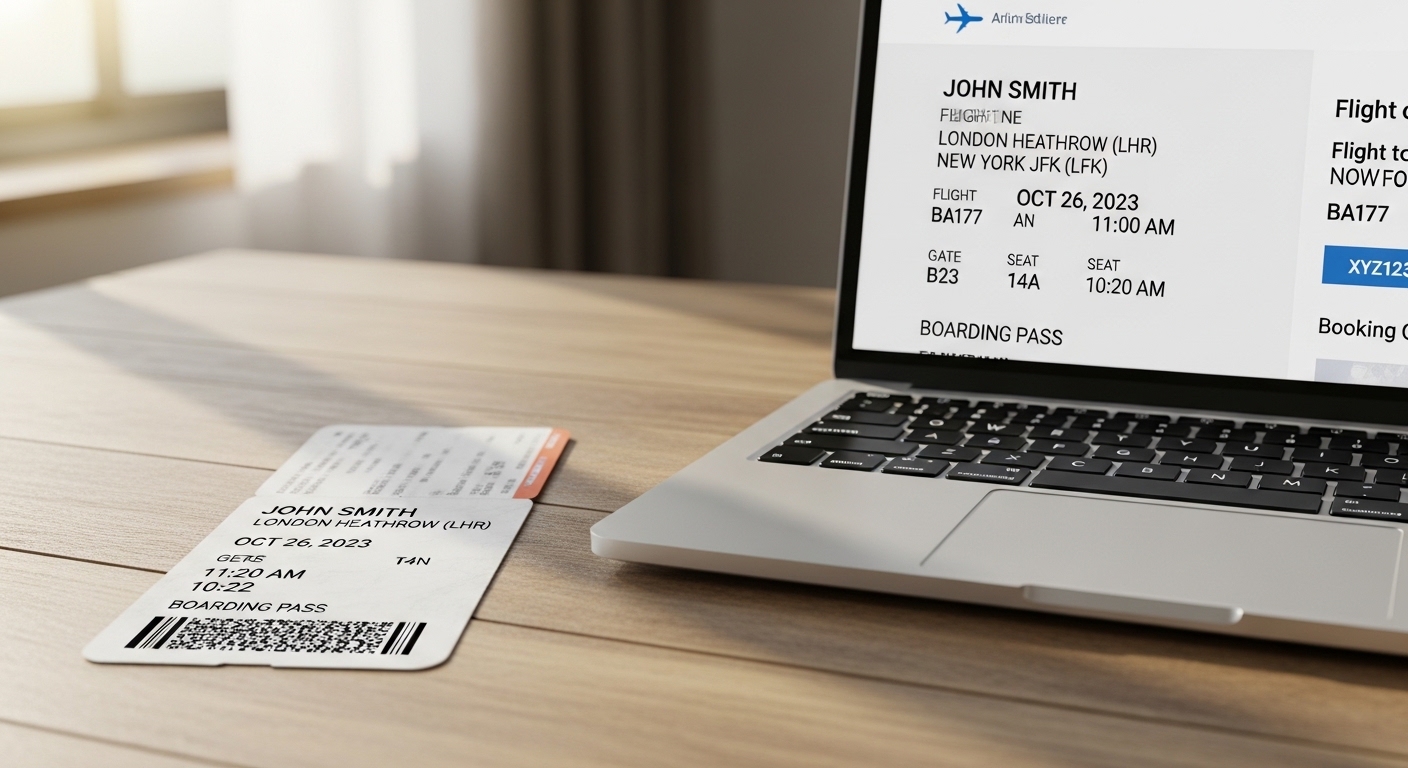
How the Math Actually Works 📊
Airlines use a branch of mathematics called yield management (also called revenue management) to decide exactly how many extra tickets to sell. It's the same discipline that determines why the seat next to you cost twice what you paid.
At its core, the calculation is a probability problem. If historical data shows that, on a given route, roughly 8% of passengers don't show up, and the plane has 200 seats, the airline knows that selling 200 tickets will likely result in around 184 actual boarders. So they might sell 215 tickets, expecting the no-show rate to bring actual boarders close to 200.
But it's not that simple. Airlines don't use a single average — they build statistical models that account for the full distribution of possible outcomes. The question isn't just "what's the average no-show rate?" It's "what's the probability that more than 200 people show up if we sell 215 tickets?" That's a classic application of the binomial distribution in statistics.
The model also factors in connecting flights (passengers on connections are more likely to miss a leg), fare class (fully refundable business tickets have higher no-show rates than cheap non-refundable economy fares), and even weather forecasts for the departure city. A snowstorm warning raises the predicted no-show rate; airlines may actually sell fewer extra tickets in response.
A concrete real-world example: United Airlines, like most major carriers, has publicly acknowledged using sophisticated revenue management software that recalculates overbooking levels continuously as the departure date approaches. As more passengers check in online in the 24 hours before a flight, the model updates its predictions and the gate team gets a clearer picture of whether a bump situation is likely.

Real-World Examples of Overbooking in Action 🌍
The most publicly documented overbooking incident in recent memory involved United Airlines in 2017, when a passenger was forcibly removed from an overbooked flight at Chicago O'Hare airport. The video went viral globally, sparked congressional hearings in the United States, and led to significant policy changes across the industry. The incident made clear that overbooking, while mathematically sound, carries real human and reputational costs when the system breaks down.
Following that incident, several U.S. carriers raised the maximum compensation they offer to volunteers willing to give up their seats. Under U.S. Department of Transportation rules in place as of 2026, passengers who are involuntarily bumped from a domestic flight and arrive at their destination more than one hour late are entitled to cash compensation — the exact amount depends on the ticket price and the length of the delay, but it can reach several hundred dollars.
European Union regulations take a similar approach under rules known as EC 261/2004. Passengers on flights departing from EU airports (or arriving on EU-based carriers) are entitled to compensation and care — meals, accommodation if needed — when they're denied boarding due to overbooking. The amounts are fixed by distance rather than ticket price, which many passengers find more predictable.
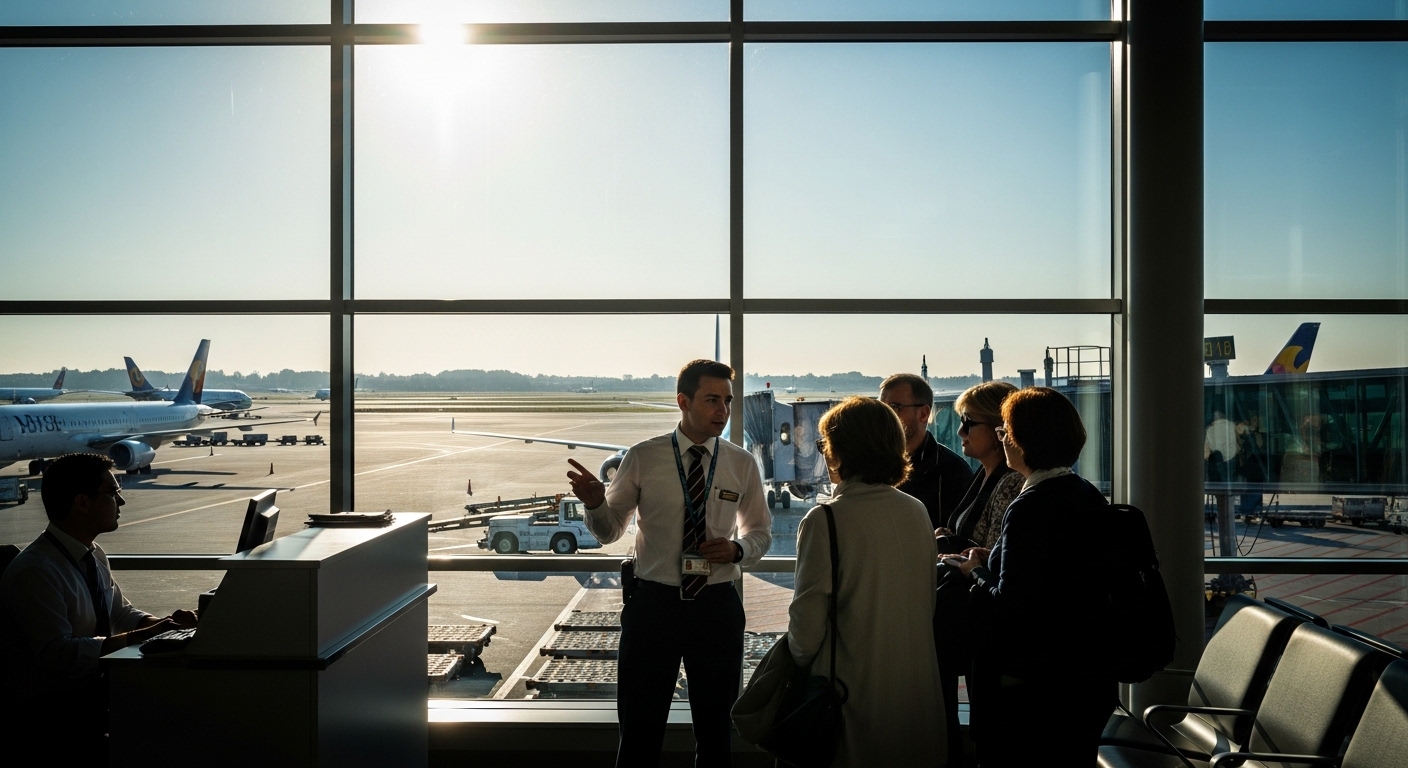
On the quieter side of the story, overbooking works invisibly millions of times a year. Gate agents routinely ask for volunteers before a flight even boards, offering travel vouchers or miles in exchange for taking a later flight. Many frequent travelers actively seek these opportunities — a free round-trip voucher in exchange for a three-hour wait at the airport is a reasonable trade for someone with flexibility.
Why This Matters to You as a Passenger 💡
Knowing how overbooking works gives you real, practical leverage. The most important thing to understand is the difference between a voluntary bump and an involuntary bump. Airlines are required to ask for volunteers first. If you have flexibility, you can negotiate — the initial voucher offer is rarely the maximum available. Gate agents often have authority to increase the offer if no one volunteers at the first price.
Your risk of being involuntarily bumped is not random. Passengers who check in late, book through third-party sites, or hold the cheapest fare class on a given flight are statistically more likely to be selected if the airline needs to offload passengers. Checking in as early as possible — ideally online the moment the window opens, typically 24 hours before departure — is one of the most effective ways to protect yourself.
Seat assignments also matter. Passengers without assigned seats are more vulnerable. If you're flying on a budget carrier that charges for seat selection, paying that fee isn't just about legroom — it's a small insurance policy against being bumped.
Research suggests that overbooking rates have declined somewhat in recent years as airlines have improved their predictive models and as the reputational risk of high-profile bumping incidents has grown. Some carriers have also introduced "no-show" fees on certain fare types, which reduces the no-show rate itself and therefore reduces the need to overbook as aggressively.
(Opinion: The 2017 United incident was a turning point, but the industry's response has been mostly cosmetic. Higher compensation caps are welcome, but the real fix would be better real-time communication with passengers — letting people know days in advance that a flight is overbooked and offering incentives to rebook voluntarily, rather than waiting until the gate to create a stressful scramble. Technology exists to do this. The will to prioritize passenger experience over last-minute revenue optimization is what's still missing.)
Frequently Asked Questions
Can an airline legally force you off a plane you're already seated on?
In most jurisdictions, yes — once you've boarded, airlines can still require you to deplane in certain circumstances, including overbooking situations. However, the legal and financial consequences for the airline are significant. In the U.S., involuntary removal of a seated passenger triggers mandatory compensation rules and, as the 2017 United incident showed, enormous reputational damage. Most airlines exhaust every voluntary option before reaching that point.
Does overbooking happen on every flight?
Not every flight is overbooked, and not every overbooked flight results in a bump. Airlines calibrate overbooking levels based on historical no-show data for each specific route and departure time. Flights with very low historical no-show rates — like popular holiday routes where nearly everyone shows up — may not be overbooked at all, or only very slightly.
What should you do if you're involuntarily bumped?
First, ask the gate agent for the specific compensation you're entitled to in writing — don't just accept a voucher without understanding your cash compensation rights. Second, ask about the next available flight, including on partner airlines. Third, keep all receipts for meals or transport costs incurred due to the delay, as these may be reimbursable. Knowing your rights before you fly — checking your country's aviation authority rules — puts you in a much stronger negotiating position.
Airline overbooking is one of those systems that feels outrageous until you understand the math — and then feels almost reasonable, right up until it happens to you. The practice isn't going away, but as predictive models improve and passenger expectations rise, the industry is slowly shifting toward handling it more transparently. The more you know about how the numbers work, the better positioned you are to navigate it — and maybe even profit from it the next time a gate agent asks for volunteers.


Comments
Post a Comment