What Is Stardust, and Why Do Scientists Look for It on Earth?
Every atom of calcium in your bones was forged inside a star that exploded before our solar system existed. That is not a metaphor — it is nuclear physics. But stardust is not just a poetic concept; it is a physical substance that scientists actively hunt for in Antarctic ice, deep-sea sediments, and even rooftop gutters. The search for it has reshaped our understanding of how the universe builds the ingredients for life.

What Is Stardust, Really? A Plain-Language Definition
The Difference Between Stardust and Regular Space Dust
The word "stardust" gets used loosely, so it helps to be precise. In the scientific sense, stardust refers to microscopic solid grains that formed directly inside stars or in the material ejected when stars die — supernovae, asymptotic giant branch stars, and novae. These grains traveled through interstellar space for millions or billions of years before being swept up by our forming solar system.
Regular space dust — the kind that makes up most of the interplanetary debris raining down on Earth — formed within our own solar system. It is local material. True stardust grains, by contrast, are genuinely extrasolar messengers: they predate the Sun itself and carry isotopic fingerprints that no solar-system process could produce.
The practical difference is enormous. Solar-system dust tells us about our cosmic neighborhood. Stardust tells us about entirely different stars, in different parts of the galaxy, that lived and died long before Earth existed.
What Stardust Is Made Of
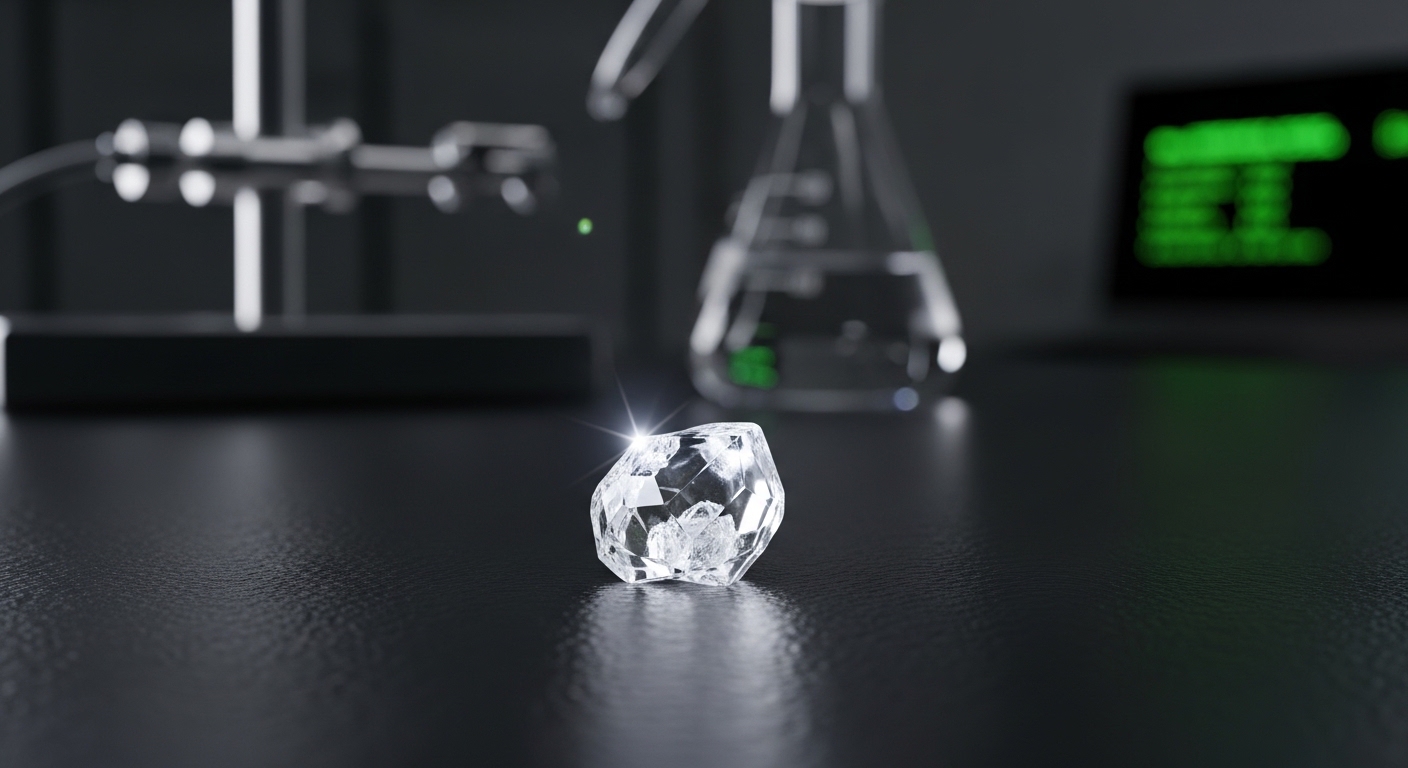
Stardust grains come in several mineral types depending on what kind of star produced them. Silicon carbide grains tend to come from carbon-rich giant stars. Tiny diamonds — some only a few nanometers across — are thought to form in supernova shockwaves. Corundum and spinel grains point to oxygen-rich stellar environments. Each mineral type is essentially a fossilized record of the nuclear furnace that created it.
How Do Scientists Identify Stardust? The Isotope Method Explained
Why Isotope Ratios Are the Smoking Gun
You cannot identify a stardust grain just by looking at it. The grains are tiny — most are smaller than a human red blood cell — and visually indistinguishable from ordinary mineral dust. The real identification tool is isotope analysis. Every element comes in slightly different versions called isotopes, and the ratio of those isotopes in a grain reveals where it was made.
Solar-system material has a characteristic isotopic composition set by the conditions of our Sun's formation. Stardust grains have wildly different ratios — sometimes off by factors of hundreds or thousands — because they formed under completely different nuclear conditions inside other stars. A silicon carbide grain with an anomalous carbon-12 to carbon-13 ratio is essentially waving a flag that says "I did not come from here."
A single stardust grain smaller than a bacterium can carry isotopic ratios so extreme they are physically impossible to produce anywhere in our solar system — making them the universe's most reliable return addresses.
The Tools Scientists Use in 2026
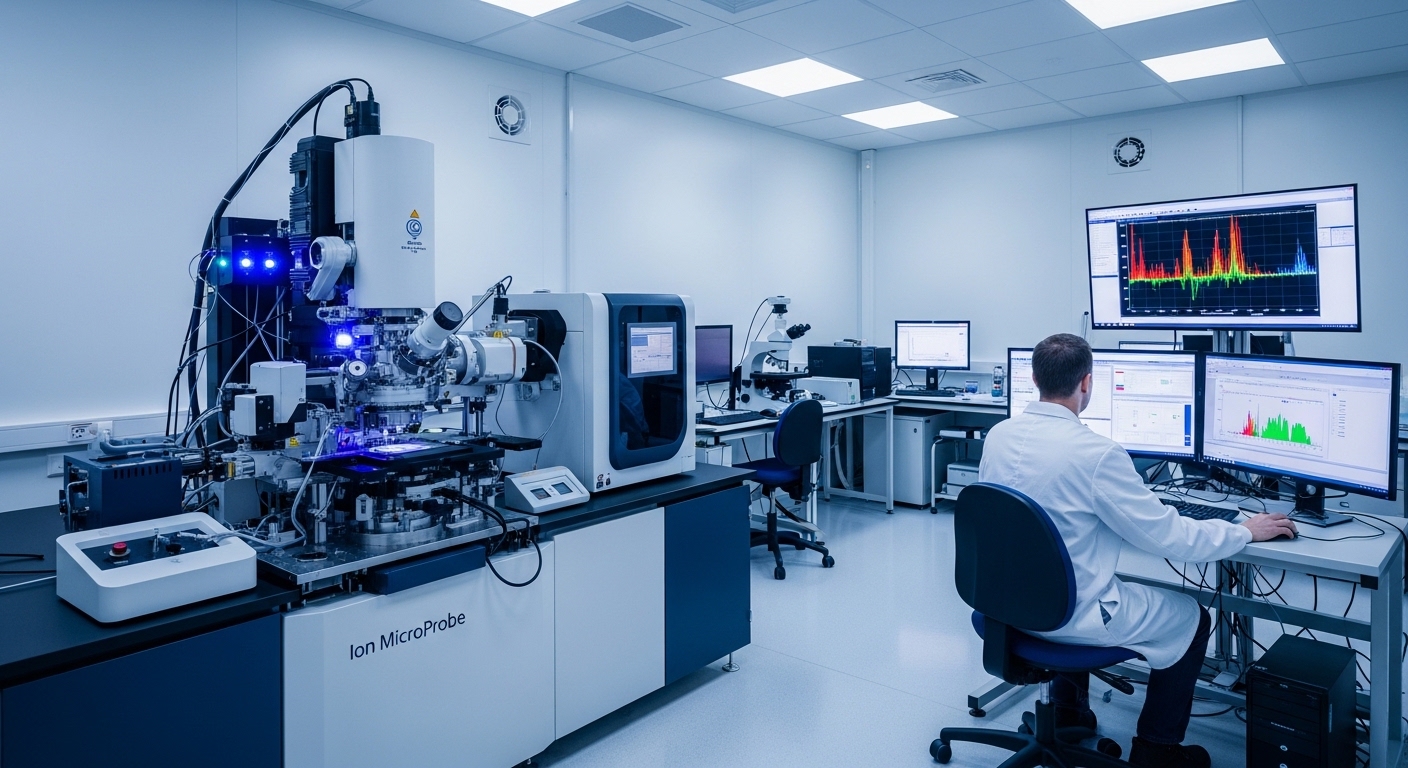
Modern isotope analysis relies on instruments called ion microprobes and nanoscale secondary ion mass spectrometers (NanoSIMS). These machines fire a focused beam of ions at a grain, liberating atoms from its surface, which are then sorted by mass. The technique can measure isotope ratios in a spot just a few hundred nanometers wide — smaller than a wavelength of visible light.
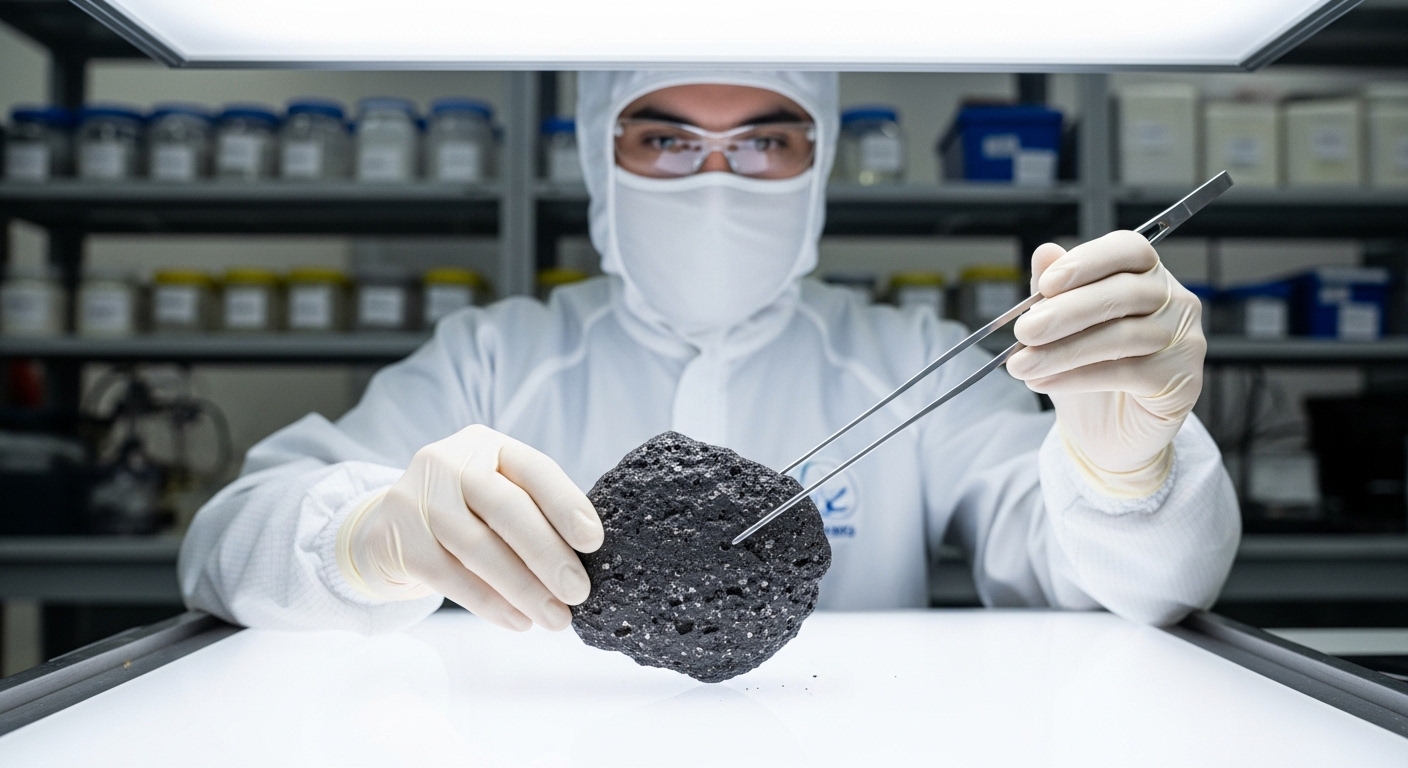
The process is painstaking. Researchers dissolve meteorite samples in harsh acids, destroying the bulk of the rock to leave behind the tiny fraction of acid-resistant grains. From a gram of meteorite, scientists might recover a few hundred stardust grains. Each one is a separate data point about a star that no telescope will ever see up close.
Where Scientists Actually Find Stardust on Earth
Meteorites: The Most Reliable Source
The richest known source of presolar grains — the technical term for stardust — is a class of meteorites called carbonaceous chondrites. The Murchison meteorite, which fell in Australia in 1969, has been studied extensively and yielded stardust grains that isotope analysis dated to roughly 7 billion years old, making them the oldest solid material ever measured. That is more than 2 billion years older than Earth itself.
Not all meteorites are equally useful. Heavily processed meteorites — ones that were heated or altered by water on their parent asteroid — tend to have their stardust grains chemically destroyed. The most primitive, least-altered meteorites are the scientific gold mines.
Deep-Sea Sediments and Antarctic Ice
Earth is constantly being dusted by extraterrestrial material. Estimates suggest thousands of tonnes of cosmic dust settle onto the planet's surface every year, though figures vary depending on the measurement method. Most of this is solar-system material, but a small fraction includes genuine stardust grains.
Scientists collect this cosmic fallout from deep-sea sediment cores, where terrestrial contamination is minimal, and from Antarctic ice cores, where the slow accumulation of ice preserves a clean record. Rooftop collection projects in cities have also recovered cosmic spherules — tiny melted droplets of extraterrestrial material — though urban contamination makes stardust identification harder in those samples.
Antarctic ice cores act as a time-stamped archive of cosmic dust — layer by layer, they preserve a record of what was falling from space across thousands of years.
Why Stardust Research Matters — What It Tells Us About Stars and Life
Reading the History of Stellar Nucleosynthesis
Every stardust grain is a direct sample from a star we can never visit. By reading its isotopic composition, astrophysicists can test and refine their models of how stars produce elements — a process called stellar nucleosynthesis. When a grain's isotope ratios match the predictions of a particular stellar model, it validates that model. When they do not match, it forces scientists to revise their understanding of how stars work.
This matters because nucleosynthesis is how the universe built everything heavier than hydrogen and helium. Carbon, oxygen, iron, calcium — all of it was assembled inside stars. Stardust grains are the physical receipts for those transactions.
The Connection to the Origins of Life
Research suggests that some of the organic molecules found in carbonaceous meteorites — including amino acids, the building blocks of proteins — may have been delivered to early Earth from space. While stardust grains themselves are not organic molecules, they are part of the same delivery system: the interstellar and interplanetary material that seeded our planet's chemistry during its first billion years.
Understanding the full inventory of what arrived on early Earth, and in what form, is central to the scientific question of how life began. Stardust research is one thread in that much larger investigation.
(Opinion: There is something philosophically significant about the fact that the most ancient objects humans have ever physically held are not artifacts or fossils but tiny mineral grains from dead stars. The Murchison stardust grains predate our solar system by billions of years, and they were sitting in a field in rural Australia until a meteorite delivered them. That strikes me as one of the most quietly astonishing facts in all of science.)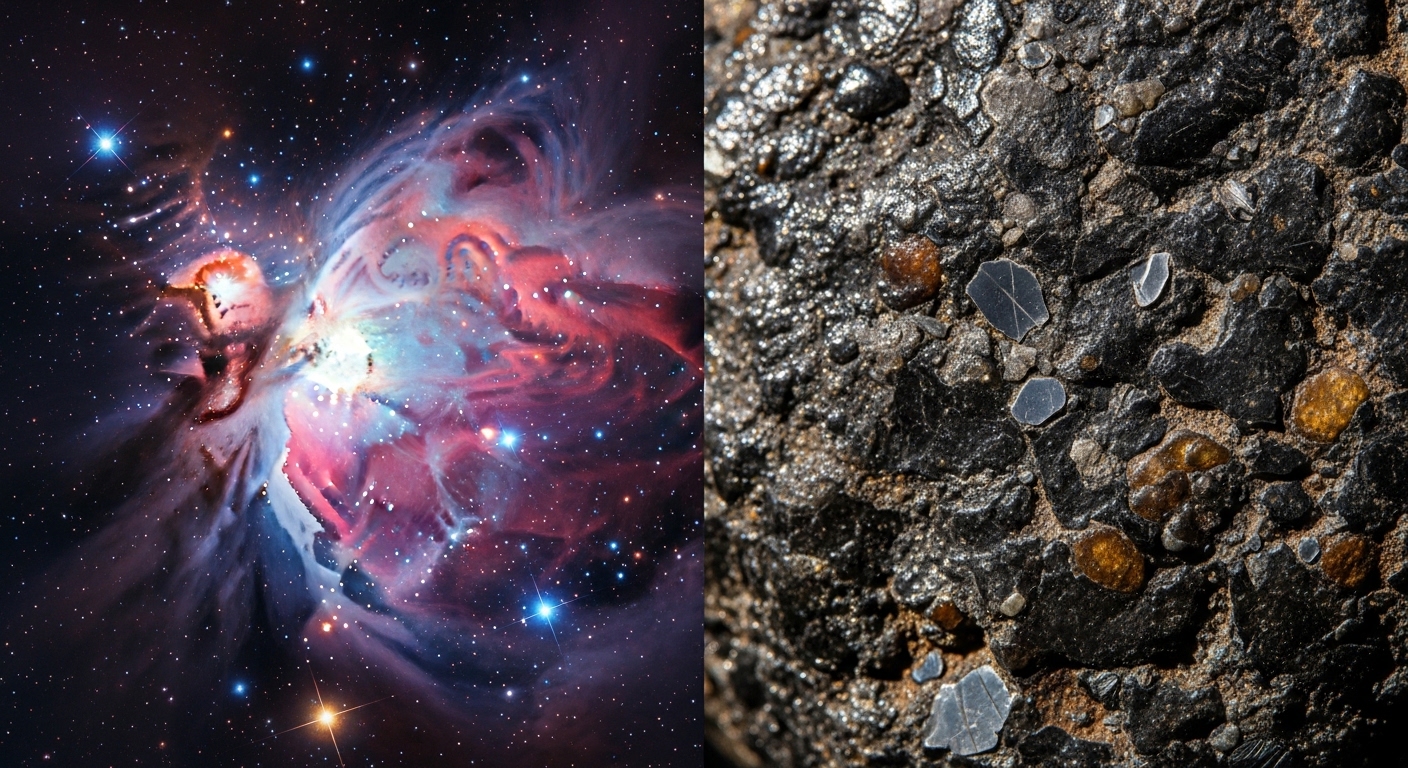
Frequently Asked Questions About Stardust
Is the stardust in our bodies the same as the stardust scientists study in meteorites?
In a broad sense, yes — the atoms in your body were produced by stellar nucleosynthesis, just like the atoms in stardust grains. But the stardust scientists study in meteorites refers specifically to solid mineral grains that formed inside stars and survived intact. The atoms in your body have been through many more transformations — gas clouds, the solar nebula, planetary chemistry — and are no longer in their original stellar grain form.
How old is the oldest stardust ever found?
The oldest presolar grains identified to date — silicon carbide grains from the Murchison meteorite — have been dated to roughly 7 billion years old using isotope analysis. For context, our solar system is approximately 4.6 billion years old, so these grains formed in a different star more than 2 billion years before our Sun ignited. Dating methods for presolar grains rely on the decay of radioactive isotopes trapped within the grain at the time of its formation.
Can stardust be found anywhere other than meteorites and ice cores?
Yes, though it is harder to isolate. Cosmic dust continuously settles on Earth's surface, and researchers have recovered extraterrestrial particles from deep-sea sediments, high-altitude atmospheric collection flights, and even urban rooftop dust. The challenge outside of meteorites is separating genuine presolar grains from the enormous background of terrestrial and solar-system material. Meteorites remain the most practical and productive source because they concentrate and preserve the grains in a relatively uncontaminated matrix.
Stardust research sits at a rare intersection: it is simultaneously one of the most technically demanding fields in science and one of the most philosophically resonant. The grains are tiny, the instruments are extraordinary, and the questions they answer stretch from the mechanics of nuclear fusion to the origins of life on Earth. The next time you hear that we are all made of stardust, know that scientists are not speaking loosely — they are describing a chain of physical events that left solid, measurable evidence, some of it sitting in a laboratory drawer right now.


Comments
Post a Comment