The Secret Language of Bugs: How Do Insect Pheromones Work?
A single female moth can release less than a millionth of a gram of chemical into the air and attract a male from more than a mile away. That's not a metaphor — it's a documented biological fact, and it tells you everything about how powerful insect pheromones really are. These chemical signals are the original long-distance communication system, refined over hundreds of millions of years before anything with a spine had a thought worth sharing.

What Are Insect Pheromones, Really?
A Chemical Signal, Not a Smell
Pheromones are chemical compounds released by one individual that trigger a specific behavioral or physiological response in another member of the same species. That last part matters: they work within a species, not across them. They are not the same as the general odors insects produce — a rotting-fruit smell that attracts fruit flies is just a food cue, not a pheromone.
The word itself comes from the Greek pherein (to carry) and hormon (to excite). It was coined in 1959 by scientists Peter Karlson and Martin Lüscher, though insects had been using the system for roughly 400 million years before anyone gave it a name. The first pheromone ever chemically identified was bombykol, isolated from the silk moth Bombyx mori — and it took researchers processing extracts from hundreds of thousands of female moths to collect enough of it to analyze.
That's the kind of operational detail that puts the difficulty in perspective. You're not dealing with large molecules or obvious quantities. You're chasing trace amounts of specific compounds that happen to be extraordinarily potent.
How Insects Detect Them
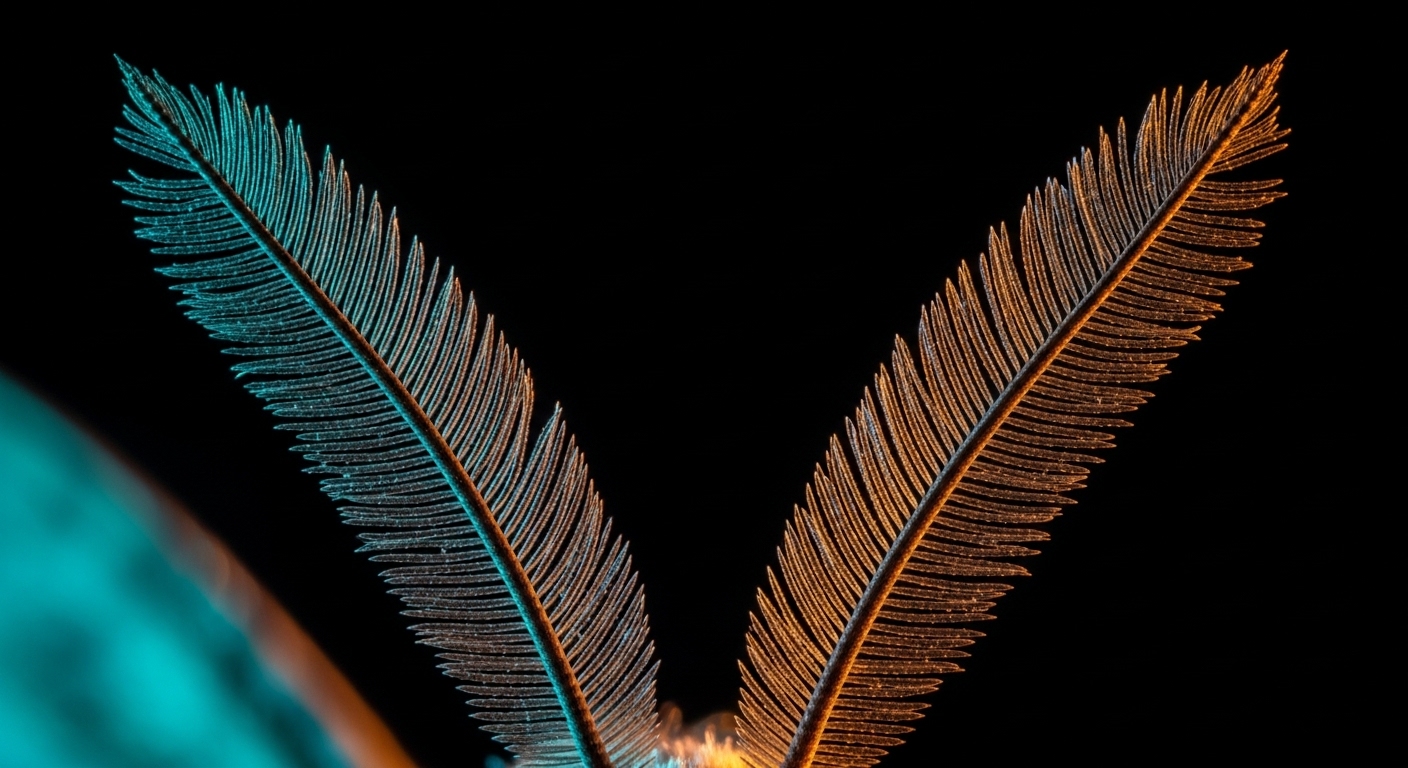
Insects don't have noses. They detect pheromones primarily through sensory hairs called sensilla on their antennae. Each sensillum contains dendrites from specialized olfactory neurons that are tuned — sometimes with remarkable specificity — to particular molecular structures. A male moth's antennae can have tens of thousands of these sensilla, each one essentially a tiny receptor waiting for the right molecule to land.
When a pheromone molecule binds to a receptor protein inside a sensillum, it triggers an electrical signal that travels to the insect's brain. The whole process, from molecule landing on antenna to behavioral response, can happen in fractions of a second. That's why you see moths flying in what looks like a purposeful, almost urgent straight line — they're tracking a real-time chemical gradient.
How the Pheromone System Actually Works — The Mechanics
Types of Pheromones and What They Do
Not all pheromones do the same job. Scientists generally divide them into categories based on function. Sex pheromones are the most studied — they attract mates and often trigger courtship behavior. Alarm pheromones warn nestmates of danger; when a honeybee stings and releases isoamyl acetate near the hive entrance, it's essentially broadcasting a distress signal that recruits other bees to defend. Trail pheromones, used heavily by ants, lay down chemical roads between food sources and the nest.
There are also aggregation pheromones, which draw insects together for feeding or overwintering, and primer pheromones — a slower-acting class that actually alters the physiology of the receiver rather than just their behavior. The queen substance produced by a honeybee queen is a primer pheromone: it suppresses ovary development in worker bees, essentially keeping the entire colony reproductively subordinate through chemistry alone.
A honeybee queen doesn't enforce her dominance through aggression — she does it with a single chemical compound that rewires the reproductive biology of thousands of workers simultaneously.
The Blend Problem — Why One Molecule Isn't Enough
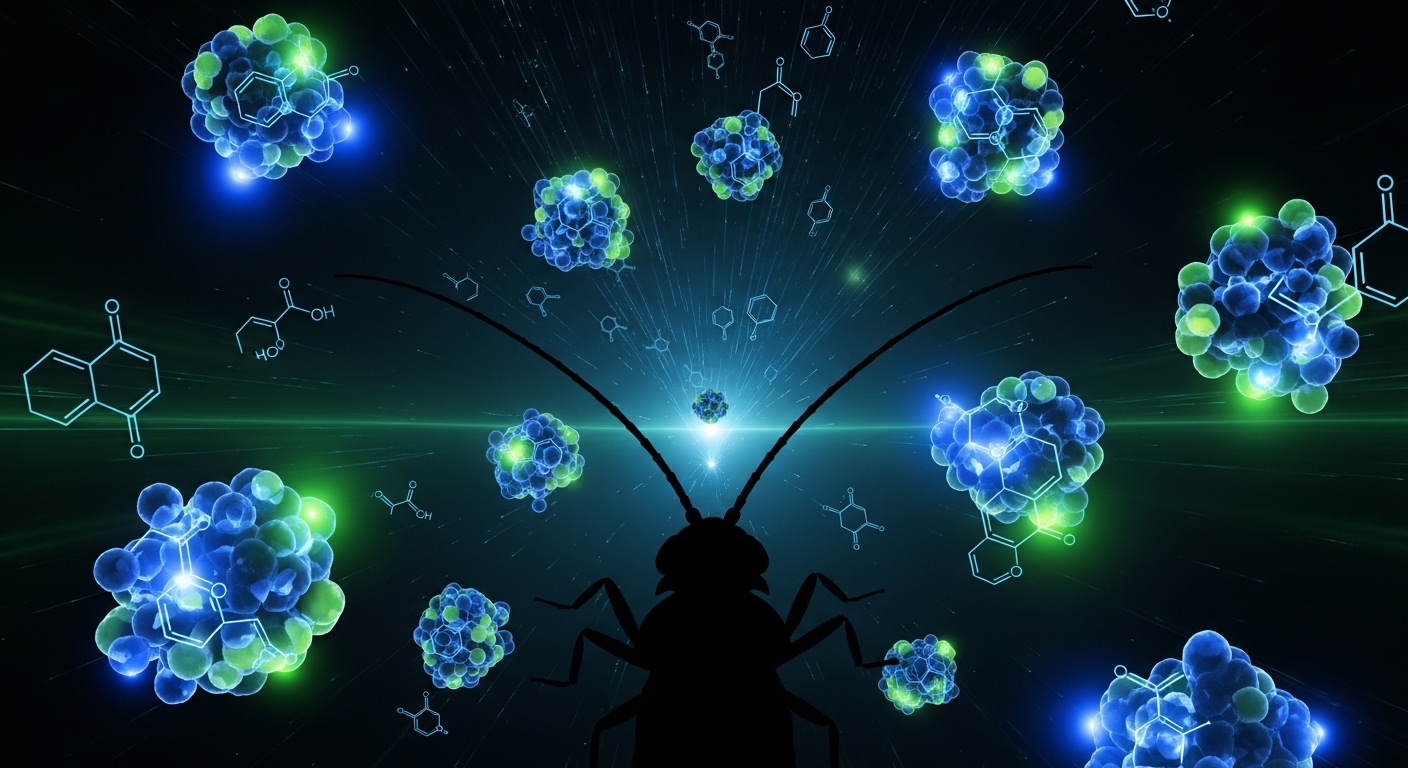
Here's where it gets genuinely interesting. Most insect sex pheromones aren't single compounds — they're precise blends of multiple chemicals in specific ratios. Two closely related moth species living in the same forest might use the exact same chemical components, just in different proportions. A ratio of 95:5 might attract one species; 70:30 attracts the other. Change the ratio, and the signal becomes meaningless or actively repellent.
This is the insect equivalent of a species-specific password. It prevents costly mating mistakes between similar species sharing the same habitat — an evolutionary problem that gets more pressing the more species are packed into one ecosystem. Tropical forests, with their extraordinary species density, have driven some of the most elaborate pheromone blend systems known.
Where Pheromone Science Shows Up in the Real World
Pest Control Without Pesticides
The most commercially significant application of pheromone research is pest management. Synthetic versions of insect sex pheromones are used in two main ways: monitoring traps and mating disruption. Monitoring traps use a lure loaded with synthetic pheromone to attract and count male insects, giving farmers an early warning of infestation levels before damage becomes visible. It's a remarkably low-tech solution to a high-stakes problem.
Mating disruption is more ambitious. Farmers saturate a field or orchard with synthetic pheromone — usually dispensed from hundreds of small plastic ties hung on plants — so that males can't locate females in the chemical noise. The codling moth, which devastates apple and pear crops across multiple continents, has been managed this way in commercial orchards since the 1990s. Some California apple growers reported significant reductions in pesticide use after switching to mating disruption programs, though results vary considerably by region and pest pressure.
The Bark Beetle Problem
Bark beetles use aggregation pheromones to coordinate mass attacks on trees — a single beetle releases a signal that recruits thousands of others, overwhelming a tree's defenses through sheer numbers. This is not a minor agricultural nuisance. Bark beetle outbreaks, amplified by warmer winters that no longer kill off beetle populations, have killed hundreds of millions of trees across western North America and parts of Europe over the past few decades.
Researchers have experimented with anti-aggregation pheromones — compounds that signal "this tree is full, go elsewhere" — to protect high-value individual trees like those in campgrounds or near structures. It works, but scaling it to forest-level management remains an unsolved challenge.
Bark beetles don't just eat trees — they use chemistry to organize a coordinated assault that can kill a centuries-old conifer in weeks.

Why Insect Pheromones Matter Beyond the Bugs Themselves
What They Tell Us About Chemical Communication
Insect pheromone research has reshaped how biologists think about communication in general. For most of human history, we assumed that complex social behavior required complex nervous systems — brains capable of learning, memory, and flexible response. Insects demolished that assumption. Ants build cities, wage wars, farm fungi, and manage waste disposal, all coordinated largely through chemical signals processed by a brain smaller than a pinhead.
The research has also influenced the study of mammalian chemical communication, including ongoing debates about whether humans have functional pheromone responses. The short answer is: probably not in the same direct, hardwired way insects do, but the question has pushed researchers to take chemical signaling in vertebrates far more seriously than they once did.
The Evolutionary Arms Race You Never Noticed
Some predators have evolved to exploit insect pheromone systems. Certain orchid species mimic the sex pheromones of female bees so precisely that male bees attempt to mate with the flowers — and in doing so, pick up pollen. The bolas spider produces compounds that mimic moth sex pheromones to lure male moths within striking range. These are not coincidences or approximations; chemical analysis has confirmed the mimicry is molecularly specific.
That level of evolutionary precision, achieved without any conscious design, is either humbling or alarming depending on your perspective.
(Opinion: The bolas spider's pheromone mimicry is one of the most underappreciated examples of evolutionary sophistication in nature. It requires not just producing a complex organic compound, but producing the right blend in the right ratio — a feat of biochemical engineering that took millions of years to perfect and that we've only recently been able to reverse-engineer in a lab.)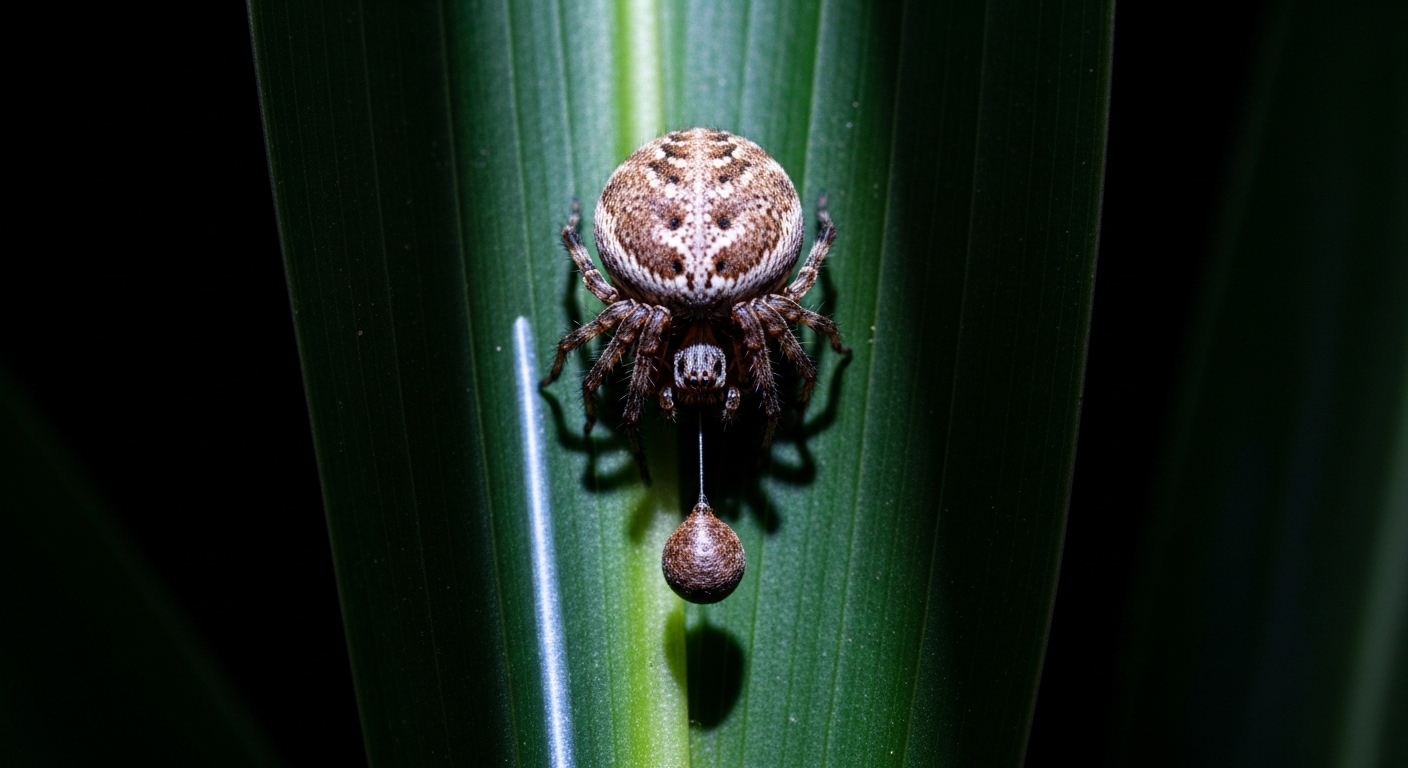
Frequently Asked Questions
Do all insects use pheromones?
Virtually all insect species studied so far use some form of chemical signaling, though the complexity varies enormously. Social insects like ants, bees, and termites have the most elaborate pheromone systems, with dozens of distinct compounds serving different functions. Solitary insects may rely on just one or two pheromone types, typically for mating.
Can humans smell insect pheromones?
Generally, no — most insect pheromones are present in quantities far too small for human olfactory detection, and our receptors aren't tuned to them. Some pheromone compounds do have detectable odors at higher concentrations (isoamyl acetate, the honeybee alarm pheromone, smells faintly of bananas), but that's incidental. The insect response happens at concentrations orders of magnitude below what humans can perceive.
Why don't pheromone-based pest controls work on every insect species?
Pheromone-based controls require identifying and synthesizing the exact chemical blend a species uses — and for many pest species, that research simply hasn't been done yet. Even when the pheromone is known, mating disruption works best in enclosed or semi-enclosed environments like orchards. In open landscapes, the technique becomes harder to implement effectively because the synthetic signal disperses too widely to maintain the necessary concentration.
The strangest implication of all this research is what it says about the nature of language itself. We tend to think of communication as something that requires intention — a sender who means to send, a receiver who chooses to respond. Insect pheromones collapse that assumption entirely. The molecule doesn't intend anything. The receiver has no choice. And yet the system encodes specificity, urgency, identity, and instruction with a precision that most human communication never achieves. Whatever language is, insects figured out a version of it long before words existed.



Comments
Post a Comment