How Do Satellites Stay in Orbit Without Falling Down?
A satellite is essentially falling toward Earth every single second — it just keeps missing. That sounds like a paradox, but it's the most accurate description of orbital mechanics you'll find. The trick isn't stopping the fall; it's moving sideways fast enough that the curve of Earth drops away beneath you at the same rate you're dropping toward it. Get that balance right, and you can circle the planet indefinitely without a single drop of fuel for propulsion.

What Is an Orbit, Really? A Plain-Language Definition
The Cannonball Thought Experiment
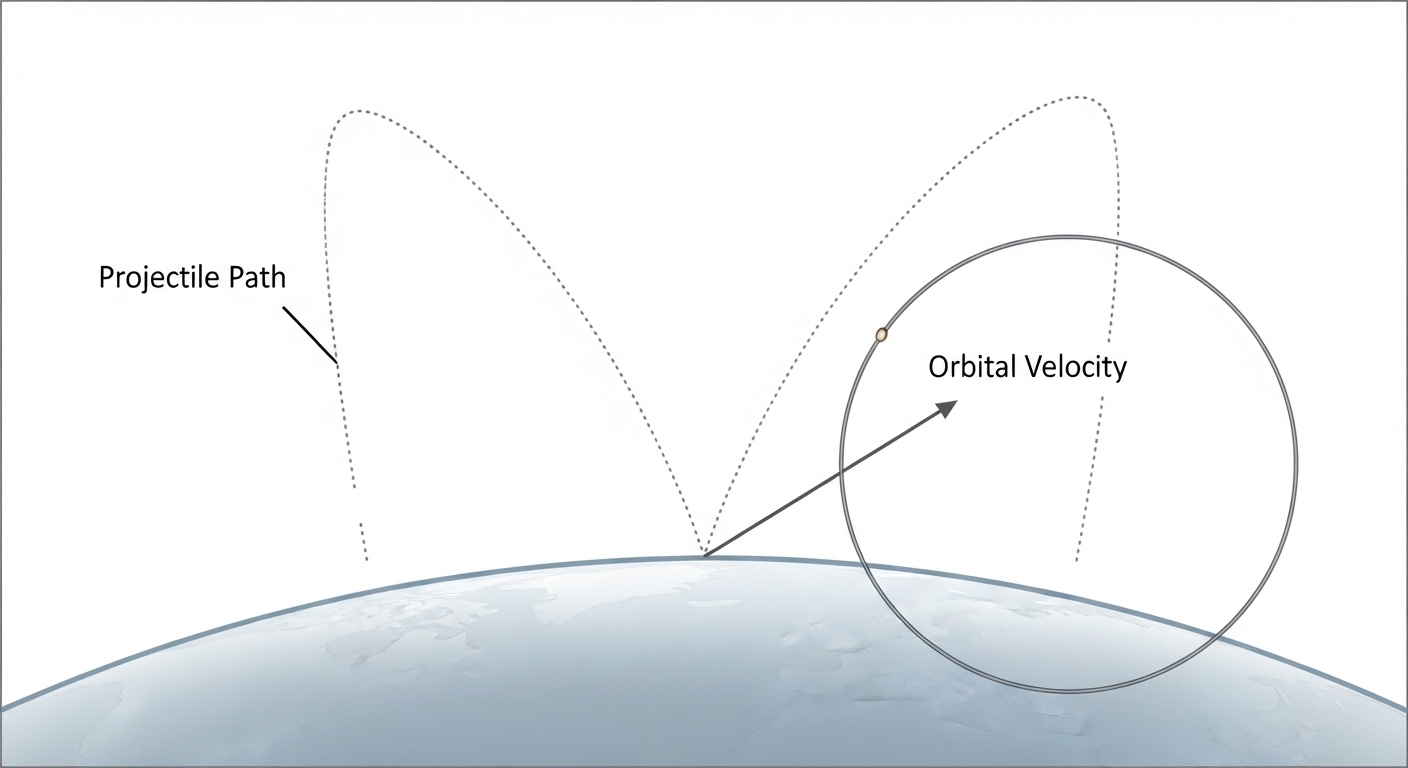
Isaac Newton described this beautifully in the 1680s using a thought experiment: imagine firing a cannonball horizontally from a very tall mountain. Fire it slowly, and it arcs to the ground. Fire it faster, and it travels farther before landing. Fire it at just the right speed — roughly 7.9 kilometers per second at Earth's surface — and the ground curves away beneath it at exactly the same rate it falls. The cannonball never lands. That's an orbit.
The key insight is that orbiting isn't about escaping gravity. Gravity is still very much in charge. A satellite in low Earth orbit experiences roughly 90% of the gravitational pull you feel standing on the ground. What changes is the geometry: the satellite is moving so fast horizontally that Earth's surface perpetually curves out from under it.
Why Satellites Don't Need Engines to Stay Up
Once a satellite reaches orbital velocity and altitude, it needs no thrust to maintain its path — assuming it's above the atmosphere. There's nothing pushing back against it, no friction to slow it down. This is why the International Space Station, which orbits at roughly 400 kilometers altitude, has been continuously inhabited for over two decades without needing constant engine burns just to stay aloft.
The ISS does fire its thrusters periodically, but not to fight gravity — it's to counteract the very thin wisps of atmosphere that still exist at that altitude, which create a tiny but real drag force over time.
How Orbital Altitude Changes Everything
Low Earth Orbit vs. Geostationary Orbit
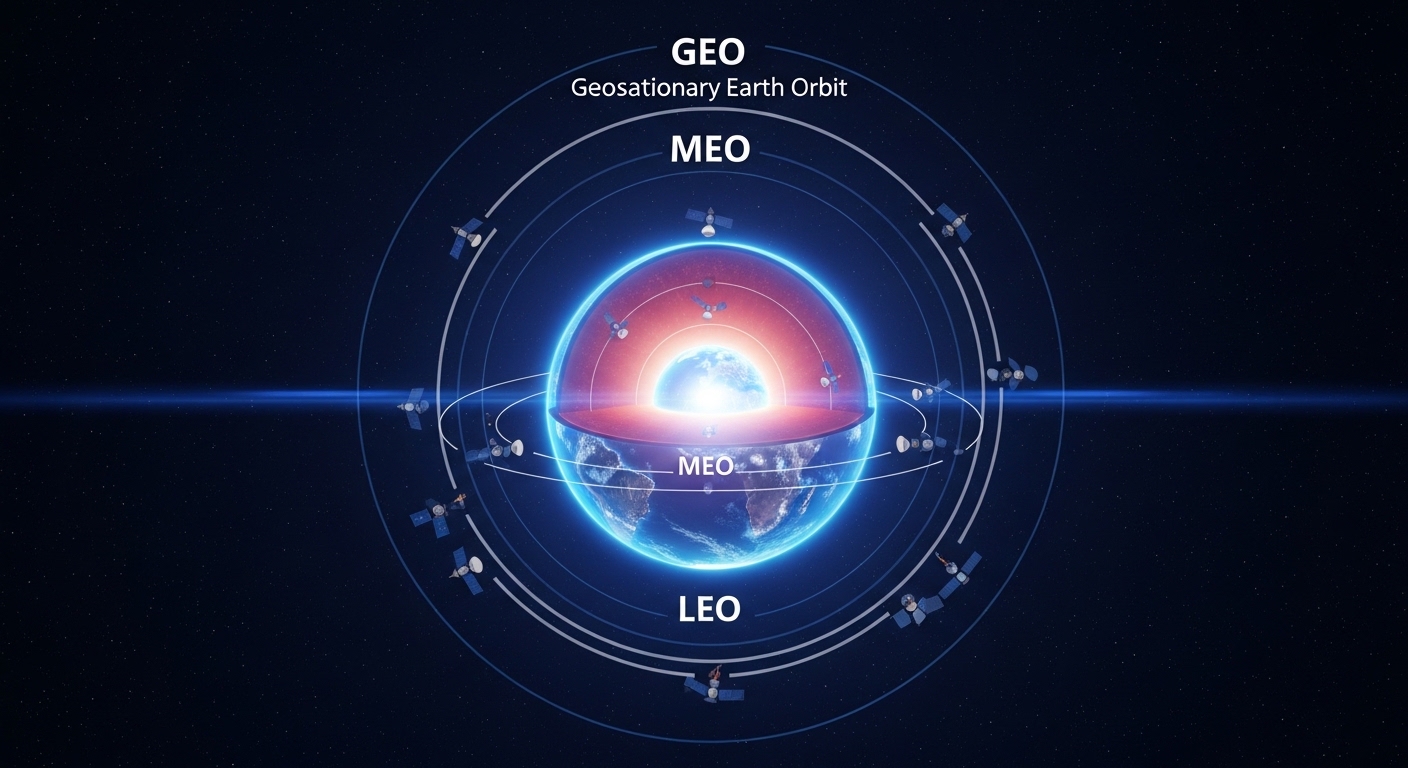
Not all satellites orbit at the same height, and altitude has dramatic consequences for speed, coverage, and purpose. Low Earth orbit (LEO) satellites — typically between 200 and 2,000 kilometers up — travel at around 7 to 8 kilometers per second and complete a full orbit in roughly 90 minutes. GPS satellites sit much higher, in medium Earth orbit around 20,000 kilometers, moving slower and taking about 12 hours per orbit.
Then there's geostationary orbit, sitting at approximately 35,786 kilometers above the equator. At that precise altitude, a satellite's orbital period matches Earth's rotation exactly — 24 hours. From the ground, it appears completely stationary in the sky. That's why your satellite TV dish points at a fixed spot and never needs to track a moving target.
The Counterintuitive Speed Rule
Here's something that trips people up: the higher the orbit, the slower the satellite moves. This feels backwards. You'd think a satellite farther from Earth would need to work harder to stay up. But gravity weakens with distance, so less centripetal force is needed to maintain a circular path, which means a lower orbital speed is required. A geostationary satellite moves at roughly 3 kilometers per second — less than half the speed of an ISS-altitude satellite.
The higher the orbit, the slower the satellite — because gravity weakens with distance, and less speed is needed to keep missing the ground.
What Actually Causes Satellites to Fall Back to Earth?
Atmospheric Drag — Even in Space
The atmosphere doesn't end at a sharp line. It thins gradually, and even at 400 kilometers altitude there are enough gas molecules to exert a measurable drag on a fast-moving object. Over weeks and months, this drag bleeds off a satellite's orbital energy, causing it to slowly spiral inward. The ISS loses roughly 2 kilometers of altitude per month due to drag alone — which is why it requires periodic reboost burns from visiting spacecraft or its own thrusters.
Solar activity makes this worse in a non-obvious way. When the Sun is particularly active, it heats Earth's upper atmosphere, causing it to expand outward. Suddenly, a satellite that was cruising through near-vacuum finds itself plowing through slightly denser air. The Skylab space station — America's first — fell back to Earth in 1979 partly because a more active solar cycle than expected expanded the atmosphere and increased drag beyond original mission planning.
Orbital Decay and Controlled Reentry
Small satellites in very low orbits — below about 300 kilometers — can deorbit naturally within weeks or months. This is actually useful: it means dead satellites don't clutter up prime orbital real estate forever. Larger satellites and space stations require active deorbit maneuvers to ensure they reenter over uninhabited ocean areas rather than falling randomly.
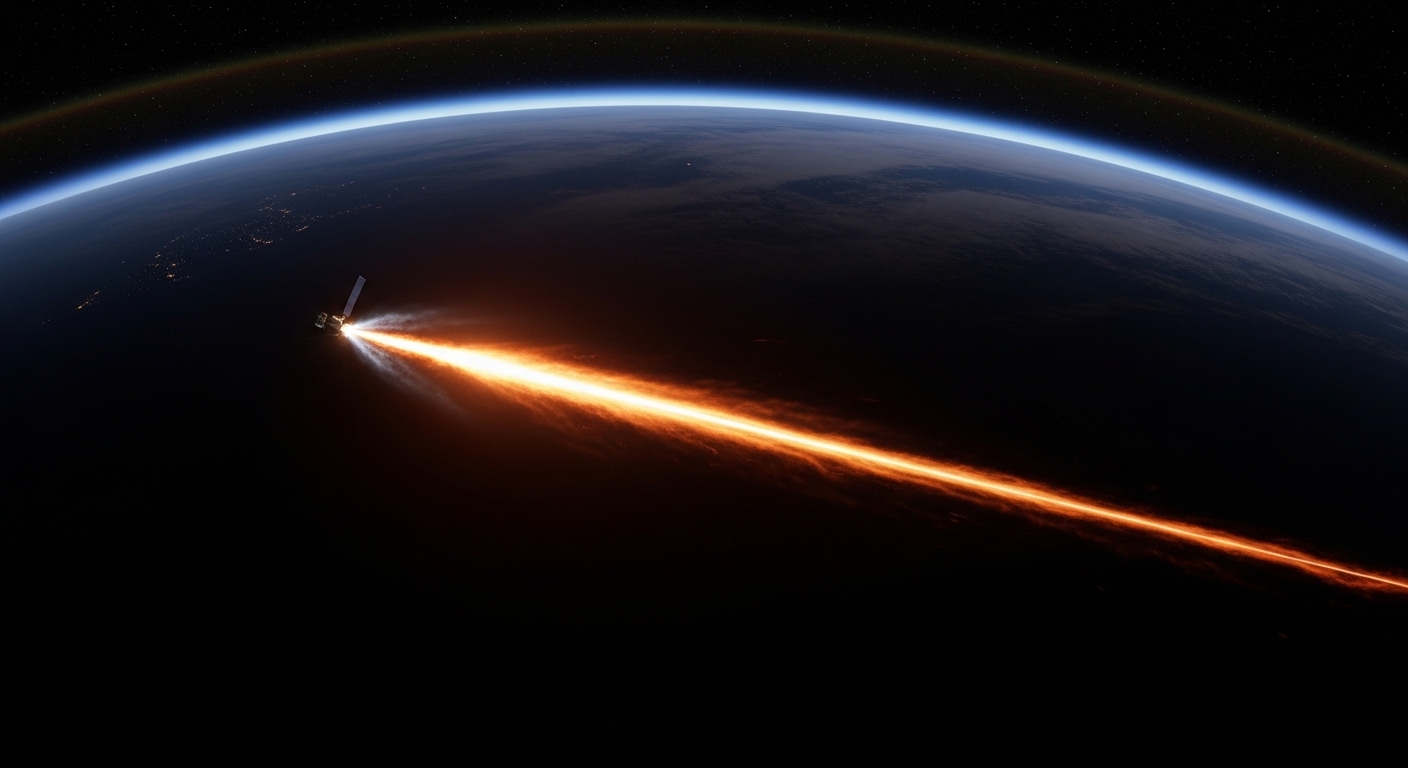
The physics of reentry is brutal. A returning object hits the upper atmosphere at several kilometers per second, and the compression of air in front of it generates temperatures that can exceed 1,600 degrees Celsius. Most of the satellite burns up. What survives is usually dense, heat-resistant components — which is why space agencies put real effort into calculating where debris will land.
Why This Matters Beyond the Science Classroom
The Infrastructure You Depend on Daily
Every time you use GPS navigation, watch satellite television, check a weather forecast, or use a credit card at a point-of-sale terminal that relies on time synchronization, you're depending on objects that are perpetually falling around the planet. The global satellite infrastructure represents one of the most consequential engineering achievements in human history — and it all runs on the same orbital mechanics Newton sketched out in the 17th century.
There are now thousands of active satellites in orbit, with commercial operators deploying large constellations in LEO for broadband internet coverage. Managing orbital slots, preventing collisions, and dealing with defunct satellites has become a serious logistical and regulatory challenge. The Kessler Syndrome — a theoretical cascade where collisions generate debris that causes more collisions — is no longer just a thought experiment. It's a risk that space agencies actively model and plan around.
The Surprising Fragility of It All
What most people don't appreciate is how precisely calibrated orbital insertion has to be. Launch a satellite 50 kilometers too low and atmospheric drag shortens its lifespan by years. Launch it at slightly the wrong angle and the orbit precesses in ways that may not serve its mission. The margin for error during the final burn that places a satellite in its target orbit is often measured in meters per second of velocity — a tiny fraction of the 7-plus kilometers per second it's already traveling.
Orbital insertion tolerances are often measured in meters per second — a rounding error on a velocity that's already 25 times the speed of sound.(Opinion: There's something quietly remarkable about the fact that the same gravitational principle that makes an apple fall also keeps a weather satellite hovering over the same patch of ocean for decades. We've gotten so accustomed to GPS and satellite imagery that the underlying physics has become invisible — which is probably the highest compliment you can pay to an engineering system.)
Frequently Asked Questions
Do satellites ever run out of fuel and fall down?
Satellites don't need fuel to stay in orbit — they need fuel only to adjust their orbit, counteract atmospheric drag, or deorbit at end of life. When a satellite runs out of propellant, it can no longer correct its orbit or avoid collisions, but it doesn't immediately fall. Depending on altitude, it may continue orbiting for years, decades, or even centuries before atmospheric drag brings it down naturally.
Why don't satellites collide with each other constantly?
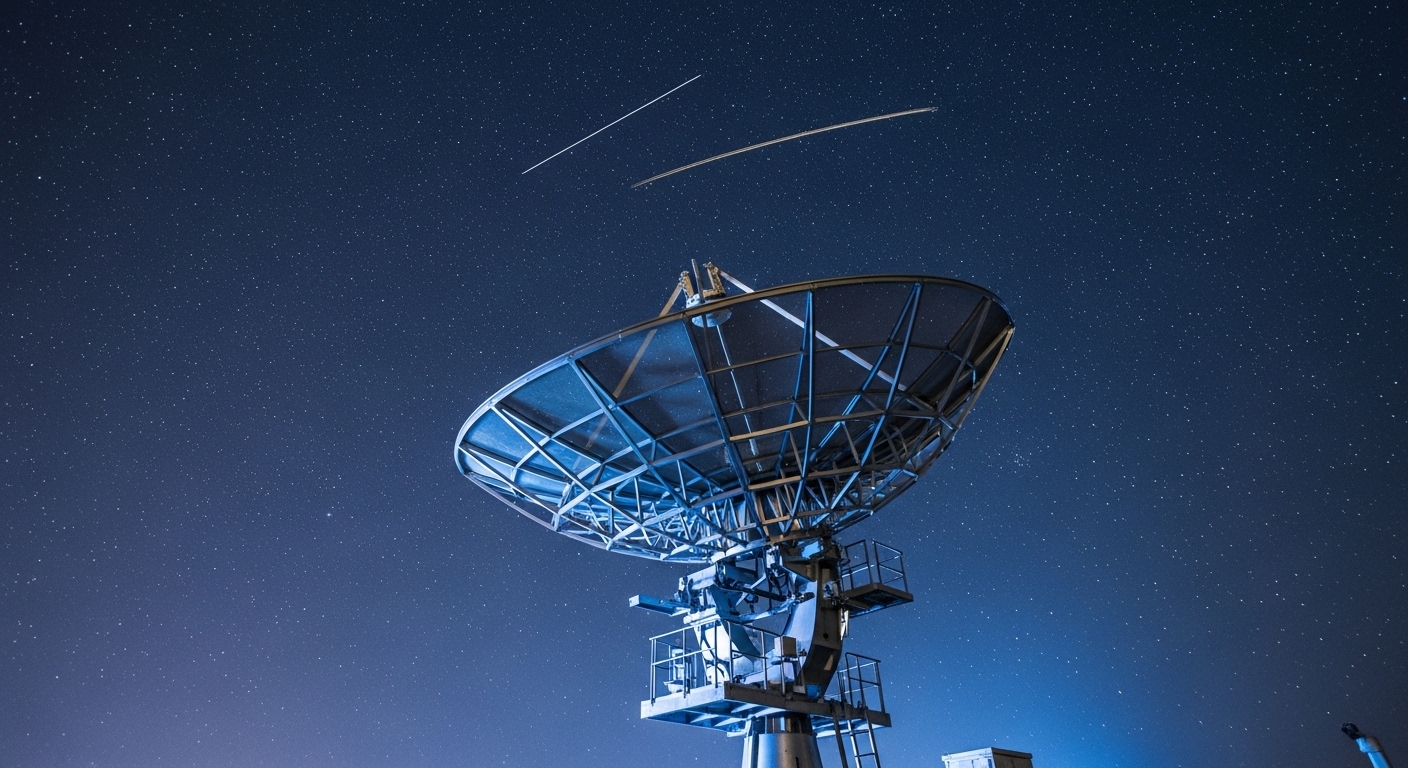
Space is genuinely enormous, even in the relatively crowded low Earth orbit band. Satellites are also tracked by ground-based radar networks, and operators receive conjunction warnings when two objects are predicted to pass dangerously close. Evasive maneuvers are performed when the collision probability exceeds a threshold — typically around 1 in 10,000, though this varies by operator. The real concern is untracked debris smaller than about 10 centimeters, which radar can't reliably detect but which travels fast enough to be catastrophic.
Could a satellite orbit at any altitude, or are there forbidden zones?
Technically, any altitude above the atmosphere works for orbital mechanics. In practice, the Van Allen radiation belts — two donut-shaped regions of high-energy charged particles trapped by Earth's magnetic field — are hostile to electronics and solar panels. Most satellites are designed to operate either below the inner belt or above the outer one. Long-term exposure in the belts degrades hardware rapidly, which is why few satellites are intentionally stationed there.
The next time you open a maps app and watch your position update in real time, consider that the signal enabling that is bouncing off an object moving at several kilometers per second, perpetually falling around a planet, kept aloft by nothing more than the geometry of motion and a gravitational field that has no intention of letting go. The fall never stops — it just never quite arrives.



Comments
Post a Comment