What Is Space Weather? How Storms From the Sun Affect Earth
In March 1989, a solar storm knocked out power across the entire province of Quebec in under 90 seconds. Six million people lost electricity for up to nine hours — not because of rain or wind, but because of a burst of magnetized plasma that left the Sun two days earlier. Space weather is not a metaphor. It is a real physical phenomenon with the power to cripple infrastructure, scramble satellites, and light up the sky at latitudes where auroras have no business appearing.
What Is Space Weather? A Plain-Language Definition
More Than Just Solar Flares
Space weather refers to changing conditions in the space environment driven primarily by the Sun's activity. It encompasses solar flares, coronal mass ejections (CMEs), solar energetic particle events, and fluctuations in the solar wind — the constant stream of charged particles flowing outward from the Sun in all directions. Earth sits inside this stream every second of every day.
The term "weather" is apt because, like atmospheric weather, space weather is variable, somewhat predictable, and capable of ranging from calm to catastrophic. Unlike atmospheric weather, you cannot feel it directly. No wind, no rain, no temperature drop. The effects arrive invisibly and hit electronic and magnetic systems first.
Earth's magnetic field — the magnetosphere — acts as a natural shield, deflecting most of this particle bombardment. But when a particularly powerful CME hits, it can compress and distort the magnetosphere dramatically, triggering what scientists call a geomagnetic storm.
The Sun's Role: Not a Steady Candle
The Sun follows an approximately 11-year activity cycle, swinging between solar minimum (fewer sunspots, calmer output) and solar maximum (more sunspots, more frequent eruptions). We are currently in Solar Cycle 25, which has been more active than forecasters initially predicted. That matters because the frequency and intensity of space weather events scales with solar activity.
How Does Space Weather Actually Work? The Mechanism Explained
From Eruption to Earth Impact
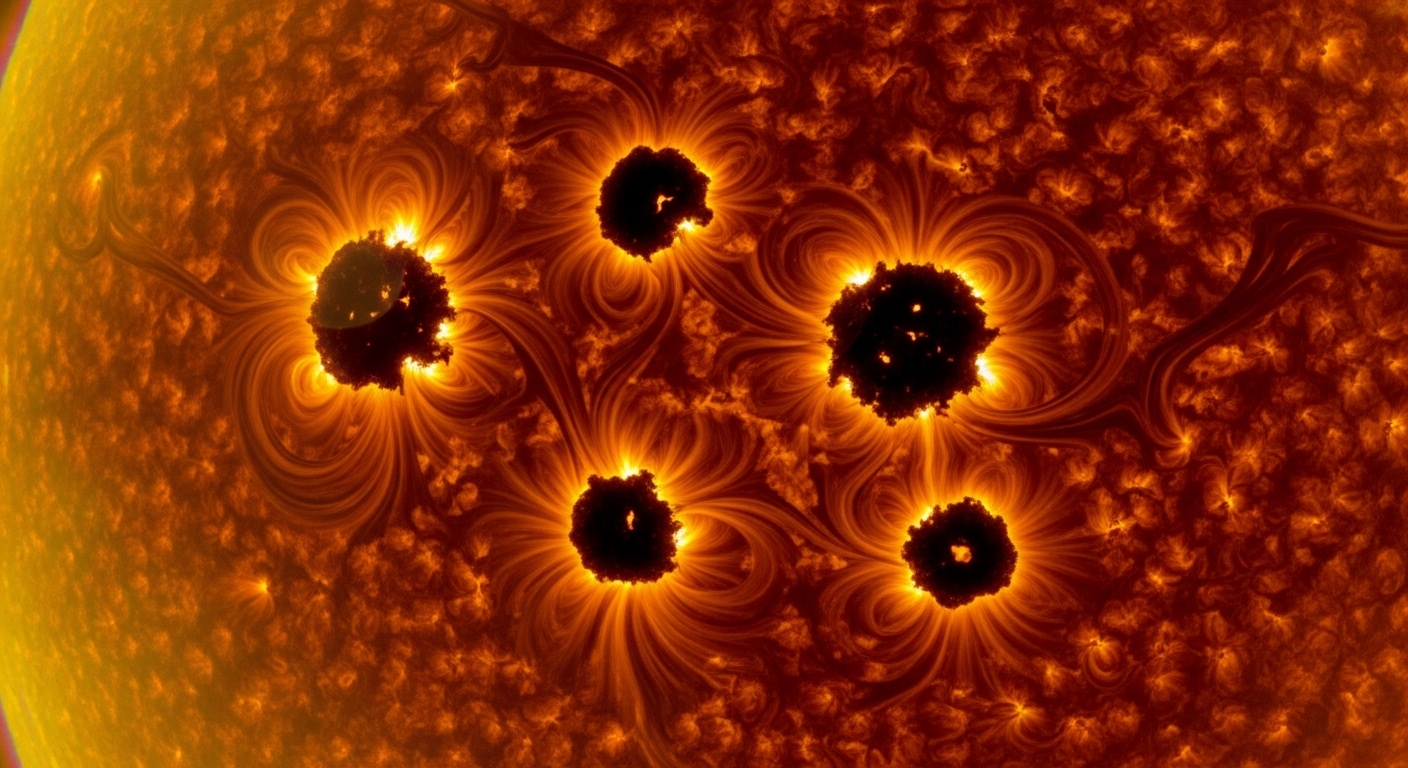
A coronal mass ejection begins when magnetic field lines in the Sun's corona become twisted and unstable, then suddenly snap into a new configuration — a process called magnetic reconnection. This releases an enormous bubble of magnetized plasma, sometimes containing billions of tons of charged particles, hurled into space at speeds ranging from a few hundred to over 2,000 kilometers per second.
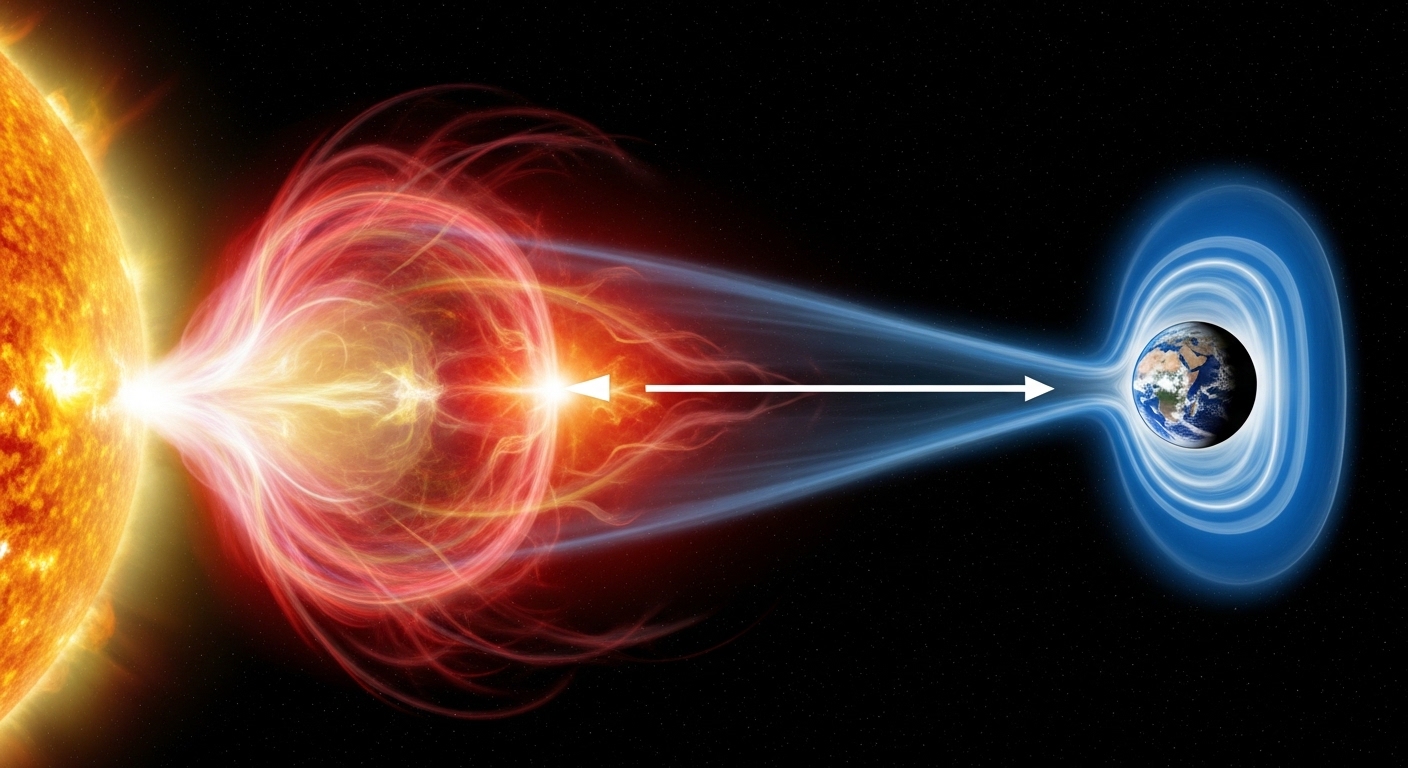
When that cloud reaches Earth — typically one to three days after leaving the Sun — it collides with the magnetosphere. If the CME's magnetic field is oriented in a particular direction (southward, in technical terms), it couples efficiently with Earth's field and drives energy deep into the magnetosphere. That is when the real disruption begins.
The energy drives electric currents through the upper atmosphere and along the ground. These ground-induced currents (GICs) flow through anything conductive — power lines, pipelines, railway tracks. Long transmission lines act like antennas, picking up currents they were never designed to carry. Transformers overheat. In severe cases, they fail permanently, and high-voltage transformers are not items you can order next-day delivery.
A southward-oriented CME magnetic field is the key ingredient in a damaging geomagnetic storm — the direction of arrival matters as much as the size of the eruption.
Solar Flares vs. CMEs: Not the Same Thing
People often use these terms interchangeably, but they are distinct events. A solar flare is an intense burst of electromagnetic radiation — X-rays and ultraviolet light — that travels at the speed of light and reaches Earth in about eight minutes. It can disrupt high-frequency radio communications almost immediately, which is a serious problem for aviation over polar routes where satellites provide no backup.
A CME is the slower-moving mass of plasma. A flare can occur without a CME and vice versa, though powerful flares often accompany large CMEs. The combination is the most dangerous scenario.
Where You See Space Weather's Effects in Real Systems
Power Grids and the Quebec Lesson
The 1989 Quebec blackout remains the clearest modern example of space weather causing direct infrastructure failure. The storm that caused it was rated at the high end of the geomagnetic storm scale — a level scientists classify as "severe." The Hydro-Québec grid collapsed because GICs saturated the transformers, causing protective relays to trip in a cascade that took the entire system down in less than two minutes.
What most people don't realize is that a storm roughly twice as powerful hit Earth in 1859 — the Carrington Event. At the time, the most complex electrical infrastructure on the planet was the telegraph network. Operators reported sparks flying from their equipment and, in some cases, being able to send messages with the telegraph machines completely disconnected from their batteries, powered entirely by the induced current from the storm.
Satellites, GPS, and Aviation
Satellites face multiple threats. Energetic particles can damage solar panels and electronic components. During geomagnetic storms, Earth's upper atmosphere heats up and expands, increasing drag on low-orbit satellites — which causes them to slow down and drop in altitude faster than expected. Operators have to fire thrusters more frequently just to maintain orbit, burning through propellant that determines a satellite's operational lifespan.
GPS accuracy degrades during solar storms because the ionosphere — the electrically charged upper atmosphere — becomes turbulent, bending and delaying the radio signals that GPS relies on. For most users checking a map app, this is a minor annoyance. For precision agriculture, surveying, or autonomous vehicle navigation, errors of several meters are operationally significant.
During a strong geomagnetic storm, the upper atmosphere can expand enough to increase drag on low-orbit satellites by a factor of ten or more — compressing years of expected orbital decay into weeks.
The Upside: Auroras at Unusual Latitudes
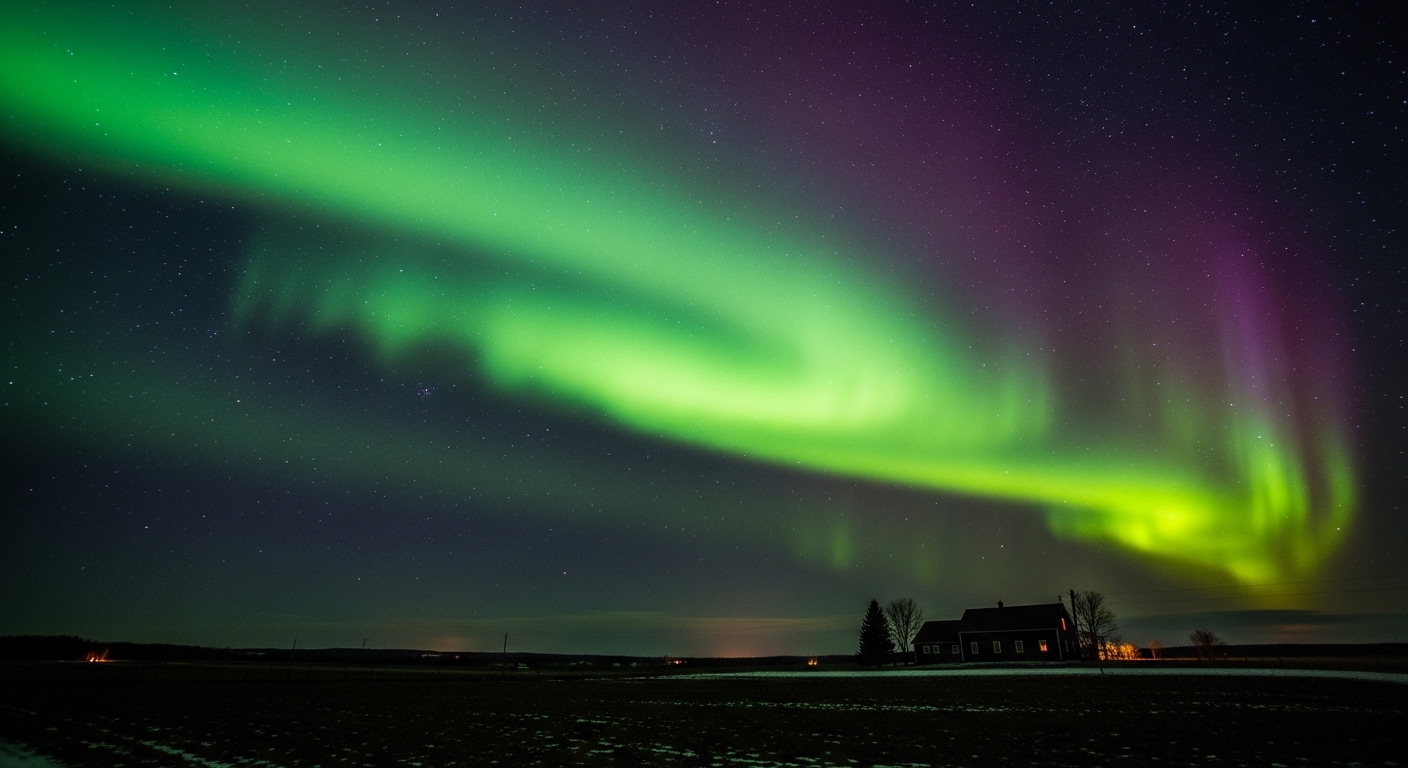
Not every effect is damaging. Geomagnetic storms push the auroral oval — the ring around the poles where auroras normally appear — toward lower latitudes. During the strong storms of May 2024, auroras were visible across much of the continental United States, parts of Europe well south of the Arctic Circle, and even some locations in the northern tropics. Anyone who stepped outside that night and looked up got an accidental reminder that the Sun is doing something enormous, constantly.
Why Space Weather Forecasting Is Harder Than It Looks
The Prediction Problem
Forecasters at agencies like NOAA's Space Weather Prediction Center can detect a CME leaving the Sun and estimate when it will arrive at Earth. The hard part is predicting the magnetic field orientation of the CME — that southward-versus-northward question that determines whether a storm will be mild or severe. That measurement can only be made reliably when the CME reaches a monitoring satellite positioned about 1.5 million kilometers from Earth, giving forecasters roughly 15 to 60 minutes of warning.
Fifteen minutes is not much time to take a power grid offline safely. Grid operators need hours of lead time to reduce load and reconfigure systems to minimize transformer exposure. This is the central operational challenge of space weather preparedness, and it has not been solved.
The Monitoring Gap
The primary deep-space monitoring satellite, DSCOVR, was launched in 2015 and has been operating well past its original design life. A gap in coverage — even a brief one — would significantly reduce warning times. This is not a hypothetical concern; it is an active topic in the space weather policy community. Several successor missions have been discussed, but the timeline for replacement hardware has shifted multiple times.
(Opinion: The gap between what we know about space weather risk and what governments have actually done to harden critical infrastructure against it is genuinely alarming. The science has been clear for decades. The policy response has been slow in a way that would seem inexplicable if it weren't so familiar.)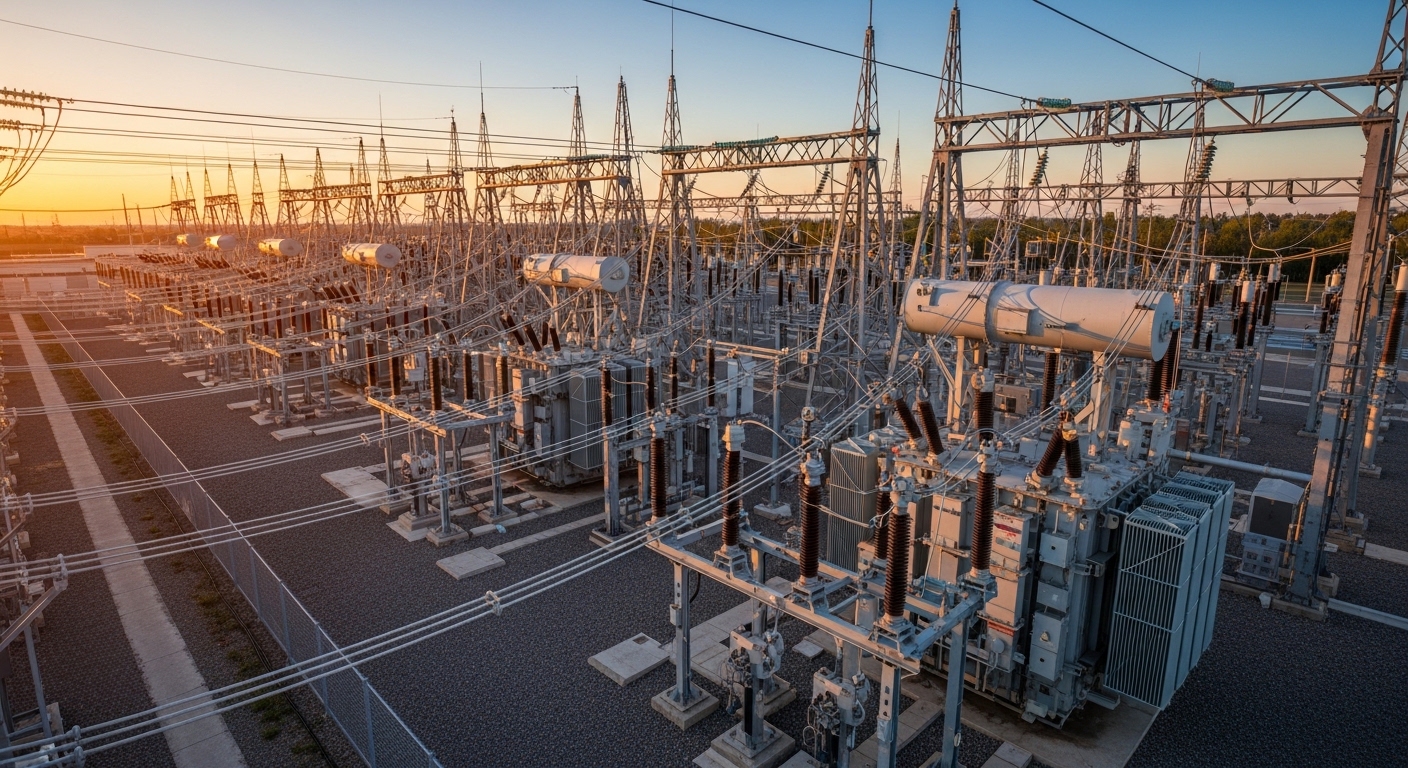
Frequently Asked Questions
Can space weather affect humans directly?
At ground level, Earth's atmosphere and magnetic field provide enough shielding that space weather poses no direct health risk to most people. Astronauts on the International Space Station, however, can receive elevated radiation doses during solar energetic particle events and are sometimes instructed to shelter in more shielded parts of the station. Passengers and crew on high-altitude polar flights also receive slightly increased radiation exposure during major solar storms, which is why some airlines reroute polar flights during severe events.
How strong was the Carrington Event compared to modern storms?
The 1859 Carrington Event is estimated to be among the most powerful geomagnetic storms in recorded history — research suggests it may have been roughly twice as intense as the 1989 Quebec storm. Some researchers believe a Carrington-scale event today could cause widespread, long-duration power outages affecting large regions, with recovery times measured in weeks to months rather than hours. Estimates of economic damage vary widely, but figures in the trillions of dollars have appeared in government risk assessments.
Is there any way to protect electronics from a severe solar storm?
For individual consumers, there is little practical action to take beyond the fact that most personal electronics are not directly vulnerable to GICs — they run on low-voltage DC power and are not connected to long conductive lines. The real vulnerability is in the grid that powers them. At the infrastructure level, engineers can install GIC blocking devices on transformers, operate grids at reduced capacity during storm warnings to limit exposure, and stockpile spare transformers. Some countries have made progress on these measures; others have not.
The strangest thing about space weather is how thoroughly it exposes the hidden assumptions baked into modern civilization. Every long-distance power line, every GPS-dependent system, every satellite in low orbit is operating on the quiet assumption that the Sun will keep behaving itself. It usually does. But the star at the center of our solar system has been erupting violently for four and a half billion years, and it will not make an exception for our infrastructure.


Comments
Post a Comment