How Do Prediction Markets Work? A Simple Explainer
In 2020, prediction markets gave Joe Biden a roughly 65% chance of winning the U.S. presidential election weeks before most major polls had settled on a clear favorite. They weren't perfect, but they moved faster and often more accurately than traditional forecasting methods. That's not a coincidence — it's the whole point of how these markets are designed.

What Is a Prediction Market, Really?
The Core Idea in Plain Language
A prediction market is a platform where people buy and sell contracts tied to the outcome of a future event. If you think a particular candidate will win an election, you buy a contract that pays out — usually one dollar — if that outcome happens. If you're wrong, the contract expires worthless. The price of the contract at any given moment reflects the crowd's collective estimate of the probability.
So if a contract for 'Candidate A wins' is trading at 62 cents, the market is saying there's roughly a 62% chance that candidate wins. Simple as that. The price is the forecast.
This is fundamentally different from a poll, which asks people what they think will happen. A prediction market asks people to put money behind that belief. That distinction matters enormously.
Where Did They Come From?
The Iowa Electronic Markets, run by the University of Iowa, launched in 1988 and is one of the oldest continuously operating prediction markets. It was originally designed as a teaching tool for economics students. Researchers quickly noticed it was outperforming traditional polls in presidential election forecasting — and the academic interest exploded from there.
Today, platforms like Polymarket and Kalshi operate at much larger scale, covering everything from elections to Federal Reserve rate decisions to sports outcomes.
How the Pricing Mechanism Actually Works
Supply, Demand, and Belief
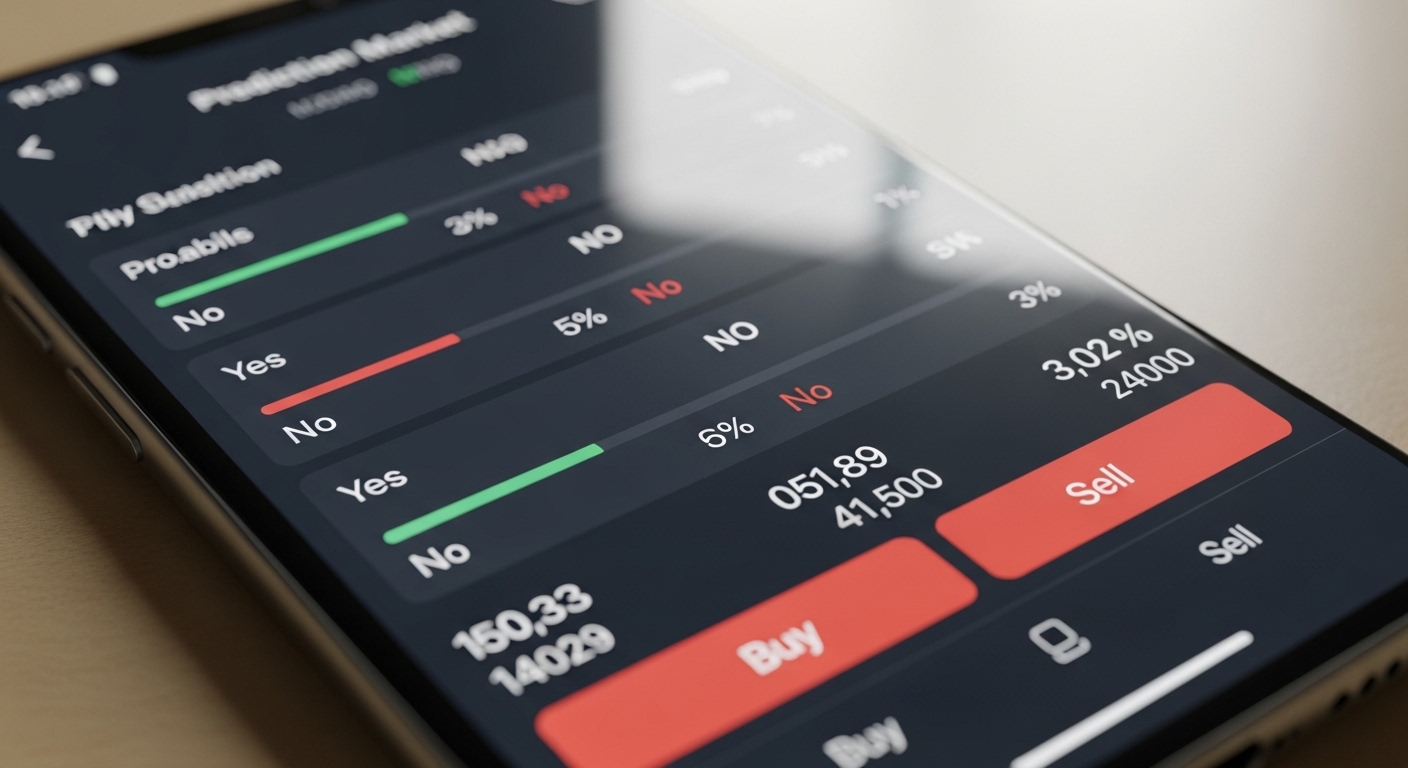
The price in a prediction market is set by supply and demand, just like any other market. If a lot of people suddenly believe an event is more likely, they rush to buy contracts, pushing the price up. If new information makes an outcome look less likely, sellers outnumber buyers and the price drops.
This creates a self-correcting system. Imagine a rumor circulates that a major tech company is about to announce a merger. Traders who believe it rush to buy the relevant contract. If the rumor turns out to be false, those contracts lose value fast, punishing people who acted on bad information. Over time, this incentivizes careful thinking over gut reactions.
The price in a prediction market isn't just a number — it's a continuously updated consensus built from thousands of people betting real money on being right.
The Role of Arbitrage
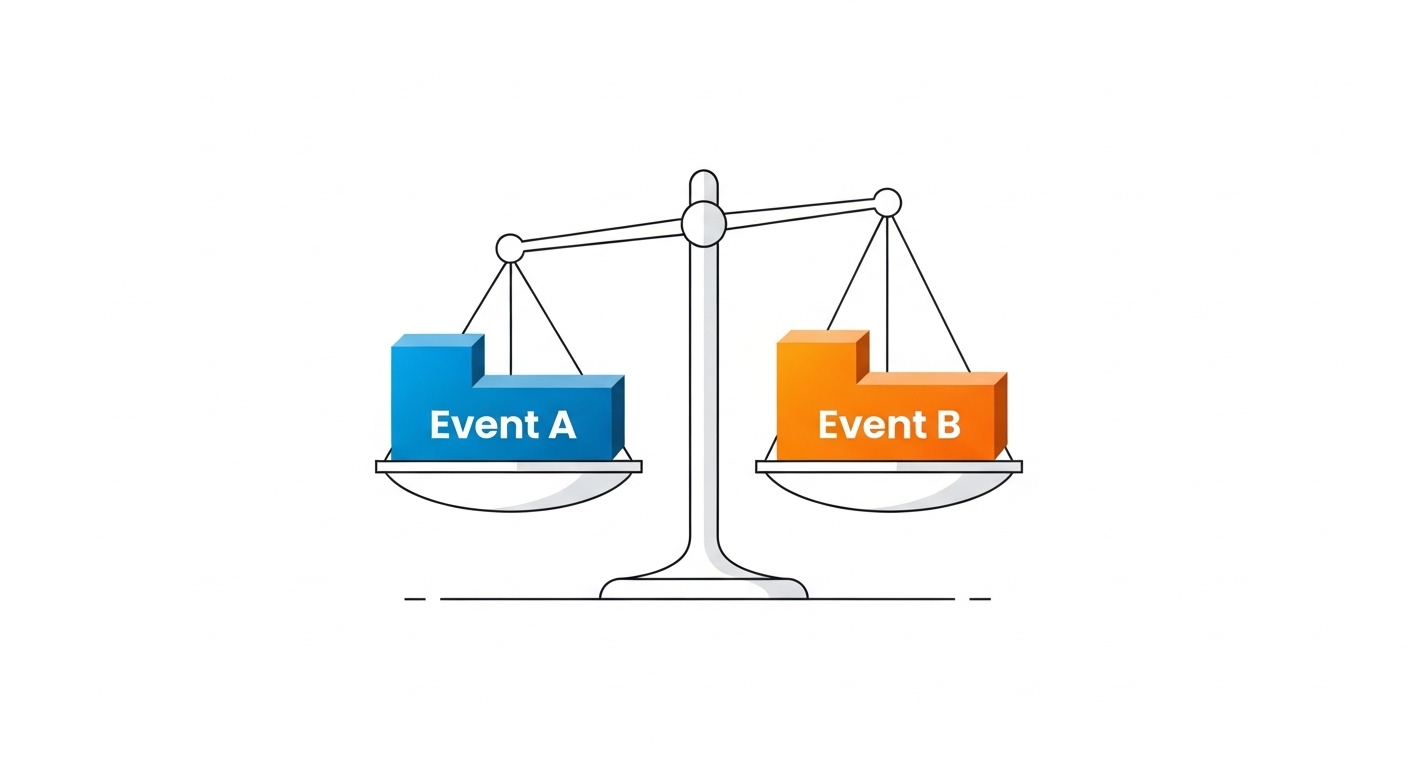
One underappreciated mechanic is arbitrage. In a well-functioning prediction market, if the probabilities of all possible outcomes don't add up to 100%, sharp traders will exploit that gap until it closes. This keeps the market internally consistent in a way that polling averages often aren't.
For example, if 'Candidate A wins' is priced at 60 cents and 'Candidate B wins' is also priced at 60 cents in a two-candidate race, that's 120 cents total — which implies more than 100% probability. Arbitrageurs will sell whichever contract is overpriced until the numbers balance out. It happens fast.
Why Prediction Markets Are Surprisingly Accurate
The Wisdom of Crowds — With Skin in the Game
The classic 'wisdom of crowds' idea holds that aggregating many independent estimates often beats any single expert. Prediction markets take that further by filtering out noise: people who are overconfident or poorly informed tend to lose money and exit the market. What's left is a pool of participants who have demonstrated some ability to forecast correctly.
Research comparing prediction markets to expert panels and polls has generally found that markets perform at least as well, and often better, especially for near-term events with clear resolution criteria. The key phrase there is 'clear resolution criteria' — markets struggle when the outcome is ambiguous or slow to resolve.
A Counterintuitive Limitation
Here's the part most explainers skip: prediction markets can be wrong in systematic ways when participants share the same blind spots. If everyone trading on a market gets their information from the same news sources, the market reflects that shared bias rather than correcting for it.
This happened in some Brexit-related markets in 2016, where the trading pool skewed heavily toward urban, financially connected participants who underestimated Leave sentiment in rural areas. The market was confidently wrong — not because the mechanism failed, but because the crowd wasn't diverse enough.

Where Prediction Markets Are Used — and Where They're Banned
Legal and Regulatory Patchwork
The legal status of prediction markets is genuinely messy. In the United States, the Commodity Futures Trading Commission (CFTC) regulates event contracts, and for years the agency blocked most real-money political prediction markets from operating domestically. Kalshi fought a multi-year legal battle to offer election contracts in the U.S., and the regulatory picture is still evolving.
Offshore platforms like Polymarket, which operates on blockchain infrastructure, have attracted significant volume from U.S. users despite operating in a legal gray zone. Anyone who has tried to sign up for one of these platforms from a U.S. IP address knows the verification hoops involved.
Beyond Elections — Corporate and Scientific Applications
Prediction markets aren't just for political junkies. Companies have used internal prediction markets to forecast product launch dates, quarterly sales figures, and project completion timelines. The logic is the same: employees who know the real state of a project will bet accordingly, surfacing information that might never make it into an official status report.
HP famously experimented with internal prediction markets in the early 2000s and found they outperformed official sales forecasts. The uncomfortable implication was that employees knew more than their managers were reporting — and the market made that visible.
Internal prediction markets sometimes reveal what employees actually believe versus what they're willing to say in a meeting — which is why some organizations love them and others quietly shelve them.(Opinion: Prediction markets deserve far more mainstream adoption than they currently get, particularly in corporate planning. The resistance isn't really about accuracy — it's about the fact that they make uncomfortable truths hard to ignore. A market that says your flagship product will miss its launch date by six months is a very different kind of bad news than a project manager saying 'we're tracking slightly behind.')
Frequently Asked Questions
Are prediction markets legal to use in the United States?
It depends on the platform and the type of contract. Some regulated platforms like Kalshi have received CFTC approval to offer certain event contracts, including political ones. Many offshore platforms operate in a legal gray area. The regulatory landscape has been shifting, so it's worth checking the current status of any specific platform before participating with real money.
Can a prediction market be manipulated by a single large trader?
In theory, yes — a well-funded actor can move prices temporarily by placing large orders. In practice, manipulation tends to be self-correcting: other traders see the price move as an opportunity and bet against it, pushing the price back toward the true probability. Sustained manipulation is expensive and rarely profitable. That said, thin markets with low trading volume are more vulnerable than deep, liquid ones.
Why do prediction markets sometimes give very different odds than polls?
Polls measure stated opinion; prediction markets measure financial conviction. A poll respondent has no cost for being wrong, so responses can reflect wishful thinking or social desirability bias. A market participant loses real money for being wrong, which creates a strong incentive to be honest and accurate. The divergence between polls and markets is often most pronounced when one side's supporters are more enthusiastic than they are numerous.
The deepest thing about prediction markets isn't their accuracy rate — it's what they reveal about the gap between what people say and what they actually believe when money is on the line. That gap turns out to be significant, and in some cases, it tells you more about the state of the world than any survey ever could.



Comments
Post a Comment