How Do Reusable Rockets Work? The Future of Space Travel
Landing a rocket booster upright on a drone ship in the middle of the ocean sounds like something from a science fiction film — yet it happens routinely now, sometimes multiple times in a single week. The engineering behind it is genuinely strange, because rockets were never designed to land. For most of spaceflight history, they were designed to fall apart gracefully on the way down, with each stage burning up or splashing into the ocean. Reusability flipped that entire philosophy on its head.

What Is a Reusable Rocket, Really?
More Than Just 'Landing the Rocket'
A reusable rocket is any launch vehicle — or component of one — designed to be recovered, refurbished, and flown again. The key word is 'designed.' Early space shuttles were technically reusable, but the refurbishment costs between flights were so enormous that the economic argument never fully held up. True reusability means flying again quickly and cheaply, not just physically surviving re-entry.
The distinction matters more than it sounds. A rocket booster that costs tens of millions of dollars to refurbish after each flight is not really solving the cost problem — it's just redistributing it. The goal is to treat a rocket more like a commercial aircraft: fly it, inspect it, fuel it, and fly it again with minimal downtime and expense.
Most modern reusable systems focus on the first stage — the large booster section that does the heaviest lifting in the first few minutes of flight. Upper stages and payload fairings are harder to recover because they travel much faster and reach higher altitudes, though some programs have experimented with catching or recovering those too.
How Does a Rocket Actually Fly Back and Land?
The Boostback Burn and Entry Burn
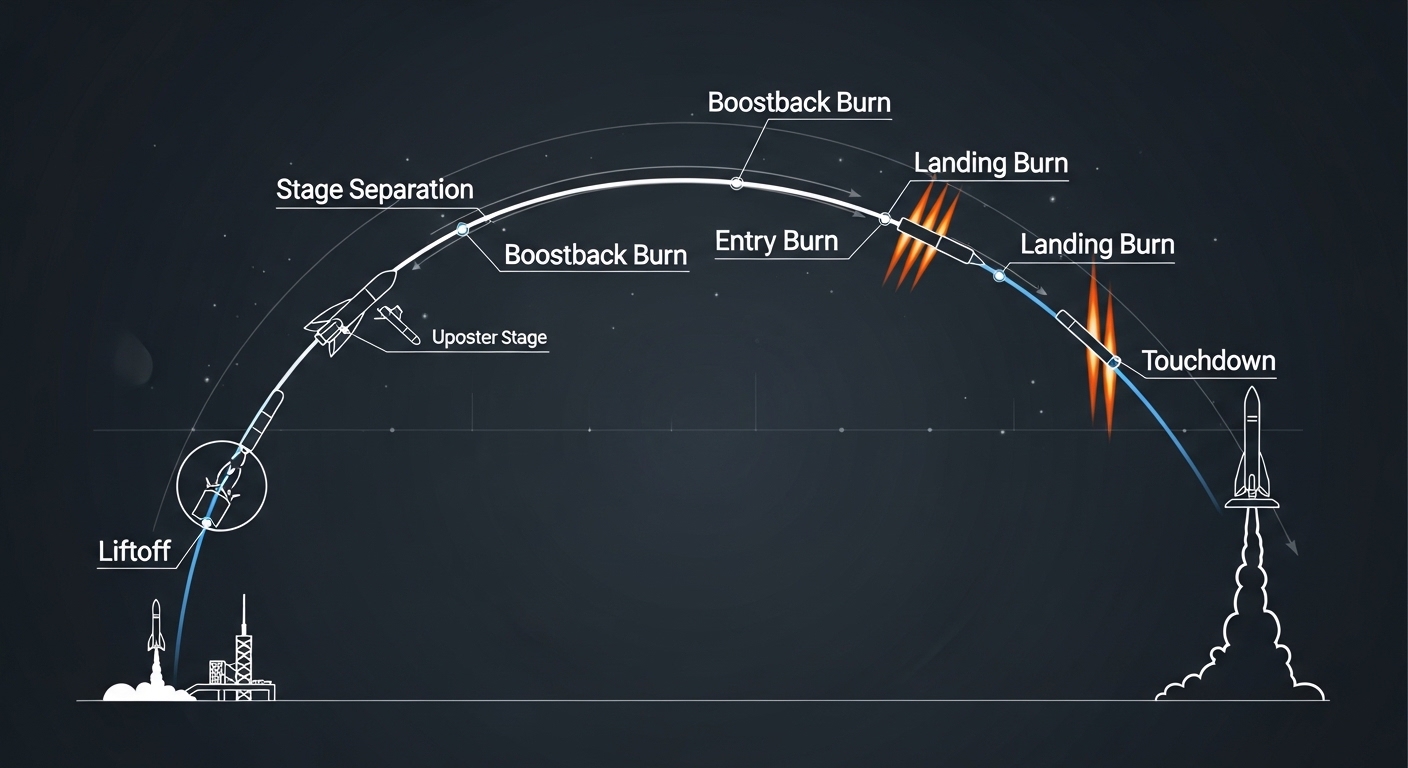
After the first stage separates from the upper stage — typically a few minutes into flight — it is traveling fast and high, but not fast enough to reach orbit. At that point, the booster performs what engineers call a 'boostback burn': it reignites some of its engines and fires them in the direction of travel to slow down and reverse course, sending it back toward the launch site or a drone ship downrange.
The atmosphere does some of the deceleration work, but not enough. As the booster re-enters the thicker lower atmosphere, it performs an 'entry burn' to reduce speed and protect the engines from aerodynamic heating. Then, in the final seconds before touchdown, a single engine fires — sometimes called the 'landing burn' — to slow the vehicle to nearly zero just before contact with the ground.
Grid Fins and Cold Gas Thrusters
Steering a falling rocket is not simple. Reusable boosters use a combination of grid fins — large lattice-like metal fins that fold out from the sides of the rocket — and cold gas thrusters to control orientation during descent. Grid fins work like aerodynamic brakes and steering surfaces simultaneously. They look almost comically industrial, like someone bolted a chain-link fence to the side of a rocket. But they work remarkably well across a wide range of speeds.
The landing burn lasts only about 20 seconds, but the rocket must go from roughly 200 mph to nearly zero — a deceleration sequence with almost no margin for error.
The landing legs, which fold flat against the body during ascent, deploy just before touchdown. They are designed to absorb the final impact and keep the booster stable on whatever surface it lands on — concrete at a land-based pad, or a steel platform on a ship at sea.
Why Reusable Rockets Changed the Economics of Space
The Cost of Throwing Away a Rocket
A traditional expendable rocket is essentially a very expensive piece of hardware you use once and discard. Estimates for building a medium-to-large expendable rocket typically run into the tens of millions of dollars, sometimes significantly more. Most of that cost is in the first stage — the engines, the structure, the avionics. Throwing all of that into the ocean after a single flight is, from a pure economics standpoint, roughly equivalent to buying a commercial aircraft, flying it once from New York to London, and then sinking it in the Atlantic.
Reusability attacks that cost structure directly. If a booster can fly ten, twenty, or more times, the manufacturing cost gets amortized across all those flights. The per-launch cost drops substantially, even accounting for refurbishment, inspection, and propellant for the landing burns.
The Refurbishment Problem Nobody Talks About
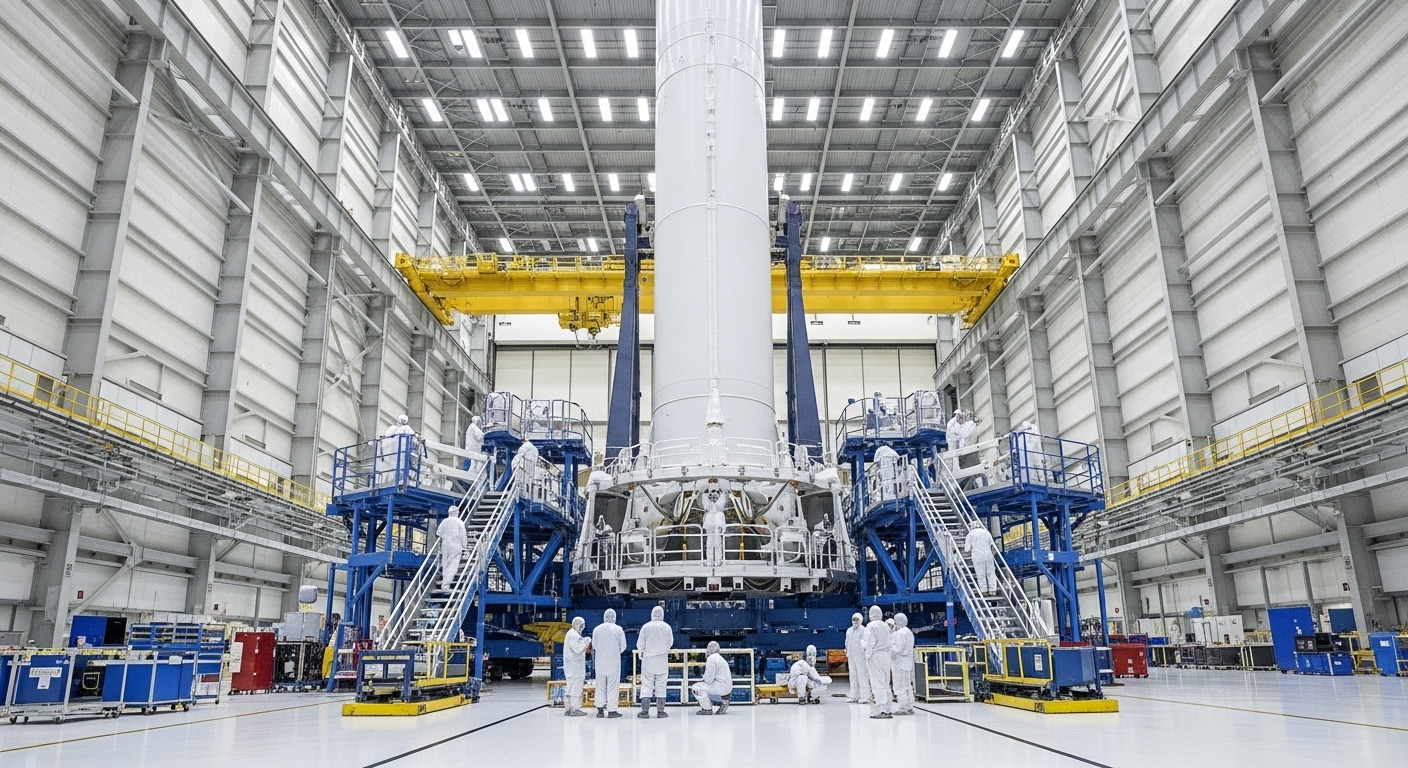
Here is the part that rarely makes headlines: landing the rocket is actually the easier half of the problem. The harder part is figuring out what condition it is in after it lands, and how much work it needs before flying again. Engines that have survived a violent ascent, a re-entry, and a landing burn have been through enormous thermal and mechanical stress. Inspecting every component — turbopumps, combustion chambers, wiring harnesses — takes time and expertise.
Some boosters have flown more than a dozen times with relatively modest refurbishment between flights. That is a genuine engineering achievement, not a given. Early in any reusable rocket program, engineers are essentially learning in real time what wears out fastest and what holds up better than expected.
Reusability does not eliminate rocket complexity — it just shifts the engineering challenge from manufacturing to maintenance and inspection.
Who Is Actually Building Reusable Rockets Right Now?
The Programs Leading the Field
SpaceX's Falcon 9 is the most operationally proven reusable rocket currently flying. Its first-stage booster has demonstrated the ability to land and reflly reliably, and the program has accumulated an extensive flight history across a wide range of mission types. The company's larger Starship system aims to make both the booster and the upper stage fully reusable — a much more ambitious goal that involves catching the booster with a mechanical arm structure at the launch tower rather than landing on legs.
Rocket Lab, a smaller launch company, has been experimenting with recovering its Electron rocket's first stage by catching it mid-air with a helicopter after it descends under a parachute. It sounds improbable. It has actually worked in testing, though the operational cadence of helicopter catches is still being developed. Blue Origin's New Shepard system has demonstrated vertical landing for suborbital flights, and its larger New Glenn rocket is designed with a reusable first stage for orbital missions.
What About the Space Shuttle?
The Space Shuttle is often cited as the original reusable spacecraft, and technically it was — the orbiter, the solid rocket boosters, and the main engines were all recovered and reused. But the program's refurbishment costs were staggering. Each flight required thousands of person-hours of inspection and repair, particularly for the thermal protection tiles on the orbiter's surface. The shuttle demonstrated that reusability was physically possible. It also demonstrated, painfully, that reusability without low refurbishment costs does not automatically reduce launch prices.
(Opinion: The shuttle program deserves more credit than it gets for proving the concept, even if the economics never worked out. It was an engineering marvel built in an era when the computational tools to optimize it simply did not exist yet.)
Why Reusable Rockets Matter Beyond Lower Launch Costs
Frequency Changes Everything
Lower cost per launch is the headline benefit, but the deeper shift is in launch frequency. When rockets are expendable, you build them slowly and carefully because each one is a one-shot asset. When rockets are reusable, you can fly more often — and flying more often means learning faster. Anomalies get identified and corrected across a larger data set. Manufacturing processes improve. Ground crews get more experienced.
This is not a hypothetical. The pace of orbital launches has increased substantially over the past decade, driven largely by reusable systems enabling commercial operators to fly more frequently and at lower cost. That increased cadence has made it economically viable to deploy large satellite constellations that would have been financially impossible with purely expendable rockets.
The Counterintuitive Environmental Angle
Rockets burn significant amounts of propellant, and that has environmental implications regardless of whether the hardware is reused. But there is a counterintuitive point worth raising: a reusable rocket that flies twenty times produces far less manufacturing waste and uses fewer raw materials per kilogram delivered to orbit than twenty separate expendable rockets. The environmental calculus is complicated, but reusability is not obviously worse — and in some respects is meaningfully better — than the expendable alternative.
The propellant chemistry matters too. Rockets burning liquid methane or liquid hydrogen produce different combustion byproducts than those burning kerosene-based fuels. As the industry scales up, these distinctions will matter more, not less.
Frequently Asked Questions
How many times can a reusable rocket booster actually fly?
Figures vary by vehicle and operator, but some Falcon 9 boosters have flown more than fifteen times as of recent years. There is no universal limit — it depends on the design margins, the inspection findings after each flight, and the operator's risk tolerance. Engineers set flight limits conservatively at first and extend them as data accumulates.
Does the landing burn waste a lot of fuel that could have gone to the payload?
Yes, and this is a real engineering trade-off. The propellant reserved for the boostback, entry, and landing burns reduces the rocket's payload capacity compared to an expendable version of the same vehicle. Operators typically offer a 'expendable' mode on some rockets — skipping recovery — to maximize payload when the mission requires it. The reusability benefit has to outweigh that payload penalty over multiple flights to make economic sense.
Why don't all rockets use parachutes to land instead of engines?
Parachutes work well for capsules and some smaller rocket stages, but a large first-stage booster is extremely heavy and hits the atmosphere at high speed. Parachutes large enough to slow it down safely would themselves be enormous and heavy, eating into the payload budget. Engine-powered propulsive landing gives much finer control over the final touchdown and works in conditions — like high winds or a moving ship deck — where parachutes would be unreliable. Rocket Lab's helicopter-catch approach uses a parachute for the initial deceleration but still requires active intervention at the end.
The real measure of reusable rockets will not be any single dramatic landing — it will be the moment when launching a satellite feels as logistically unremarkable as booking a cargo flight. That shift is already underway in the commercial launch industry, and the companies still building expendable rockets are increasingly aware that their business model has a narrowing window. The question is no longer whether reusability works. The question is how far the economics can be pushed before the next constraint — propellant production, ground infrastructure, regulatory approval timelines — becomes the new bottleneck.


Comments
Post a Comment