What Are Fragrance Notes? Understanding Top, Middle, and Base Notes in Perfume
Spray a perfume on your wrist in the morning and it smells completely different by noon. That's not your imagination, and it's not the perfume going bad — it's the fragrance notes doing exactly what they were designed to do. The scent you experience is a carefully engineered sequence, not a single static smell, and understanding that sequence changes how you shop for, wear, and think about fragrance entirely.
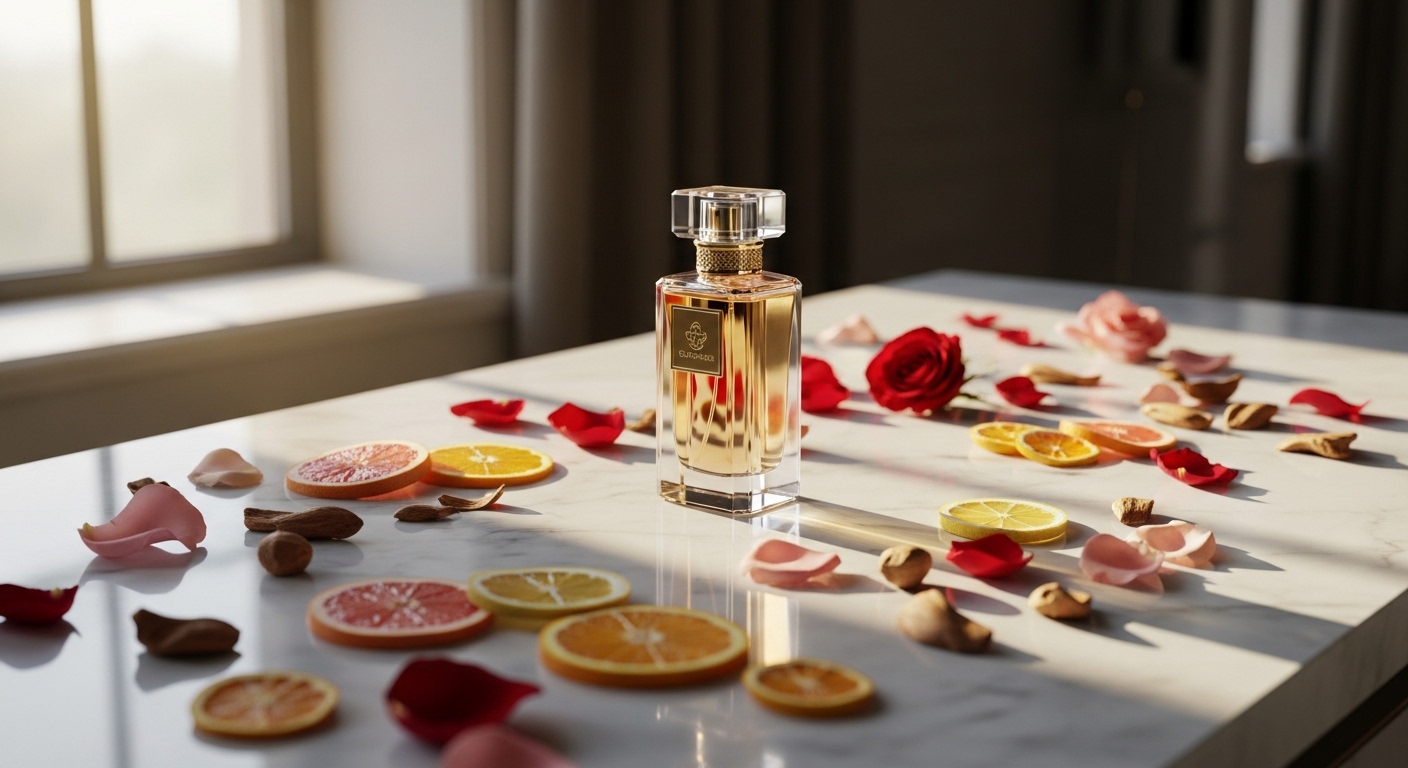
What Are Fragrance Notes? A Plain-Language Definition
The Pyramid Model Every Perfumer Uses
Fragrance notes are the individual scent layers that make up a perfume, organized by how quickly they evaporate. Perfumers visualize this as a pyramid: the lightest, fastest-evaporating materials sit at the top, the heart of the fragrance sits in the middle, and the heaviest, longest-lasting materials anchor the base. Every commercial perfume — from a drugstore body spray to a luxury eau de parfum — is built on this structure.
The word 'note' is borrowed from music, and the analogy is deliberate. Just as a chord is several notes played together, a perfume is several aromatic materials experienced in sequence and in combination. A skilled perfumer isn't just picking ingredients that smell good individually — they're composing how those ingredients will interact and evolve over hours on skin.
Why the Pyramid Exists at All
Different aromatic molecules have different volatility — the rate at which they turn from liquid into vapor and reach your nose. Small, lightweight molecules evaporate fast. Large, heavy molecules cling to surfaces and release slowly. The pyramid structure isn't a marketing invention; it's a direct consequence of chemistry. Perfumers work within these physical constraints and, over time, learned to turn them into an artistic tool.
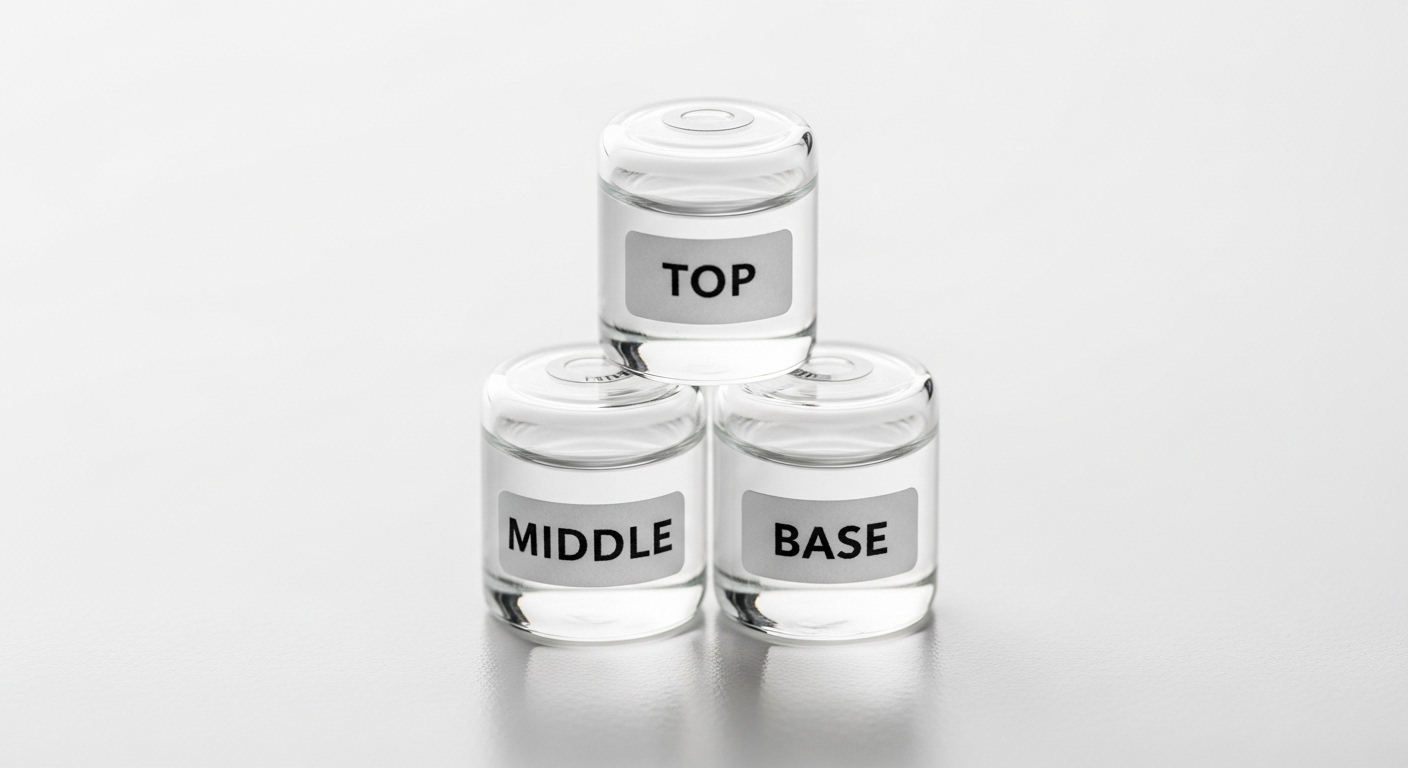
How Top Notes Work — and Why They're Misleading
The First Impression Problem
Top notes are what you smell in the first few minutes after application — typically anywhere from two to fifteen minutes, depending on the specific materials and concentration. They're almost always bright, fresh, or sharp: citrus fruits like bergamot, lemon, and grapefruit are classics, as are light herbs like basil or lavender and some green notes. They hit fast, they hit hard, and then they're gone.
Here's the problem: most people smell a perfume on a card in a shop, decide they love it, buy it, and then wonder why it smells different on their skin an hour later. What they smelled on the card was almost entirely top notes. The actual character of the perfume — the part you'll be living with all day — was still hidden underneath. Sampling on skin and waiting at least twenty minutes is the only way to actually evaluate a fragrance.
The top notes are the perfume's handshake — memorable, but not the whole person. Judging a fragrance by its opening is like judging a film by its trailer.
Why Citrus Dominates the Top
Citrus materials are almost universally used as top notes because their molecular structure makes them highly volatile. The aromatic compounds in lemon or bergamot peel evaporate so quickly that perfumers have to use them in relatively large quantities just to make them perceptible. Some modern perfumers use encapsulation technology — tiny capsules that burst on friction — to extend citrus longevity, but even then, it's a workaround for a fundamental chemical reality.

How Middle Notes Define a Perfume's True Character
The Heart of the Fragrance
Middle notes — also called heart notes — emerge as the top notes fade, usually between fifteen minutes and an hour after application. They form the core identity of the fragrance and typically last for several hours. Florals dominate here: rose, jasmine, ylang-ylang, geranium. Spices like cardamom, cinnamon, and black pepper are common too, as are some fruity and herbal materials.
The middle is where a perfume earns its description. When someone says a fragrance is 'a warm floral' or 'a spicy oriental,' they're describing the heart. The top notes create intrigue; the middle notes deliver the promise. A well-constructed heart also acts as a bridge — it should connect the brightness of the opening to the depth of the base without feeling like a jarring transition.
The Transition You Actually Feel
Anyone who has worn a heavy rose or jasmine fragrance on a hot day knows how dramatically the heart can shift in warm weather. Heat accelerates evaporation, which means the transition from top to middle happens faster, and the middle itself can feel more intense than it would in cooler conditions. Perfumers account for this, but it's also why the same fragrance can smell noticeably different in July versus December.
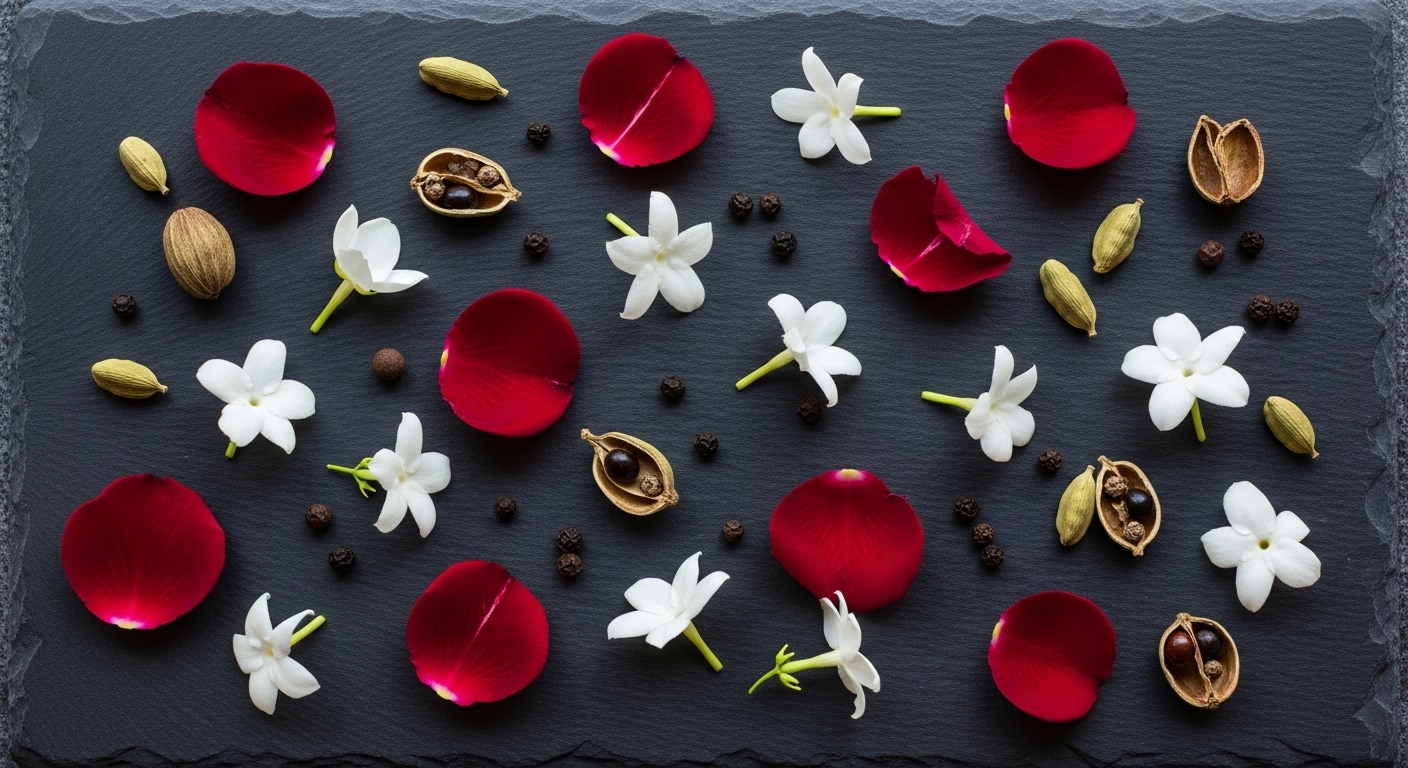
How Base Notes Create Longevity and Depth
The Foundation That Stays With You
Base notes are the heaviest, slowest-evaporating materials in a fragrance. They typically become fully perceptible after about thirty minutes to an hour, once the top notes have largely disappeared, and they can linger on skin and fabric for hours — sometimes well into the next day. Common base notes include sandalwood, cedarwood, vetiver, patchouli, musk, amber, vanilla, and labdanum.
Base notes do two jobs simultaneously. First, they provide the fragrance's lasting power — the 'dry-down' that perfume enthusiasts talk about is almost entirely the base revealing itself. Second, they act as fixatives, slowing the evaporation of the middle notes and giving the whole composition more staying power. Without a well-chosen base, even a beautiful heart can vanish within an hour.
Musk is the invisible backbone of most modern perfumes — present in nearly every commercial fragrance, yet almost never listed prominently on the bottle.
Why Musk Is Everywhere (and Mostly Synthetic)
Natural musks were historically derived from animal sources, a practice that is now largely prohibited or heavily restricted due to conservation concerns. The musks used in virtually all contemporary perfumery are synthetic — and this is actually a good thing. Synthetic musks are consistent, cruelty-free, and can be engineered to have specific properties. Some are designed to be 'skin musks' that smell like clean, warm skin; others are more powdery or soapy. The category is far more varied than the single word 'musk' suggests.
(Opinion: The dry-down is genuinely the most underrated part of fragrance evaluation. Plenty of perfumes have flashy, crowd-pleasing openings that collapse into something generic within an hour. A fragrance that starts quietly but develops a rich, complex base is almost always the better long-term companion — and the better value.)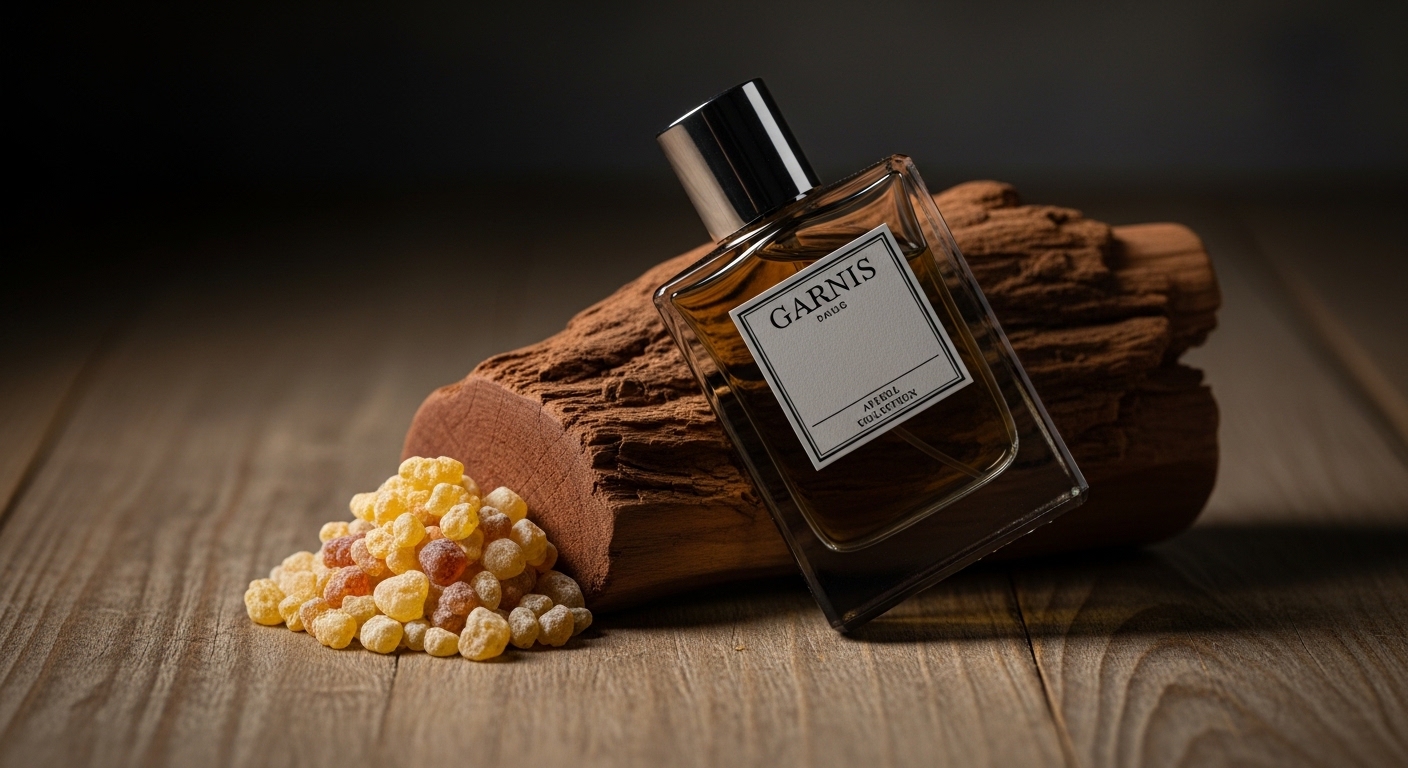
Frequently Asked Questions
Do all perfumes have all three types of notes?
Most commercial fragrances are built on the three-note pyramid, but it's a framework, not a rule. Some minimalist or 'soliflore' fragrances focus on a single material across all stages. Some niche perfumers deliberately reject the pyramid structure entirely, building linear fragrances that smell the same from application to dry-down. The pyramid is a useful tool for understanding how most perfumes behave, not a universal law.
Why does the same perfume smell different on different people?
Skin chemistry plays a real role. Factors like skin pH, hydration level, diet, and even body temperature affect how fragrance molecules interact with your skin and how quickly they evaporate. A base-heavy fragrance with a lot of musks or ambers can smell dramatically richer on someone with naturally warmer, oilier skin. This is also why a fragrance that smells incredible on a friend doesn't always translate the same way on you.
Is a higher concentration (like eau de parfum vs. eau de toilette) just about how long it lasts?
Concentration affects longevity, but it also changes the character of the fragrance. A higher concentration means more aromatic material relative to alcohol, which tends to make the base notes more prominent and the overall impression heavier and richer. An eau de toilette version of a fragrance often smells brighter and more transparent than its eau de parfum counterpart — not just lighter. Some fragrances are actually better experienced at a lower concentration for exactly this reason.
The next time you reach for a bottle and spray it on your wrist, you're not just applying a scent — you're starting a timer. The citrus will vanish, the flowers will bloom, the woods and musks will settle in, and what you're left with hours later is the truest version of what that perfume actually is. Most people never wait long enough to meet it.



Comments
Post a Comment