How Do Solar Sails Work? A Simple Guide to Sailing on Light
Light has no mass, yet it can push a spacecraft across the solar system. That sounds like it should be impossible — and for most of human history, it was just a thought experiment. But solar sails are real, they have flown in space, and the physics behind them is surprisingly straightforward once you strip away the mystique.
What Is a Solar Sail, Exactly?
The Basic Concept
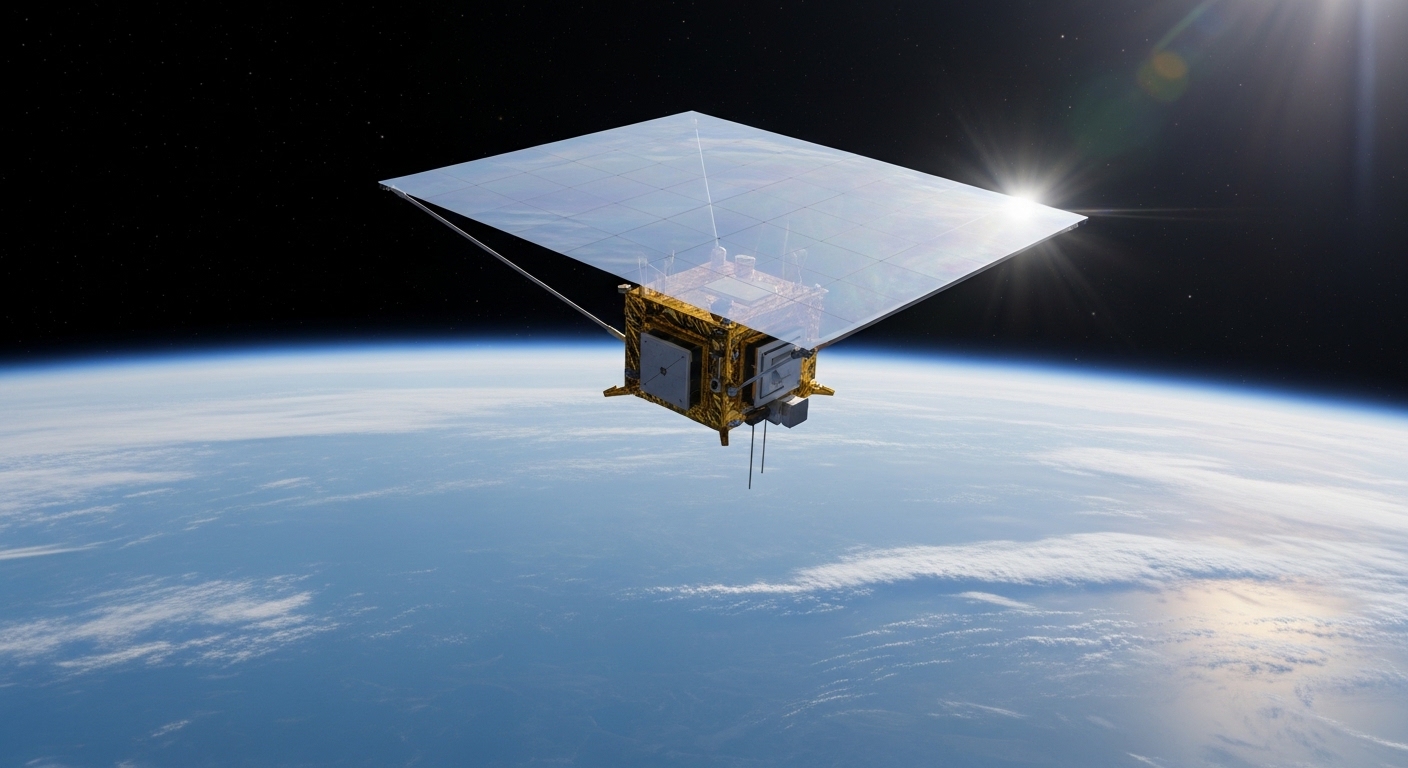
A solar sail is a spacecraft propulsion system that uses the pressure of sunlight instead of rocket fuel. The sail itself is an enormous, extremely thin sheet of reflective material — often measured in micrometers of thickness — stretched across a lightweight frame. When photons from the sun strike the sail and bounce off, they transfer a tiny amount of momentum to the spacecraft.
The key word there is 'tiny.' The force produced is minuscule by any everyday standard. But in the vacuum of space, where there is no friction, even a microscopic push applied continuously for weeks or months adds up to real velocity. That is the entire game: patience over power.
Why Photons Can Push Things
Photons are massless, but they carry momentum — this is one of those counterintuitive results from quantum mechanics and special relativity that still trips people up. The momentum of a photon is proportional to its energy, which is inversely proportional to its wavelength. Shorter wavelengths carry more momentum per photon, which is why some researchers have explored whether ultraviolet light might offer a slight advantage over visible light for sail propulsion.
When a photon hits a perfectly reflective surface and bounces back, it transfers twice as much momentum as it would if it were simply absorbed. This is why the reflectivity of the sail material matters enormously — a mirror-like surface is not just aesthetically pleasing, it is physically more efficient.
How Does a Solar Sail Actually Move Through Space?
Acceleration Without Fuel
The acceleration a solar sail produces depends on three things: the intensity of sunlight at its current distance from the sun, the area of the sail, and the total mass of the spacecraft. Closer to the sun, sunlight is more intense and the push is stronger. A larger sail catches more photons. A lighter spacecraft accelerates faster from the same force — basic Newton.
To put a number on it: at Earth's distance from the sun, sunlight exerts a pressure of roughly 9 micronewtons per square meter on a perfectly reflective surface. That is about the weight of a small paperclip spread across an entire square meter. Scale that up to a sail hundreds of meters across and a spacecraft weighing only a few kilograms, and you start getting somewhere useful.
A solar sail never runs out of fuel — as long as there is a star nearby, it is always accelerating. That changes the economics of deep-space missions entirely.
Steering and Orbital Mechanics
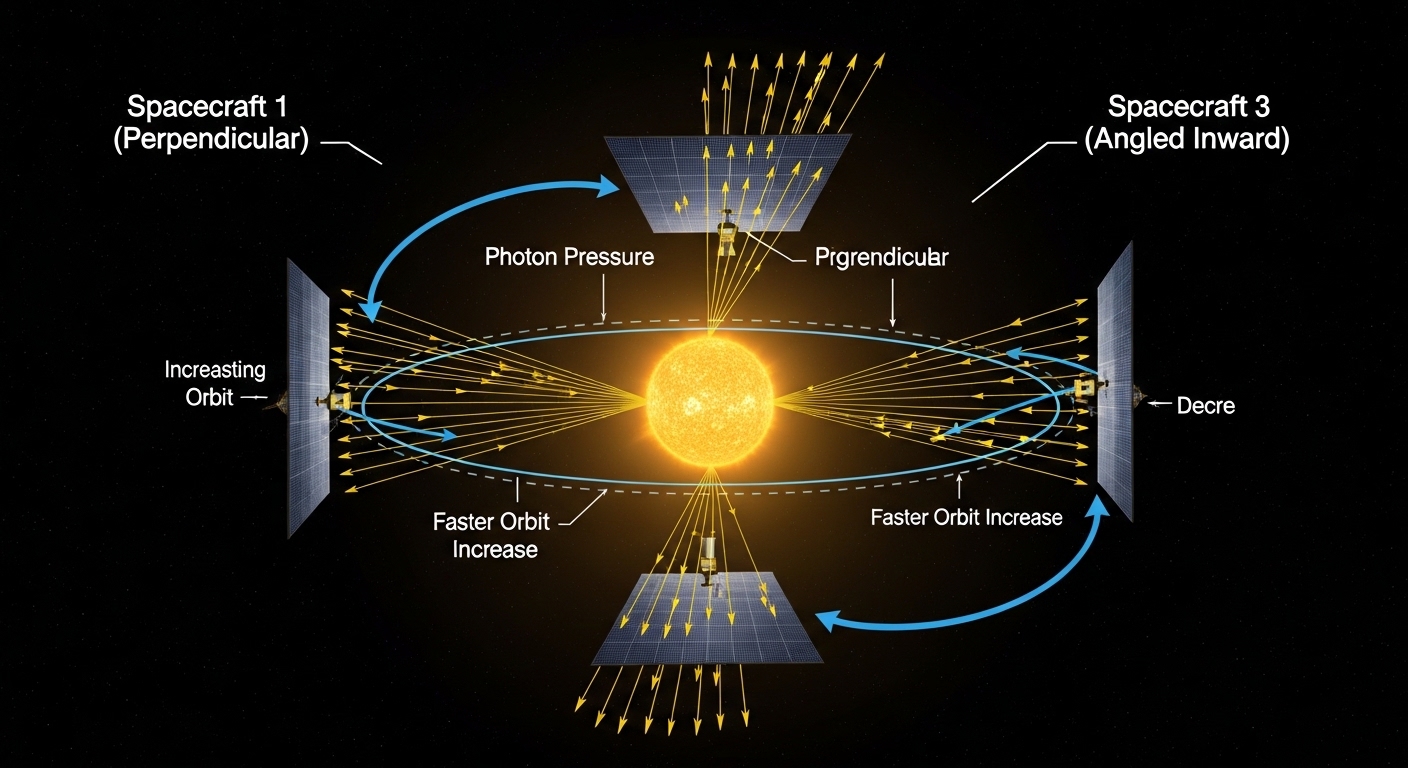
Here is where it gets genuinely clever. To move away from the sun, you angle the sail so that the light pressure pushes you in the direction of your orbital motion, which raises your orbit. To move toward the sun, you tilt the sail to push against your orbital motion, which lowers your orbit. You are not fighting gravity — you are working with it.
Steering is achieved by adjusting the angle of the sail relative to the sun, sometimes using small movable panels called 'vanes' at the corners, or by shifting the center of mass of the spacecraft. It is a slow, deliberate process — nothing like the instant thrust of a chemical rocket. Anyone who has watched a sailboat tack into the wind has an intuitive feel for the geometry, even if the physics differs.
Real Solar Sail Missions That Have Already Flown
IKAROS and LightSail 2
Japan's IKAROS spacecraft, launched in 2010, was the first to demonstrate solar sail propulsion in interplanetary space. It deployed a 14-meter diagonal sail made of polyimide film just 7.5 micrometers thick — thinner than a human hair — and successfully used sunlight pressure to alter its trajectory on the way to Venus. The mission confirmed that the concept worked outside of computer simulations.
The Planetary Society's LightSail 2, launched in 2019, went further by demonstrating controlled solar sailing in Earth orbit. It raised its orbit measurably using only sunlight, then deliberately lowered it by changing the sail's orientation. It was a small spacecraft — roughly the size of a loaf of bread before deployment — but it proved that attitude control and solar sailing could be combined effectively.
NASA's Advanced Composite Solar Sail System
NASA has continued pushing the technology forward with increasingly sophisticated sail structures. The challenge has always been deploying a very large, very thin surface reliably from a very small package. Booms that unfurl like a tape measure, rather than rigid rods, have become the preferred approach because they pack down to almost nothing and weigh very little. Getting the deployment sequence right is one of those engineering problems that looks simple on paper and is genuinely brutal in practice.
The thinner the sail, the better — but materials thin enough to be useful are also fragile enough to tear from a single micrometeorite strike. That trade-off has no clean solution yet.
Why Solar Sails Matter for the Future of Space Exploration
The Fuel Problem They Solve
Every kilogram of rocket fuel you launch costs money and takes up mass that could be payload. For long missions — think decades-long probes to the outer solar system or beyond — the fuel budget becomes a fundamental constraint. Solar sails sidestep this entirely. A sail-powered spacecraft can keep accelerating for as long as it remains in sunlight, without carrying a single gram of propellant.
This makes solar sails particularly attractive for missions that need sustained low thrust over long periods: maintaining a fixed position relative to the sun (called a 'stationary orbit' or 'halo orbit'), slowly spiraling out to the asteroid belt, or even reaching interstellar space faster than any chemical rocket could manage.
The Starshot Vision — and Its Limits
The most ambitious solar sail concept is Breakthrough Starshot, which proposes using a powerful ground-based laser array to accelerate a tiny sail-equipped probe to a significant fraction of the speed of light — potentially reaching the Alpha Centauri system within a human lifetime. The physics are sound in principle. The engineering challenges are, to put it mildly, extraordinary.
At those velocities, even a single dust grain becomes a lethal projectile. The sail material would need to reflect the laser almost perfectly, or it would vaporize from the absorbed energy. And slowing down at the destination is not part of the current plan — the probe would fly through at enormous speed and have only minutes to collect data. Whether that counts as 'exploration' is a fair question.
(Opinion: Solar sails represent one of the few propulsion concepts where the more you understand the physics, the more plausible they become — which is the opposite of most 'revolutionary' space technologies. The Starshot laser-sail idea is genuinely different: the more you dig into the engineering details, the more you appreciate just how many unsolved problems sit between the concept and a working probe.)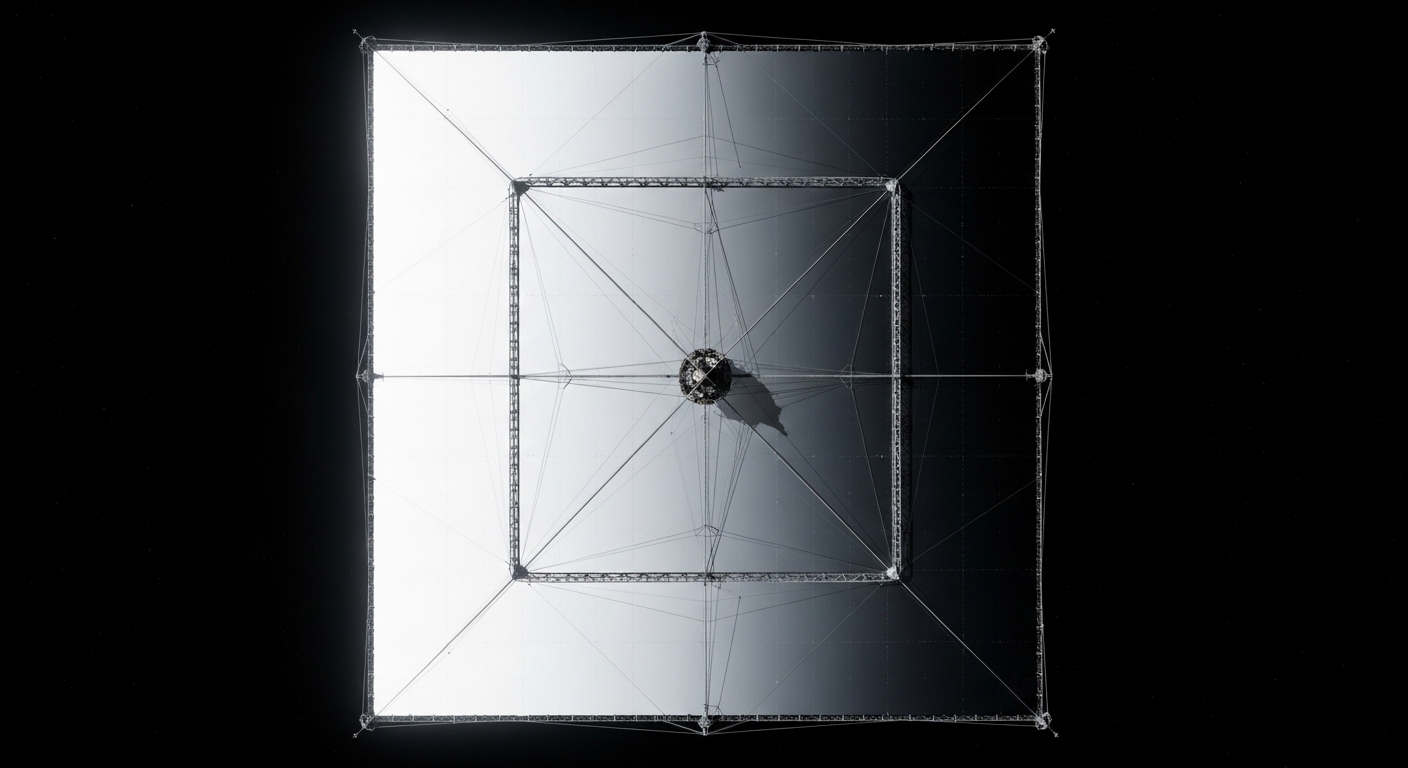
Frequently Asked Questions
Can a solar sail work in the outer solar system, far from the sun?
Yes, but with diminishing returns. Sunlight intensity drops with the square of the distance from the sun — so at Jupiter's distance, you receive roughly 4% of the sunlight Earth gets. A solar sail still works, but the acceleration becomes very small. For missions beyond Saturn, researchers often propose hybrid approaches that use solar sails closer to the sun to build up speed, then coast the rest of the way.
Why don't we just use solar sails for everything if they never run out of fuel?
The main limitation is time. Solar sails produce extremely low thrust, which means reaching high speeds takes months or years of continuous acceleration. For missions where speed matters — crewed flights, time-sensitive science — chemical or ion propulsion is still far more practical. Solar sails are best suited for robotic missions where patience is an option and mass savings are critical.
Could a solar sail be used to slow down a spacecraft, not just speed it up?
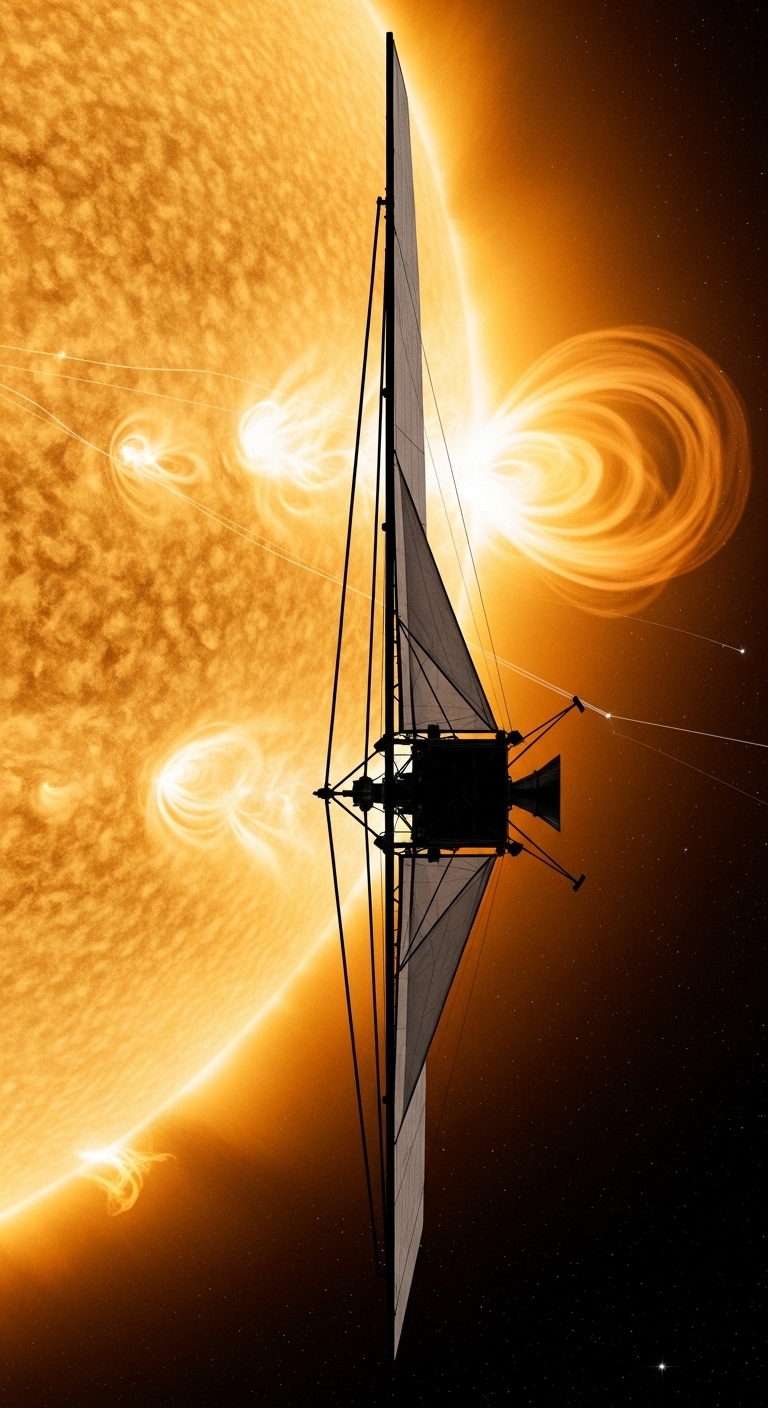
Yes — this is called 'photon braking' and it is one of the more elegant ideas in astrodynamics. By angling the sail to face the sun while moving away from it, the light pressure acts as a brake. Some mission concepts for reaching nearby star systems propose using the target star's own light to decelerate the probe as it arrives, which would eliminate the need to carry any braking propellant at all.
The strangest thing about solar sails is not the physics — it is the timeline. A technology that Johannes Kepler speculated about in the 1600s, after noticing that comet tails always point away from the sun, is now a real engineering discipline with flight-proven hardware. The gap between 'light pushes things' and 'we can navigate by it' took about four centuries to close. What that says about the pace of human ingenuity is worth sitting with for a moment.


Comments
Post a Comment