Red Planet Dreams: Is It Possible to Terraform Mars for Human Habitation?
Mars has roughly one percent of Earth's atmospheric pressure. Stand on its surface without a suit and your blood would begin to boil within seconds — not from heat, but from the near-vacuum conditions. That single fact captures just how far Mars sits from anything resembling a habitable world. And yet, serious scientists, engineers, and space agencies have spent decades working out whether humanity could, in principle, change that.
What Does 'Terraforming Mars' Actually Mean?
The Basic Definition
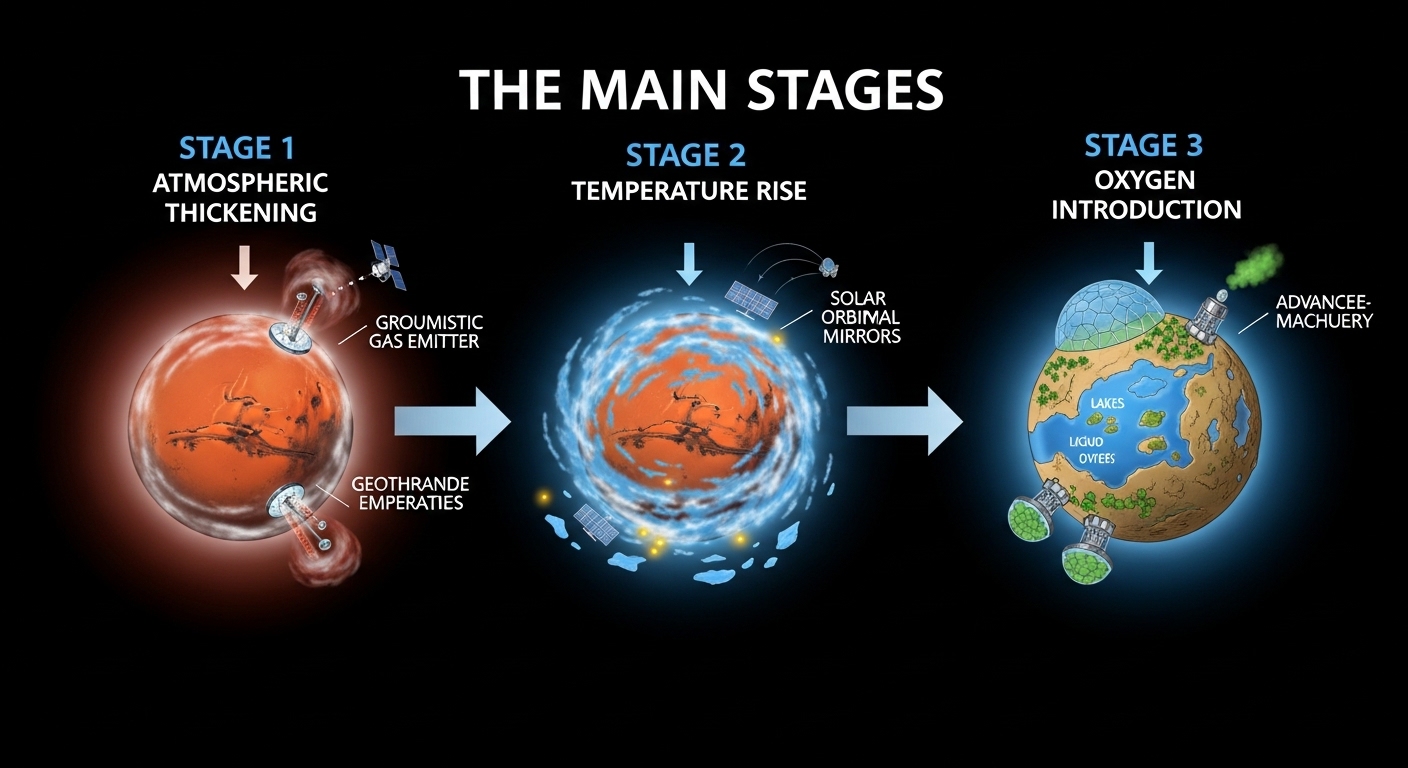
Terraforming — literally 'Earth-shaping' — means deliberately altering a planet's environment until it can support Earth-like life, ideally without requiring a spacesuit. For Mars, that means raising the atmospheric pressure, warming the planet, introducing breathable oxygen, and somehow dealing with the soil chemistry. Each of those tasks is enormous on its own. Together, they represent arguably the largest engineering project ever conceived.
The term was popularized by science fiction writer Jack Williamson in 1942, but the concept entered serious scientific literature decades later. Carl Sagan wrote about it in the early 1970s, proposing that introducing dark dust or plants onto the Martian polar ice caps could trigger a warming cycle. That idea didn't pan out as cleanly as hoped, but it started the conversation in earnest.
Why Mars Specifically?
Mars is the obvious candidate because it's the most Earth-like planet in the solar system — which is a bit like saying it's the tallest building in a one-story town. It has a 24.6-hour day, water ice at its poles and beneath its surface, and a thin carbon dioxide atmosphere that at least provides a starting point. Venus has similar gravity to Earth but surface temperatures hot enough to melt lead. Mars is cold and thin-aired, but those problems are theoretically fixable.
How Would Terraforming Mars Actually Work? The Science Explained
Step One — Warming the Planet
Mars currently averages around minus 60 degrees Celsius. The first step in most serious terraforming proposals is triggering a runaway greenhouse effect — intentionally. One approach involves releasing powerful greenhouse gases into the atmosphere, such as perfluorocarbons (PFCs), which are thousands of times more potent than carbon dioxide as warming agents. The idea is to manufacture these gases on Mars and release them continuously over decades.
Another proposal involves redirecting asteroids or comets rich in ammonia toward Mars to crash-land and release gases. This is the kind of plan that sounds like science fiction until you realize that planetary scientists have modeled it with genuine equations. The timescales involved are brutal — estimates for meaningful warming range from decades to centuries depending on the method.
Step Two — Thickening the Atmosphere
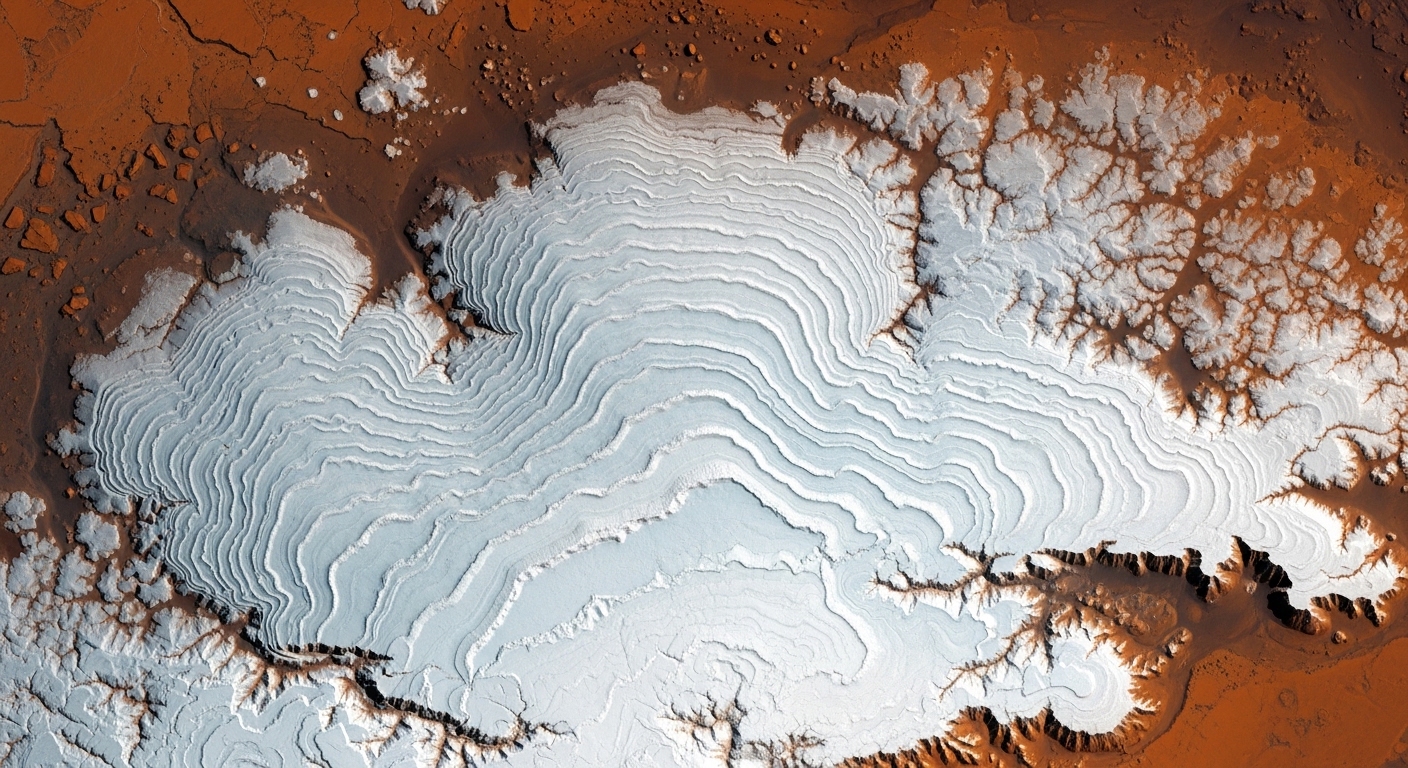
Warming the planet would, in theory, sublimate the carbon dioxide locked in the southern polar ice cap, thickening the atmosphere. But here's the problem that emerged from more recent research: a 2018 study published in Nature Astronomy estimated that even releasing all accessible CO2 on Mars would only raise atmospheric pressure to roughly 1.2 percent of Earth's — far short of the roughly 50 percent needed for humans to survive without a pressure suit. Mars simply doesn't have enough accessible CO2 to do the job through this method alone.
Mars may not have enough accessible carbon dioxide to fully terraform itself — meaning any serious effort would require importing atmospheric material from elsewhere in the solar system.
Step Three — Oxygen and the Soil Problem
Even if you solved pressure and temperature, the atmosphere would be mostly CO2. Introducing photosynthetic organisms — hardy cyanobacteria or engineered plants — is the standard proposal for converting CO2 to oxygen over geological timescales. NASA's Perseverance rover actually demonstrated a small-scale version of this concept with its MOXIE instrument, which successfully converted Martian CO2 into oxygen. That was a proof of concept, not a solution — MOXIE produced oxygen in tiny quantities — but it showed the chemistry works.
The soil is a separate headache. Martian regolith contains perchlorates, which are toxic to most Earth plants. Any agricultural terraforming would require either washing the soil at massive scale or engineering organisms that tolerate or break down perchlorates. Some bacteria on Earth can actually metabolize perchlorates, which has made astrobiologists quietly optimistic about this particular hurdle.
The Magnetic Field Problem Nobody Talks About Enough
Why Mars Lost Its Atmosphere in the First Place
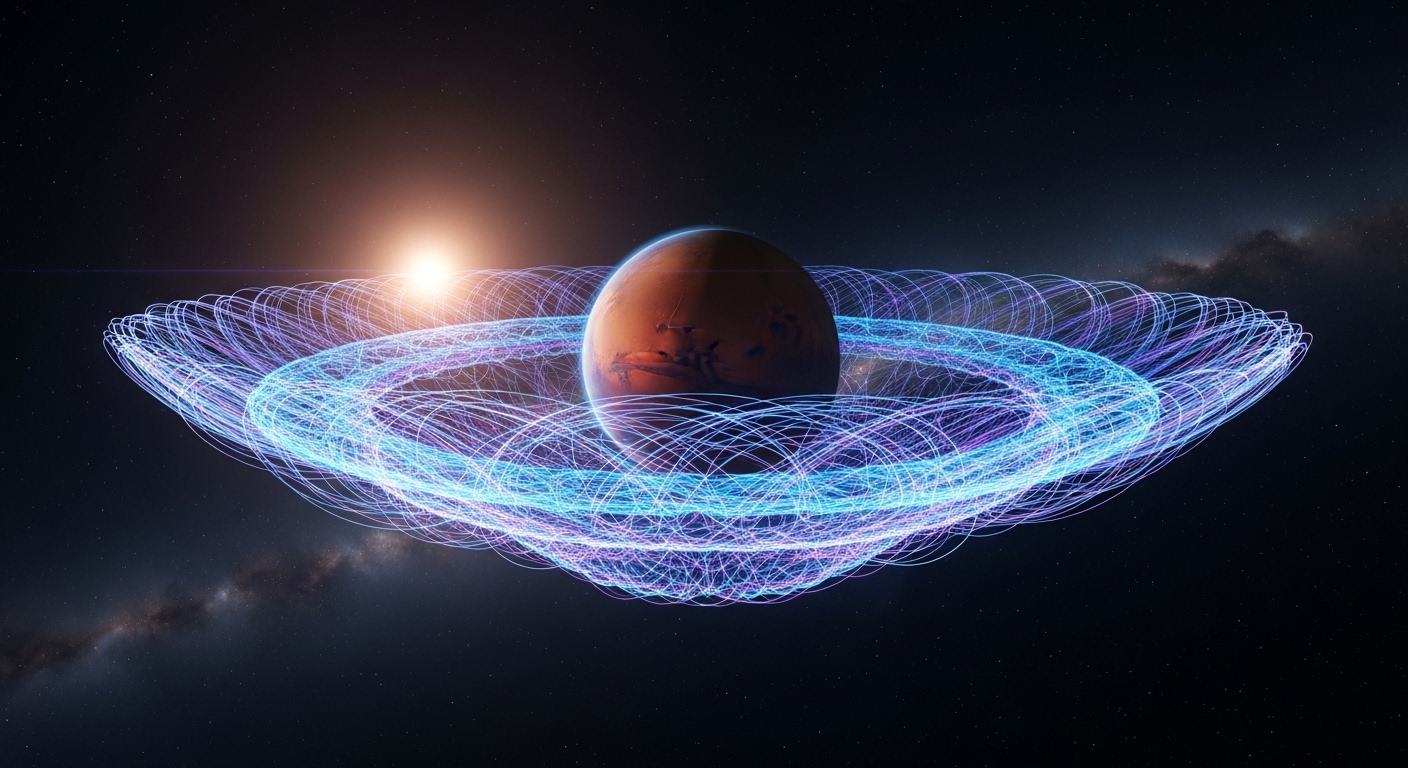
Mars doesn't have a global magnetic field. Earth's magnetic field deflects the solar wind — a constant stream of charged particles from the sun — protecting the atmosphere from being stripped away. Mars lost its magnetic field billions of years ago when its core cooled and stopped generating the dynamo effect. Without that shield, the solar wind has been slowly eroding the Martian atmosphere ever since.
This creates a fundamental long-term problem for terraforming. Even if you spent centuries building up a thick, warm, oxygen-rich atmosphere, the solar wind would gradually strip it away again. The timescale for this stripping is debated — some researchers suggest it would take millions of years to lose a terraformed atmosphere, which might be long enough to matter. Others are less optimistic.
Could We Build an Artificial Magnetic Shield?
NASA scientists have actually proposed placing a magnetic dipole shield at the Mars L1 Lagrange point — a gravitationally stable spot between Mars and the Sun. A large enough artificial magnetic field at that location could theoretically deflect the solar wind before it reaches Mars. This was discussed at a NASA Planetary Science Vision 2050 Workshop, and while it remains speculative, it's not physically impossible. The engineering challenge is staggering, but the concept doesn't violate any known physics.
A magnetic shield at the Mars-Sun Lagrange point is the kind of idea that sounds absurd until you realize it's the only known solution to a problem that would otherwise undo centuries of terraforming work.
How Long Would Terraforming Mars Actually Take?
The Honest Timeline
Estimates vary wildly, and anyone who gives you a confident specific number is guessing. Conservative scientific estimates for even partial terraforming — enough to walk outside without a pressure suit, though still needing an oxygen mask — run to several hundred years at minimum. Full Earth-like conditions, with breathable air and liquid surface water, are typically estimated in the range of thousands to tens of thousands of years using currently conceivable technology.
Elon Musk has publicly suggested a faster timeline using nuclear detonations over the poles to release CO2 — a concept sometimes called 'nuke Mars.' The physics of this approach are disputed. Most planetary scientists think the available CO2 is simply insufficient to produce the desired effect, regardless of how quickly you release it. The 2018 Nature Astronomy findings were partly a direct response to this kind of optimism.
The Generational Commitment Problem
Even the optimistic timelines span multiple human generations. That raises a question that's more political than scientific: what civilization commits resources across centuries to a project whose benefits arrive long after every current decision-maker is dead? Human history doesn't offer many encouraging examples of multi-generational infrastructure projects succeeding without interruption. The construction of some medieval cathedrals took over a century — and those had the advantage of being visible and local.
FAQ
Could humans live on Mars before it's fully terraformed?
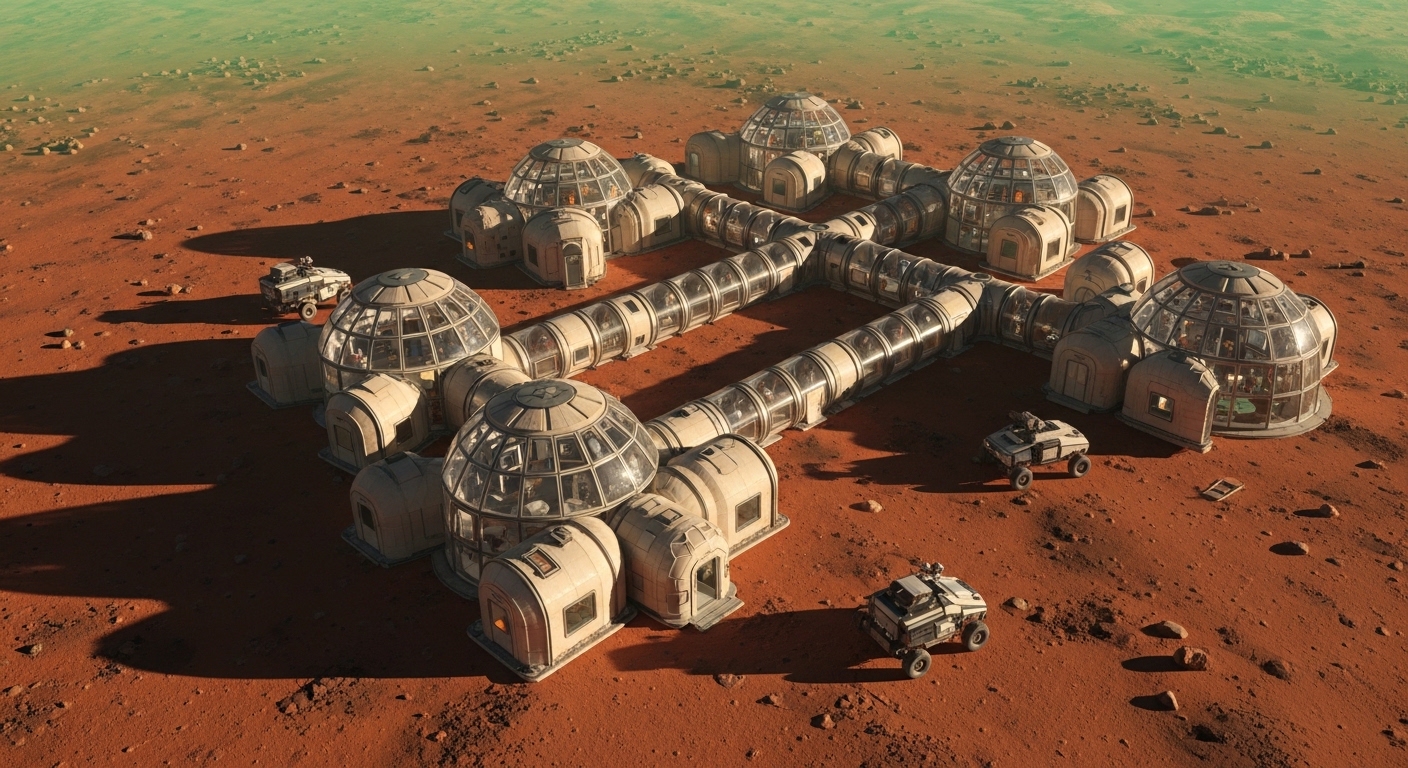
Yes — and this is actually the more likely near-term scenario. Pressurized habitats, underground settlements, and enclosed biospheres could support human communities on Mars long before any terraforming effort produces results. Many researchers argue that 'paraterraforming' — enclosing regions under domes rather than transforming the whole planet — is more realistic within any foreseeable timeframe.
Would terraforming Mars destroy any existing Martian life?
This is a genuine ethical concern in planetary science circles. If microbial life exists on Mars — possibly in subsurface brines or deep rock — terraforming could wipe it out before we even discover it. Some scientists argue we have an obligation to search thoroughly before altering the planet. Others point out that if Martian life exists, it's almost certainly extremophilic and might actually thrive in a warmer, wetter environment.
Is terraforming Mars legal under international space law?
Current space law, primarily the 1967 Outer Space Treaty, prohibits national appropriation of celestial bodies but doesn't explicitly address planetary-scale environmental modification. The treaty does include provisions about avoiding harmful contamination of space environments, which some legal scholars argue could apply to terraforming. The honest answer is that international space law hasn't caught up with the possibility — it was written when landing on the Moon was the frontier.
The most unsettling thing about terraforming Mars isn't the engineering difficulty — it's the possibility that we could do everything right and still fail because the planet's core went cold three billion years ago. A world without a magnetic field is a world perpetually losing its skin to the solar wind. We can imagine building an atmosphere. Building a planetary magnetic field from scratch is a different category of problem entirely — and it's the one that will ultimately determine whether Mars can ever be anything more than a temporary address.



Comments
Post a Comment