Lorry or Truck? A Fun Guide to Common British vs. American English Words
The same language, spoken by hundreds of millions of people, and yet a British person asking for the 'boot' of a car will leave most Americans staring blankly at the bumper. English split into two distinct dialects centuries ago, and the gap has never fully closed. What started as colonial divergence hardened into genuine cultural identity — and today the differences are sharp enough to cause real confusion, occasional offence, and a lot of comedy.
| Category | British English | American English |
|---|---|---|
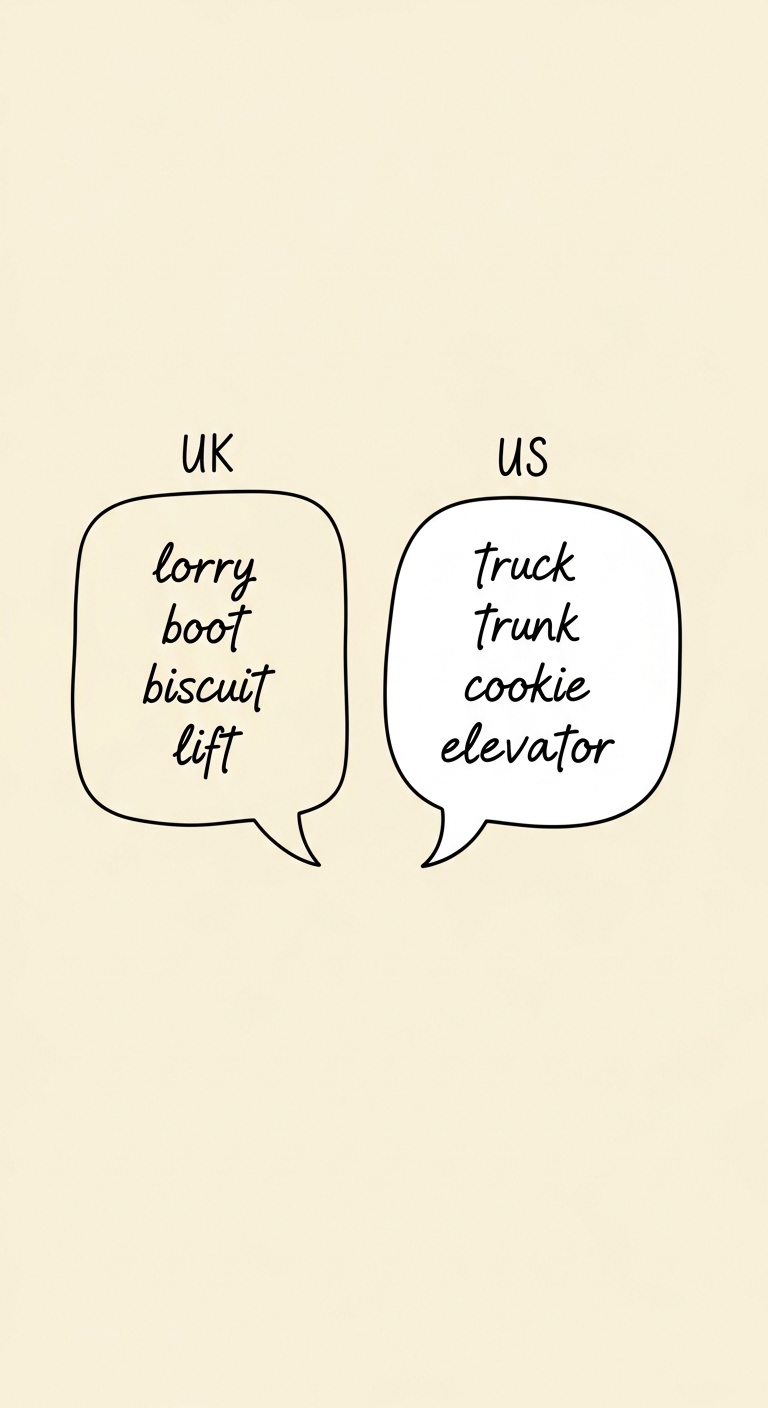
| Large road vehicle | Lorry | Truck |
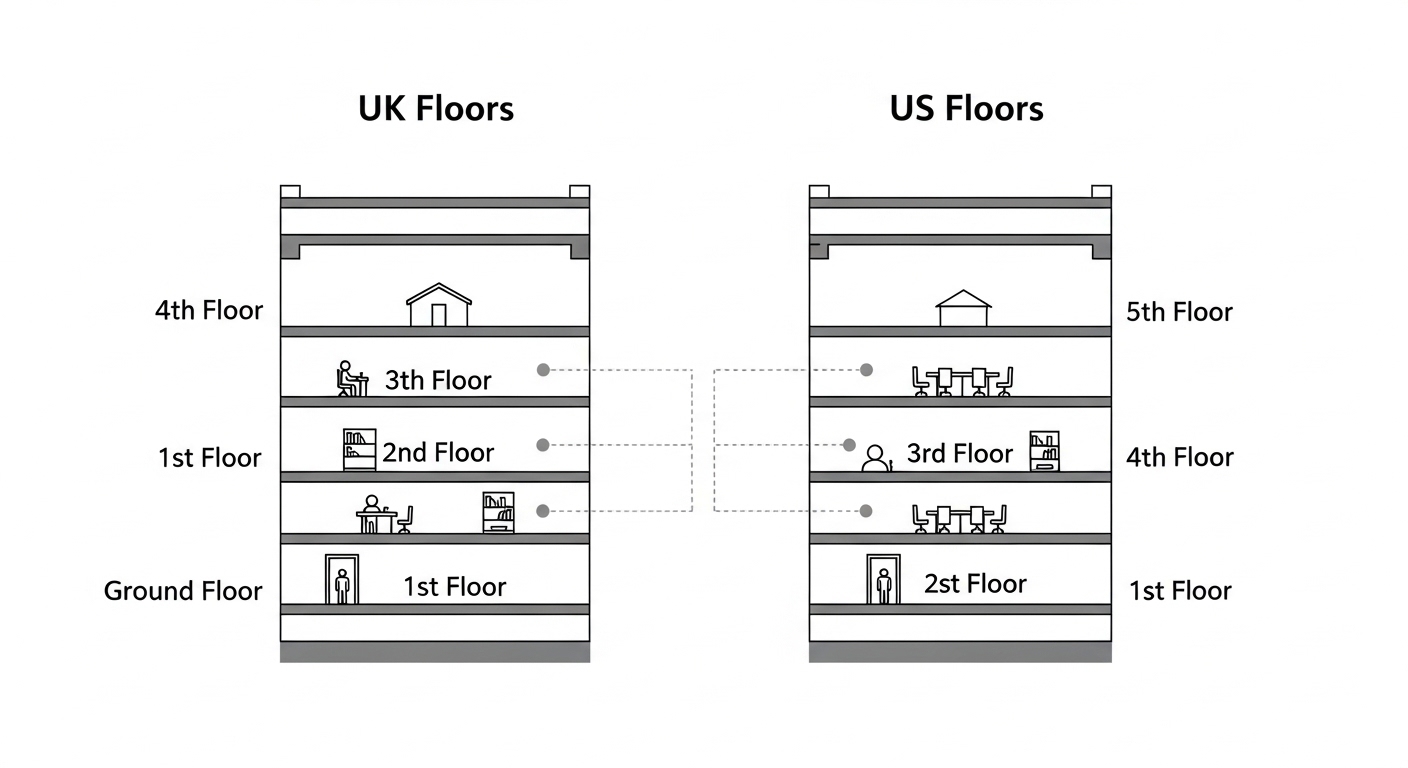
| Ground floor + 1 | First floor | Second floor |
| Autumn season | Autumn | Fall |
| Trousers | Trousers | Pants |
| Underground rail | Tube / Underground | Subway |
Why British and American English Diverged in the First Place
The Colonial Freeze Effect
When English settlers crossed the Atlantic in the 1600s and 1700s, they took the language as it existed at that moment and largely preserved it in amber. Meanwhile, English back in Britain kept evolving. This is why American English actually retains some features — like the 'z' in 'realize' — that are closer to older English spelling conventions than the British 'realise' that came later.
Geography did the rest. With no daily contact, the two varieties drifted. New words were coined independently on each side of the ocean, often for the same thing. A large goods vehicle needed a name: Britain reached for 'lorry' (origins debated, possibly from a dialect word for 'to pull'), America went with 'truck' (from the Greek 'trochos', meaning wheel).
Then came the 19th century and the era of deliberate differentiation. Noah Webster, the American lexicographer, actively rewrote spellings to distinguish American English from British — dropping the 'u' from 'colour', swapping 'centre' for 'center'. It was a political act as much as a linguistic one.
Road and Transport Words: Where the Confusion Hits Hardest
Lorry, Truck, and Everything in Between
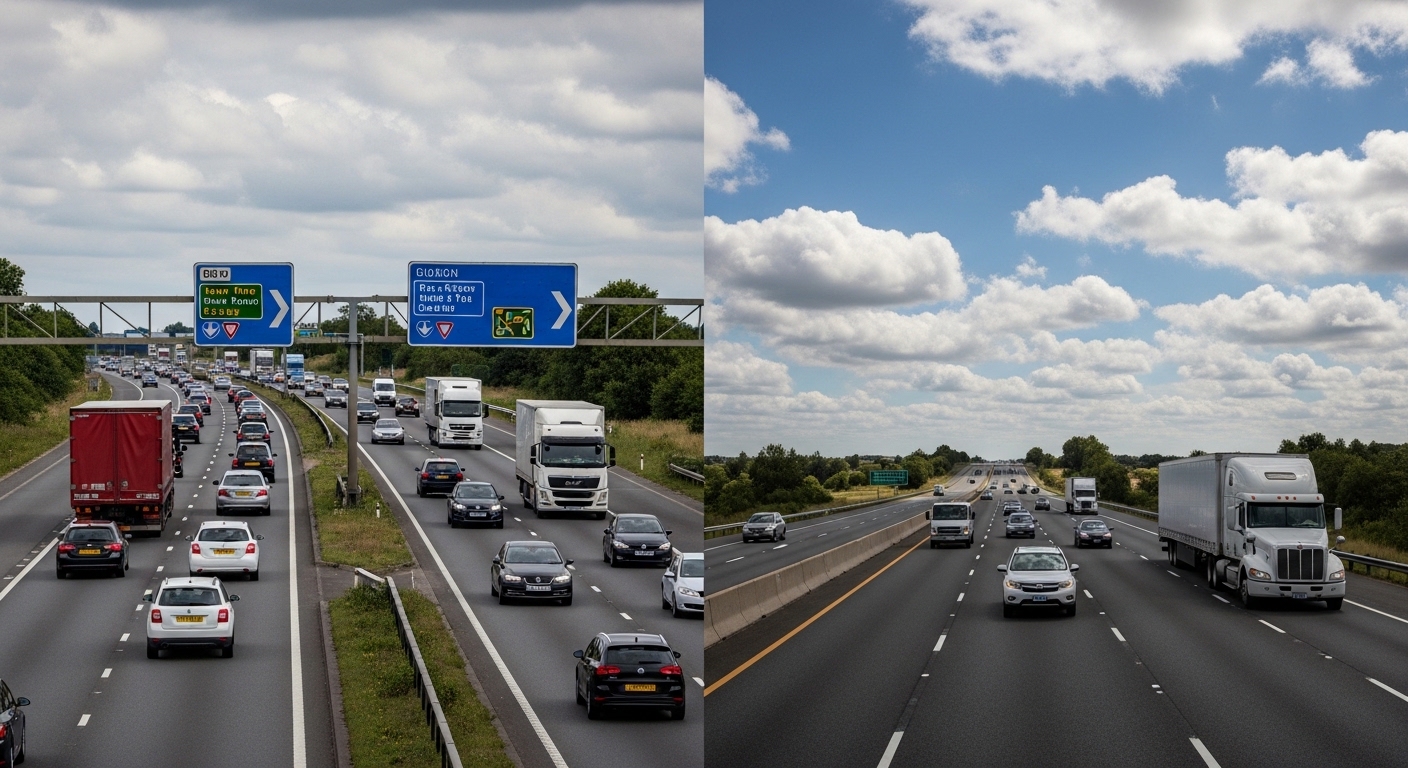
Transport vocabulary is where British-American confusion gets genuinely dangerous, or at least expensive. An American driver told to park in the 'car park' will understand eventually, but the 'dual carriageway' sign on a British road has caused more than a few rental-car moments of panic. A dual carriageway is simply a divided highway — two lanes in each direction with a central reservation (median, in American).
The lorry vs. truck distinction is the most famous, but the rabbit hole goes deeper. What Americans call the 'hood' of a car, the British call the 'bonnet'. The 'trunk' becomes the 'boot'. 'Gas' becomes 'petrol'. And if a British person tells you their car has gone into the 'garage' for a 'service', they mean a mechanic's workshop, not a home garage — which they'd more likely call a 'garage' anyway, but pronounced differently.
The British 'boot' and 'bonnet' are not quirky slang — they are the standard terms, and using 'trunk' or 'hood' in a British garage will mark you as a tourist immediately.
Petrol Stations and Rest Stops
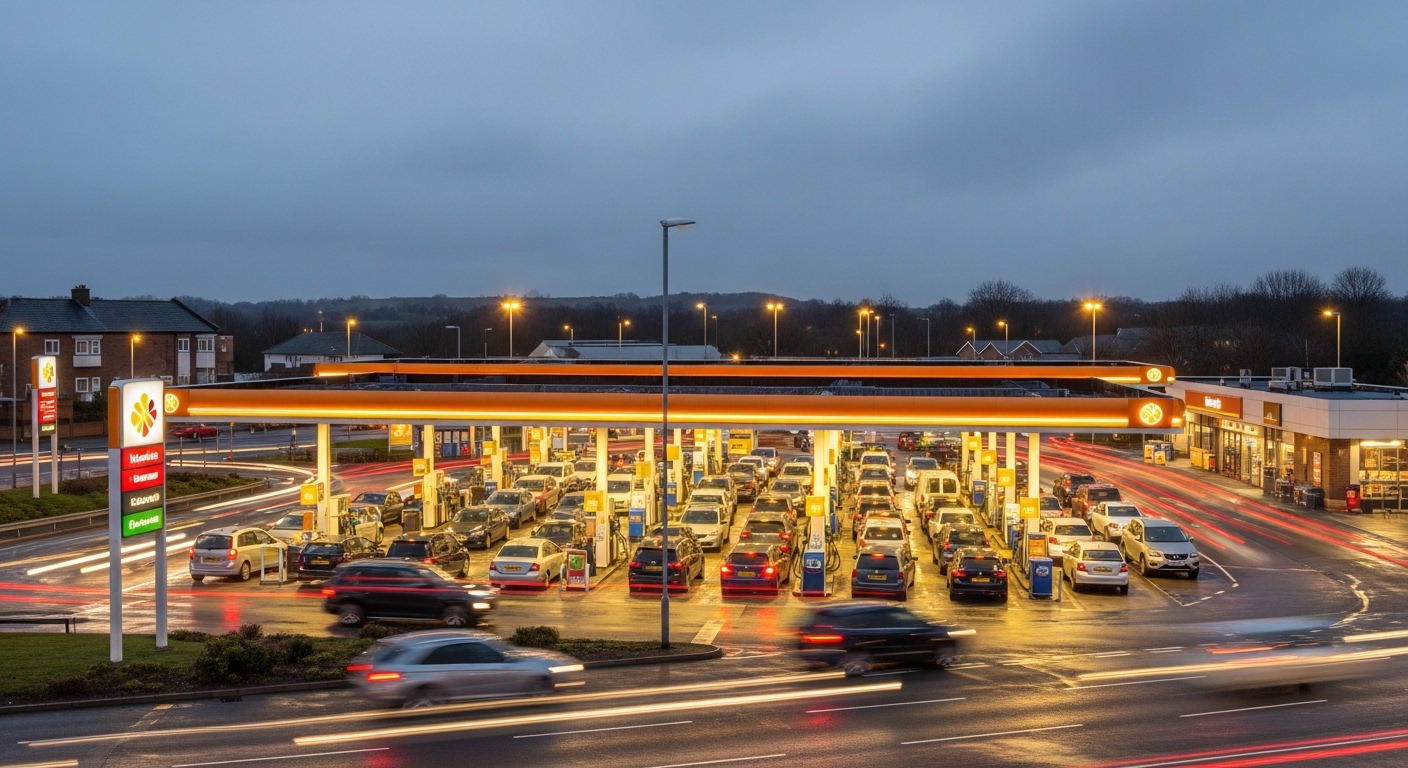
Pull off a British motorway and you'll find a 'services' — a large rest stop with fuel, food, and shops. Americans call the equivalent a 'rest stop' or 'travel plaza'. The British 'motorway' itself maps to the American 'freeway' or 'highway', though technically a freeway implies no tolls, while a motorway just means a high-speed road with restricted access.
Food and Drink: A Minefield of False Friends
Biscuits, Chips, and Crisps
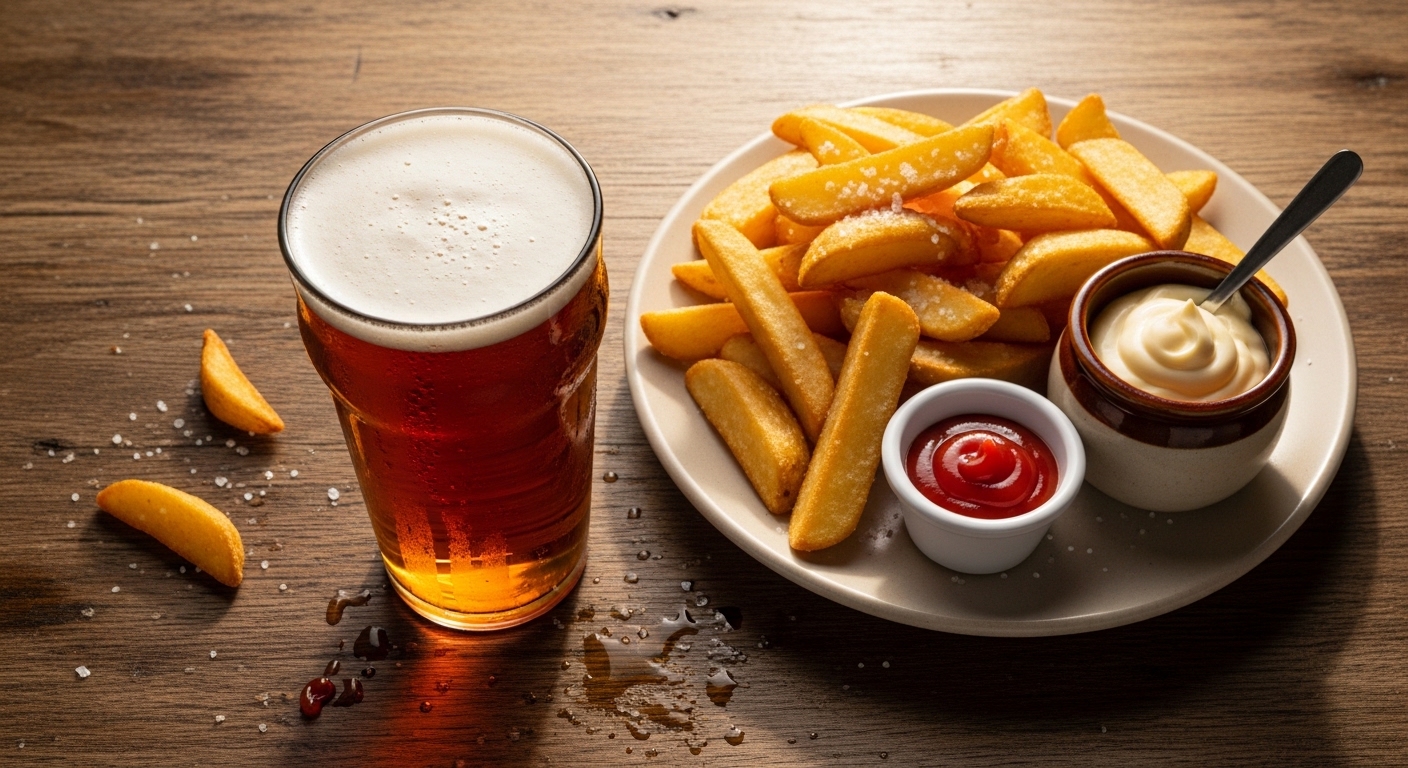
Order 'chips' in a British pub and you'll get thick-cut fried potatoes — what Americans call 'fries'. Ask for 'crisps' and you'll get what Americans call 'chips'. The inversion is complete and slightly maddening. A British 'biscuit' is a hard, sweet, snappable thing — a digestive, a hobnob, a rich tea. An American 'biscuit' is a soft, fluffy, savoury bread roll, closer to what the British would call a 'scone' (though even that comparison isn't exact).
Anyone who has ordered food in a foreign English-speaking country knows the specific anxiety of not being sure whether the menu means what you think it means. 'Jacket potato' (British) is simply a 'baked potato' (American). 'Aubergine' is 'eggplant'. 'Courgette' is 'zucchini'. The French influence on British food vocabulary is real and persistent.
Drinks and Pubs
A British 'pub' has no direct American equivalent — 'bar' is the closest, but a pub implies a different social function, often with a food menu, a beer garden, and the expectation that you order at the bar rather than being served at a table. 'Lemonade' in Britain typically means a fizzy, clear, sweet drink (like Sprite). In America, it means the cloudy, fresh-squeezed or reconstituted juice-based drink. Ordering lemonade in the wrong country is a reliable way to look confused.
Asking for a 'lemonade' in Britain and expecting something tart and cloudy is a rite of passage for American travellers — you will get a glass of fizzy Sprite-adjacent liquid, and you will accept it.
Home, School, and Everyday Life: The Subtle Gaps
Floors, Flats, and Lifts
The floor-numbering issue is one of the most disorienting for American visitors to Britain. In the UK, the ground floor is the ground floor — the one at street level. The floor above it is the first floor. In America, the ground floor is the first floor. This means that a British 'second floor' is an American 'third floor', and hotel guests regularly end up one storey off.
A British 'flat' is an American 'apartment'. A 'lift' is an 'elevator'. The 'post' is the 'mail'. A 'solicitor' in Britain is a lawyer — not someone doing something shady, as the American connotation of 'soliciting' might suggest. These are the words that trip up even fluent speakers, because they sound familiar enough that you don't think to question them.
School Words That Don't Translate
British school vocabulary is its own dialect. 'Primary school' maps roughly to American 'elementary school'. 'Secondary school' covers what Americans split into 'middle school' and 'high school'. A British 'sixth form' — the final two years of secondary education — has no American equivalent at all; the closest is the junior and senior years of high school, but sixth form is often a separate institution with a different culture entirely.
'University' is used in Britain where Americans say 'college' for higher education generally. Saying you 'went to college' in Britain implies a further education college, which is a post-16 institution below university level. The same words, doing different jobs.
Which Version Is 'Correct'? The Honest Answer
Neither — and That's the Point
Linguists are pretty consistent on this: there is no 'correct' version of English, only versions that are appropriate in context. British English is not more proper or more original — it has changed just as much as American English, just in different directions. The idea that British English is the 'real' English is a form of linguistic snobbery that the evidence doesn't support.
That said, context matters enormously. Writing 'color' in a British publication will look like a typo. Using 'whilst' in American copy will read as affected. The practical rule is simple: pick one variety and be consistent within a single piece of writing.
(Opinion: The British tendency to treat American English as a degraded form of the 'original' is not only historically inaccurate — it's also a bit rich coming from a language that borrowed freely from French, Norse, Latin, and dozens of other languages for a thousand years. American English is not broken British English. It's just English that went somewhere else and kept going.)When the Gap Actually Matters
For casual conversation, the differences are mostly amusing. But in legal documents, medical instructions, or safety signage, they can matter. The word 'table' is a classic example: in British English, to 'table' a motion means to bring it forward for discussion. In American English, to 'table' something means to postpone it indefinitely. The opposite meaning, in a boardroom, is not a small problem.
Frequently Asked Questions
Is British English older than American English?
Both varieties descend from the same Early Modern English spoken in the 1600s. American English preserved some older features while British English evolved in different directions. Neither is simply 'older' — they diverged from a common point and developed independently.
Why do British people say 'autumn' while Americans say 'fall'?
Both words were used in England during the colonial period. 'Fall' (short for 'fall of the leaf') was common in 17th-century English and travelled to America, where it stuck. In Britain, 'autumn' — borrowed from Old French — eventually became the dominant term. American English preserved the older native word.
Does the word 'pants' mean something rude in British English?
Yes, and this catches Americans off guard. In British English, 'pants' refers to underwear. Telling a British colleague you like their pants is not a compliment about their trousers. The correct British term for what Americans call pants is 'trousers'. 'Pants' is also used informally in British slang to mean something is rubbish or of poor quality.
The 'table a motion' problem is a useful reminder that the gap between British and American English is not just a matter of charming vocabulary differences. Two people who are both fluent English speakers can walk out of the same meeting with opposite understandings of what was just decided. The language feels shared right up until the moment it isn't — and that moment tends to arrive without warning.


Comments
Post a Comment