More Than Just Clothes: The Incredible Engineering of Spacesuits Explained
A spacesuit is not a garment. It is a one-person spacecraft — a pressurized, temperature-regulated, oxygen-supplying, radiation-shielding system that has to work perfectly while a human being bends, reaches, and grips tools in a vacuum. The suit worn during an Apollo moonwalk contained roughly 21 layers of material. The modern Extravehicular Mobility Unit (EMU) used on the International Space Station weighs around 280 pounds on Earth, though in microgravity that weight becomes irrelevant. What does not become irrelevant is the engineering packed into every square inch of it.
What a Spacesuit Actually Is — Beyond the White Suit
A Pressurized Bubble Around a Human Body
The core job of a spacesuit is to maintain a breathable, pressurized environment around the astronaut's body when there is none outside. In low Earth orbit, the external pressure is essentially zero. Without a pressurized suit, the gases dissolved in a person's blood would begin to bubble out — the same process that causes decompression sickness in deep-sea divers. The suit has to hold internal pressure steady, typically around 4 to 8 pounds per square inch depending on the design, while still allowing the wearer to move.
That tension between pressure and mobility is the central engineering problem. Inflate a balloon and try to bend it. That resistance is exactly what early suit designers fought against. The solution was not to fight the pressure but to engineer joints that redirect it — using carefully shaped convoluted sections and bearings that rotate under load without requiring the astronaut to overpower the suit's stiffness.
The Layers You Never See
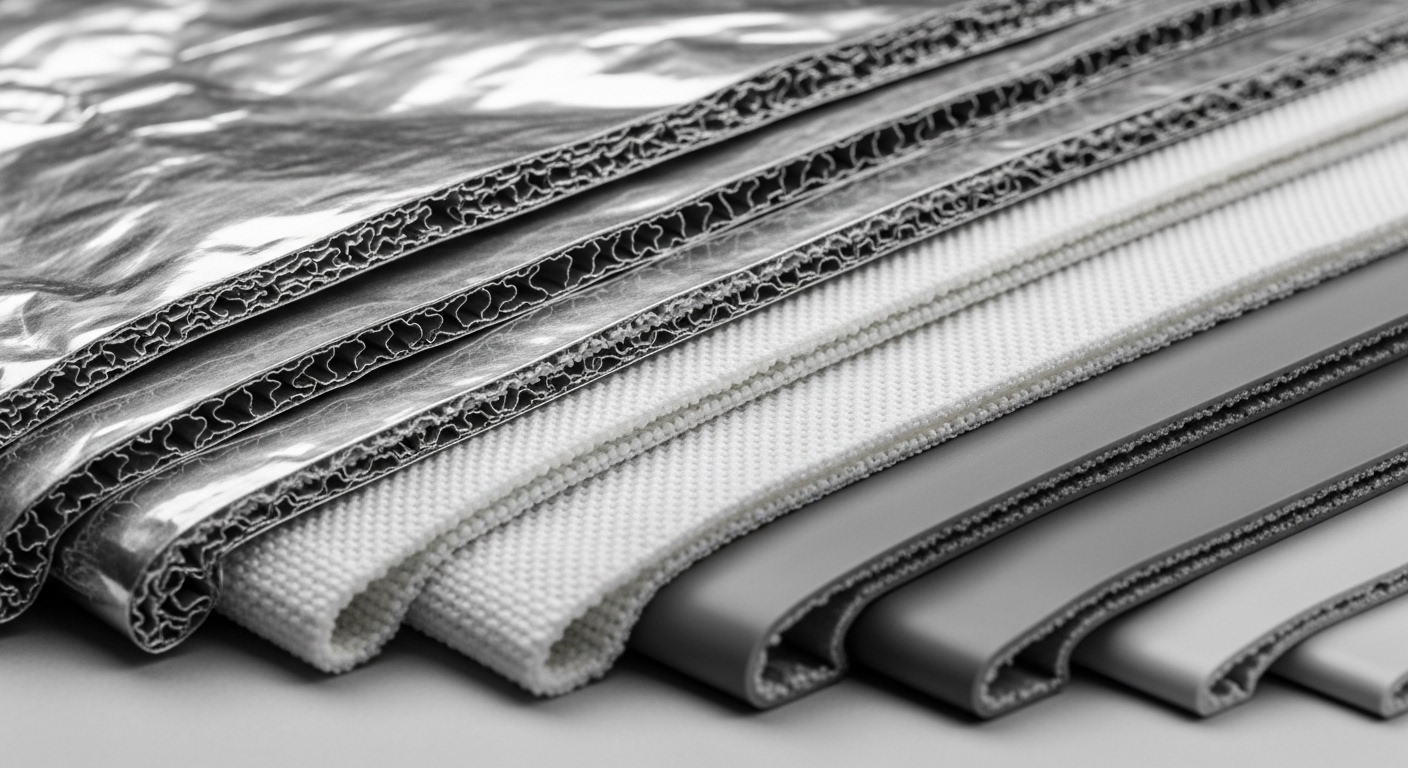
The white outer shell is just the beginning. Beneath it, a typical suit contains a thermal micrometeorite garment made of multiple layers of aluminized Mylar and Dacron — the same basic principle as a space blanket, but engineered to stop micrometeorites traveling at several kilometers per second. Beneath that sits a pressure bladder, usually made from urethane-coated nylon, which is the actual airtight envelope. Then there is a restraint layer to prevent the bladder from ballooning outward under pressure. And closest to the skin, a liquid cooling and ventilation garment — essentially a mesh suit threaded with thin tubes carrying chilled water to carry away the body heat that would otherwise cook the astronaut inside the suit.
The liquid cooling layer in a modern spacesuit circulates roughly a liter of water per minute — without it, an astronaut doing moderate physical work would overheat within minutes.
How Spacesuit Pressure and Life Support Actually Work
The Oxygen Problem
Spacesuits do not carry compressed air — they carry pure oxygen. This matters because nitrogen, which makes up about 78% of the air we breathe, is inert but takes up space and adds weight. Pure oxygen at a lower pressure can deliver the same partial pressure of oxygen that the lungs need. The trade-off is fire risk: pure oxygen environments are highly flammable, which is why the Apollo 1 cabin fire in 1967 was so catastrophic. Modern suit designs manage this risk carefully, particularly during the transition between the spacecraft's mixed-atmosphere cabin and the suit's pure-oxygen environment.
Before a spacewalk, astronauts typically spend hours breathing pure oxygen at reduced pressure — a process called pre-breathing — to purge nitrogen from their bloodstream and prevent decompression sickness when they switch to the lower-pressure suit environment. It is tedious, time-consuming, and has been a limiting factor in how quickly spacewalks can be scheduled.
The Primary Life Support System
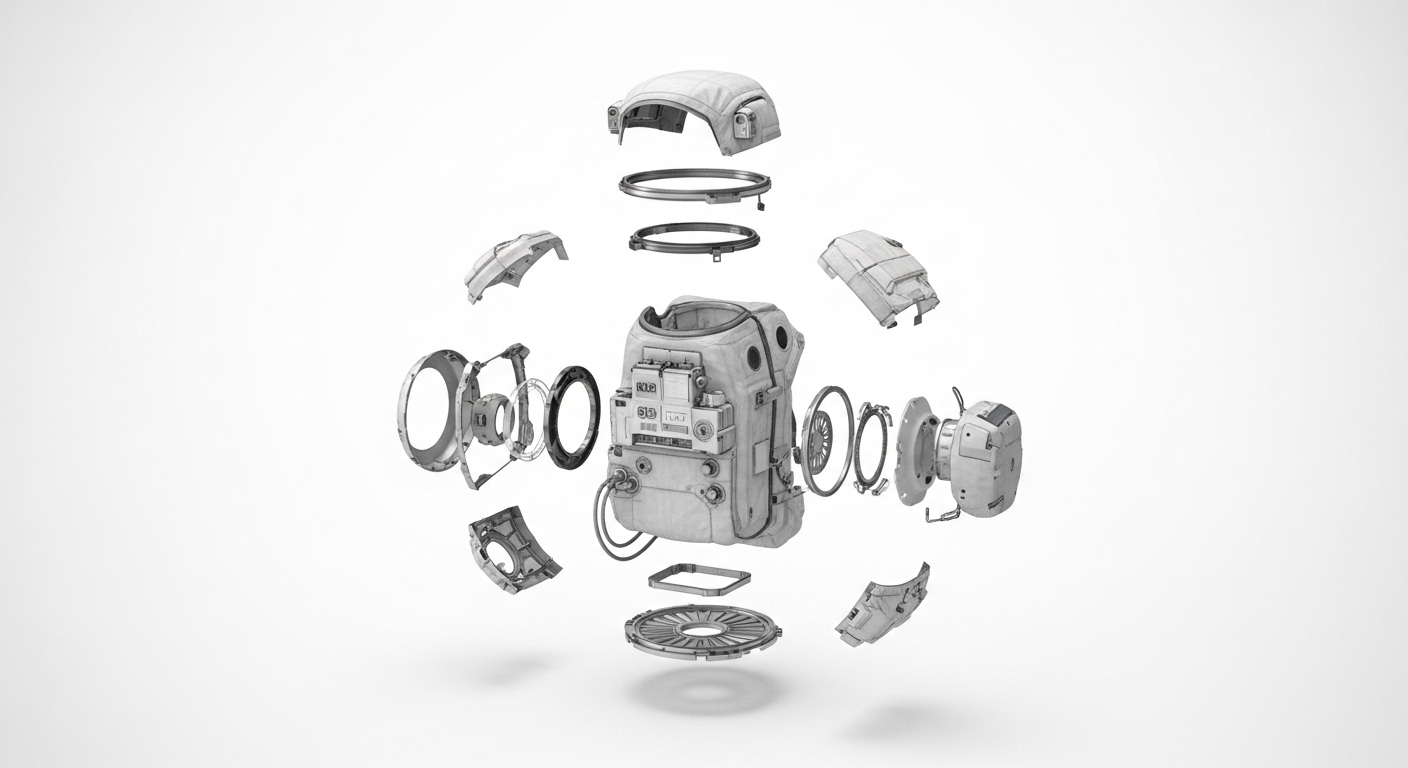
The backpack-shaped unit attached to the suit is called the Primary Life Support System (PLSS). It handles oxygen supply, carbon dioxide removal, pressure regulation, and cooling water circulation simultaneously. Carbon dioxide removal is handled by a lithium hydroxide canister that chemically absorbs CO2 — if that canister becomes saturated, CO2 levels rise and the astronaut loses consciousness. The Apollo 13 mission famously required improvising a CO2 scrubber fix using materials on hand, because the lunar module's canisters were a different shape than the command module's.
The PLSS also carries a warning system and a small emergency oxygen supply called the Oxygen Purge System — a last-resort backup that can keep an astronaut alive long enough to get back inside if the primary system fails. Every component has a redundancy path. Nothing in a spacesuit is single-point-of-failure if the engineers can help it.
The Thermal Engineering That Keeps Astronauts Alive in Temperature Swings
From Boiling to Freezing in 45 Minutes
In low Earth orbit, a surface in direct sunlight can reach roughly 120 degrees Celsius. The same surface in shadow can drop to around minus 160 degrees Celsius. An astronaut on a spacewalk cycles through both conditions roughly every 90 minutes as the ISS orbits the Earth. The suit has to handle this swing without letting either extreme reach the person inside.
The outer white color is not aesthetic — white reflects solar radiation effectively, reducing heat gain. The aluminized layers underneath act as radiation barriers. And the liquid cooling garment handles the metabolic heat the astronaut generates from physical exertion. The system is designed so the astronaut can dial up or down the cooling rate using a simple control on the chest-mounted display.
Gloves: The Hardest Part to Engineer
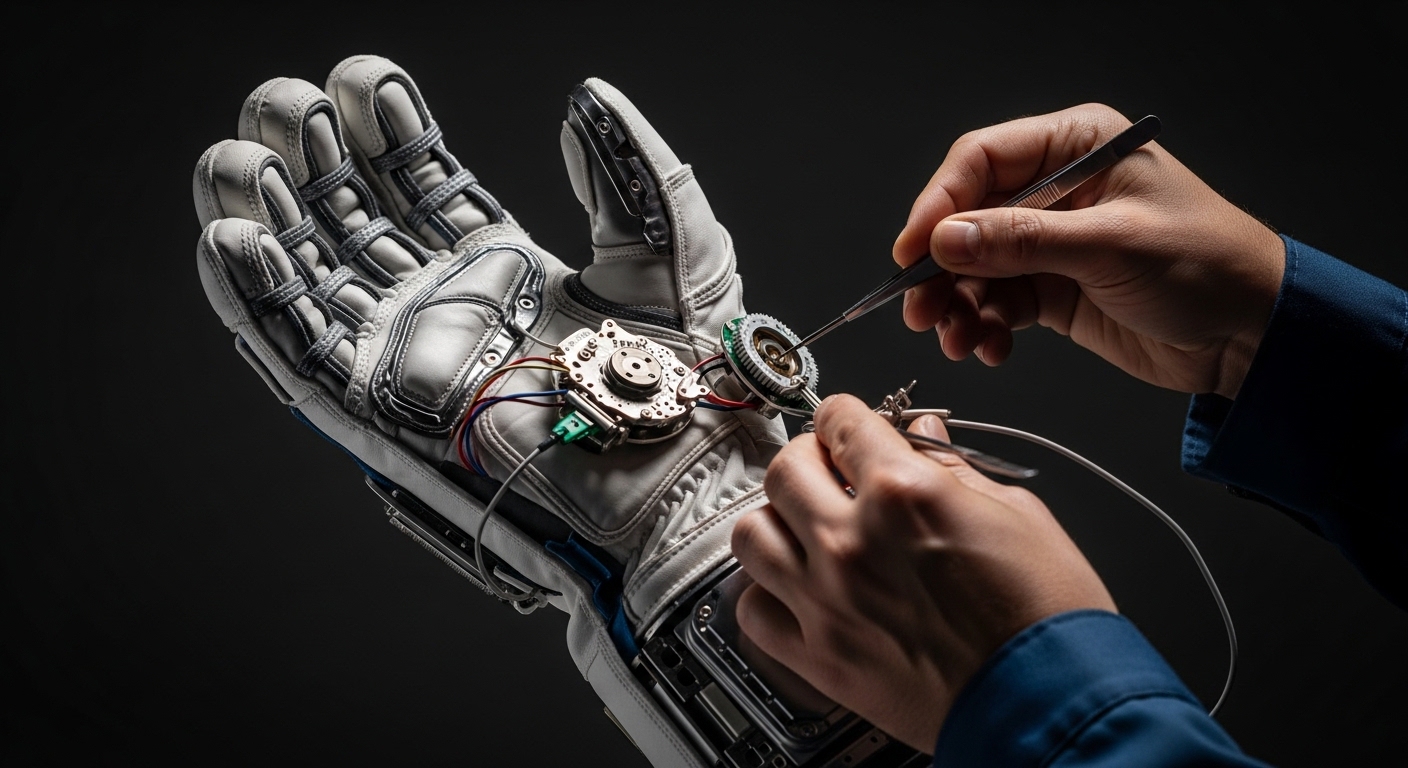
Spacesuit gloves are arguably the most technically demanding component in the entire system. They have to maintain pressure, provide thermal protection, and still allow enough dexterity for an astronaut to operate tools, tighten bolts, and handle delicate equipment. Fingertip sensitivity is critical — astronauts have reported that after several hours of a spacewalk, their fingernails can bruise or even detach due to the pressure inside the glove pushing against the fingertip. Engineers have spent decades trying to solve this, and it remains an active area of development.
Spacesuit gloves are so difficult to get right that NASA has run public design competitions specifically to improve fingertip dexterity — a problem that has resisted clean solutions for over 60 years.
Why Next-Generation Spacesuit Design Is So Difficult
The Moon Demands Something Different
The EMU was designed for microgravity — floating, reaching, pulling. Walking on the Moon or Mars is a fundamentally different physical challenge. Lunar dust, which is electrostatically charged and razor-sharp at the microscopic level, destroyed the outer layers of Apollo suits within just a few moonwalks. Any new lunar suit has to solve the dust problem, which means rethinking seals, joints, and outer materials from scratch.
NASA's Artemis program has been developing new suit designs for lunar surface operations. The requirements are significantly different from ISS suits: better lower-body mobility for walking and crouching, dust mitigation, and the ability to be donned and doffed more quickly. Some designs have explored a rear-entry hatch concept, where the astronaut climbs in through the back of the suit rather than stepping into it piece by piece.
Commercial Suits Enter the Picture
For the first time in the history of human spaceflight, private companies are now developing suits for operational use. SpaceX developed its own intravehicular suit — the one worn during launch and re-entry — which is a pressurized emergency suit rather than a spacewalking suit. Axiom Space has a contract to develop extravehicular suits for NASA's Artemis lunar missions. Collins Aerospace is another active player. The shift from a single government-designed suit to a competitive commercial ecosystem is genuinely new territory, and nobody yet knows whether it will produce better suits faster or introduce new failure modes that a more centralized program would have caught.
(Opinion: The commercial suit development race feels like the right move in principle, but the history of life-support engineering suggests that competitive pressure and cost-cutting do not always mix well with zero-margin safety requirements. The next decade will be a real test of whether the model works.)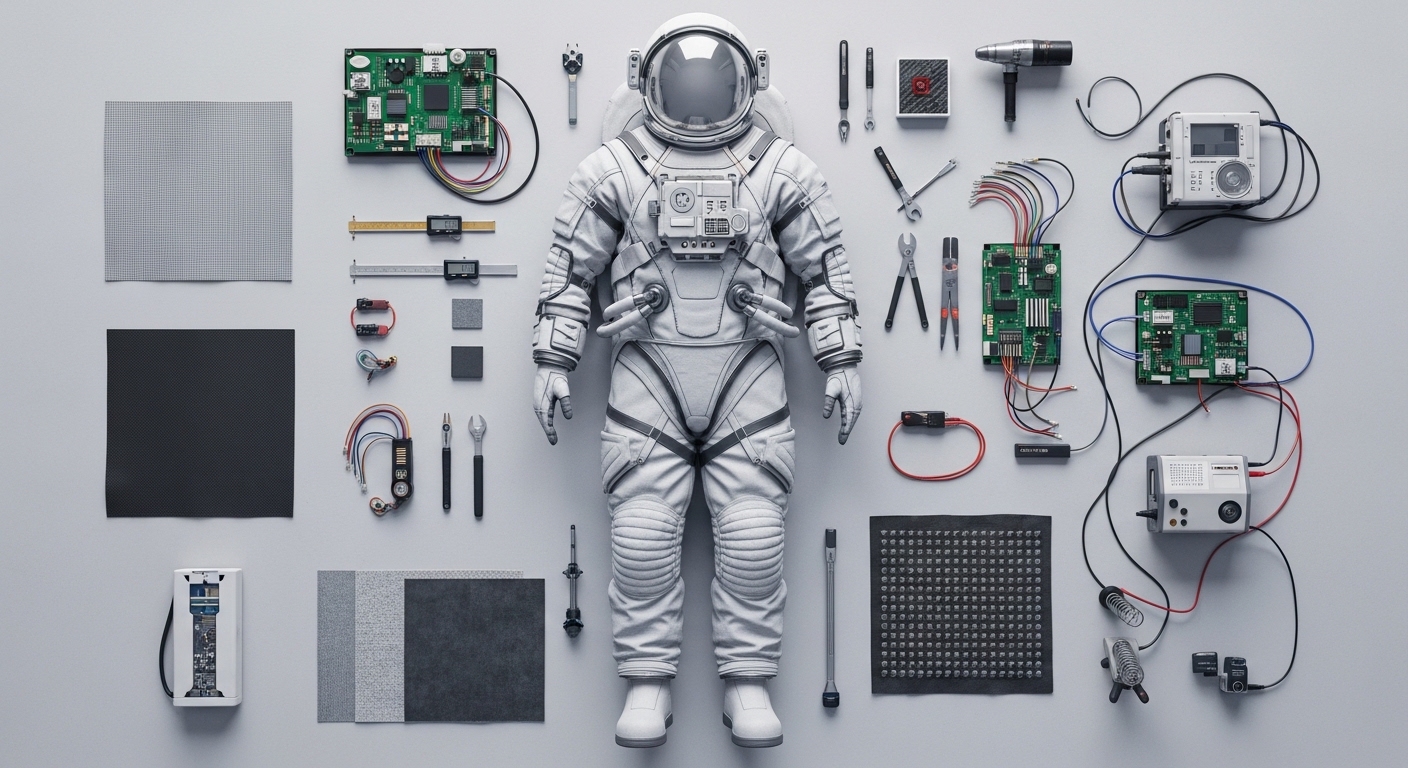
Frequently Asked Questions
How long can an astronaut survive in a spacesuit during a spacewalk?
The current EMU is rated for roughly 8 hours of extravehicular activity on a single charge of consumables — oxygen, battery power, and cooling water. In practice, most spacewalks are planned for 6 to 7 hours to maintain a safety margin. The suit also carries an emergency oxygen supply that can extend survival time briefly if the primary system fails.
Why do spacesuits cost so much?
Estimates for the cost of a single EMU suit have ranged from tens of millions to over 150 million dollars, depending on how development costs are allocated. The expense comes from the extreme engineering tolerances required, the small production quantities, the extensive testing each suit must pass, and the redundancy built into every system. You are essentially building a custom spacecraft that fits one person and has to work perfectly in one of the most hostile environments in the universe.
Can a spacesuit protect against radiation?
Partially, but not completely. The suit's multiple layers do provide some shielding against low-energy particles, and the outer materials help with ultraviolet radiation. However, high-energy galactic cosmic rays and solar particle events can penetrate the suit. For short spacewalks in low Earth orbit, the exposure is manageable. For deep-space missions to the Moon or Mars, radiation during EVAs is a genuine health concern that suits alone cannot fully address — the spacecraft itself provides most of the radiation shielding.
The most striking thing about spacesuit engineering is not any single component — it is the fact that all of these systems have to work simultaneously, without failure, while a human being moves around in them for hours at a stretch. A pressurized joint that works 999 times out of 1,000 is not good enough. Neither is a CO2 scrubber that almost always functions correctly. The suit has to be right every single time, in an environment where there is no rescue and no second chance. That is not a clothing problem. That is one of the hardest engineering problems humans have ever set for themselves — and we have been solving it, imperfectly but persistently, since the early 1960s. The next generation of suits will face challenges the Apollo engineers never imagined, and the margin for error will be exactly the same: zero.



Comments
Post a Comment