Are Our Days Actually Getting Longer? The Science of Earth's Slowing Spin
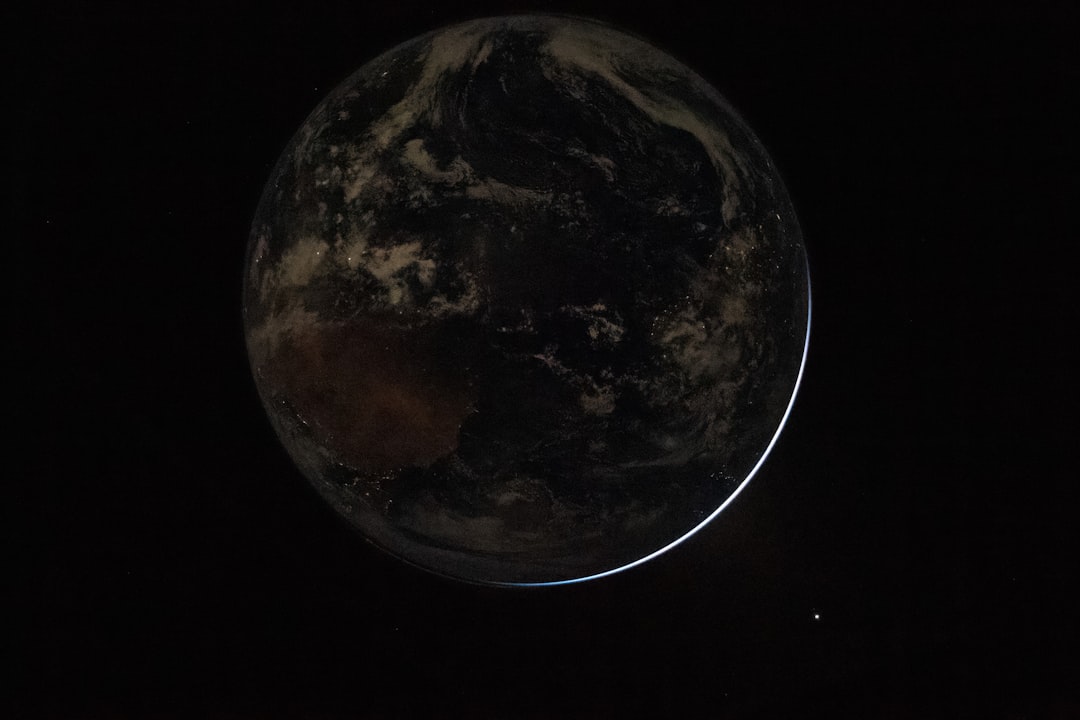
Every day is exactly 24 hours long — except it isn't. Earth's rotation is gradually slowing down, and a single day today is roughly 1.4 milliseconds longer than it was a century ago. That sounds trivial until you realize that over geological time, this tiny drag has added up to hours. Days on early Earth lasted only about 18 to 22 hours, and the planet has been winding down ever since.
What Is Earth's Slowing Rotation — and How Do We Know?
The Evidence Hidden in Ancient Rock
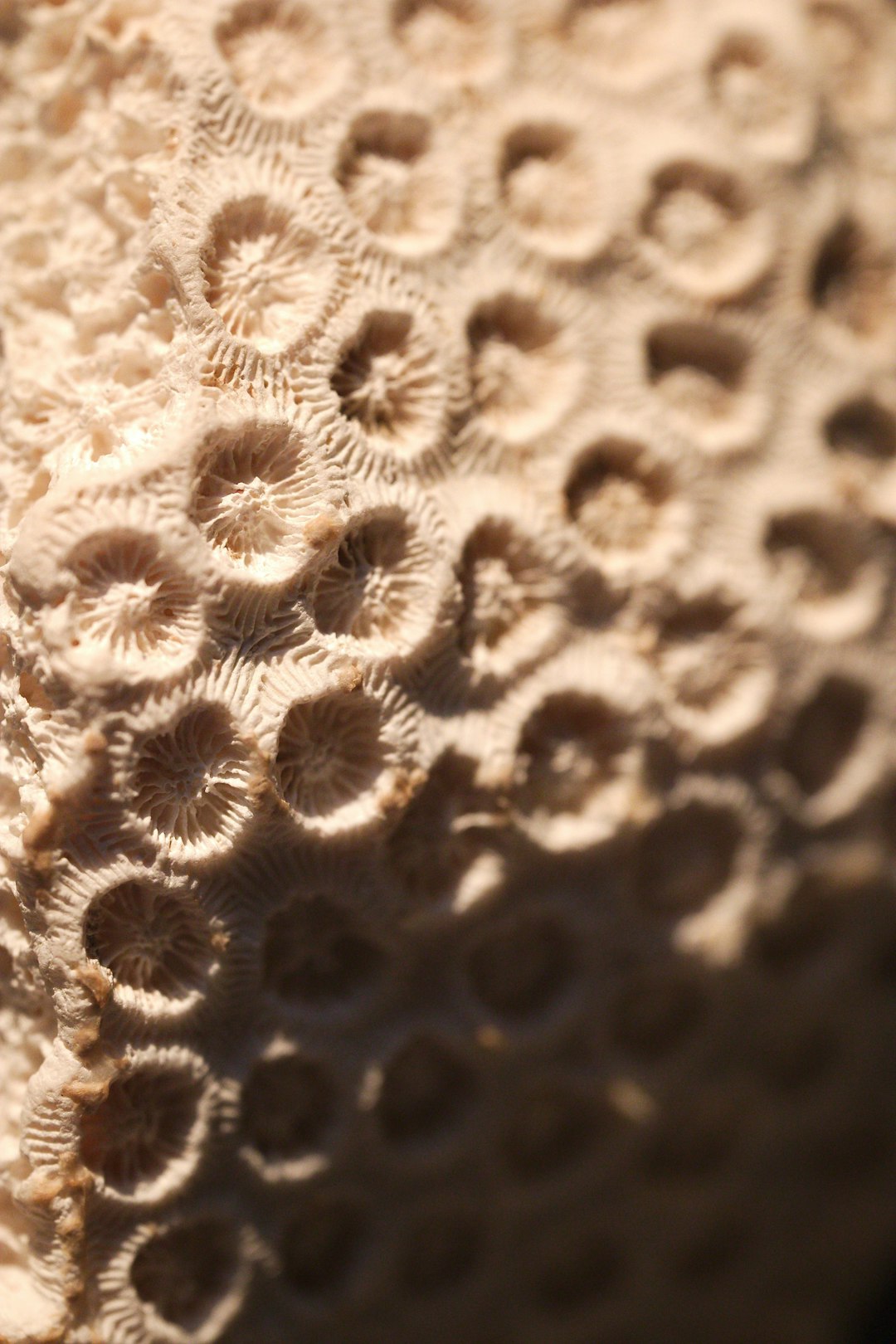
Geologists and paleontologists have found some of the most convincing evidence not in telescopes but in fossils. Certain corals and shellfish lay down daily growth rings, much like tree rings, and by counting them against annual cycles, researchers can estimate how many days were in a year hundreds of millions of years ago. Studies of Devonian-era fossils — from roughly 400 million years ago — suggest the year contained somewhere around 400 days, meaning each day was noticeably shorter than it is now.
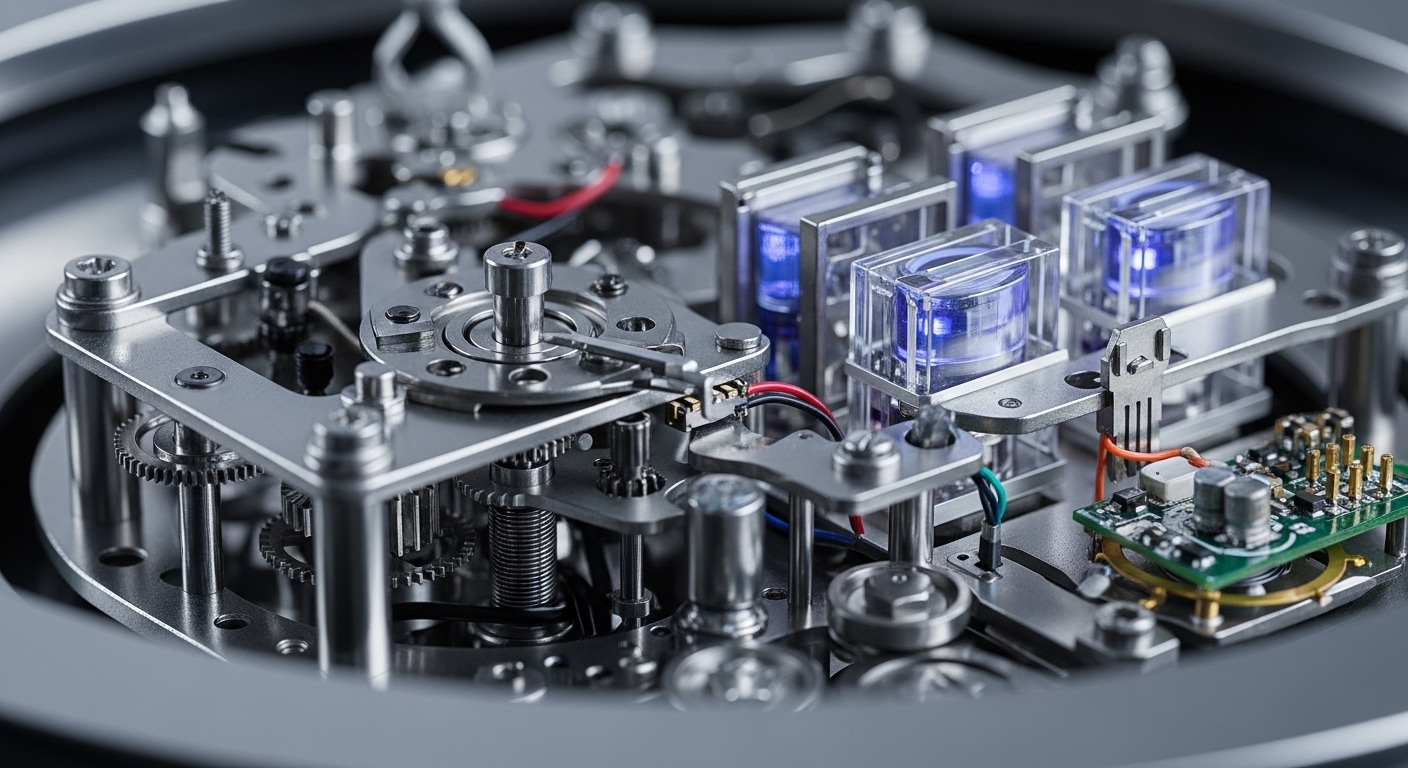
More recently, atomic clocks have made the measurement precise enough to be unsettling. Since the 1960s, timekeepers at institutions like the International Earth Rotation and Reference Systems Service have been comparing atomic time — which is perfectly uniform — against astronomical time, which tracks Earth's actual rotation. The gap between the two is real, measurable, and requires periodic corrections called 'leap seconds' to keep clocks aligned with the sky.
What Atomic Clocks Actually Reveal
Leap seconds are the clearest public-facing proof that Earth's rotation is not a constant. Between 1972 and the early 2020s, more than two dozen leap seconds were added to Coordinated Universal Time. Each one represents Earth falling slightly behind the clock. It's a small bureaucratic footnote that carries a genuinely strange implication: the planet you're standing on is not spinning at a fixed rate.
Leap seconds are not a rounding error — they are direct evidence that Earth's rotation is variable, and the planet has needed more than two dozen corrections in just the past half-century.
How Does Earth's Rotation Actually Slow Down?
The Moon's Gravitational Grip
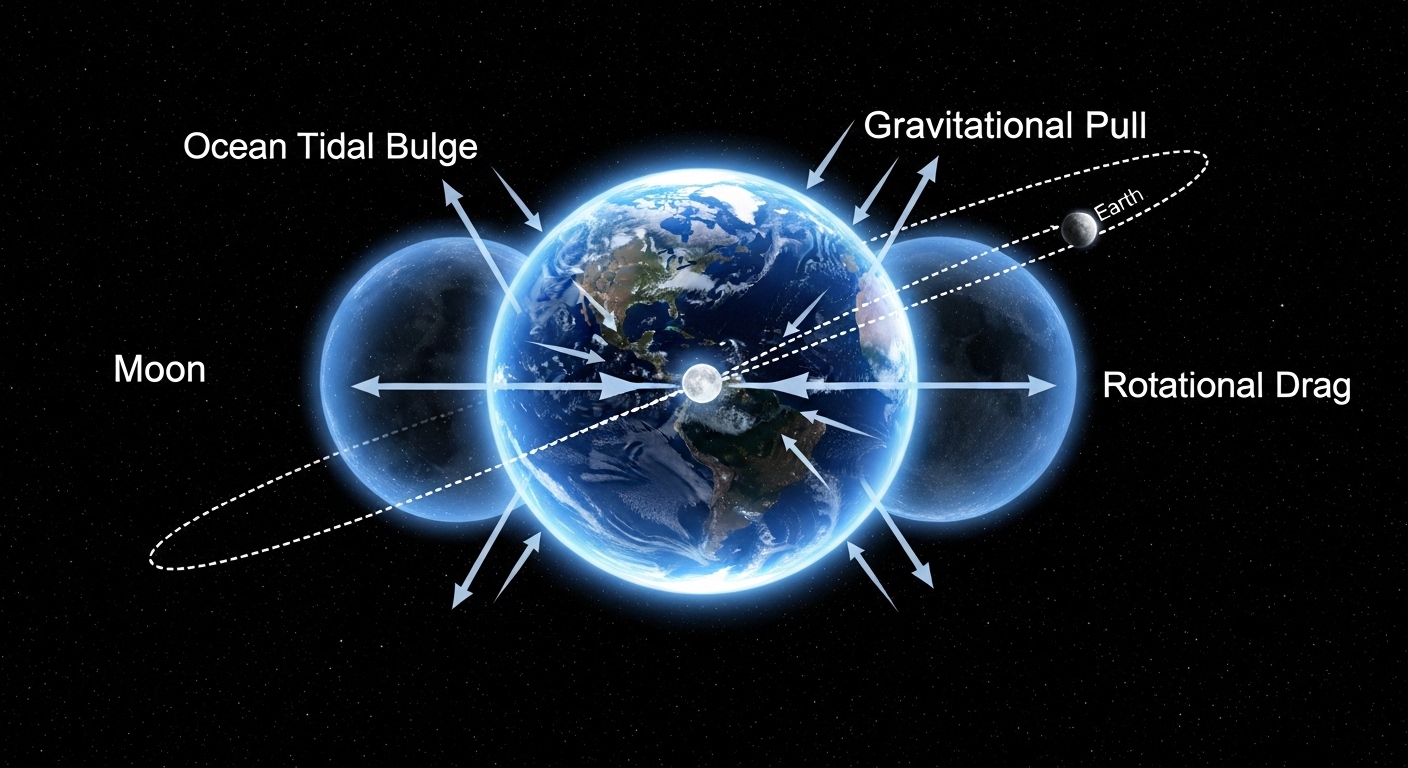
The dominant cause is tidal friction, and the Moon is the main culprit. As Earth rotates, the Moon's gravity pulls on the oceans and, to a lesser extent, on the solid rock of the planet itself. This creates tidal bulges — the familiar rise and fall of sea levels — but those bulges don't sit perfectly in line with the Moon. Because Earth rotates faster than the Moon orbits, the bulge gets dragged slightly ahead of the Moon's position.
That misalignment creates a gravitational tug-of-war. The Moon pulls back on the bulge, acting like a brake on Earth's spin. The energy lost from Earth's rotation doesn't disappear — it transfers to the Moon, which responds by slowly spiraling outward. The Moon is currently moving away from Earth at roughly 3.8 centimeters per year, a rate confirmed by laser ranging experiments that have bounced signals off retroreflectors left on the lunar surface during the Apollo missions.
Other Forces in the Mix
The Moon isn't the only factor. The Sun exerts its own tidal forces, though weaker. Atmospheric pressure changes, seasonal shifts in ice and water distribution, and even large earthquakes can nudge Earth's rotation speed in the short term. The 2011 Tohoku earthquake in Japan was calculated to have shortened the day by a tiny fraction of a microsecond by redistributing mass and slightly compressing Earth's moment of inertia — the same physics that makes a spinning figure skater speed up when they pull in their arms.
There's also a long-term geological factor: as ice sheets melt, mass shifts from the poles toward the equator, which tends to slow rotation slightly. Post-glacial rebound — the gradual rising of land that was compressed under ancient ice sheets — does the opposite. These effects are small but measurable, and they interact in ways that make precise long-range predictions genuinely difficult.
Where You Can See Earth's Slowing Spin in Real History
Ancient Eclipses as a Time Stamp
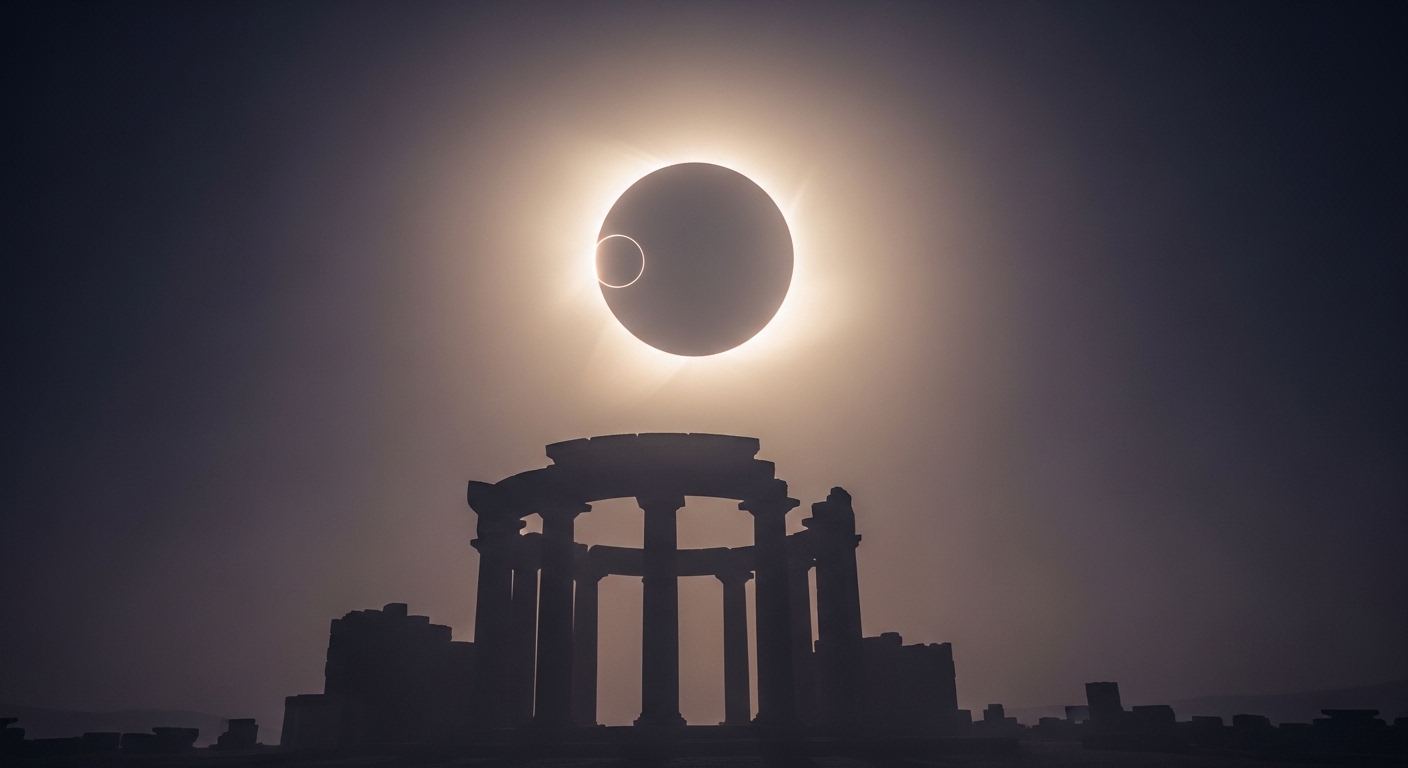
One of the most elegant proofs comes from historical eclipse records. Astronomers can calculate exactly where a solar eclipse should have been visible based on orbital mechanics — but when they apply those calculations to eclipses recorded by Babylonian, Chinese, and Greek observers thousands of years ago, the predicted paths don't match the historical accounts. The discrepancy is consistent with Earth having rotated slightly more in the past than modern models would predict, which is exactly what a gradually slowing rotation would produce.
The offset grows the further back you go. For eclipses from roughly 2,000 years ago, the calculated path can be off by hundreds of kilometers compared to where ancient observers actually reported seeing totality. That systematic drift is a fingerprint of accumulated rotational slowdown over millennia.
The Counterintuitive Recent Twist
Here's the part that surprises most people: in the mid-2010s to early 2020s, Earth's rotation actually sped up slightly, producing some of the shortest days recorded since precise atomic timekeeping began. Scientists proposed several explanations, including changes in atmospheric circulation and shifts in molten material within the core. It was a reminder that the long-term trend toward slower days is not a smooth line — it's noisy, with short-term fluctuations that can temporarily reverse the direction.
Earth's long-term slowdown is real, but the rotation also speeds up and slows down on timescales of months and years — the planet's spin is more like a wobbling top than a winding clock.
Why Earth's Slowing Rotation Actually Matters Today
The GPS and Timekeeping Problem
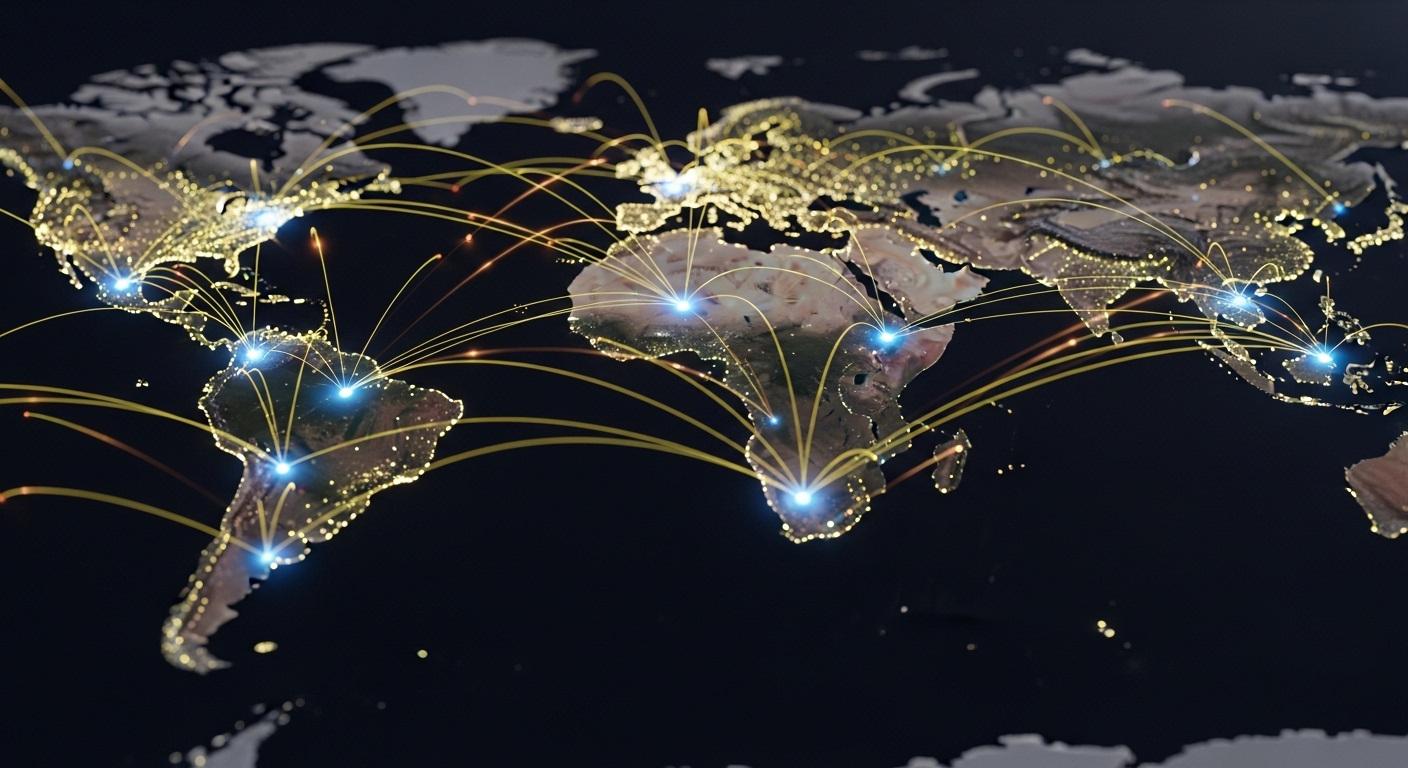
This isn't purely academic. GPS satellites rely on extraordinarily precise timing to calculate positions. The entire system assumes a consistent relationship between atomic time and Earth's rotational position. When Earth's spin drifts, that relationship breaks down, and without corrections, GPS coordinates would accumulate errors. The leap second system was designed partly to manage this, though the technology industry has pushed back hard against it — a single leap second inserted into a network's time system can cause software failures, and several high-profile outages have been traced to leap second handling errors.
In fact, the debate over whether to abolish the leap second became a serious international policy discussion, with a resolution passed in 2022 to eventually phase it out in favor of allowing a larger accumulated difference to build up before any correction. The decision reflects a genuine tension between astronomical reality and the needs of digital infrastructure.
The Deep Future of Earth's Day
Project far enough forward and the implications get strange. If the slowdown continues, Earth will eventually reach a state where one side permanently faces the Moon — a condition called tidal locking, the same reason the Moon always shows us the same face. That outcome is billions of years away and may never fully occur before the Sun expands into a red giant. But it's the logical endpoint of the physics already in motion.
(Opinion: The fact that we've had to insert leap seconds into global timekeeping infrastructure because a planet is slowing down is one of the more quietly astonishing things about modern science. It's the kind of detail that sounds like science fiction until you realize it's been affecting your phone's GPS for decades.)
Frequently Asked Questions
How much longer does a day get each year?
The increase is extremely gradual — roughly 1.4 milliseconds per century on average, though the rate is not perfectly constant. Over a human lifetime, the change is far too small to notice without atomic-precision instruments. The effect only becomes dramatic over geological timescales of millions to hundreds of millions of years.
Will Earth ever stop rotating completely?
Almost certainly not within any timeframe relevant to life on Earth. Full tidal locking to the Moon — if it ever occurred — would take billions of years, and the Sun is expected to end its main-sequence life before that process completes. Short-term, the rotation is stable enough that the change per human generation is measured in fractions of a millisecond.
Why did Earth's rotation speed up in recent years if the long-term trend is slowing?
The long-term slowdown caused by tidal friction operates over millions of years, but shorter-term variations are driven by other factors: shifts in atmospheric pressure, redistribution of water and ice, and movements within Earth's liquid outer core. These can temporarily accelerate or decelerate the spin by small amounts, occasionally producing days that are measurably shorter than average. It's a genuine short-term reversal layered on top of a much longer trend.
The strangest part of all this isn't that Earth is slowing down — it's that the Moon is the reason your GPS works as well as it does, and also the reason it occasionally doesn't. The same gravitational relationship that has been quietly stealing milliseconds from our days for billions of years is now embedded in the infrastructure of modern navigation. We built a global positioning system on top of a planet that doesn't spin at a fixed rate, and then had to argue internationally about how to handle the consequences.


Comments
Post a Comment