Taste of the Past: Why We Crave Nostalgic Comfort Foods
A bowl of mac and cheese can stop a grown adult mid-bite and send them straight back to a Tuesday afternoon in third grade. That's not sentimentality — that's neuroscience. The connection between food and memory is one of the most powerful and least understood links in human psychology, and it shapes what we eat, what we buy, and what we reach for when life gets hard.

What Nostalgic Comfort Food Actually Is — and Why It's Not Just 'Junk Food'
The Definition That Actually Holds Up
Comfort food is often dismissed as a euphemism for unhealthy eating. But researchers who study food psychology define it more precisely: comfort food is any food that provides psychological relief, emotional warmth, or a sense of safety — and crucially, that association is almost always rooted in personal history. A dish that's pure comfort food for one person might mean nothing to another.
That's the part people miss. Comfort food isn't a category of ingredients — it's a category of meaning. Mashed potatoes with butter might be deeply comforting to someone who grew up in the American Midwest and completely neutral to someone who didn't encounter them until adulthood. The food itself is almost beside the point.
Nostalgic comfort food specifically refers to foods tied to earlier periods of life — usually childhood or early adolescence — when the emotional stakes of eating were different. You weren't thinking about nutrition labels. You were just hungry, and someone fed you, and it felt safe.
The Surprising Role of Repetition
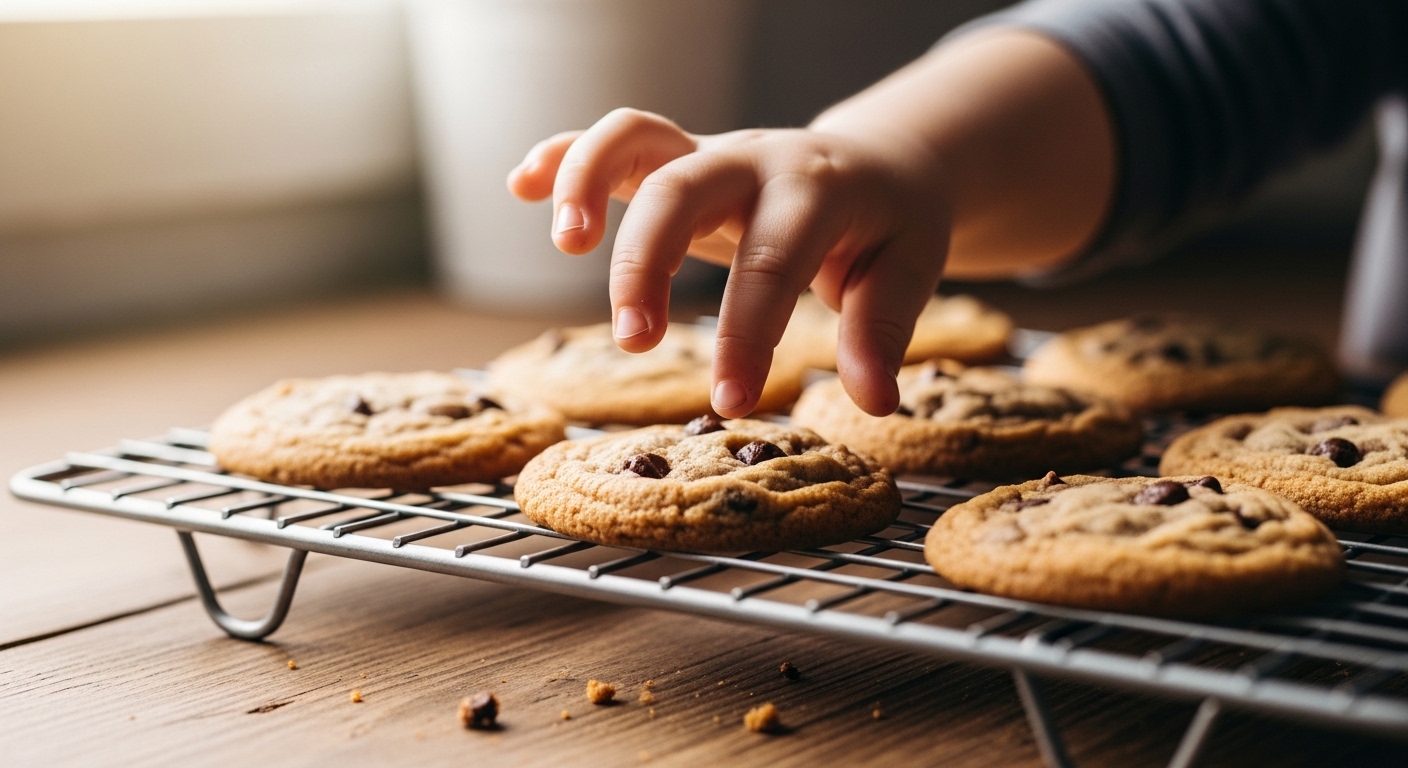
One counterintuitive finding from food psychology research: the foods that become most nostalgically powerful aren't necessarily the ones we ate on special occasions. They're often the ones we ate repeatedly, in ordinary circumstances. The birthday cake gets remembered, but the after-school snack gets craved. Repetition builds the neural pathway; emotion reinforces it.
How the Brain Encodes Food as Emotional Memory
The Olfactory Shortcut
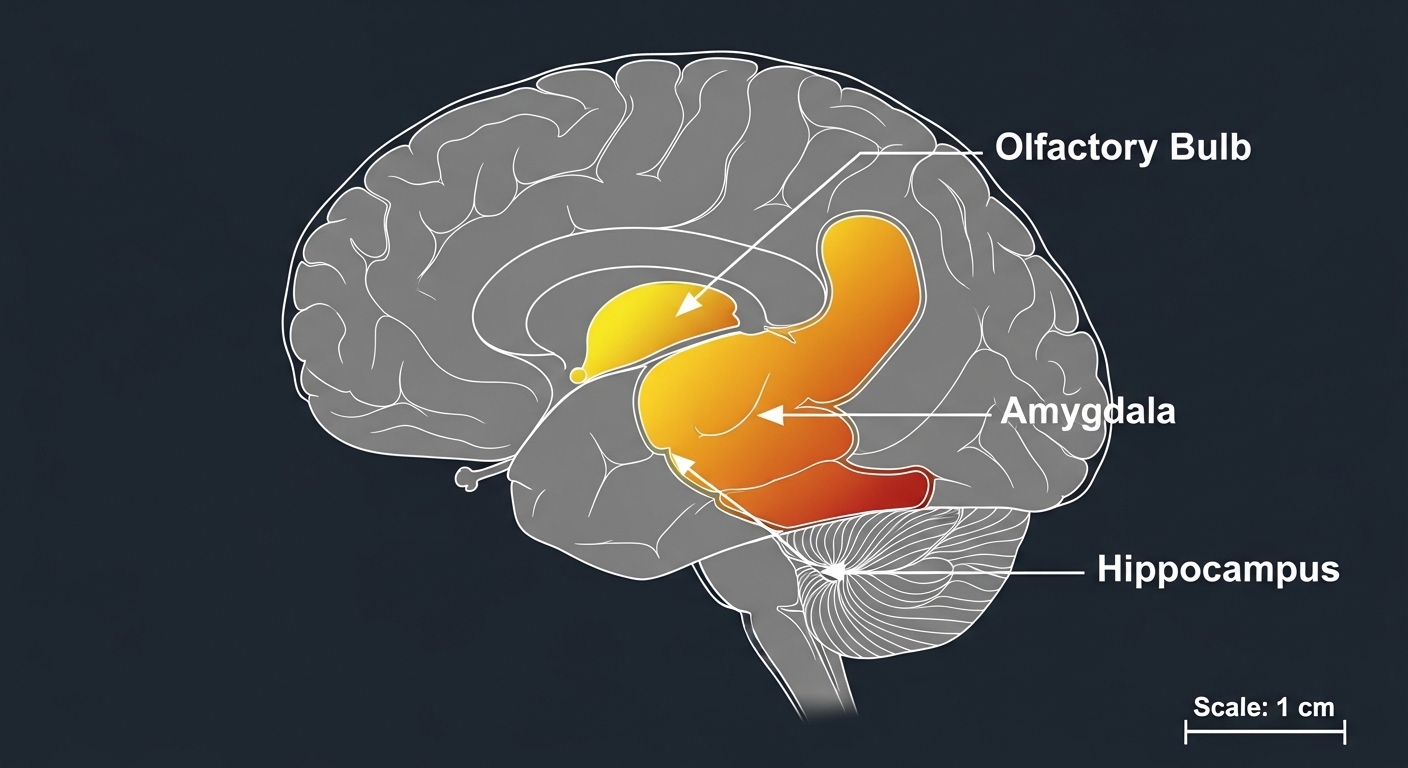
Smell is the only sense with a direct neural pathway to the amygdala and hippocampus — the brain regions most responsible for emotion and memory. Every other sense routes through the thalamus first, which acts as a kind of relay station. Smell skips that step entirely. This is why the scent of something baking can produce an emotional reaction before you've even consciously identified what you're smelling.
Taste and smell are also deeply intertwined — what we call 'flavor' is mostly olfactory information processed alongside taste. So when you eat a food from your past, you're not just triggering a taste memory. You're triggering a full sensory-emotional package that the brain stored together the first time around.
Smell bypasses the brain's relay station entirely — which is why a whiff of something familiar can hit you emotionally before your conscious mind even catches up.
Why Comfort Foods Feel Like Relief
Research suggests that eating foods associated with positive memories can activate reward pathways in the brain, including dopamine release. But there's a second mechanism at work that's less discussed: familiar foods reduce cognitive load. When you're stressed, your brain is already working hard. Eating something familiar — something that requires no evaluation, no decision, no novelty processing — gives the prefrontal cortex a small but real break.
That's why comfort eating isn't always about the taste. Sometimes it's about the absence of effort. The food is already known. It's already safe. You don't have to think about it.
Where Nostalgia Fits In — The Psychology Behind the Craving
Nostalgia as a Coping Mechanism
Nostalgia used to be classified as a disorder. The term was coined in the 17th century by a Swiss physician to describe a debilitating homesickness observed in soldiers — and for a long time, it was treated as a kind of psychological illness. The modern understanding is almost the opposite: research now suggests nostalgia functions as a psychological resource, something people draw on to maintain a sense of continuity and meaning when the present feels unstable.
Food is one of the most reliable triggers for nostalgic states precisely because it's embodied. You're not just remembering — you're physically re-experiencing something. That's a much stronger signal to the brain than looking at an old photograph.
The 'Social Surrogacy' Effect
Some researchers have proposed that comfort foods work partly through what they call social surrogacy — the idea that foods associated with close relationships (a parent's cooking, a grandmother's recipe) can temporarily substitute for the feeling of social connection. Eating that food when you're lonely or stressed doesn't just taste good; it partially reactivates the sense of being cared for.
This might sound abstract, but you can feel it in practice. There's a reason people make their mother's soup recipe when they're sick as adults, even when they're perfectly capable of making something more nutritious. The recipe isn't really about the soup.
(Opinion: The social surrogacy framing is one of the more quietly profound ideas in food psychology. It reframes comfort eating not as weakness or indulgence but as a legitimate, if imperfect, emotional regulation strategy — one that humans have probably been using for as long as we've had food traditions worth remembering.)Comfort food isn't always about hunger. Sometimes it's about reactivating the feeling of being cared for — and the brain doesn't always distinguish between the real thing and the memory of it.

How Comfort Food Cravings Play Out in Real Life
Stress, Seasons, and Life Transitions
Comfort food cravings spike predictably during periods of stress, illness, loneliness, and major life transitions. Moving to a new city is one of the most reliably documented triggers — people report strong cravings for hometown foods or childhood dishes within the first weeks of relocation. The food becomes a portable piece of identity in an unfamiliar environment.
Seasonal patterns also show up consistently. Cold weather increases cravings for warm, calorie-dense foods across cultures — not just because of temperature, but because those foods are often the ones associated with family gatherings and indoor time. The association runs deep enough that even people in warm climates report craving 'winter foods' when they feel emotionally low.
A Real-World Example: The Pandemic Baking Surge
During the early months of the COVID-19 pandemic, home baking surged dramatically across many countries. Flour and yeast sold out in supermarkets. Sourdough starter tutorials flooded the internet. What was driving it wasn't just boredom — it was a documented turn toward comfort and control during extreme uncertainty. People baked bread their grandparents made. They made the cookies from the recipe card in the kitchen drawer. The nostalgia was almost the point.
That episode illustrated something important: comfort food cravings aren't just individual quirks. They're a collective response to shared emotional conditions. When enough people feel the same kind of stress at the same time, you can see the craving at a population level.
FAQ
Is craving comfort food a sign of emotional eating — and is that bad?
Not necessarily. Emotional eating gets a bad reputation, but turning to food for comfort is a normal human behavior with deep psychological and social roots. The concern arises when it becomes the only coping strategy available, or when it consistently overrides physical hunger signals. Occasional comfort eating in response to stress or nostalgia is well within the range of normal behavior.
Why do comfort food cravings feel so specific — why that exact dish and not just 'something sweet'?
Because the craving is tied to a specific memory, not just a flavor category. The brain stores sensory, emotional, and contextual information together, so what gets activated is the whole package — the specific texture, the specific smell, the specific associations. A generic sweet food won't satisfy a craving for your grandmother's apple pie because it doesn't carry the same encoded memory. The specificity is the point.
Do people in all cultures experience nostalgic comfort food cravings the same way?
The underlying mechanism appears to be universal — the olfactory-memory connection and nostalgia as a psychological resource show up across cultures. But the specific foods, the triggers, and the social contexts vary enormously. What counts as comfort food is almost entirely culturally and personally constructed. Someone raised in Japan might find deep comfort in a bowl of dashi broth; someone raised in Mexico might find it in tamales. The neuroscience is shared; the menu is not.
The strangest part of all this is that the food doesn't have to be good. People crave mediocre cafeteria pizza from their school years, gas station snacks from road trips, instant noodles eaten in a college dorm at midnight. The quality is irrelevant. What matters is the moment the food was attached to — and the fact that eating it again briefly makes that moment feel less gone than it actually is.



Comments
Post a Comment