Is That Really Them? How to Spot and Avoid AI Deepfake Scams
A grandmother in the United States wired thousands of dollars to someone she believed was her grandson — trapped, scared, and calling from jail. The voice was perfect. The panic sounded real. It was neither. AI voice cloning had reproduced her grandson's speech patterns from a handful of social media videos, and a scammer used it to run what law enforcement now calls a 'virtual kidnapping' scheme. This is not a rare edge case anymore. It is a Tuesday.

What You Need Before You Start: Understanding How Deepfakes Actually Work
The Technology Behind the Illusion
Deepfakes are synthetic media — video, audio, or images — generated by AI models trained on real footage of a person. The term originally referred to face-swapping video, but the category now includes voice clones, real-time video manipulation, and text-based impersonation. What changed in the last few years is not the concept but the cost: tools that once required a film studio's compute budget now run on consumer hardware or cheap cloud APIs.
Voice cloning deserves special attention because it is the most common attack vector right now. Some publicly available tools can produce a convincing voice clone from as little as a few seconds of audio. Your child's TikTok videos, your CEO's conference keynote, your own voicemail greeting — all of it is raw training data in the wrong hands.
Video deepfakes are harder to produce convincingly but are catching up fast. Real-time face-swap tools can run during a live video call, which means a scammer can appear on screen as someone you know. If you have never tested this assumption, you should.
Why This Matters Before You Do Anything Else
Most deepfake defense advice focuses on detection — spotting the glitch, the weird blinking, the mismatched lip sync. That framing is already losing the battle. Detection is useful but not sufficient. The more durable defense is a set of habits and verification systems you build before you ever receive a suspicious call or message. Think of it like locking your door before someone tries to break in, not after.

Step-by-Step Instructions: How to Protect Yourself From Deepfake Scams
Step 1 — Establish a Family or Team Safe Word
This is the single most effective low-tech countermeasure available. Agree on a short, memorable word or phrase with the people you trust most — family members, a close colleague, a business partner. If anyone contacts you in an emergency claiming to be that person, you ask for the safe word. A deepfake cannot know it. A scammer cannot guess it. The word should not appear anywhere online and should be changed if you ever suspect it has been compromised.
Some families use a rotating phrase tied to something private — an inside joke, a pet's old nickname, a childhood memory. The specificity is the point. Keep it simple enough to remember under stress, because that is exactly when you will need it.
Step 2 — Audit Your Public Audio and Video Footprint
Search your own name on major platforms and note how much audio and video of you is publicly accessible. Long-form content — podcasts, YouTube videos, recorded webinars — gives a voice cloning model more to work with. This does not mean you need to delete everything, but it does mean understanding your exposure. For high-risk individuals like executives or public figures, some security consultants recommend keeping a minimal public audio profile and using text-based public communication where possible.
For most people, the practical step is reviewing privacy settings on social media so that videos are visible only to people you know. A scammer farming voice data from a locked-down account faces a much harder job.
Step 3 — Learn the Current Visual and Audio Tells
Detection clues change as the technology improves, but as of now there are still reliable signals to look for. In video, watch for: unnatural blinking patterns or eyes that never blink, hair and earring edges that look slightly blurred or 'floaty,' inconsistent lighting between the face and background, and mouth movements that lag slightly behind speech. In audio, listen for: a faint mechanical smoothness to the voice, unusual cadence or rhythm, and background audio that sounds too clean or too generic.
The most dangerous deepfakes are not the perfect ones — they are the ones just good enough to catch you off guard in a high-stress moment when your critical thinking is already compromised.
One underappreciated tell: deepfake audio often struggles with unusual proper nouns — specific street addresses, unusual last names, local landmarks. Ask the caller to repeat a specific detail that only the real person would know and notice how the voice handles it.
Step 4 — Verify Through a Second Channel Before Acting
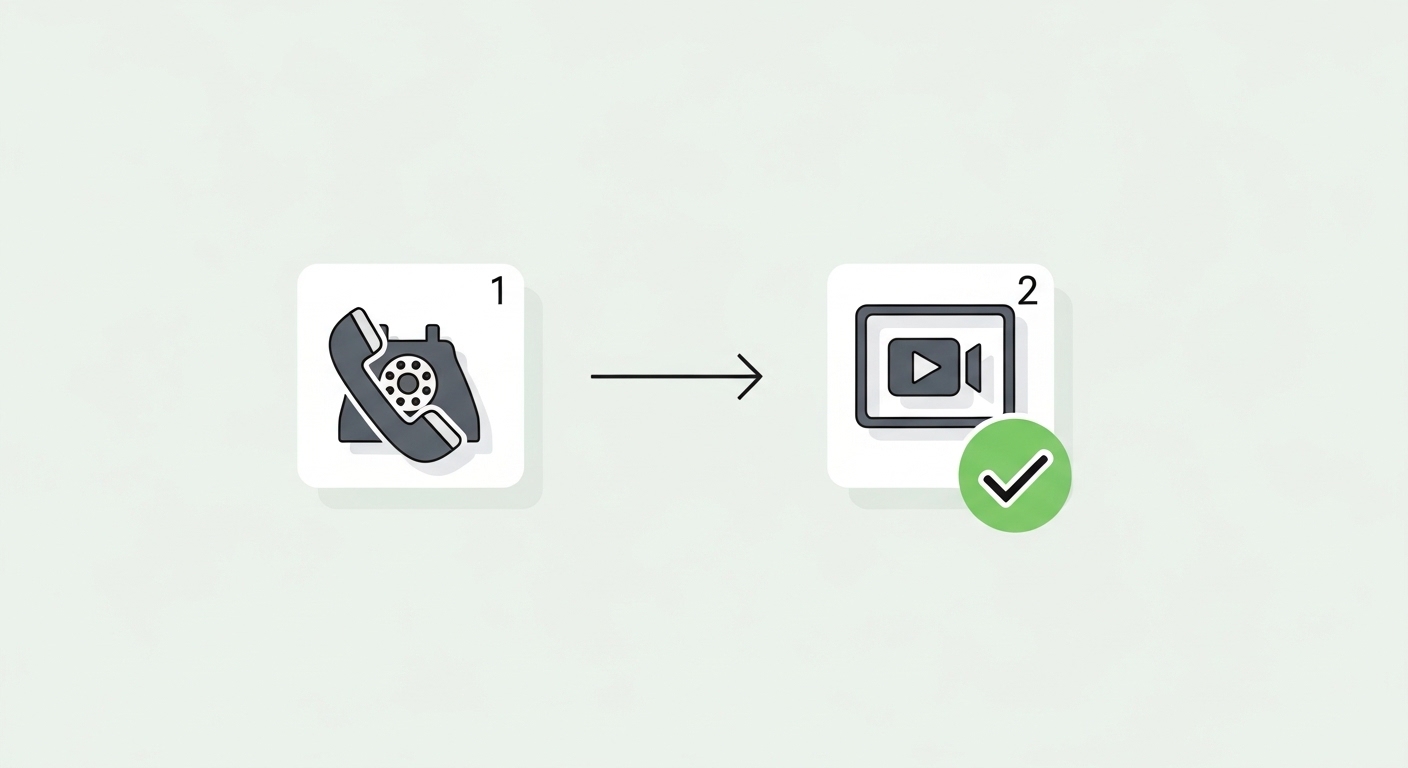
This is the rule that stops most scams cold. If you receive an urgent request — wire money, share a password, confirm a transaction — hang up or pause the conversation and call the person back on a number you already have saved. Do not use a number provided in the suspicious message. Do not reply to the same thread. Open a fresh channel.
The urgency is almost always manufactured. Real emergencies can survive a two-minute verification pause. Scams cannot. If someone is pressuring you to act immediately without allowing you to verify, that pressure itself is the red flag.
Step 5 — Use Verification Tools for High-Stakes Decisions
For business contexts — especially finance, legal, or HR — consider implementing a formal verification protocol for any request above a certain threshold. Some organizations now require that large wire transfers be confirmed via a pre-established video call using a known device, not just an email or phone call. A few enterprise security platforms offer real-time deepfake detection for video calls, though the reliability of these tools varies and they should be treated as one layer of defense, not the whole answer.
For individuals, free reverse image search tools can help verify whether a photo used in a social media impersonation is stolen or AI-generated. Tools that detect AI-generated images have improved, though they are not foolproof — treat them as supporting evidence, not verdicts.
Common Pitfalls to Avoid When Dealing With Deepfake Scams
Trusting Caller ID or Video Platform Identity
Caller ID can be spoofed. A video call coming from an account with your boss's name and photo is not proof it is your boss. These are trivially easy to fake and are often the first thing a scammer sets up. The platform identity is a starting point for suspicion, not a verification mechanism.
Anyone who has received a call from their own phone number knows how easily this system breaks down. Spoofing tools are cheap and widely available. Never treat the display name or number as confirmation of identity for anything that involves money, access, or sensitive information.
Assuming You Would 'Just Know'
This is the most dangerous assumption of all. Research on social engineering consistently shows that people are poor at detecting deception under emotional pressure. A scammer using a convincing voice clone of your child, combined with a fabricated emergency scenario, is specifically designed to bypass your rational evaluation. The emotional hijack is the product.
Your gut feeling is not a security system. Verification protocols work precisely because they function even when your instincts are being deliberately overwhelmed.
Waiting for the Technology to Solve It
Detection tools will always lag behind generation tools. That is the structural reality of this arms race. Behavioral habits — the safe word, the second-channel verification, the pause before acting — are more durable than any detection algorithm because they do not depend on the scam being technically detectable. Build the habits now, while the stakes of getting it wrong are still manageable.

Pro Tips to Speed Things Up — and Make Your Defenses Stick
Make the Safe Word Conversation Normal
The hardest part of the safe word system is having the initial conversation without making everyone feel like they are preparing for a spy thriller. Frame it practically: 'I read about a scam where someone faked a family member's voice and I want us to have a way to verify each other quickly.' Most people, once they hear a concrete example, get it immediately. Do this with elderly relatives especially — they are disproportionately targeted.
Practice the Pause
The two-minute verification pause feels awkward the first time. Practice it on low-stakes calls so it becomes a reflex. Tell the person you are calling back in two minutes and actually do it, even when you are fairly sure it is legitimate. The habit has to be automatic to work when the pressure is real.
Brief Your Workplace
If you handle finances, HR data, or system access at work, raise deepfake awareness with your team explicitly. Many corporate fraud cases now involve AI-generated audio impersonating executives — a pattern sometimes called 'CEO fraud' or 'BEC' (business email compromise) extended into voice. A single team member who knows to verify before transferring funds can prevent a loss that runs into six figures.
(Opinion: The security industry tends to oversell technical solutions here because technical solutions are sellable. The honest answer is that a family safe word and a habit of calling people back costs nothing and stops more attacks than most enterprise software. That gap between what works and what gets marketed is worth noticing.)
Frequently Asked Questions
Can deepfake audio really be that convincing with just a short clip of someone's voice?
Yes, and this surprises most people. Some voice cloning tools can produce recognizable output from a surprisingly small amount of source audio — in some cases, under a minute of clean speech. The quality improves with more data, but the threshold for 'convincing enough to fool a stressed family member' is lower than most people expect. Public videos, voicemail greetings, and recorded calls are all potential sources.
What should I do if I think I have already been targeted by a deepfake scam?
If money was transferred, contact your bank immediately — speed matters for potential recovery. Report the incident to your national cybercrime reporting body (in the US, that is the FBI's Internet Crime Complaint Center, IC3). Document everything: save the call logs, any messages, and any account information used. If the scam impersonated a specific person you know, alert that person so they can warn their own contacts.
Are video deepfakes detectable in real time during a live call?
Sometimes, but not reliably. Current real-time deepfake video still tends to show artifacts under certain lighting conditions or when the subject moves quickly. Asking someone to turn sideways, move to a different light source, or hold an object up to the camera can stress-test a real-time face swap. Some enterprise video platforms are beginning to integrate detection layers, but these are imperfect and should not be your primary defense.
The unsettling thing about deepfake scams is not the technology itself — it is what they reveal about how much trust we extend automatically to a familiar voice or face. We built our social instincts in a world where those signals were unforgeable. That world ended quietly, and most people have not updated their assumptions to match the one they are actually living in.



Comments
Post a Comment