Cosmic Wanderers: What Are Interstellar Comets and Where Do They Come From?
In October 2017, a telescope in Hawaii picked up something that broke every orbital model astronomers had. An object was moving through the solar system at a speed and trajectory that made no sense — it hadn't come from anywhere in our solar system. It had come from somewhere else entirely. That object, later named 1I/'Oumuamua, was the first confirmed interstellar visitor ever detected. The discovery didn't just make headlines; it forced planetary scientists to rethink what passes through our cosmic neighborhood on a regular basis.
What Is an Interstellar Comet, Exactly?
The Basic Definition — and Why It's Trickier Than It Sounds
An interstellar comet (or interstellar object, more broadly) is any small body — comet, asteroid, or something in between — that originated outside our solar system and is now passing through it. The key distinction from ordinary comets is orbital energy. Objects gravitationally bound to our Sun travel on elliptical paths. Interstellar visitors arrive on hyperbolic trajectories, meaning they have more than enough velocity to escape the Sun's gravity entirely. They swing through and keep going forever.
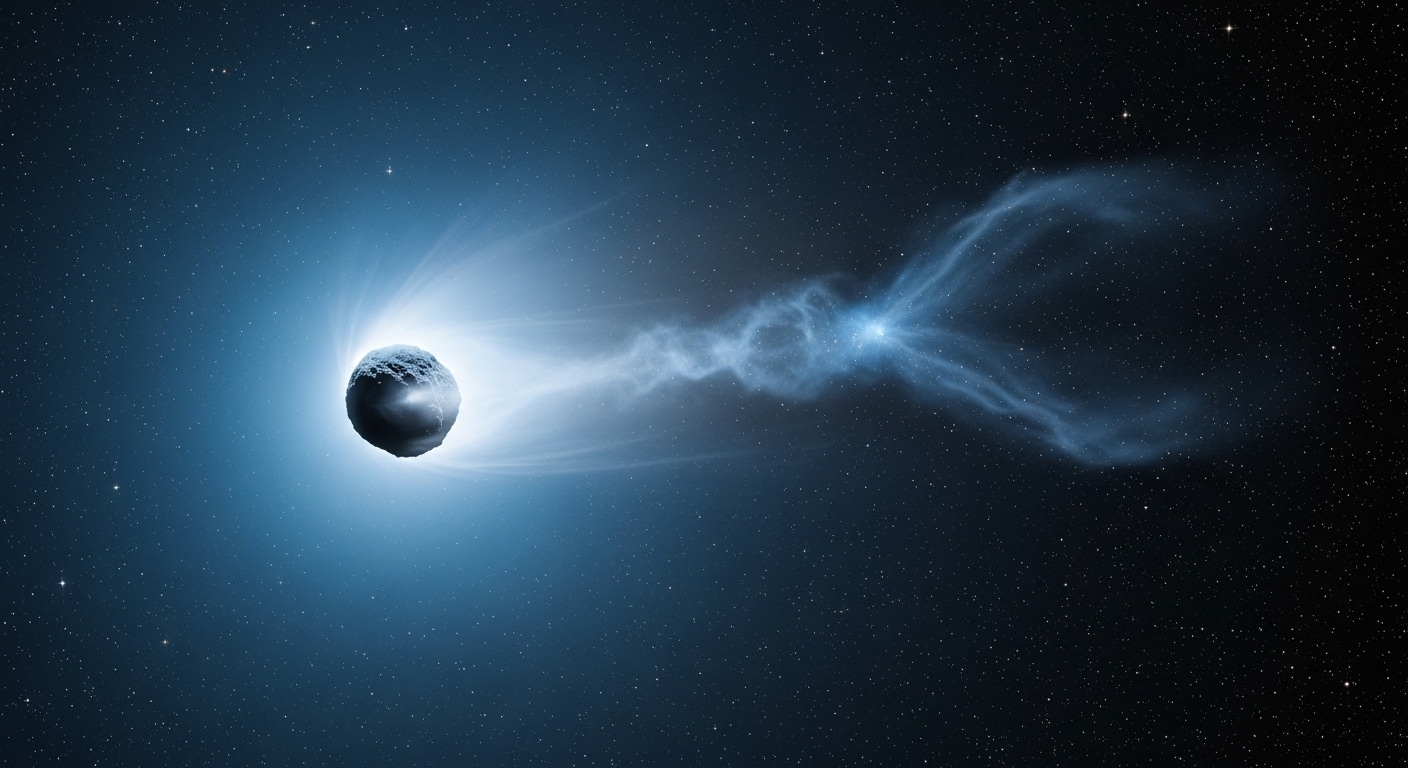
The word 'comet' gets complicated here. 'Oumuamua showed no visible coma or tail — the classic signs of a comet — yet it appeared to accelerate in a way consistent with outgassing, which is a comet behavior. The second confirmed interstellar object, 2I/Borisov, discovered in 2019, was far more cooperative: it had a clear coma and tail, making it an unambiguous interstellar comet by any definition. So the category is real, but the objects inside it can look very different from each other.
How Scientists Identify Them
Detection comes down to orbital mechanics. When a new object is spotted, astronomers take multiple position measurements over days or weeks and calculate its orbit. If the eccentricity — a measure of how elongated the orbit is — comes out significantly above 1.0, the object is on a hyperbolic path and almost certainly came from interstellar space. 'Oumuamua had an eccentricity of roughly 1.2, which was so far above the threshold that there was essentially no debate about its origin.
Where Do Interstellar Comets Come From?
The Ejection Mechanism — How Objects Escape Their Home Systems
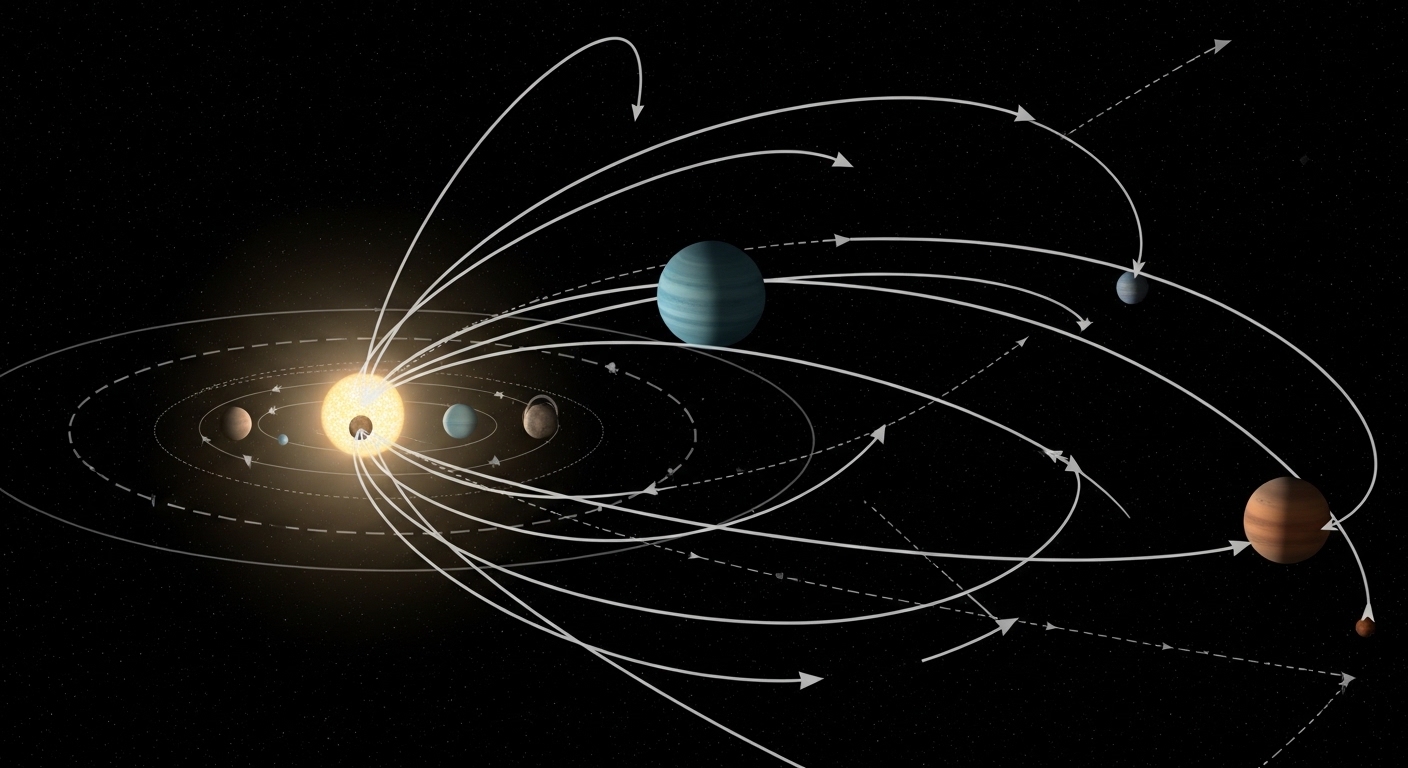
Every solar system is a chaotic construction site during its early life. Planets form, migrate, and gravitationally bully smaller objects around them. In our own solar system, the giant planets — Jupiter especially — are thought to have flung enormous numbers of comets outward into the Oort Cloud or entirely out of the solar system during their early orbital migrations. The same process happens around other stars.
When a young planet swings close to a smaller body, it can impart a gravitational kick that exceeds the local escape velocity. That object then becomes an interstellar traveler. Estimates suggest that each planetary system may eject trillions of objects over its lifetime, seeding the galaxy with a constant low-level stream of interstellar wanderers. The galaxy, in other words, is full of other stars' discarded debris.
Every planetary system likely ejects trillions of objects over its lifetime — meaning the space between stars is far more crowded with debris than it looks.
What Their Composition Tells Us About Other Stars
This is where interstellar comets get genuinely exciting. When 2I/Borisov passed through the inner solar system in late 2019 and early 2020, astronomers pointed every available telescope at it. They detected carbon monoxide, water, and other molecules in its coma. The composition turned out to be surprisingly similar to comets from our own solar system — which either means cometary chemistry is fairly universal, or we got lucky with a 'typical' visitor.
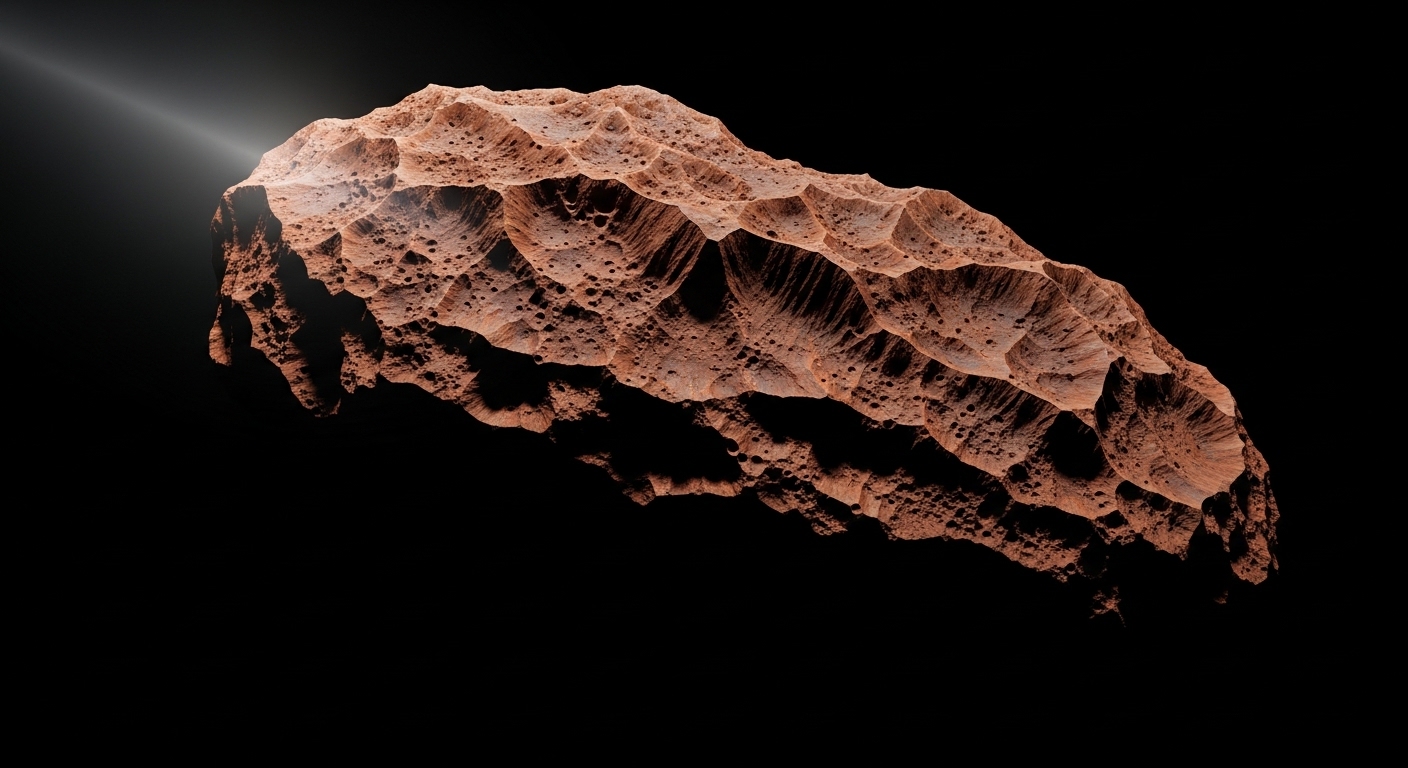
'Oumuamua was stranger. Its flat, pancake-like shape (some estimates put its aspect ratio at roughly 10:1) has no good analog among solar system objects. One hypothesis — proposed seriously by researchers at Harvard, though disputed by many colleagues — was that it could be a piece of alien technology. The more mainstream explanation involves exotic natural processes like hydrogen iceberg sublimation or fracturing from tidal forces. Nobody has fully settled the question.
How Rare Are Interstellar Visitors — and Are We Missing Most of Them?
The Detection Problem Is Bigger Than You'd Think
Here's the counterintuitive part: astronomers now believe interstellar objects pass through the inner solar system fairly regularly — possibly several per year at detectable sizes. We only confirmed the first one in 2017 not because they're rare, but because our sky surveys weren't sensitive or fast enough to catch them before. 'Oumuamua was spotted only weeks before its closest approach to Earth, when it was already on its way out.
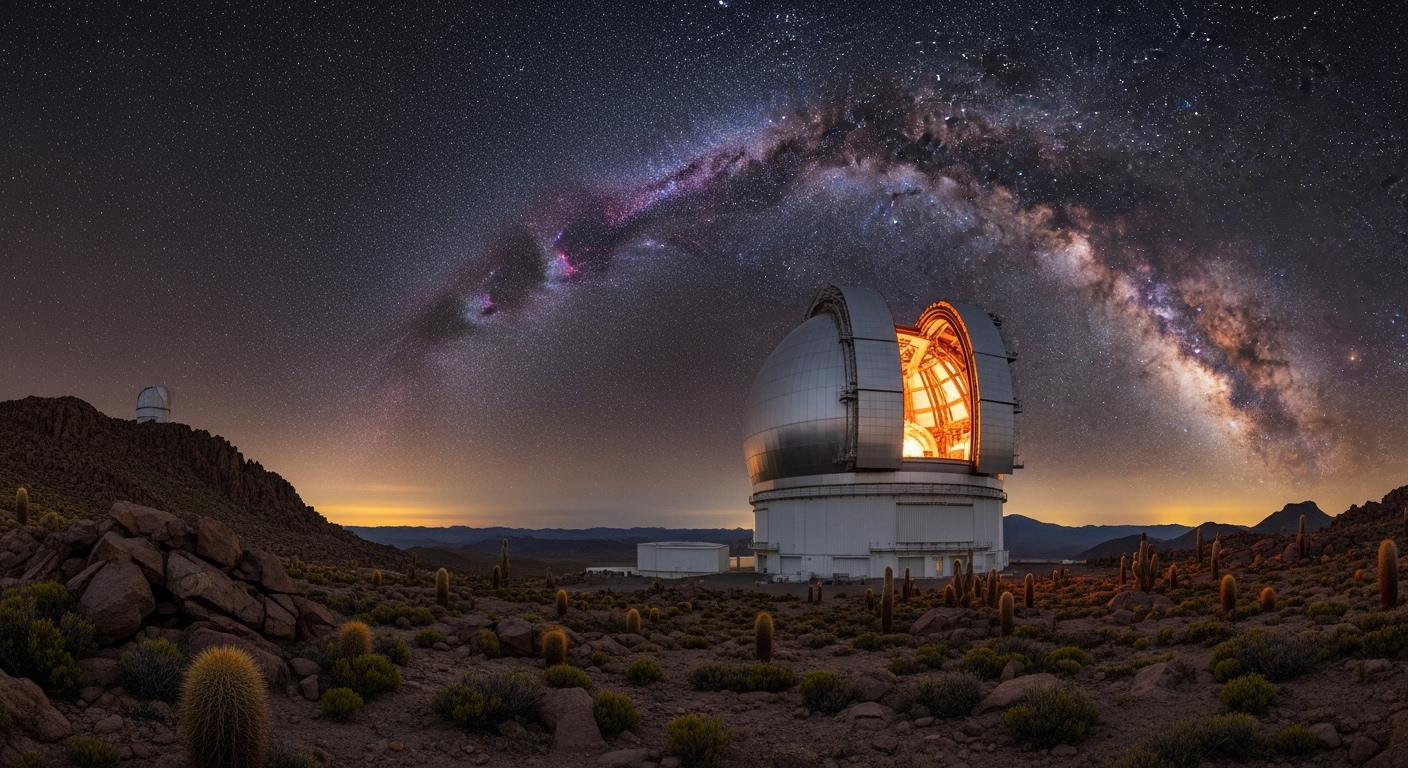
The Vera C. Rubin Observatory in Chile, which began full science operations recently, is expected to dramatically change this. Its massive mirror and wide field of view are designed to survey the entire visible sky every few nights. Astronomers expect it to detect interstellar objects at a rate that was previously impossible — potentially giving us enough warning to study them properly, or even to plan a fast-response spacecraft intercept mission.
The One That Almost Got Away
There's a striking historical footnote here. Analysis of older sky survey data has suggested that a fireball that entered Earth's atmosphere over the Pacific Ocean in 2014 — designated CNEOS 2014-01-08 — may have been an interstellar meteor, based on its speed and trajectory. If confirmed, it would predate 'Oumuamua as the first interstellar object detected in our solar system. The data is contested, but the possibility that interstellar material has literally landed on Earth — or in the ocean — is not as far-fetched as it once seemed.
We didn't miss interstellar visitors for decades because they weren't there — we missed them because we weren't looking fast enough or carefully enough.
Why Interstellar Comets Matter Beyond the Headlines
The Panspermia Connection
One of the more provocative ideas in astrobiology is panspermia — the hypothesis that life, or at least the chemical precursors to life, can travel between star systems. Interstellar comets are the most plausible delivery vehicle for this. Comets are known to carry complex organic molecules, amino acid precursors, and water ice. If a comet from another star system were to impact a young planet, it could theoretically seed it with chemistry that accelerates the emergence of life.
This isn't fringe science. Research suggests that the early Earth received significant amounts of organic material from cometary and asteroidal impacts. Extending that logic to interstellar sources is a small conceptual step — though the probability of any single interstellar object actually hitting a planet is vanishingly small. The numbers matter less than the timescale: over billions of years, even rare events accumulate.
What They Reveal About Planet Formation Everywhere
Each interstellar object is essentially a sample from another planetary system — one we could never visit directly. The composition of 2I/Borisov's coma gave astronomers a data point about the chemistry of at least one other protoplanetary disk. As detection improves and more objects are found, the aggregate data could tell us whether our solar system's chemistry is typical or unusual. That question has direct implications for how common Earth-like planets might be.
(Opinion: The fact that we've confirmed only two interstellar objects in all of human history — and both were found within the last decade — suggests we're at the very beginning of a new field. The next generation of sky surveys may reveal that interstellar visitors are so common they become almost routine, which would be one of the stranger scientific normalizations in recent memory.)
Frequently Asked Questions
What is the difference between 'Oumuamua and 2I/Borisov?
'Oumuamua, discovered in 2017, showed no visible coma or tail and had an unusual elongated shape — it behaved more like an asteroid but with unexplained acceleration. 2I/Borisov, found in 2019, displayed a clear coma and cometary tail and had a composition broadly similar to comets in our own solar system. They're both confirmed interstellar objects, but they look and behave quite differently from each other.
Could an interstellar comet ever be captured by our Sun's gravity?
In theory, yes — but it would require a very precise gravitational interaction with a planet to bleed off enough velocity. The odds for any given object are extremely low. Some researchers have modeled scenarios where a close encounter with Jupiter could theoretically slow an interstellar object enough to trap it, but no confirmed case of this has been identified.
Is there any chance we could send a spacecraft to intercept an interstellar object?
It's technically possible but extremely challenging. The main obstacle is time — interstellar objects move fast and are typically spotted late. Several mission concepts have been proposed, including one called 'Comet Interceptor' developed by the European Space Agency, which is designed to be ready to launch on short notice when a suitable target appears. Whether it could reach an interstellar visitor specifically depends heavily on the geometry and timing of the next discovery.
The deeper implication of interstellar comets isn't just that other solar systems shed debris — it's that the galaxy functions as a single interconnected system, slowly shuffling material between stars over billions of years. The boundary of 'our' solar system turns out to be far more porous than it looks. Whatever passed through here before we were watching, we'll never know. But the next one is already on its way.


Comments
Post a Comment