Crack the Code: Smart Strategies for Solving Word Puzzles
A crossword solver who knows just one extra trick — scanning for plural endings before filling in any letters — consistently finishes grids faster than someone with a larger vocabulary who dives in blind. Word puzzles reward method over raw knowledge. Whether you're stuck on a cryptic clue, a five-letter Wordle, or a Sunday crossword, the difference between frustration and a clean solve usually comes down to a handful of repeatable strategies.
What You Need Before You Start Solving
Know Your Puzzle Type First
Not all word puzzles play by the same rules, and mixing up strategies is one of the fastest ways to waste time. A cryptic crossword clue operates completely differently from a standard American-style clue — the surface reading is almost always a red herring by design. Wordle-style deduction games reward letter frequency logic, while anagram puzzles demand a different mental mode entirely.
Before you write a single letter, identify what kind of puzzle you're holding. Ask: does each clue have a definition component, a wordplay component, or both? That one question alone will tell you which toolkit to reach for.
Build Your Mental Frequency List
English has a well-documented set of high-frequency letters: E, T, A, O, I, N, S, H, R are consistently the most common in written text. Knowing this list cold is genuinely useful — it's not trivia, it's infrastructure. When you're guessing an unknown word, start with combinations that use these letters before reaching for X, Q, or Z.
The same logic applies to common short words. Three-letter answers in crosswords are dominated by a small pool: THE, AND, ARE, ERE, ORE, ATE, ETA. Memorizing that pool takes an afternoon and pays off for years.
Step-by-Step Strategies for Solving Word Puzzles
Step 1 — Scan for Gimmes and Anchor Letters First
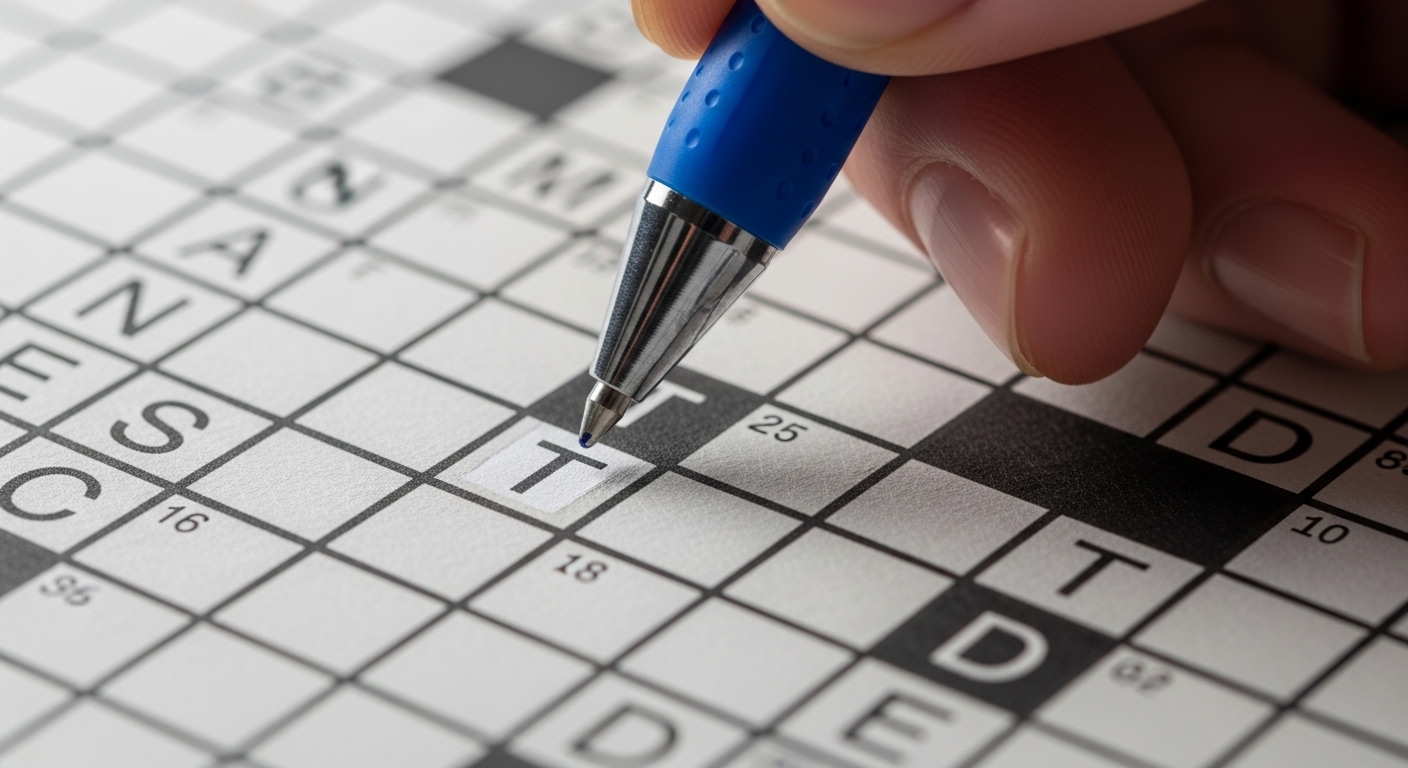
Every puzzle has a few clues you can answer immediately. These are your anchors. Fill them in first, because each confirmed letter constrains the crossing answers and shrinks your search space dramatically. On a 15x15 crossword, getting three or four anchor answers placed early can unlock an entire quadrant.
Resist the urge to work top-to-bottom in order. That's how the puzzle is printed, not how it's best solved. Jump to what you know, then work outward from those confirmed letters.
Step 2 — Use Word Pattern Recognition
If you have _ _ T _ _ _ N, your brain can immediately start filtering. Words ending in '-tion', '-tion', or '-tten' become candidates. The pattern itself is a clue. This is especially powerful in games like Hangman or Wordle variants where you see the letter positions before you know the word.
Common endings worth memorizing: -ING, -TION, -NESS, -MENT, -ABLE, -IBLE, -LY. Common beginnings: UN-, RE-, PRE-, DIS-, OVER-. These affixes cover a disproportionate share of long answers in English-language puzzles.
Step 3 — Apply the Crossing Strategy Systematically
When you're stuck on a clue, don't stare at it in isolation. Look at what crossing answers can give you. Even one confirmed letter in the right position can trigger recognition — the brain is remarkably good at completing partial words once it has a foothold.
Work the crossings in order of confidence. Fill in the crossing answer you're most sure about, then return to the original clue with the new letter in place. Repeat. This iterative loop is how experienced solvers unstick themselves without guessing wildly.
One confirmed crossing letter is worth more than five minutes of staring at a clue in isolation. Work the grid, not just the clue list.
Step 4 — Tackle Themed Clues as a Group
Most American crosswords have a theme — a set of long answers that share a pattern, pun, or concept. If you can identify the theme early, you can often guess long answers before you have a single crossing letter. Theme answers are usually the longest entries in the grid, typically 15 letters on a standard puzzle.
Look at the puzzle title if one is given. Constructors often embed the theme directly in the title. A puzzle called 'Going Bananas' probably has answers involving fruit, slipping, or yellow things. That's not cheating — that's reading the room.
How to Avoid the Most Common Solving Pitfalls
Locking In Wrong Answers Too Early
The single most common mistake intermediate solvers make is committing too hard to an early guess. You fill in STARE for a five-letter clue, it feels right, and then you spend ten minutes trying to make crossing answers work around it — when the actual answer was GLARE. Pencil exists for a reason. So does the undo button.
If two or three crossing answers refuse to cooperate with your filled-in word, treat that as strong evidence your answer is wrong, not that the crossing clues are unusually hard. The grid is self-correcting if you let it be.
Overthinking Misdirection in Cryptic Clues
Cryptic crossword clues are built on deliberate misdirection — the surface reading is designed to send you down the wrong path. The real structure is always: definition + wordplay, or wordplay + definition. Your job is to find the seam between the two parts.
Take a clue like 'Scattered raisins in container (9).' The word 'scattered' signals an anagram. 'Raisins in' gives you the letters to rearrange: R, A, I, S, I, N, S, I, N — nine letters. The answer is RAININESS. The word 'container' is the definition. Once you train yourself to spot anagram indicators (scattered, confused, mixed, broken), a whole category of clues becomes much more tractable.
Other common cryptic indicators: 'going up' or 'rising' signals a reversal in a down clue; 'reportedly' or 'sounds like' signals a homophone; 'holding' or 'inside' signals a hidden word. Learn the indicator vocabulary and cryptics stop feeling like black magic.
In a cryptic clue, the surface reading is the lie. The wordplay indicator is the truth. Find the indicator first, every time.
Pro Tips to Speed Up Your Solving Time
Build a Personal Crosswordese Vocabulary
'Crosswordese' is the informal term for words that appear constantly in puzzles but almost nowhere else in daily life. ETUI (a small ornamental case), ESNE (an Anglo-Saxon serf), OLEO (margarine), ERNE (a type of eagle) — these words exist in puzzles because their letter combinations are constructor gold. Learning two or three of these per week adds up fast.
Keep a running list. After every puzzle, note any answer you had to look up. Within a few months, you'll have a personal reference sheet that covers the majority of obscure fill you'll ever encounter.
Time-Box Your Stuck Moments
Give yourself a hard limit — say, 90 seconds — on any single clue before you move on. Staring longer rarely produces a breakthrough; it usually just burns time and builds frustration. Return to the clue after filling in more of the surrounding grid. Fresh eyes on a clue with two new crossing letters is almost always more productive than extended staring.
Practice Deduction, Not Just Recall
The solvers who improve fastest aren't the ones with the biggest vocabulary — they're the ones who get better at eliminating wrong answers quickly. If you know a five-letter answer ends in -ER and the clue is about movement, you can generate a short candidate list (MOVER, ROVER, COVER, HOVER) and test them against crossings in seconds. That's deduction, and it's a trainable skill.
(Opinion: The best thing that ever happened to crossword solving culture was the rise of online communities where people post their reasoning, not just their answers. Watching how an experienced solver breaks down a cryptic clue — step by step — is worth more than any book on the subject. Find one of those communities and lurk for a week.)
Frequently Asked Questions
What's the best first word to play in Wordle-style puzzles?
There's no single universally 'best' starting word, but words that pack in high-frequency vowels and common consonants — think combinations of E, A, R, O, T, S, I — give you the most information from your first guess. Many experienced players use a two-word opening strategy, sacrificing the first guess entirely for information rather than trying to score a hit.
Do crossword constructors reuse the same answers repeatedly?
Yes, and intentionally so. Certain short words with useful letter patterns appear across puzzles from different constructors and publications because they're structurally necessary to fill grids cleanly. This is why learning crosswordese pays off — you're not memorizing trivia, you're learning the constructor's toolkit. Once you know the common fill words, you'll recognize them on sight.
Is solving cryptic crosswords actually harder than standard crosswords, or just different?
Genuinely different, and harder in a specific way: cryptics require you to suppress your instinct to read clues as normal sentences. The misdirection is the whole game. Many solvers who breeze through standard puzzles find cryptics impenetrable at first, not because of vocabulary gaps, but because the mental mode required is almost the opposite. Once the logic clicks, though, cryptics become addictive in a way standard crosswords rarely match.
The most counterintuitive thing about word puzzles is that getting faster has almost nothing to do with knowing more words. It has everything to do with building better elimination habits, recognizing structural patterns, and learning when to let a clue go and come back to it. A solver who has internalized those habits will outpace a walking dictionary every time — and probably enjoy the process more too.


Comments
Post a Comment