The Science of Survival: How Some Animals Can Freeze Solid and Live
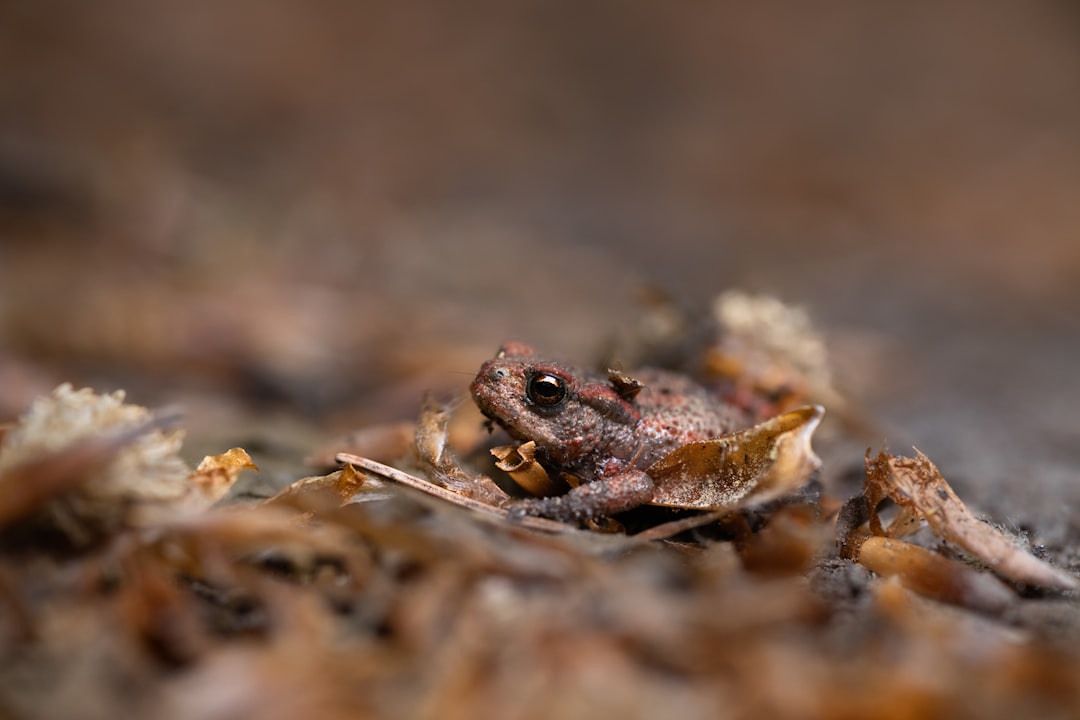
A wood frog sitting in a Minnesota forest in January has no heartbeat. Its blood has stopped moving. Ice crystals have formed inside its body cavities. By any conventional measure, it is dead — and yet, come spring, it will thaw, hop away, and breed. This is not science fiction. It is one of the most extraordinary physiological feats in the animal kingdom, and scientists have been trying to reverse-engineer it for decades.
What Is Freeze Tolerance — and How Is It Different From Just Being Cold?
Freeze Tolerance vs. Freeze Avoidance
Most cold-weather animals survive winter through freeze avoidance — they produce antifreeze proteins or supercool their body fluids so ice never actually forms inside them. Arctic fish, certain insects, and many reptiles use this strategy. Freeze tolerance is the rarer, more radical option: the animal lets ice form inside its body and survives anyway.
The distinction matters enormously. Ice crystals are physically destructive. They puncture cell membranes, disrupt protein structures, and as water freezes and expands, they can shred tissue from the inside. For a freeze-tolerant animal, surviving that process requires a suite of physiological adaptations working in precise coordination — not just one clever trick.
Think of it like the difference between a car that can drive on ice and a car that can be encased in a glacier and still start when it thaws. One is impressive engineering. The other seems almost impossible.
Which Animals Can Actually Do This?
The wood frog (Rana sylvatica) is the most studied example, but it is far from alone. The Siberian salamander has survived being frozen in permafrost for what researchers estimate could be extended periods — though the most dramatic claims remain debated. Several species of terrestrial turtle hatchlings in North America, including painted turtles, can survive partial freezing. Among invertebrates, the list grows considerably: certain nematodes, tardigrades, and various insects including the goldenrod gall fly larva tolerate freezing as a routine part of their life cycle.
How Does Freeze Tolerance Actually Work? The Cellular Mechanics
The Cryoprotectant Flood
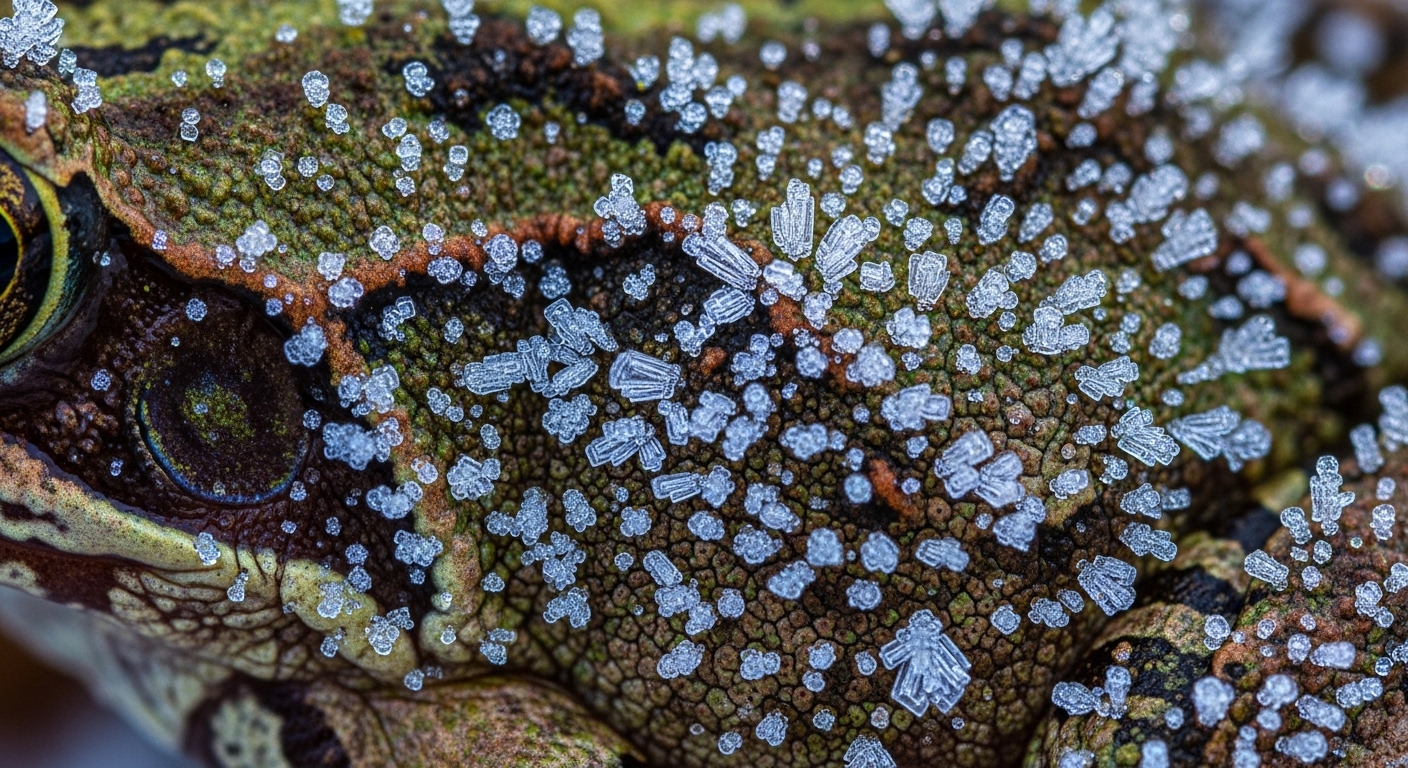
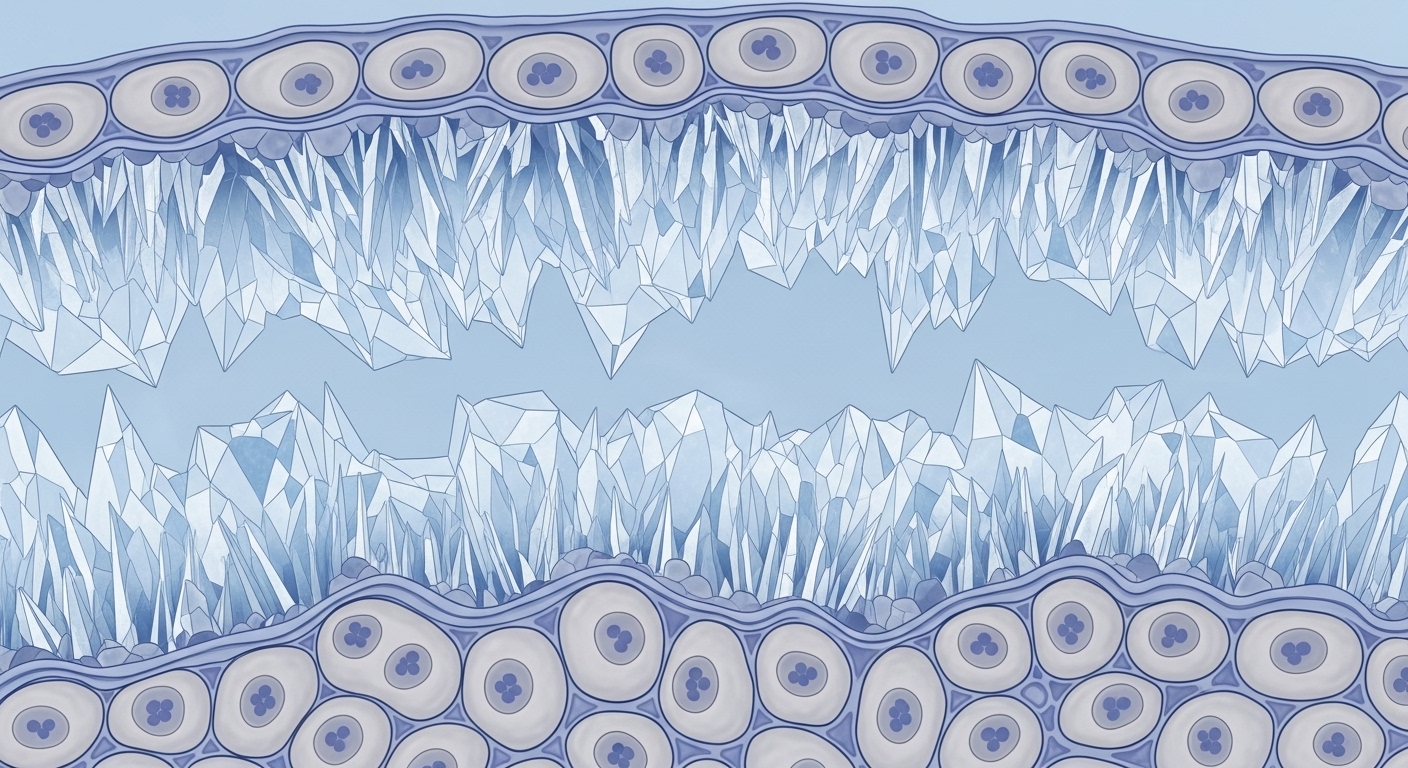
When a wood frog's skin detects ice forming — which can happen within minutes of temperatures dropping below freezing — it triggers a rapid glucose dump into the bloodstream. The liver converts stored glycogen into glucose at a remarkable rate, and blood glucose concentrations can rise to levels that would be catastrophically diabetic in a human. This glucose acts as a cryoprotectant: it floods cells and prevents the intracellular water from freezing, even as ice forms freely in the spaces between cells.
The ice that does form is essentially sequestered in the extracellular space — the fluid surrounding cells rather than inside them. The cells themselves dehydrate as water is drawn out osmotically, but they remain intact. It is a controlled dehydration managed at the cellular level, happening in real time as the animal freezes.
The wood frog does not prevent freezing — it choreographs it. Ice forms exactly where the body can tolerate it, and nowhere else.
Suspended Animation, Not Death
During full freeze, the frog's heart stops. Breathing stops. Brain activity drops to undetectable levels. But 'stopped' is not the same as 'destroyed.' Cellular metabolism does not cease entirely — it slows to a crawl. Certain stress proteins, sometimes called freeze-responsive proteins, are upregulated before and during freezing to stabilize membranes and protect proteins from denaturation.
When temperatures rise, the thaw proceeds from the core outward. The heart restarts — typically within an hour of thawing beginning — and circulation resumes before the outer tissues have fully warmed. This sequencing appears to be critical. Rewarming too fast, or in the wrong order, can be fatal even for animals adapted to the process.
Anyone who has tried to revive a frozen plant by putting it next to a radiator has accidentally demonstrated the wrong approach. Rapid rewarming causes its own cellular damage, a phenomenon well-documented in cryobiology research.
The Tardigrade Exception: A Completely Different Strategy
Cryptobiosis — Going Further Than Freezing
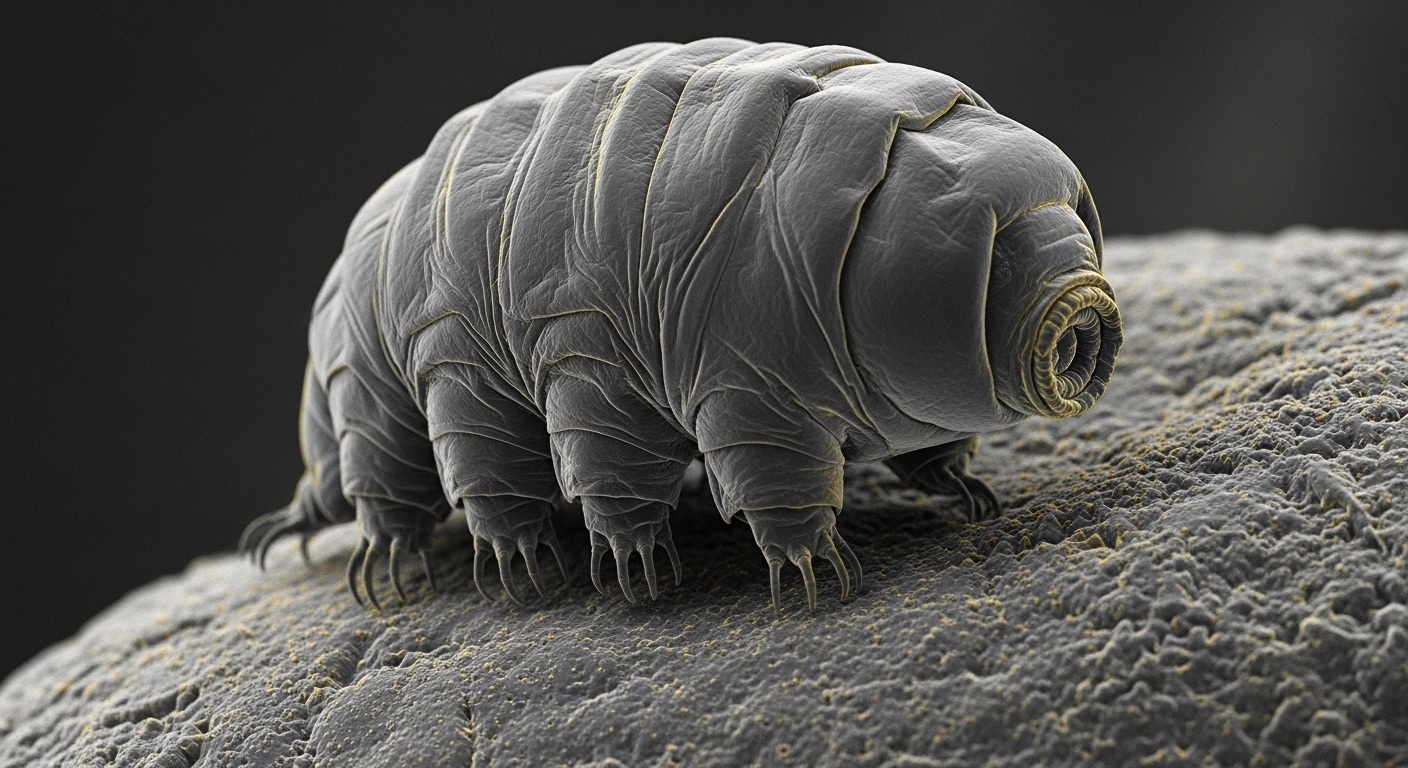
Tardigrades deserve their own category. These microscopic animals — sometimes called water bears — do not merely tolerate freezing. Under extreme conditions, they enter a state called cryptobiosis, expelling nearly all water from their bodies and essentially halting all metabolic activity. In this dried, contracted state called a 'tun,' they can survive temperatures approaching absolute zero, vacuum conditions, and even brief exposure to open space.
The mechanism differs from the wood frog's glucose strategy. Tardigrades produce a sugar called trehalose that replaces water molecules around cellular structures, preserving their shape in a glassy matrix. When water returns, the structures reassemble correctly. It is less like freezing and more like pressing 'pause' on biology itself.
Tardigrades do not survive freezing — they survive the absence of life conditions. That is a meaningfully different thing.
Why This Matters Beyond the Lab
The tardigrade's trehalose trick has real-world applications that researchers are actively pursuing. Preserving vaccines, blood products, and even organs for transplant without refrigeration is a long-standing challenge in medicine. If the molecular mechanism behind cryptobiosis could be reliably replicated in mammalian cells, the implications for medicine and long-distance space travel would be significant. Progress has been slow, but the direction is clear.
Why Can't Mammals Freeze and Survive? The Limits of the System
The Problem of Scale and Complexity
Mammals generate their own body heat, which means they have never evolved the metabolic machinery to manage ice formation across billions of cells simultaneously. More fundamentally, mammalian cells are far more metabolically active than frog or nematode cells — they require continuous oxygen delivery, and even brief interruptions cause irreversible damage. The brain is especially vulnerable. Human neurons begin dying within minutes of losing blood flow, a timescale that makes any freeze-and-thaw cycle essentially incompatible with survival.
There is also a size problem. A wood frog is small enough that freezing and thawing happen relatively quickly and uniformly. A large mammal would freeze unevenly, with outer tissues experiencing ice formation long before the core cools — creating exactly the kind of uncontrolled, damaging freeze that cryoprotectants are meant to prevent.
What About Hibernating Bears?
Bear hibernation is often misunderstood. Bears do not freeze. Their core body temperature drops only modestly — by roughly 5 to 8 degrees Celsius — and they remain warm-blooded throughout. What makes bear hibernation remarkable is the metabolic suppression: heart rate drops dramatically, and the bear does not eat, drink, urinate, or defecate for months without significant muscle loss. That is impressive, but it is a different phenomenon entirely from freeze tolerance.
(Opinion: The popular conflation of hibernation with freezing probably does a disservice to both phenomena. Each is extraordinary on its own terms, and treating them as variations of the same trick obscures how genuinely alien freeze tolerance really is.)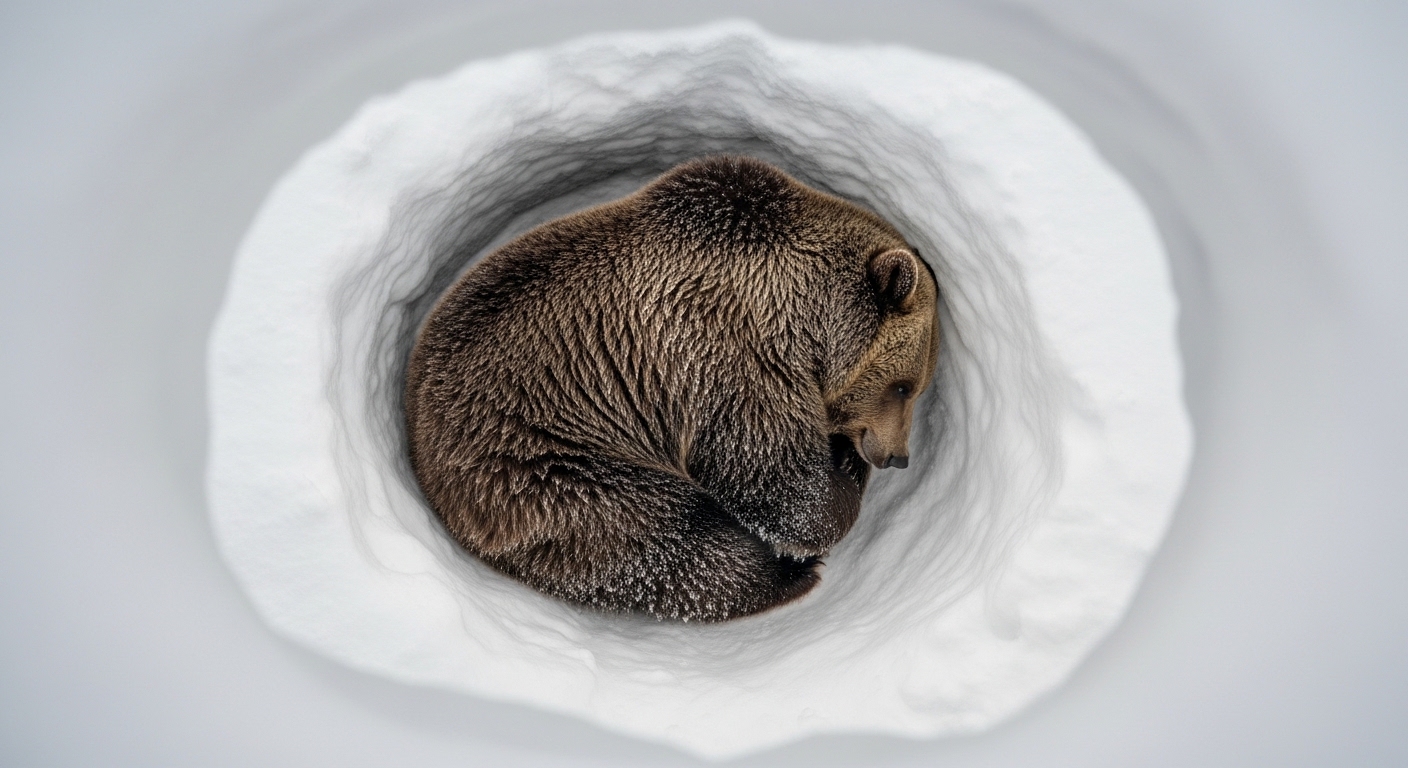
FAQ
Can scientists use freeze tolerance research to help preserve human organs for transplant?
This is one of the most active areas of application. Current organ preservation relies on cold storage, not freezing, because ice formation destroys human tissue. Researchers are studying the cryoprotectant strategies used by wood frogs and the trehalose mechanisms in tardigrades to develop better preservation solutions. Progress has been made in preserving smaller tissue samples, but scaling these methods to whole organs remains a significant challenge.
How long can a wood frog stay frozen?
Under natural conditions, wood frogs in northern climates may remain frozen for weeks to a few months during winter. Laboratory experiments have successfully frozen and thawed wood frogs multiple times within a single season. The upper limit of how long they can remain frozen and still recover is not precisely established, but extended freezing beyond what they would normally experience in the wild does reduce survival rates.
Is the wood frog the only vertebrate that can freeze solid?
No, though it is the best-studied example in North America. Several species of terrestrial turtle hatchlings — including painted turtles and box turtles — can survive partial freezing. The Siberian salamander is often cited as another vertebrate freeze-tolerance example, though the most extreme claims about its survival duration remain subject to scientific debate. Among vertebrates, the ability appears to be relatively rare and has evolved independently in different lineages.
What makes freeze tolerance genuinely unsettling — in the best possible way — is that it forces a rethink of what 'alive' actually means. If your heart has stopped, your blood is frozen, and your brain shows no activity, the usual definitions fail you. The wood frog exists in a state that sits uncomfortably between life and death for months at a time, and then simply decides to be alive again. The fact that we can describe the mechanism does not make it feel any less strange.


Comments
Post a Comment