What Is Short Selling? A Clear and Simple Explanation
In January 2021, a group of retail investors on Reddit drove the price of GameStop stock up by roughly 1,700% in a matter of weeks — and the mechanism they were exploiting was short selling. Hedge funds had bet heavily that GameStop's price would fall. When it rose instead, those funds faced catastrophic losses. The episode made short selling front-page news, but most coverage skipped the part where they actually explain what it is.
What Is Short Selling, Exactly?
The Basic Mechanic in Plain Language
Short selling is borrowing an asset — almost always a stock — selling it immediately, and then buying it back later at (hopefully) a lower price. The difference between what you sold it for and what you paid to buy it back is your profit. If the price goes up instead of down, you lose money.
Here's a concrete example. Suppose a stock is trading at $100. You borrow 10 shares from your broker and sell them, pocketing $1,000. A month later, the stock drops to $60. You buy 10 shares back for $600, return them to the broker, and keep the $400 difference (minus fees). Simple enough.
Now flip it. The stock climbs to $140 instead. You still have to buy those 10 shares back to return them — now costing you $1,400. You've lost $400. And unlike a regular stock purchase, where the worst case is losing 100% of what you put in, a short seller's losses are theoretically unlimited because a stock price has no ceiling.
Who Actually Lends the Shares?
This part surprises most people. The shares you borrow usually come from other investors' brokerage accounts — often without those investors even knowing it's happening. When you sign a standard margin agreement with most brokers, you're typically granting permission for your shares to be lent out. The broker earns a fee, and so does the short seller's broker. The original shareholder usually sees nothing.
How Does Short Selling Actually Work — Step by Step?
The Mechanics Behind the Trade
The process involves more moving parts than a standard buy-and-hold trade. A short seller needs a margin account, which means the broker requires a deposit as collateral — typically a percentage of the total position value. This is called the margin requirement, and it can vary by broker and by how volatile the stock is.
Once the position is open, the short seller pays a daily borrowing fee to keep it alive. For easy-to-borrow, large-cap stocks, this fee is often tiny. But for heavily shorted or hard-to-find shares, the 'borrow rate' can climb into double-digit annualized percentages. Traders who shorted certain meme stocks in 2021 were sometimes paying borrow rates above 100% annualized — which means time itself was working against them even if the stock stood still.
A short position doesn't just need the stock to fall — it needs it to fall fast enough to outrun the daily borrowing costs eating into your profit.
What Is a Short Squeeze?
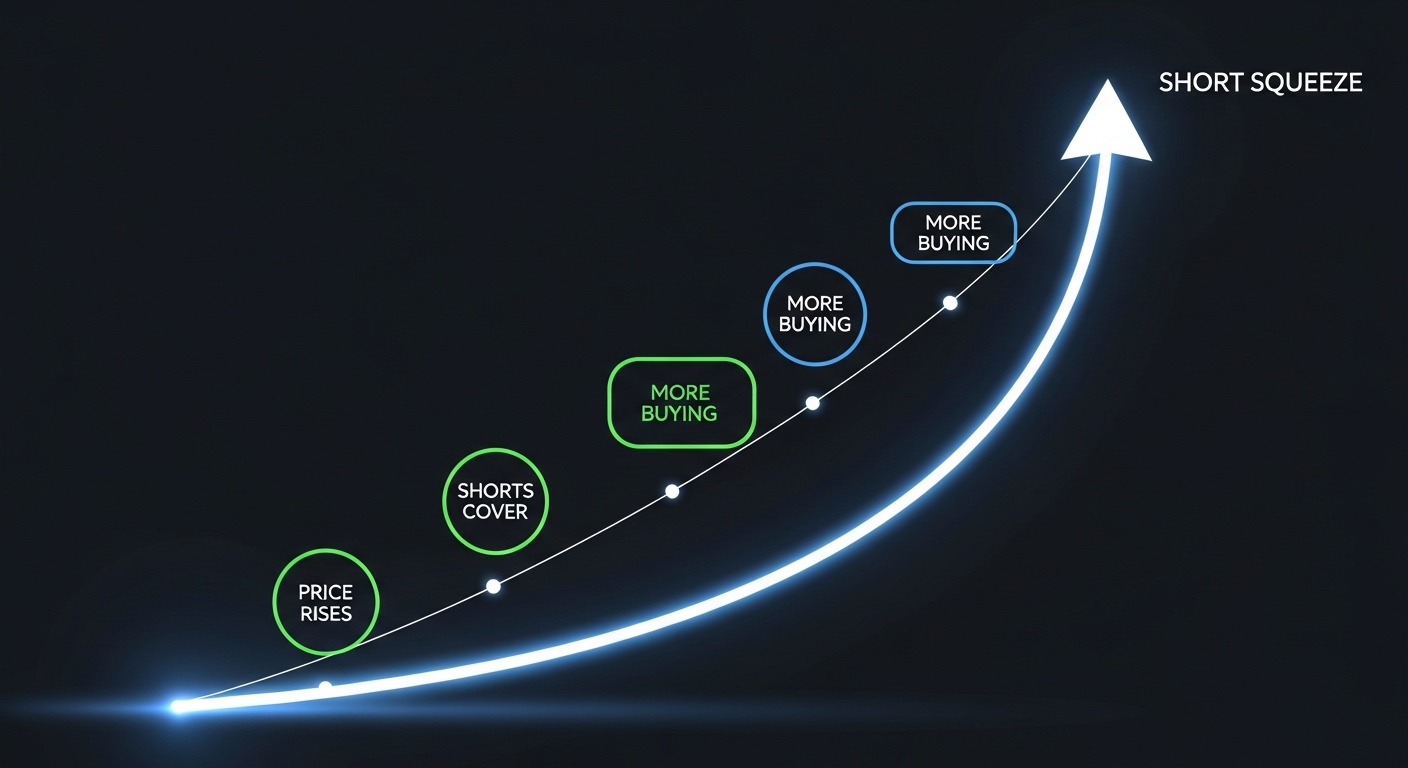
A short squeeze happens when a heavily shorted stock's price starts rising sharply, forcing short sellers to buy back shares quickly to limit their losses. That buying pressure pushes the price even higher, which forces more short sellers to cover, which pushes the price higher still. It's a feedback loop.
GameStop in 2021 is the most famous recent example, but short squeezes are not new. Volkswagen briefly became the world's most valuable company by market cap in 2008 during a short squeeze, after Porsche revealed it had quietly accumulated a controlling stake — leaving short sellers scrambling for shares that barely existed in the open market.
Where Short Selling Shows Up in Real Markets
Legitimate Uses Beyond Speculation
Short selling has a reputation as a purely predatory practice, but that's not the full picture. Institutional investors use it constantly as a hedging tool. A fund that holds a large position in airline stocks might short a related index to reduce its exposure to a broad market downturn — not because it thinks airlines will collapse, but because it wants to isolate the specific bet it's making.
Research firms that specialize in short selling — sometimes called short sellers or activist short sellers — have a track record of uncovering genuine corporate fraud. Hindenburg Research's 2020 report on Nikola, an electric truck company, alleged that the company had misled investors about its technology. The stock fell sharply, and subsequent regulatory investigations validated many of the report's claims. Without short sellers willing to profit from exposing fraud, some of those schemes might have lasted much longer.
The Darker Side
That said, 'short and distort' schemes do exist — where bad actors take a short position and then spread false negative information to drive a stock down. This is illegal market manipulation, but it happens. Regulators in most major markets treat it the same way they treat 'pump and dump' schemes on the long side.
(Opinion: Short selling gets unfairly demonized every time a high-profile squeeze makes headlines. The reality is that markets with no mechanism for bearish bets tend to inflate bubbles faster and correct harder — short sellers, annoying as they are to companies and retail bulls, provide a genuine price-discovery function that benefits everyone in the long run.)
Why Short Selling Matters — and What It Reveals About Markets
Price Discovery and Market Efficiency
When only buyers can participate in a market, prices tend to drift upward regardless of underlying value. Short sellers are the mechanism that allows pessimistic information to get priced in. Academic research generally supports the idea that markets with active short selling are more efficient — meaning prices reflect available information more accurately.
Markets without short selling don't eliminate bearish sentiment — they just delay it, storing up the correction until it arrives all at once.
What Regulators Do About It
Short selling is legal in most developed markets but heavily regulated. Many countries require disclosure when a short position exceeds a certain percentage of a company's outstanding shares. During periods of extreme market stress — the 2008 financial crisis, for example — regulators in the US and UK temporarily banned short selling on financial stocks, arguing it was accelerating panic. The evidence on whether those bans actually helped is genuinely mixed.
One quirky operational detail most overviews skip: in the US, there's a rule called the 'locate requirement.' Before a broker can execute a short sale, it must first confirm that the shares can actually be borrowed. Selling shares short without locating them first is called 'naked short selling' and is generally prohibited — though enforcement has been inconsistent over the years, and it remains a contested topic among market structure researchers.
Frequently Asked Questions
Can regular retail investors short sell stocks?
Yes, but with conditions. You need a margin account, which most major brokers offer after a short application process. Not all stocks are available to short — your broker needs to have shares available to lend. Some brokers also restrict short selling on certain highly volatile stocks during unusual market conditions.
Is short selling the same as buying put options?
They're related but different. Buying a put option gives you the right to sell a stock at a set price — it's a way to profit from a decline with capped downside (you can only lose what you paid for the option). Short selling involves actually borrowing and selling shares, with theoretically unlimited downside if the stock rises. Options are often considered less risky for bearish bets for this reason, though they come with their own complexity.
Why do companies hate being shorted?
Short interest in a stock is publicly reported, and high short interest can signal to the broader market that sophisticated investors expect the price to fall — which can become a self-fulfilling narrative. Companies also sometimes accuse short sellers of spreading negative information to profit from the decline, even when the criticism is legitimate. The tension between management teams and short sellers is one of the more colorful ongoing dramas in financial markets.
Short selling is one of those mechanisms that works quietly in the background of every functioning market — until it doesn't, and suddenly everyone has an opinion about it. The GameStop episode didn't reveal that short selling was broken. It revealed how fragile a highly concentrated short position becomes when enough people decide to push back at once. That dynamic has existed as long as financial markets have, and it will keep playing out in new forms as long as people can bet on both sides of a price.



Comments
Post a Comment