Beyond Siri: How AI Voice Assistants Actually Understand What You Say
When you ask a voice assistant to set a timer for seven minutes, roughly a dozen distinct computational processes fire in under a second. That is not a metaphor — it is a pipeline of acoustic modeling, language parsing, intent classification, and response generation, all stitched together so seamlessly that the experience feels like talking to someone who just happens to live inside your phone. The reality underneath is considerably stranger and more impressive than most people realize.

What AI Voice Assistants Actually Are — Not Just Fancy Search Engines
The Difference Between Retrieval and Understanding
Early voice interfaces, including the first iteration of Siri when it launched in 2011, were largely sophisticated command-matching systems. You said a phrase, the system checked it against a list of recognized patterns, and it returned a scripted result. If your phrasing drifted even slightly from what the engineers anticipated, the whole thing fell apart. Anyone who tried to use early voice search in a noisy car knows exactly how fragile that felt.
Modern voice assistants are built on a fundamentally different architecture. Instead of matching phrases, they attempt to model meaning — understanding context, resolving ambiguity, and tracking conversational state across multiple turns. The shift from pattern-matching to genuine language modeling is what separates a system that answers 'What is the weather?' from one that can answer 'Will I need an umbrella for my walk later?' without you ever saying the word 'weather.'
The Role of Large Language Models
The backbone of most modern voice assistants is now a large language model (LLM) — a neural network trained on enormous quantities of text to predict and generate language. These models do not store facts like a database. Instead, they develop statistical representations of how words, concepts, and ideas relate to each other. When you speak, the assistant is not looking up your question; it is constructing a response based on learned patterns of meaning.
This is also why modern assistants occasionally produce confident-sounding wrong answers. The model is optimized to generate plausible language, not to verify truth. That tension — between fluency and accuracy — is one of the central engineering challenges in the field right now.

How Voice Assistants Process Speech — Step by Step
Step 1: Wake Word Detection
Before any of the interesting processing begins, the device has to decide whether you are actually talking to it. Wake word detection runs locally on the device using a small, highly optimized model — not the full cloud-based system. This local model listens continuously for a specific acoustic signature ('Hey Siri,' 'Alexa,' 'OK Google') while consuming minimal power. It is deliberately narrow: it only needs to recognize one or two phrases with high confidence, and it errs heavily toward false negatives to protect privacy and battery life.
The counterintuitive detail here is that the wake word model is intentionally kept dumb. A smarter model would require more compute, drain the battery, and introduce latency. The tiny on-device model is a deliberate engineering trade-off, not a limitation of what is technically possible.
Step 2: Automatic Speech Recognition (ASR)
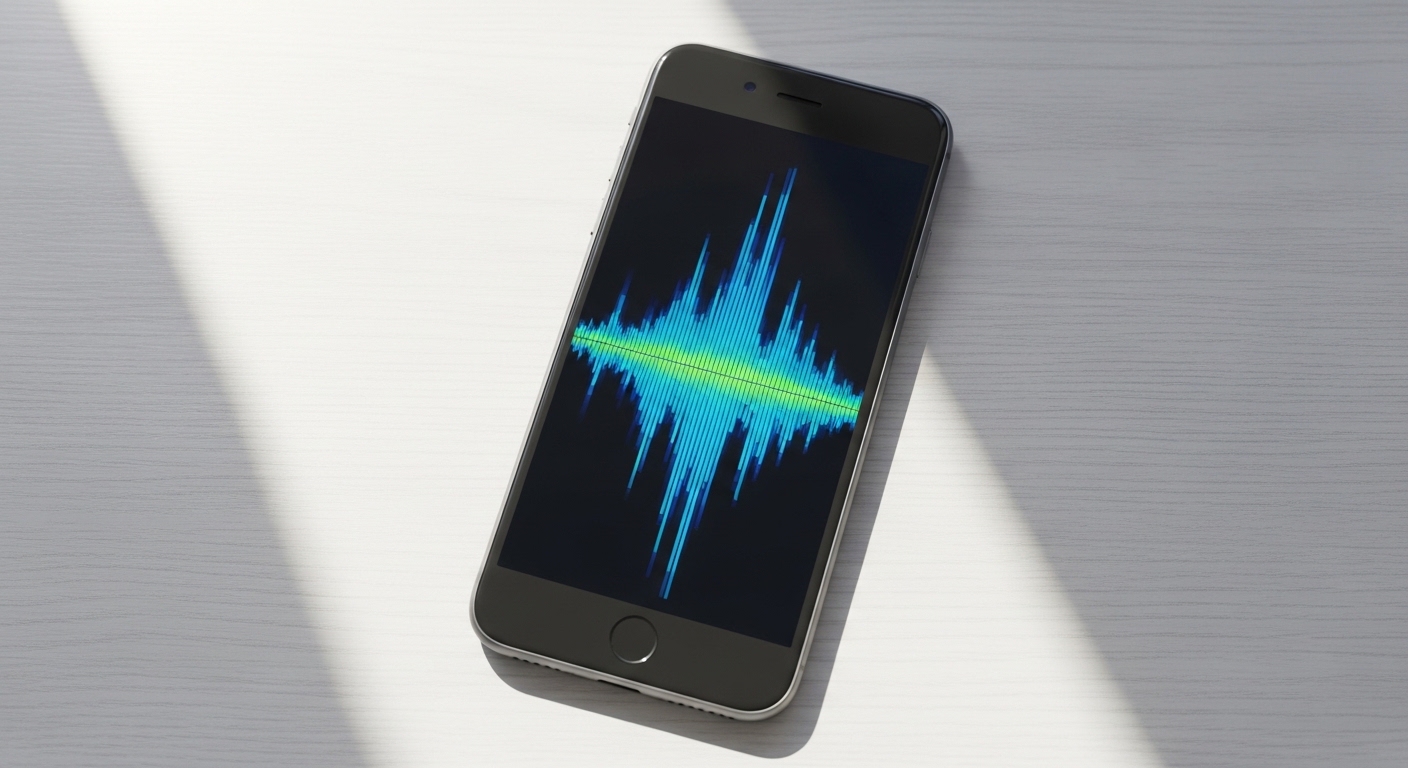
Once the wake word fires, your speech is captured and sent — usually to cloud servers — where automatic speech recognition converts the audio waveform into text. ASR systems work by breaking audio into short frames (typically around 10–25 milliseconds each) and analyzing the acoustic features of each frame. The model then predicts the most likely sequence of words that could have produced that audio, accounting for background noise, accent variation, and speaking speed.
Modern ASR models, like those based on transformer architectures, have become dramatically more accurate over the past several years. Research suggests word error rates on clean speech have dropped below 5% for major languages — roughly comparable to human transcription accuracy under similar conditions.
The acoustic model does not hear words — it hears frequencies. Turning those frequencies into language is a separate, equally complex problem that runs immediately after.
Step 3: Natural Language Understanding (NLU)
Once the system has a text transcription, it needs to figure out what you actually want. This is the job of natural language understanding. NLU breaks your request into an intent (what you want to do) and entities (the specific things involved). 'Play jazz music in the kitchen' has an intent of 'play media,' entities of 'jazz' (genre) and 'kitchen' (target device), and an implicit entity of 'now' (timing).
Where it gets genuinely tricky is with follow-up queries. If you say 'Make it louder' thirty seconds later, the system needs to resolve 'it' back to the kitchen speaker playing jazz — a problem called coreference resolution. Handling this across a multi-turn conversation without losing the thread is one of the harder problems in applied NLU.
Step 4: Response Generation and Text-to-Speech
The assistant constructs a response — either by querying a knowledge base, calling an API, or generating text directly from the language model — and then converts that text back into speech using a text-to-speech (TTS) engine. Modern TTS systems use neural vocoders that synthesize audio waveforms directly, producing voices that are remarkably close to natural human speech in rhythm and intonation. The robotic cadence of early synthesized voices is largely gone, replaced by something that can express hesitation, emphasis, and even subtle warmth.
Where Voice Assistants Still Struggle — and Why
The Ambiguity Problem
Human language is deeply ambiguous in ways that are obvious to us but genuinely hard to resolve computationally. 'Book me a table at that Italian place we went to last month' contains a pronoun ('that'), a relative time reference ('last month'), a vague category ('Italian place'), and an implicit assumption that the assistant has access to your location history and memory. Most current systems cannot reliably handle all of those simultaneously.
Researchers sometimes call this the 'grounding problem' — connecting abstract language to specific real-world referents. It is easy for humans because we share enormous amounts of implicit context. Machines have to reconstruct that context from scratch every time.
Accent and Dialect Gaps
ASR systems are trained on datasets, and those datasets have historically skewed toward certain accents, dialects, and speaking styles. Research has documented measurable differences in word error rates across demographic groups for major commercial systems. A speaker with a strong regional accent or a non-native speaker of English may experience noticeably worse recognition accuracy than someone speaking a standard broadcast accent — even on the same device, asking the same question.
This is not a small edge case. It affects hundreds of millions of potential users and represents both a technical challenge and a fairness issue that the industry has been slow to fully address.
Training data shapes what a model can hear. A voice assistant trained mostly on one dialect will quietly fail everyone else — not dramatically, just consistently.

Why This Technology Matters Beyond Convenience
Accessibility as a Primary Use Case
For people with motor disabilities, visual impairments, or conditions like dyslexia, voice interfaces are not a convenience feature — they are often the primary way of interacting with technology. A well-functioning voice assistant can make the difference between independent access to information and relying on another person for basic tasks. This is a use case that tends to get buried under marketing language about smart home gadgets, but it is arguably the most important application of the technology.
The stakes here are also why the accent and dialect accuracy gaps matter so much. If the system works reliably for some users and inconsistently for others, the people most dependent on it are often the ones left behind.
The Shift Toward Agentic Assistants
The next significant evolution in voice assistants is not better speech recognition — that problem is largely solved for common use cases. The frontier is agentic behavior: assistants that can take multi-step actions in the world on your behalf. Book the flight, check the calendar, send the confirmation, set a reminder. Not just answer questions, but actually do things.
This shift introduces a new category of risk. An assistant that can only answer questions can be wrong, but the damage is limited. An assistant that can take actions — send emails, make purchases, modify files — can cause real harm if it misunderstands or is manipulated. The security and trust architecture for agentic AI is still being worked out, and it is not a solved problem.
(Opinion: The industry has a tendency to ship agentic features before the guardrails are ready, because the demos are impressive and the risks are abstract until something goes wrong. That pattern has not served users well in other areas of tech, and there is little reason to think voice AI will be different.)
Frequently Asked Questions
Does my voice assistant listen to everything I say all the time?
The on-device wake word model is always listening for its trigger phrase, but it processes audio locally and does not transmit anything to the cloud until the wake word is detected. That said, false wake-word activations do occur — meaning the system occasionally starts recording when you did not intend it to. Major platform providers have acknowledged this and offer settings to review and delete stored recordings.
Why does my voice assistant sometimes get simple things wrong but handle complex questions correctly?
This is a genuine quirk of how language models work. They are optimized for statistical patterns in language, not logical consistency. A complex question that resembles patterns the model has seen many times may get a fluent, accurate answer, while an unusual phrasing of a simple question can trip the system up entirely. It is counterintuitive, but the difficulty of a question for a human and the difficulty for an LLM are not the same scale.
Can voice assistants understand multiple languages in the same conversation?
Some systems are beginning to support code-switching — the natural human habit of mixing languages mid-sentence — but it remains an active research area rather than a fully reliable feature. Most commercial assistants still expect you to set a primary language and stick to it. Multilingual support has improved significantly, but seamless cross-language conversation is not yet standard.
Voice assistants have traveled an enormous distance from scripted command trees to systems that can hold a thread across a conversation, synthesize speech that sounds genuinely human, and increasingly take actions in the world. But the gap between what they appear to understand and what they actually understand remains real — and worth keeping in mind. The most consequential question in this space right now is not whether these systems can pass for intelligent, but whether the people building them are moving carefully enough as the stakes get higher.



Comments
Post a Comment