See It, Then Hear It: The Simple Science of Why Lightning Always Beats Thunder
Light travels at roughly 300,000 kilometers per second. Sound, by comparison, crawls along at about 343 meters per second at sea level. That gap — enormous, almost absurd — is why you see the flash before you hear the boom, every single time, without exception. The physics here is not subtle or complicated, but the details behind it are more interesting than the simple rule suggests.
What Actually Happens When Lightning Strikes
The Discharge That Starts Everything
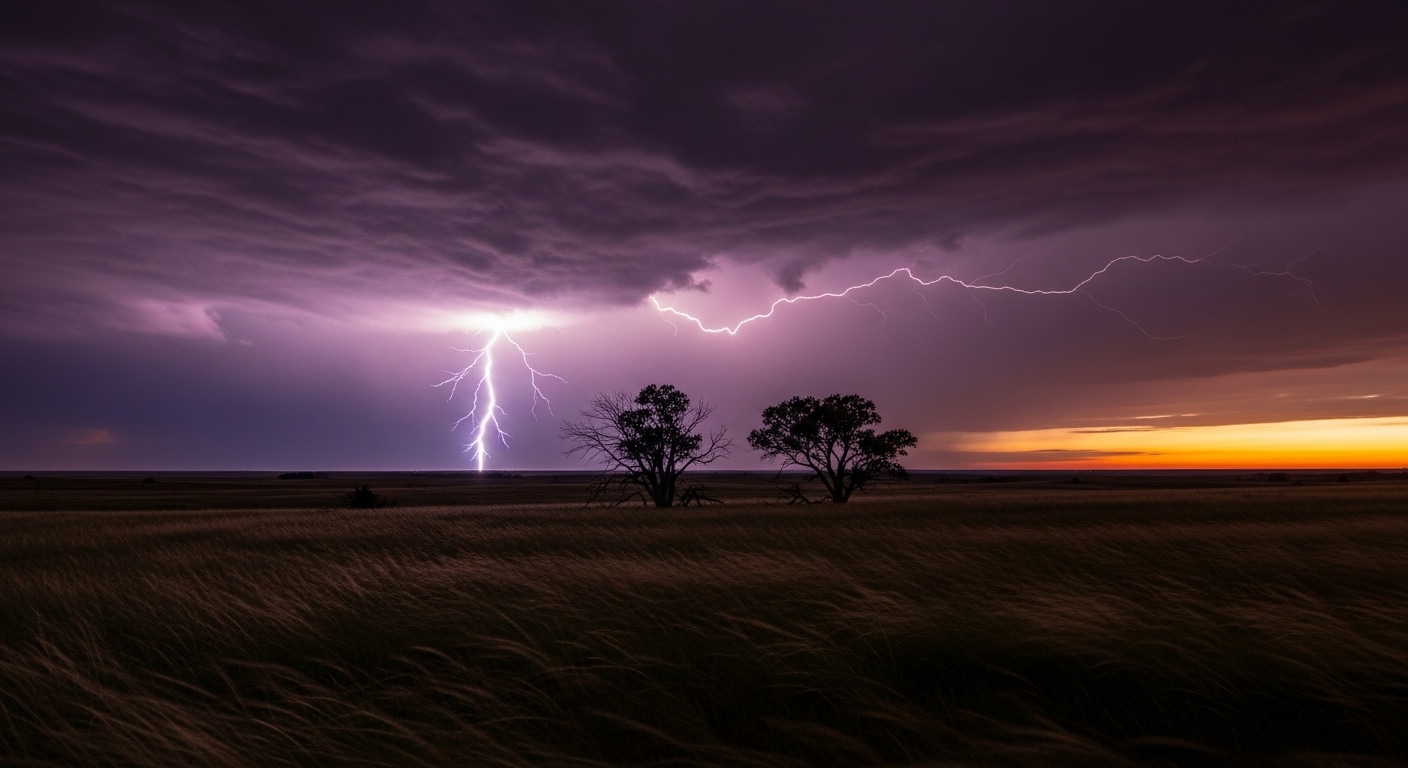
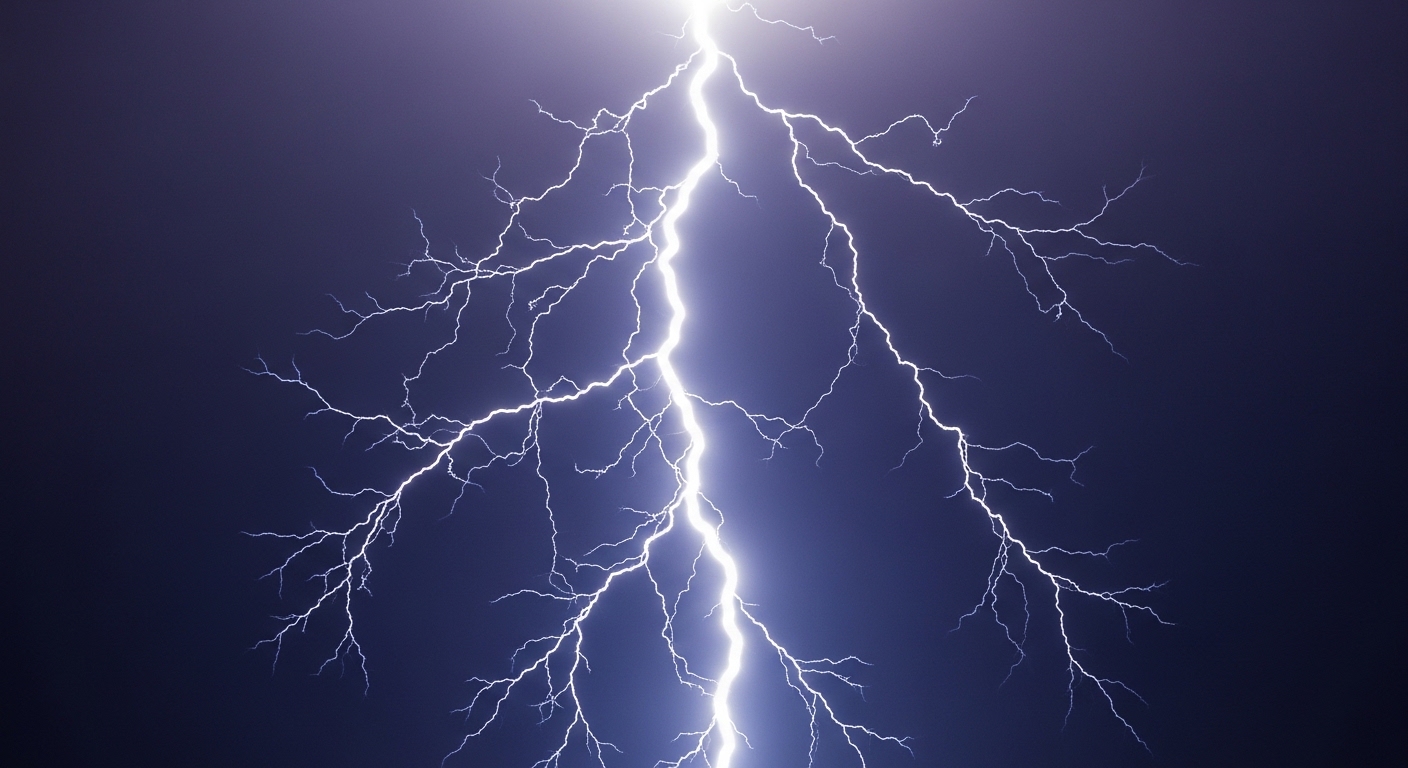
Lightning is an electrical discharge — a rapid equalization of charge between two regions that have built up a significant voltage difference. That difference usually develops between the base of a storm cloud and the ground, though cloud-to-cloud lightning is also common. The discharge happens in microseconds, releasing an enormous amount of energy in a channel of superheated plasma.
That plasma channel is the key detail most casual explanations skip. The air inside a lightning bolt is heated to temperatures that estimates suggest reach around 30,000 Kelvin — roughly five times hotter than the surface of the sun. That extreme heat causes the surrounding air to expand violently and almost instantaneously. The expansion is what creates the pressure wave we hear as thunder.
So lightning and thunder are not two separate events. They are the same event, perceived through two completely different physical mechanisms, arriving at your senses at very different speeds.
Why Light Wins Every Time — The Physics of the Gap
Speed of Light vs. Speed of Sound
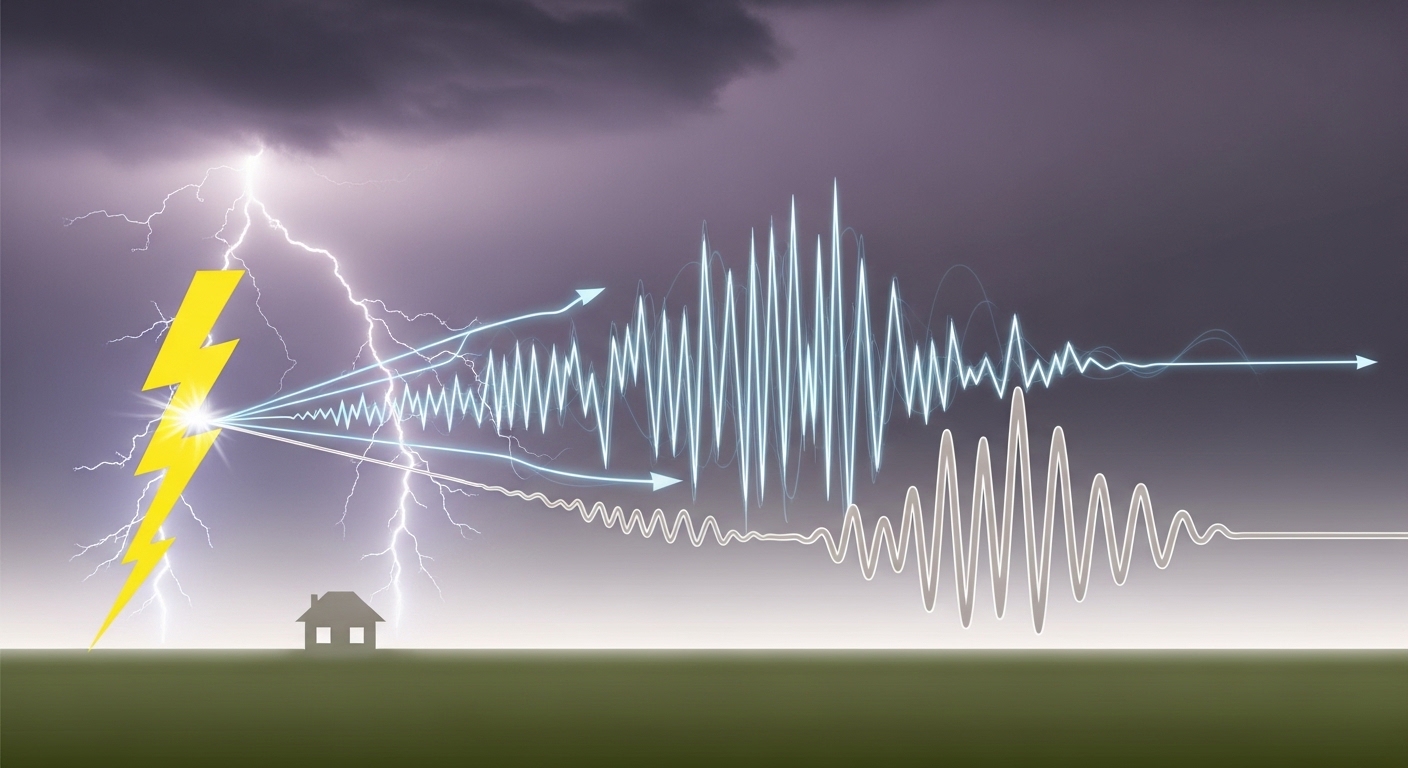
The speed of light in air is so close to its speed in a vacuum that the difference is negligible for everyday purposes. Sound, on the other hand, is a mechanical wave — it needs a medium to travel through, and it moves by pushing molecules into each other in a chain reaction. That process takes time. A lot more time.
The practical result: light from a lightning strike reaches your eyes almost instantaneously regardless of distance. Sound from the same strike travels at roughly one kilometer every three seconds (or one mile every five seconds). A storm five kilometers away means you see the flash and then wait about fifteen seconds before the thunder reaches you.
Sound needs to physically push air molecules across the entire distance between you and the strike. Light does not — it arrives before you have even registered that you are waiting.
The 'Count the Seconds' Rule — and Its Limits
The old trick of counting seconds between flash and thunder to estimate distance works reasonably well, but it has a real limitation people rarely mention. Temperature affects the speed of sound. On a cold day, sound travels slightly slower; on a hot, humid day, it moves a bit faster. The difference is not huge — estimates suggest the speed of sound varies by roughly 0.6 meters per second for every degree Celsius — but over long distances, it can shift your estimate by a kilometer or more.
Humidity has a smaller effect than most people expect. Dry air and humid air at the same temperature carry sound at nearly the same speed. The dominant variable is temperature, not moisture. Anyone who has tried to use the counting trick on a cold winter night and gotten a slightly off result has probably felt this without knowing why.
How Far Away Is That Storm? Reading the Delay
Using the Flash-to-Thunder Gap Practically
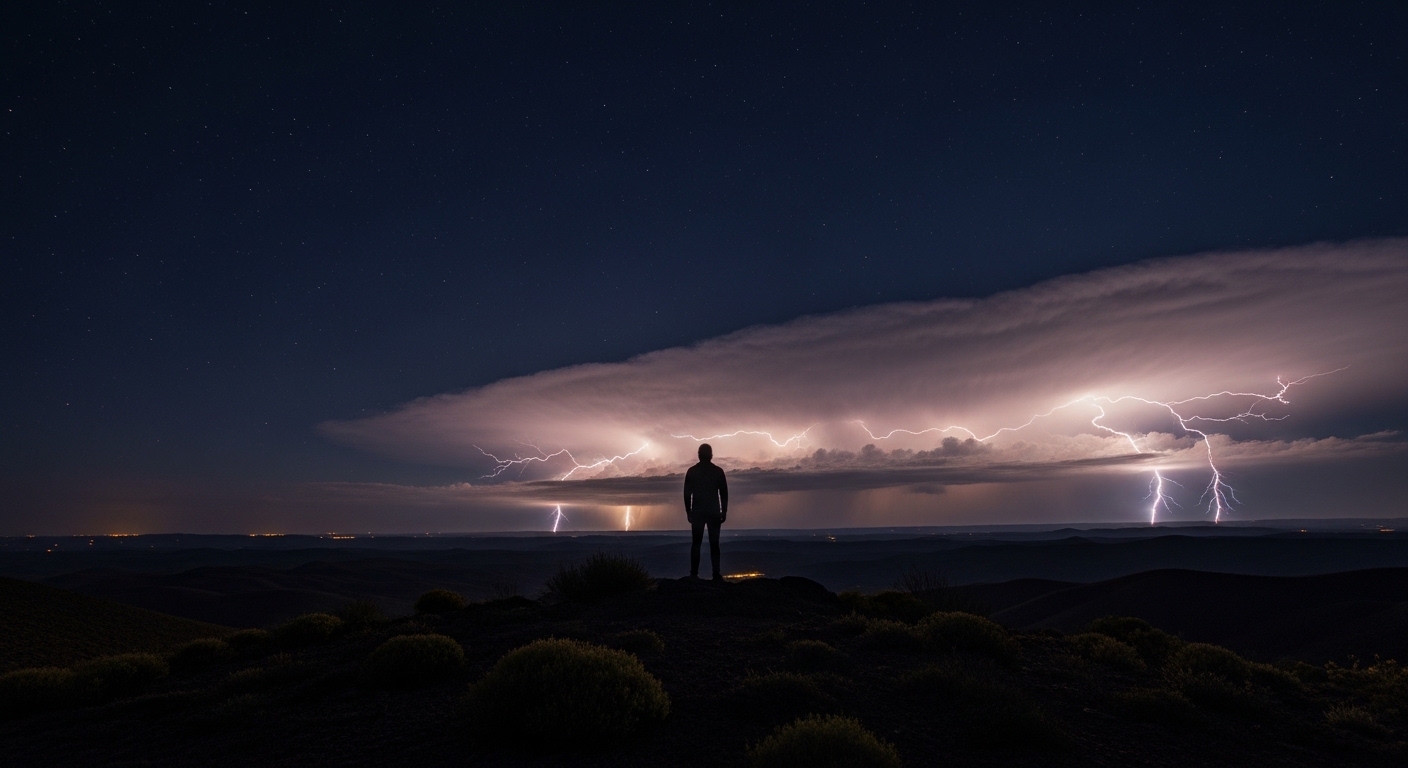
Three seconds between flash and thunder means the strike was roughly one kilometer away. Five seconds means about 1.7 kilometers. The five-second-per-mile version is a slightly rougher approximation that works well enough for most purposes. If you are counting and the gap is under ten seconds, the storm is close enough to take seriously.
Here is the counterintuitive part: a very loud crack of thunder that arrives almost simultaneously with the flash does not necessarily mean the strike was directly overhead. It means the closest point of the lightning channel was nearby — but a single bolt can be several kilometers long, and parts of it may have struck the ground much farther away. The sound you hear is a composite of the entire channel, with the nearest section arriving first and the rest trailing behind as a rumble.
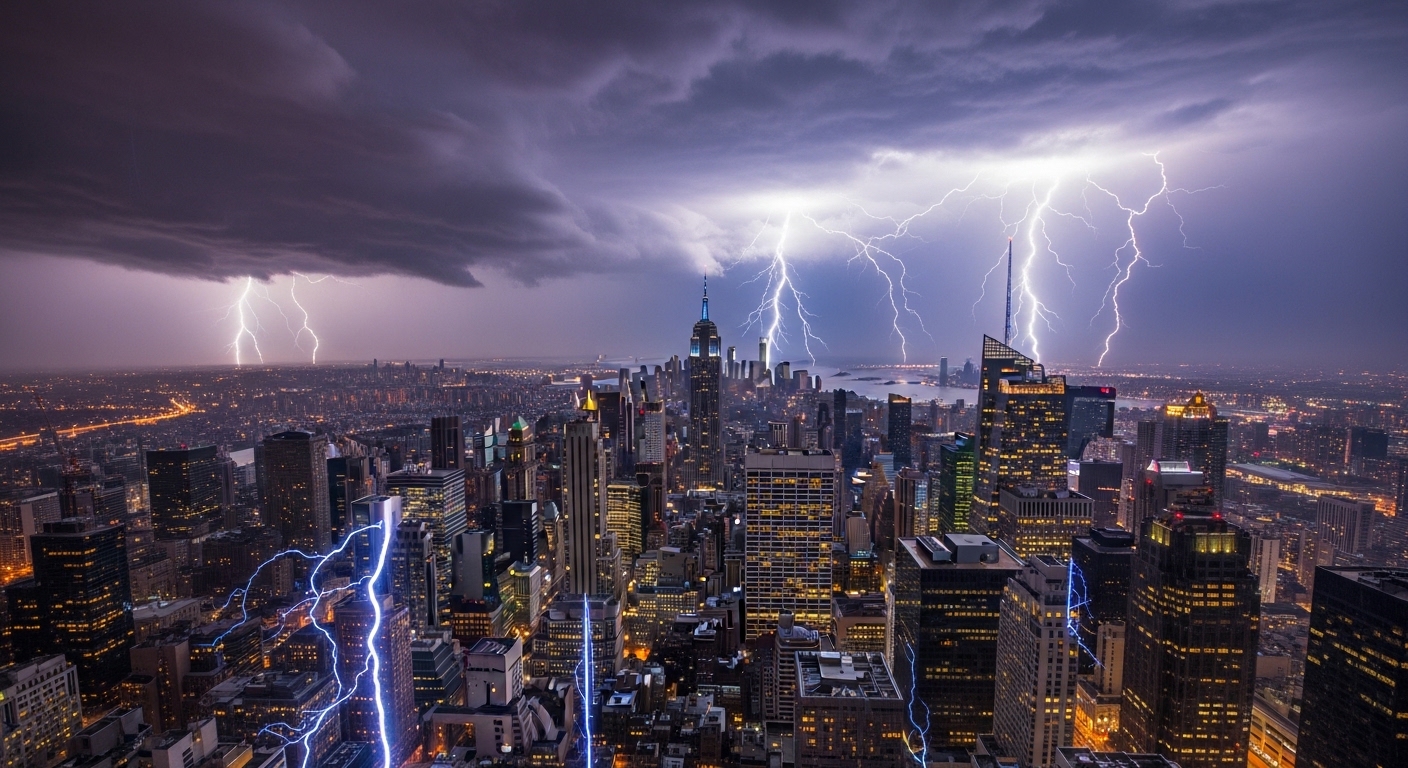
Thunder rumbles because a lightning bolt is not a point source — it is a kilometers-long channel, and each section of it sends sound to your ears at a slightly different time.
Why Thunder Has a Maximum Audible Range
Thunder rarely carries more than about 25 kilometers under normal atmospheric conditions. Beyond that distance, the sound waves spread out, lose energy, and get absorbed or refracted by the atmosphere. You can see lightning from a storm 100 kilometers away on a clear night, but you will hear nothing. The storm looks silent, almost peaceful — which is a strange inversion of the experience when you are standing underneath one.
Why the Sound of Thunder Varies So Much
Crack, Rumble, and Roll — What Shapes the Sound
A sharp crack means the closest part of the discharge channel was nearby and the sound reached you quickly and directly. A long, rolling rumble means you are hearing sound from different sections of a long bolt arriving at staggered intervals — sometimes spread over ten or twenty seconds. Echoes off hills, buildings, and cloud layers add further complexity.
The frequency content of thunder also shifts with distance. High-frequency components of the sound get absorbed by the atmosphere faster than low frequencies. A nearby strike sounds sharp and explosive. A distant one sounds like a low, rolling bass — the highs have been filtered out by the time the sound reaches you. This is the same reason distant music at an outdoor concert sounds muddy and bass-heavy compared to the full sound closer to the stage.
(Opinion: There is something genuinely underappreciated about thunder as an acoustic phenomenon. Most people treat it as a simple side effect of lightning, but the way it encodes information about distance, bolt length, and atmospheric conditions is almost elegant — a natural sonar pulse that most of us just wait through impatiently.)The Role of Terrain and Buildings
Flat, open terrain produces cleaner, shorter thunder because there is less for the sound to bounce off. Urban environments and mountain valleys create longer, more complex rumbles due to reflections. If you have ever noticed that thunder sounds different in the mountains versus at the beach, that is exactly why.
Frequently Asked Questions
Can you ever hear thunder without seeing lightning?
Yes — it is called 'heat lightning' when you see flashes without thunder, not the reverse. But you can occasionally hear thunder from a bolt that was obscured by clouds, terrain, or simply happened to be pointing away from you. The sound travels in all directions from the bolt, so it can wrap around obstacles that blocked your view of the flash.
Why does lightning sometimes appear to flicker or flash multiple times?
A single lightning event typically involves multiple return strokes — the initial discharge creates a channel, and then additional charges surge down the same path in rapid succession. Each return stroke is a separate flash, often happening within a fraction of a second. The flickering effect you see is those individual strokes, not a single continuous discharge.
Does the speed of light vary enough to affect the flash-to-thunder calculation?
No, not in any meaningful way. Light slows very slightly when passing through air compared to a vacuum — by less than 0.03 percent. At storm distances of a few kilometers, this difference amounts to nanoseconds. The calculation is entirely dominated by the much slower speed of sound, so the speed of light can be treated as instantaneous for this purpose.
The next time a storm rolls in and you start counting seconds, you are doing something humans have done for centuries — trying to measure the gap between two versions of the same violent event. What is strange is that the gap itself is a kind of accident of physics. If sound traveled even a fraction as fast as light, the whole experience of a thunderstorm would be fundamentally different: the crack and the flash arriving together, no warning, no distance to calculate. The delay is not a flaw in the system. It is the only reason we get any information at all about where the danger is.



Comments
Post a Comment