The Kardashev Scale Explained: Measuring Civilizational Energy
Right now, humanity uses roughly 2 × 10^13 watts of power annually — a number that sounds enormous until you realize the Sun radiates about 3.8 × 10^26 watts every second. We are, by the most generous calculation, a rounding error on a cosmic energy budget. That gap is exactly what the Kardashev Scale was designed to make you feel.

What Is the Kardashev Scale?
The Original Three-Type Framework
Soviet astronomer Nikolai Kardashev proposed the scale in 1964 as part of a serious scientific paper on the search for extraterrestrial intelligence. His core idea was elegant: instead of guessing at alien technology, measure civilizations by the one thing technology always requires — energy. The more energy a civilization can harness and use, the more capable it must be.
Kardashev defined three types. A Type I civilization controls all the energy available on its home planet. A Type II civilization harnesses the full output of its star. A Type III civilization commands the energy of an entire galaxy. Each step up represents roughly a tenfold increase in energy use — except it is not just tenfold, it is closer to ten billion times more at each jump, which is why the scale is logarithmic.
The original paper was not speculative fiction. Kardashev was trying to give radio astronomers a practical framework for deciding which signals from space might be artificial. A civilization transmitting at Type II or III energy levels would produce signals detectable across vast distances — which is a genuinely useful observational criterion.
How the Numbers Actually Work
Kardashev expressed the scale in terms of power in watts. Type I sits around 10^16 to 10^17 watts. Type II is approximately 4 × 10^26 watts — the Sun's full luminosity. Type III reaches roughly 4 × 10^37 watts, accounting for an entire galaxy's stellar output. These are not arbitrary round numbers; they reflect real physical quantities tied to planetary, stellar, and galactic energy scales.

How Does the Kardashev Scale Work in Practice?
Where Humanity Sits Today
Physicist Carl Sagan extended the scale to allow fractional values, which is where things get humbling. By his formula, humanity currently scores somewhere around 0.73. We are not yet a Type I civilization. We still rely heavily on fossil fuels stored underground rather than capturing live solar energy at scale, and our total energy consumption is a small fraction of what Earth's surface receives from the Sun each day.
We are a pre-Type I civilization — meaning we have not yet mastered our own planet's energy budget, let alone our star's.
Estimates suggest humanity could reach Type I status within the next few centuries if energy use continues to grow and renewable capture scales dramatically. That timeline depends enormously on political, economic, and technological factors that nobody can predict with confidence. But the physics is not the obstacle — the Sun delivers more energy to Earth's surface in one hour than humanity currently uses in a year.
What a Type II Civilization Would Actually Look Like
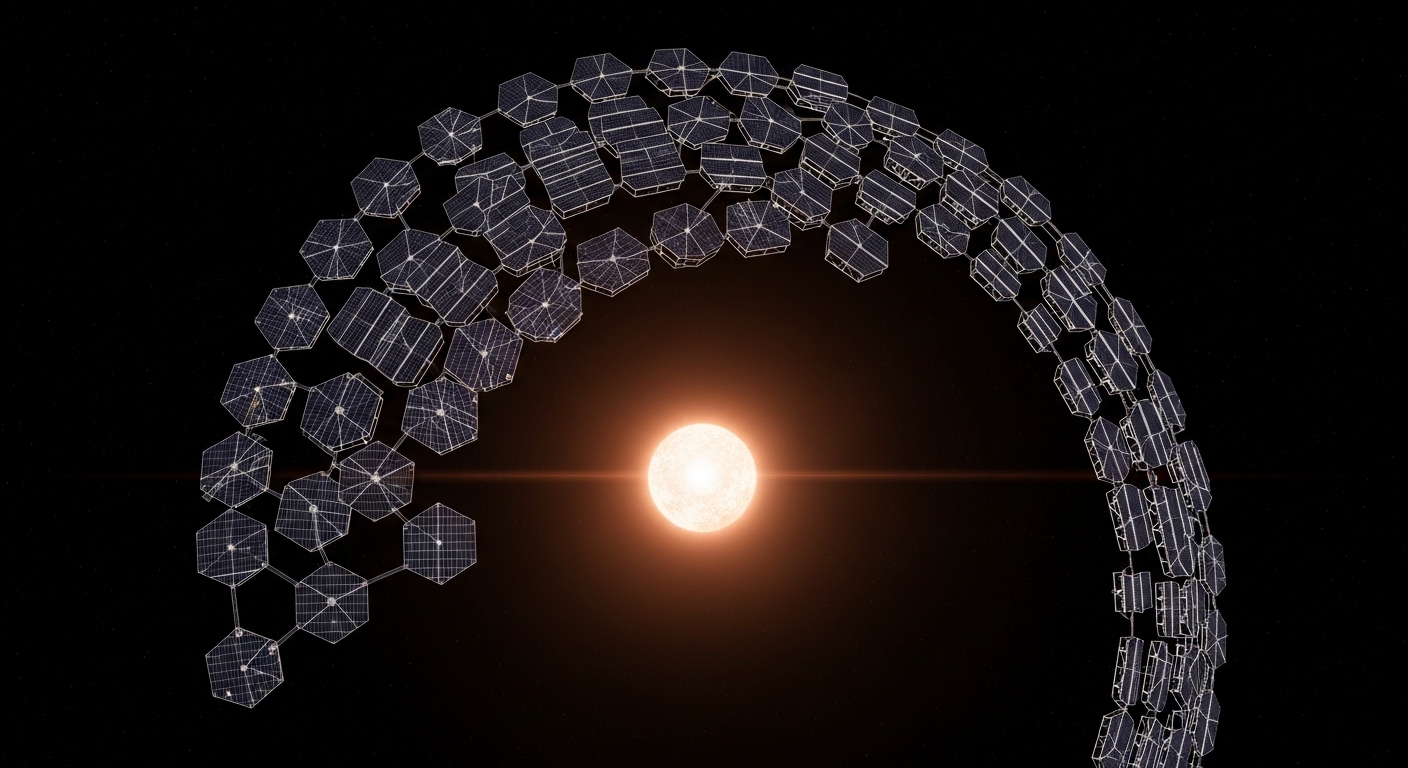
The most famous theoretical structure for a Type II civilization is the Dyson Sphere, proposed by physicist Freeman Dyson in 1960 — just a few years before Kardashev published his scale. A Dyson Sphere is not necessarily a solid shell around a star; Dyson himself described a 'swarm' of orbiting collectors. The engineering challenge is almost incomprehensible: you would need to disassemble planets to get enough raw material.
A more realistic intermediate step might be a partial Dyson swarm covering a fraction of the Sun's surface area. Even capturing one percent of solar output would give humanity roughly 3.8 × 10^24 watts — still orders of magnitude beyond current use, but physically achievable with sufficiently advanced materials science and orbital mechanics. Nobody has built one, but the concept does not violate any known laws of physics.
Astronomers have actually searched for Dyson Sphere signatures. The most famous candidate was the star KIC 8462852, nicknamed 'Tabby's Star,' which showed unusual irregular dimming patterns that briefly excited researchers. The leading explanation today involves dust clouds rather than megastructures, but the search itself illustrates how seriously some scientists take the Kardashev framework as an observational tool.
Extensions, Criticisms, and What the Scale Gets Wrong
Beyond Type III — and the Critics
Physicist Michio Kaku and others have proposed extending the scale to Type IV (energy of the observable universe) and even Type V (energy across multiple universes or dimensions). These extensions are firmly in the realm of speculation — there is no physical framework that makes them testable. They are interesting thought experiments, but Kardashev himself never endorsed them.
The scale's biggest weakness is that it only measures energy quantity, not how intelligently that energy is used. A civilization could theoretically score high on the Kardashev Scale while being extraordinarily wasteful. Some researchers have proposed alternative frameworks that factor in information processing, sustainability, or technological sophistication. The Kardashev Scale is a blunt instrument, not a complete theory of civilizational development.
Energy use is a proxy for capability, not a measure of wisdom — a distinction the original scale never tried to make.
There is also a survivability problem that the scale quietly sidesteps. The transition from Type 0 to Type I is arguably the most dangerous phase — it requires a civilization to develop planet-scale energy systems without destroying its own biosphere in the process. Several researchers have pointed out that this transition period, which we are currently living through, may be a common filter for civilizations in the universe.
The Counterintuitive Insight About Efficiency
Here is something the scale does not reward: a civilization that becomes dramatically more efficient might actually use less total energy while becoming more capable. Quantum computing, for instance, could allow information processing at a fraction of current energy costs. A civilization that solves its problems by getting smarter rather than burning more fuel would score lower on the Kardashev Scale while arguably being more advanced.
This is not just theoretical. Earth's wealthiest economies have already begun decoupling GDP growth from raw energy consumption — producing more economic output per unit of energy than previous generations. Whether that trend can scale to the civilizational level is an open question, but it suggests the Kardashev Scale may be measuring the wrong variable for the most sophisticated possible futures.
(Opinion: The Kardashev Scale is one of those ideas that reveals more about the assumptions of its era than about the universe itself. A 1964 Soviet physicist imagining civilizational progress as a linear ramp-up in energy consumption makes perfect sense in the context of postwar industrialism. But the most interesting civilizations might be the ones that learned to do more with less — and those would be invisible to Kardashev's framework entirely.)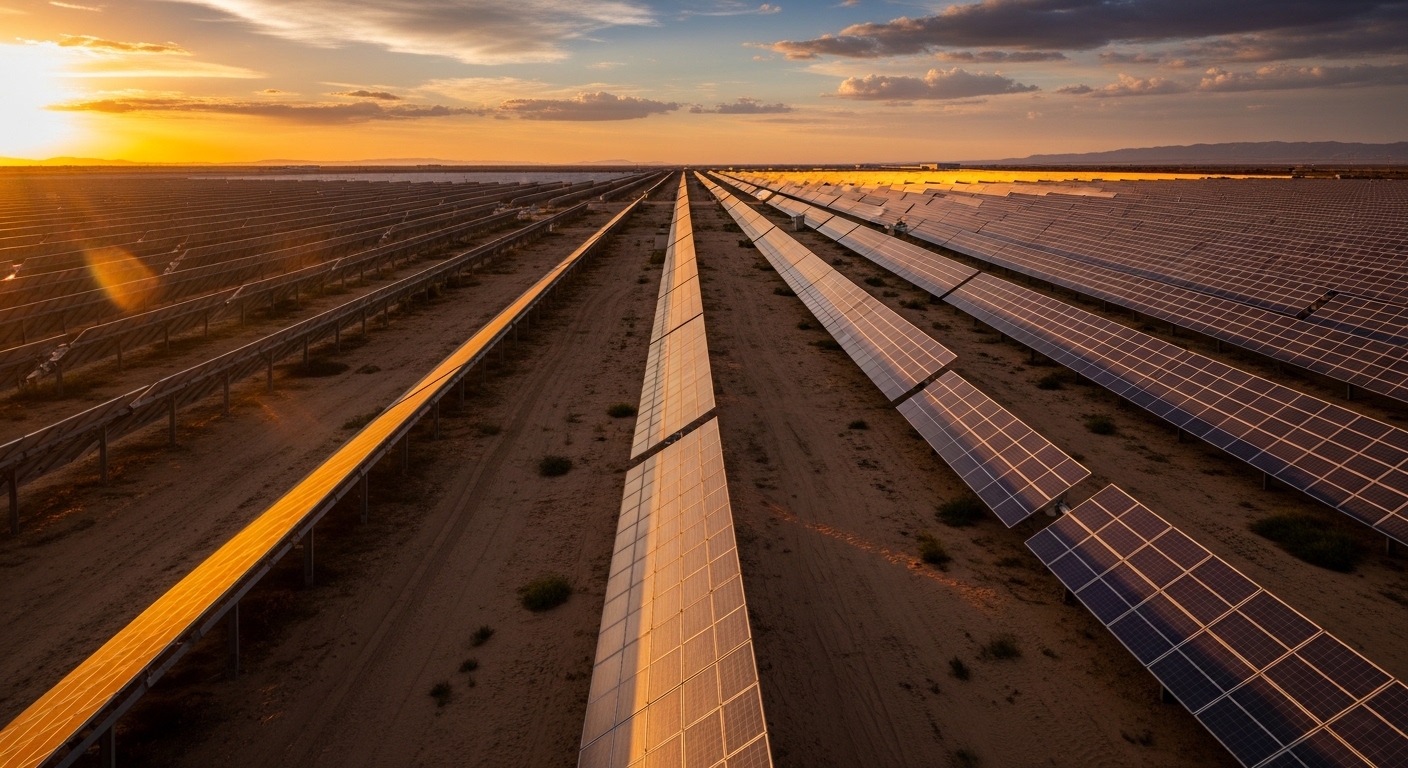
Why the Kardashev Scale Still Matters for the Search for Alien Life
Technosignatures and the Practical Application
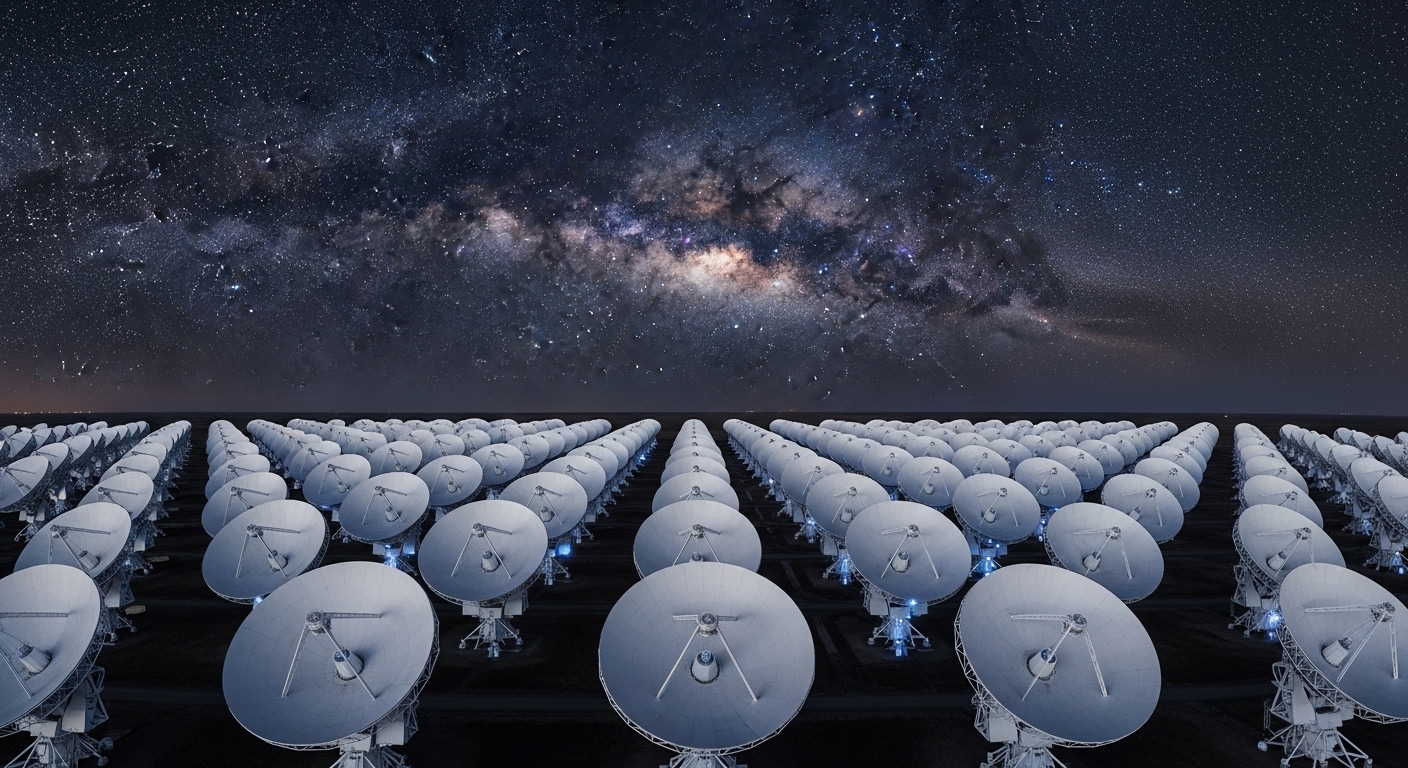
The scale's most durable contribution is not philosophical — it is observational. Astronomers searching for extraterrestrial intelligence use the concept of 'technosignatures': detectable signs of technology that would be visible from Earth. A Type II or III civilization would produce waste heat, unusual stellar dimming patterns, or radio emissions at energy levels that stand out against natural backgrounds.
The James Webb Space Telescope, while primarily designed for other purposes, has the sensitivity to detect some classes of technosignatures in nearby stellar systems. This is not its primary mission, but the capability exists. The Kardashev Scale gives researchers a way to prioritize what kinds of anomalies are worth investigating — which is exactly what Kardashev intended in 1964.
If we ever do detect a signal that appears artificial, the first question will be: what energy level is this civilization operating at? That question is the Kardashev Scale in action. It converts a philosophical puzzle — 'are we alone?' — into an engineering measurement problem, which is the kind of problem science is actually equipped to answer.
What Silence Might Mean
The fact that we have not detected any Type II or III signatures yet is itself significant. Either such civilizations are extraordinarily rare, they use energy in ways we cannot detect, or they tend not to survive long enough to reach those levels. The Kardashev Scale, combined with the Fermi Paradox, suggests a disturbing possibility: the universe may be full of civilizations that never made it past the transition we are currently navigating.
Frequently Asked Questions
Is humanity close to becoming a Type I civilization?
By Carl Sagan's extended formula, humanity currently scores around 0.73 on the Kardashev Scale. Reaching Type I would require harnessing all available energy on Earth — including full-scale solar, geothermal, and atmospheric capture. Estimates suggest this could take anywhere from one to several centuries, depending on technological and political progress. We are on the path, but we are not close by any meaningful measure.
Could a civilization skip directly to Type III?
There is no physical law preventing it, but the practical barriers are enormous. Colonizing and engineering at galactic scales requires solving problems in propulsion, materials science, and communication that are currently beyond our understanding. Most researchers assume civilizations would progress through the types sequentially, since each level provides the energy and capability needed to attempt the next. A direct jump would require technologies we cannot currently even theorize.
Why does the Kardashev Scale ignore information or intelligence as a measure?
Kardashev designed the scale specifically for radio astronomy — he needed a measurable, observable quantity, and energy output fits that requirement. Intelligence and information processing are much harder to detect from a distance. Some researchers have proposed alternative scales that incorporate these factors, but none has achieved the same widespread use. The Kardashev Scale endures precisely because it is simple and tied to something physically measurable.
The Kardashev Scale is ultimately a mirror. It does not tell us much about alien civilizations we have never met — it tells us exactly where we stand: capable enough to imagine stellar-scale engineering, not yet capable enough to survive our own planet's energy transition without serious risk. The most unsettling reading of the scale is not that Type III civilizations exist somewhere out there. It is that the gap between where we are and where we need to be may be the hardest part of the entire journey — and that every civilization in the universe has had to cross it.



Comments
Post a Comment