Why Is Tire Pressure So Important for Your Car's Safety?
A tire running at just 6 PSI below its recommended pressure can increase stopping distance by a measurable margin — and most drivers have no idea their tires are that low. Tire pressure sits in that awkward category of things everyone knows they should check and almost nobody actually does. But the consequences of ignoring it go well beyond a slightly sluggish ride. Pressure affects how your car steers, how quickly it stops, how much fuel it burns, and whether a tire survives a highway blowout or doesn't.
What Tire Pressure Actually Is — and Why the Number Matters
PSI: The Unit Behind the Spec
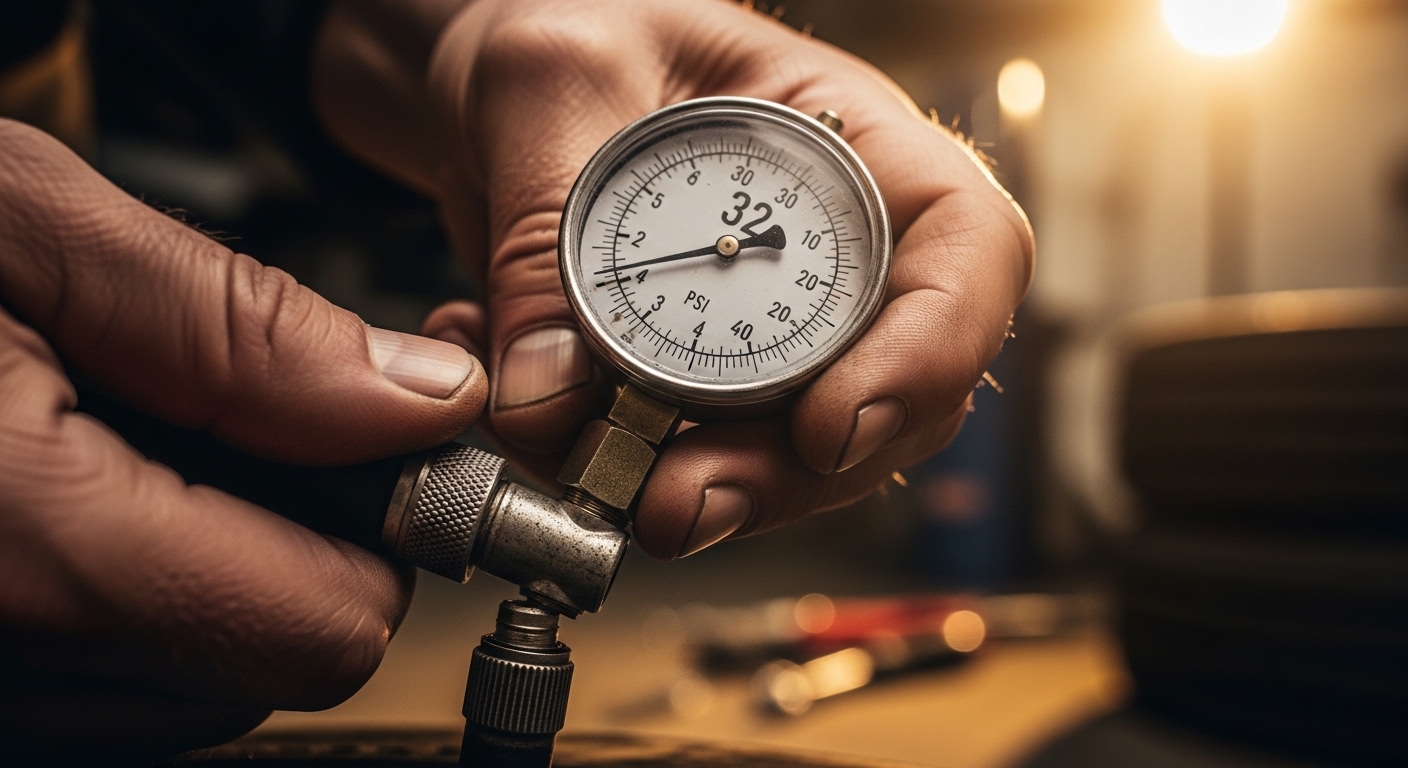
Tire pressure is measured in PSI — pounds per square inch — and it refers to the amount of air compressed inside the tire. Your car's manufacturer specifies an exact target range, usually printed on a sticker inside the driver's door jamb. That number is not a suggestion. It's an engineering calculation based on your vehicle's weight, suspension geometry, and expected load distribution.
Here's the part most people get wrong: the number on the tire sidewall is not the recommended pressure. It's the maximum the tire can safely hold. Running your tires at that maximum is actually a bad idea — it makes the contact patch smaller, reduces grip, and causes the center of the tread to wear out faster than the edges.
The right number is on that door jamb sticker. Front and rear tires often have different specs, especially on heavier vehicles or those with rear-biased weight distribution.
How Temperature Changes Everything
Tire pressure isn't static — it shifts with temperature. For roughly every 10-degree Fahrenheit drop in ambient temperature, tire pressure falls by about 1 PSI. That's why tires that were fine in September start triggering dashboard warnings in November. Anyone who has walked out to a flat-looking tire on a cold morning and found it perfectly normal by afternoon has experienced this firsthand.
Tire pressure can drop 1 PSI for every 10-degree Fahrenheit temperature fall — meaning a tire that was correctly inflated in summer may be dangerously low by mid-winter without a single slow leak.
How Low Tire Pressure Affects Your Car's Handling and Braking
The Contact Patch Problem
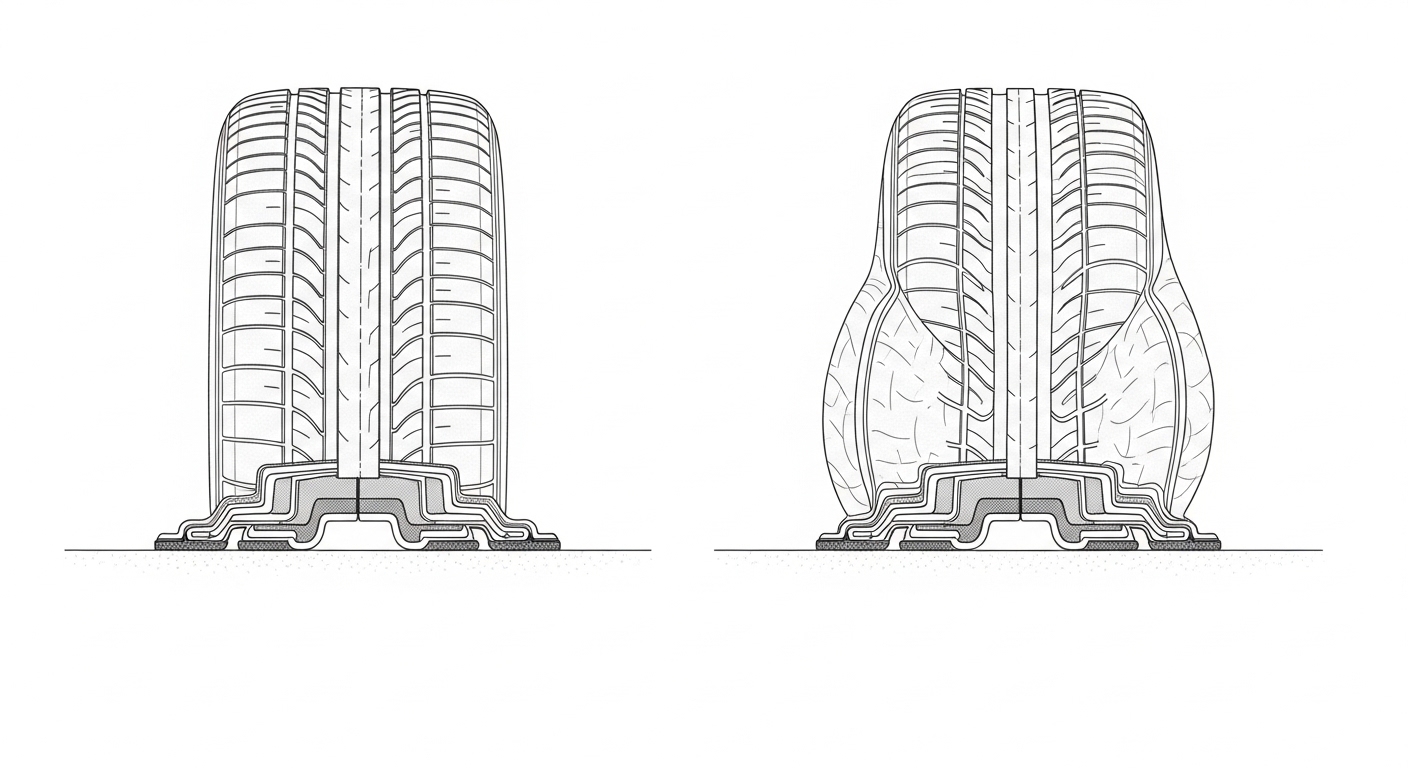
Every tire has a 'contact patch' — the small area actually touching the road at any given moment. It's roughly the size of a human hand. Proper inflation keeps that patch shaped correctly, distributing the vehicle's weight evenly across the tread. When pressure drops, the tire deforms more under load, the patch shape changes, and the edges bear more stress than the center.
In practical terms, this means reduced cornering stability. The tire flexes more than it should, which introduces a slight lag between steering input and vehicle response. On dry roads at normal speeds, you might not notice. In an emergency lane change at highway speed, that lag matters enormously.
Braking Distance — the Statistic That Should Alarm You
Research from various automotive safety organizations suggests that significantly underinflated tires — around 25% below recommended pressure — can noticeably extend braking distances. The exact figures vary by vehicle, speed, and road surface, but the directional finding is consistent: less pressure means longer stops. At 60 mph, even a small increase in stopping distance can be the difference between a near-miss and a collision.
Overinflation has the opposite problem. Too much pressure makes the tire rigid, reduces the contact patch, and causes the car to skip or bounce over surface irregularities rather than absorbing them. This is especially dangerous on wet roads where the tire needs to maintain consistent contact to channel water away from the tread.
The Blowout Risk — What Actually Causes Tires to Fail at Speed
Heat Buildup Is the Real Culprit
A tire rolling down the highway flexes thousands of times per minute. Each flex generates heat. A properly inflated tire manages that heat within acceptable limits. An underinflated tire flexes more with each rotation, generating significantly more heat — and heat is what kills tires.
The internal structure of a tire is a composite of rubber, fabric cords, and steel belts. Sustained overheating degrades the adhesion between these layers. Eventually, the layers separate. When that happens at 70 mph, the result is a sudden, violent blowout — not the slow hiss of a nail puncture, but an explosive decompression that can send a vehicle swerving across lanes in under a second.
This is why highway driving on underinflated tires is categorically more dangerous than city driving. The sustained high-speed rotation generates heat continuously, with no traffic-light stops to let things cool down.
The Spare Tire Nobody Checks
Here's an operational detail that almost every tire-pressure article skips: spare tires — especially the compact 'donut' spares — lose pressure while sitting in the trunk, unused, for years. Many drivers discover their spare is flat only after they've already pulled over with a blowout. Spare tires should be checked at least once a year, and their recommended pressure (often printed on the sidewall since they're designed for temporary use) is frequently higher than a standard tire — sometimes 60 PSI or more.
The spare tire sitting in your trunk right now has probably never been pressure-checked since the car left the factory. It may be completely flat.

How Tire Pressure Affects Fuel Economy and Tire Lifespan
Rolling Resistance and What It Costs You
An underinflated tire deforms more as it rolls, which increases rolling resistance — the force your engine has to overcome to keep the car moving. The U.S. Department of Energy has noted that underinflation is a meaningful contributor to reduced fuel economy, though exact figures depend on how low the pressure is and how the vehicle is driven. Over a full year of driving, the difference in fuel costs can add up to a noticeable amount.
Tire wear is the other financial hit. Underinflated tires wear the outer edges of the tread faster. Overinflated tires wear the center strip. Either way, you're replacing tires earlier than you should. Given that a set of quality tires can cost several hundred dollars, keeping them at the right pressure is genuinely one of the highest-return maintenance habits you can build.
TPMS — Helpful, But Not a Substitute for Checking
Most cars sold in the U.S. after 2008 include a Tire Pressure Monitoring System (TPMS), which triggers a dashboard warning when pressure drops significantly below the recommended level. The catch: TPMS typically alerts you when a tire is already 25% underinflated. That's well past the point where handling and fuel economy are already affected. The light is a last resort, not a maintenance tool.
(Opinion: The TPMS warning light has probably made drivers slightly worse about proactively checking tire pressure, not better. When a dashboard light becomes the de facto reminder system, the habit of actually checking with a gauge tends to disappear entirely.)
FAQ
How often should I check my tire pressure?
Once a month is the standard recommendation, and always before a long road trip. Check pressure when the tires are 'cold' — meaning the car has been parked for at least three hours — because driving heats the air inside and temporarily raises the reading. A morning check before your first drive gives the most accurate result.
Can I just eyeball whether a tire looks low?
Not reliably. A tire can be 10–15 PSI below its recommended pressure and still look visually normal to most people. The sidewall bulge that signals obvious underinflation only becomes visible at more severe pressure loss. The only accurate method is a pressure gauge — they cost a few dollars and fit in a glove compartment.
Does tire pressure affect all-wheel drive vehicles differently?
Yes, and it matters more than most AWD owners realize. AWD systems rely on all four tires rotating at closely matched speeds. A significantly underinflated tire has a slightly smaller effective rolling diameter, which causes it to rotate faster than the others. Over time, this can stress the AWD drivetrain components — some manufacturers explicitly warn against running mismatched tire pressures for this reason.
Tire pressure is one of those maintenance tasks where the gap between 'how easy it is' and 'how rarely people do it' is almost embarrassing. A gauge costs less than a coffee. The check takes two minutes. And yet the average car on the road is running on at least one tire that's meaningfully underinflated. The physics don't care about good intentions — a tire generating excess heat at highway speed doesn't wait for a convenient moment to fail.



Comments
Post a Comment