Digital Immortality: Exploring the Ethics of AI Recreating Loved Ones
A startup in South Korea made headlines when it helped a grieving mother speak to a digital recreation of her deceased daughter — a seven-year-old who had died from a rare illness. The interaction was filmed, broadcast on television, and watched by millions. Half the viewers cried. The other half were deeply unsettled. That split reaction tells you almost everything you need to know about digital immortality.

What Is Digital Immortality — and What Can AI Actually Do?
Beyond Simple Chatbots
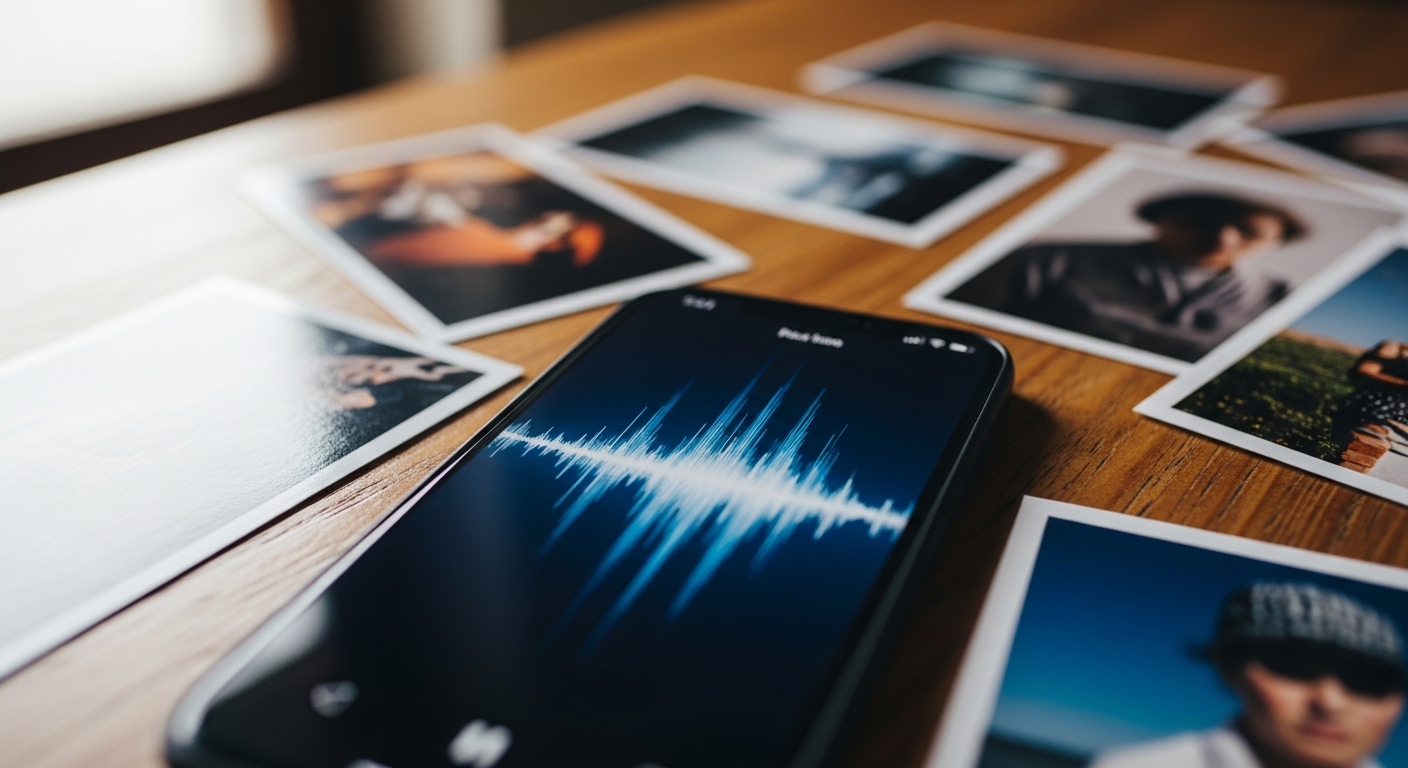
Digital immortality refers to the idea of preserving a person's identity, personality, and voice in a form that persists — and responds — after death. This is not science fiction anymore. Current AI systems can synthesize a person's voice from a few hours of audio, generate realistic video of their face from photographs, and train a language model on their texts, emails, and social media posts to approximate how they communicated.
The result is something that can hold a conversation, answer questions in a familiar tone, and even crack jokes the original person might have made. Whether that constitutes 'them' in any meaningful sense is a different question entirely. But the technical capability is real, and it is advancing quickly.
Companies offering versions of this service have existed for several years. Some focus on voice cloning for bereaved families. Others build interactive chatbots trained on a deceased person's digital footprint. A few are working toward full audiovisual avatars that can appear in video calls. The gap between 'eerily convincing' and 'indistinguishable' is narrowing faster than most people expected.
The Surprising Role of Data Volume
Here is a detail most overview articles skip: the quality of a digital recreation depends heavily on how much data the person left behind. A prolific blogger or podcaster who spent a decade online leaves a rich training set. Someone who rarely used digital communication leaves almost nothing to work with. This means digital immortality, at least in its current form, is inherently biased toward the digitally verbose — and toward younger generations who grew up documenting their lives online.
How AI Reconstructs a Person's Identity
Voice, Face, and Personality — Three Separate Problems
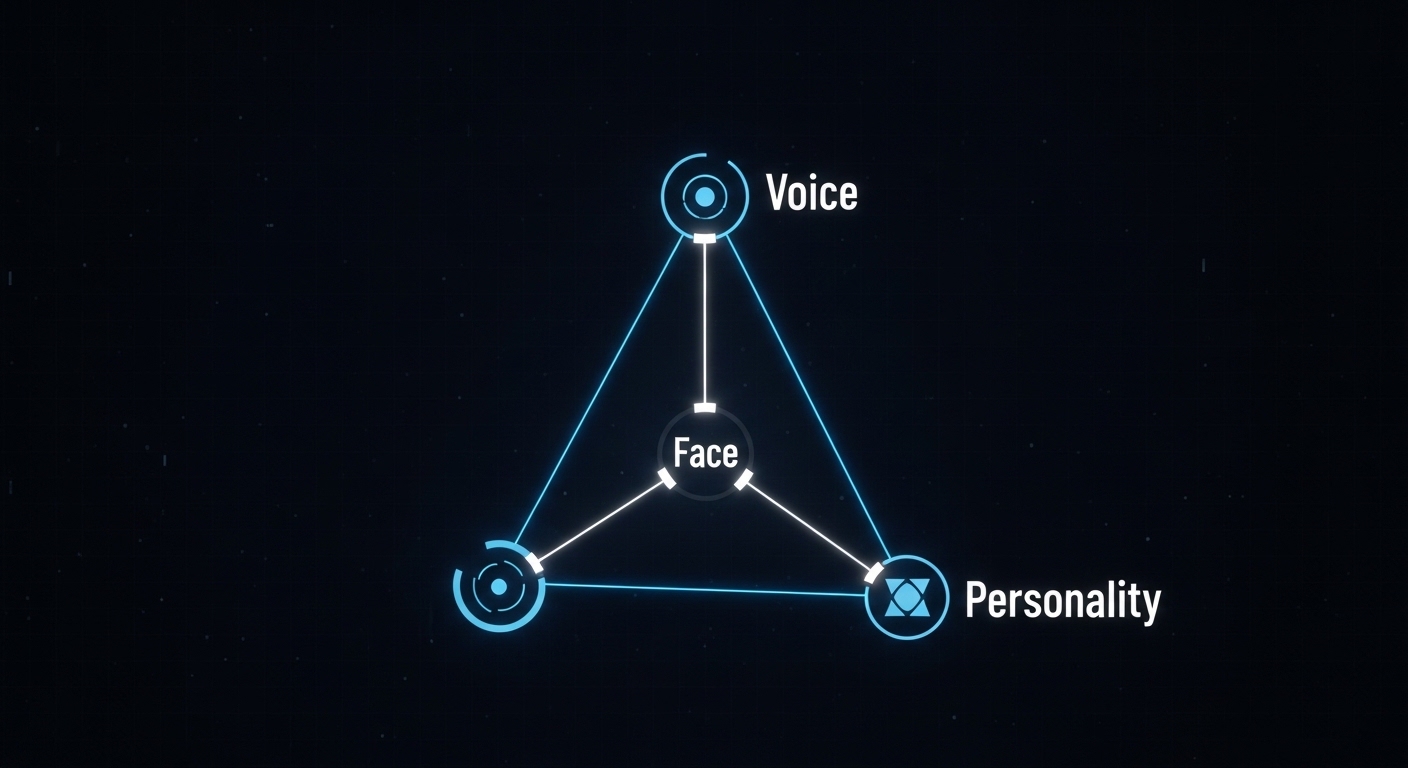
Reconstructing someone digitally is not one task — it is three distinct technical challenges that have to be solved and then stitched together. Voice cloning uses neural audio synthesis to replicate timbre, cadence, and speech patterns. Facial animation relies on generative video models trained on existing footage or photographs. Personality modeling draws on large language models fine-tuned on the individual's written output.
Each layer introduces its own failure modes. A voice clone might sound right but use phrasing the person would never have chosen. A facial avatar might look accurate in still frames but move with subtle wrongness in motion — what researchers in human-computer interaction sometimes call the 'uncanny valley' effect, where near-realism becomes more disturbing than obvious artificiality.
The uncanny valley is not just an aesthetic problem here — it is an ethical one. A recreation that feels almost right but occasionally wrong may be more psychologically damaging to a grieving person than no recreation at all.
Consent and the Dead
One of the thorniest engineering-adjacent problems is consent. Most people who have died in the last decade did not leave explicit instructions about whether their data could be used to train an AI model. Legal frameworks around this are still catching up. In most jurisdictions, data privacy rights do not clearly extend past death, which means a company — or a family member — can technically use a deceased person's digital footprint without their permission.
Some people find this untroubling. Others consider it a fundamental violation. The person being recreated cannot object, update their preferences, or ask to be taken offline. That asymmetry is not a minor footnote — it is the central ethical fault line of the entire field.
Where Digital Immortality Is Already Being Used
Grief Tech and Memorial Services
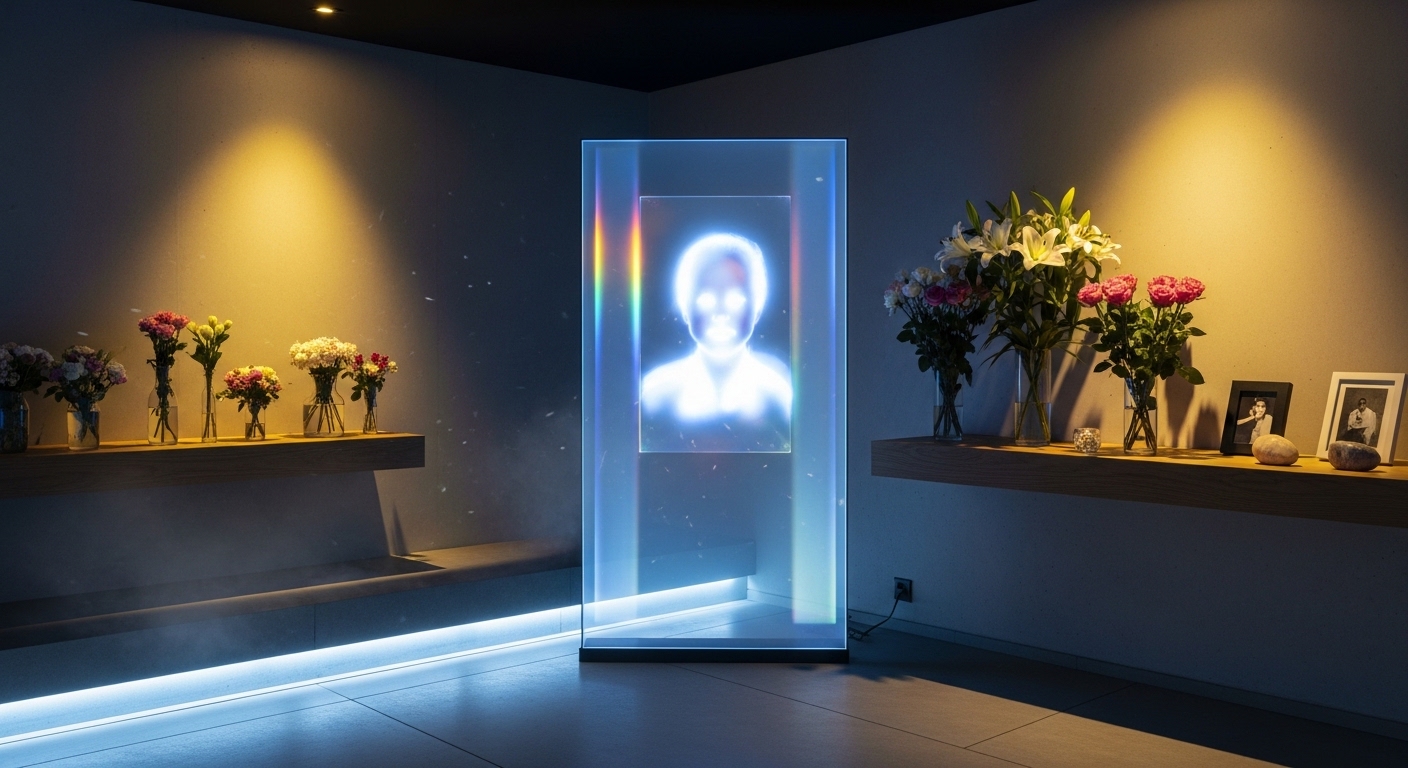
The most immediate application is grief support. Several companies now offer services that let families create interactive memorials — not static photo albums, but systems that can respond to questions, share 'memories,' and simulate conversation. The South Korean television case mentioned earlier is one of the more dramatic public examples, but quieter versions of this happen privately every day.
Grief counselors are divided on whether this helps or hinders the mourning process. Some argue that interacting with a digital recreation can provide closure, particularly for people who did not get to say goodbye. Others worry it creates a psychological dependency that prevents genuine acceptance of loss — that it is, in effect, a way of refusing to grieve.
Celebrity and Historical Figures
Digital recreations are not limited to private grief. Several entertainment companies have used AI to recreate deceased performers for new projects — generating new dialogue, restoring degraded footage, or inserting historical figures into documentary content. The estate of a well-known musician might license their likeness for a virtual concert. A documentary filmmaker might use AI to animate a historical figure speaking words they actually wrote.
This raises a different set of questions. A private family recreating a loved one affects a small circle of people. A corporation recreating a public figure for commercial gain affects public memory, cultural legacy, and potentially the financial interests of living relatives. The scale changes the ethics considerably.
When a corporation owns the digital ghost of a public figure, questions of authenticity become questions of power — who controls how someone is remembered, and who profits from it.
Why the Ethics of AI Recreating Loved Ones Are Genuinely Hard
The Grief Argument and Its Limits
The most sympathetic case for digital immortality is straightforward: if it helps a grieving person, why not allow it? Humans have always created objects and rituals to maintain connection with the dead — photographs, letters, gravestones, religious practices. A digital recreation is, in this view, just a more sophisticated version of keeping someone's voicemail greeting saved on your phone because you cannot bear to delete it.
Anyone who has scrolled through a deceased person's social media profile knows that strange, suspended feeling — the posts still there, the birthday reminders still firing, the account still technically 'alive.' Digital immortality is partly a response to a grief experience that is already happening, whether we design for it or not.
But the grief argument has limits. A photograph does not talk back. A voicemail does not adapt its responses based on what you say. An interactive AI recreation does both, and that interactivity introduces a qualitatively different kind of relationship — one where the living person may start to treat the simulation as if it has genuine continuity with the person who died. That is not obviously harmless.
Who Gets to Decide?
Families often disagree about whether a deceased person would have wanted to be recreated. A spouse might want it; an adult child might find it disturbing. A person's closest friend might know they would have hated the idea. Without explicit prior consent, there is no clean answer. And even with consent, questions remain: consent to what, exactly? To a voice clone? To an interactive chatbot? To a full avatar that can appear in video calls indefinitely?
The granularity of consent matters enormously here, and current frameworks are not built for it. Most people who have thought about their digital afterlife at all have done so in vague terms. The legal and ethical infrastructure needed to handle this with real precision does not yet exist.
(Opinion: There is something worth defending in the idea that death is final — not as a morbid conceit, but as a social and psychological reality that shapes how we treat the living. A world where the dead are always potentially reachable might subtly erode our sense of urgency about the relationships we have right now.)
Frequently Asked Questions
Is it legal to create an AI recreation of a deceased person?
In most countries, the law does not clearly prohibit it, but it does not clearly permit it either. Data privacy rights generally expire at death in many jurisdictions, and personality rights — which govern commercial use of someone's likeness — vary significantly by country and state. Some places have specific laws about posthumous likeness rights, particularly in the entertainment industry. The legal landscape is evolving rapidly, and what is permissible today may be regulated differently within a few years.
Can an AI recreation ever truly capture someone's personality?
Current AI can approximate communication style, vocabulary, and recurring topics with surprising accuracy — especially when trained on a large volume of the person's writing or speech. But personality involves things that rarely appear in digital data: how someone reacted under pressure, how they behaved in private, how they changed over time. A recreation trained on public output will reflect a curated version of the person, not the full one. It is a plausible impression, not a copy.
Could interacting with a digital recreation of a loved one make grief worse?
Research on this is still limited, and mental health professionals hold genuinely different views. Some grief therapists report that clients find brief, structured interactions helpful for processing loss. Others express concern that ongoing access to a responsive simulation can delay acceptance and create a form of complicated grief. The answer likely depends heavily on the individual, the quality of the recreation, and how the interaction is framed — which is exactly why this probably should not be a purely commercial decision.
The deeper discomfort with digital immortality is not really about the technology. It is about what we owe the dead, what we owe the living who are grieving, and whether a convincing simulation of presence is the same thing as presence at all. Those are not questions AI can answer — and the fact that we are building the technology before we have answered them is, depending on your disposition, either a sign of human ingenuity or a warning worth taking seriously.



Comments
Post a Comment