The Science Behind Silence: How Active Noise Cancellation Works
A pair of headphones that makes a roaring jet engine disappear is not a magic trick — it is physics working in real time, dozens of times per millisecond. Active noise cancellation (ANC) is one of those technologies that sounds almost too clever to be real, yet the core principle is surprisingly simple once you see it. The hard part, it turns out, is not the idea — it is the engineering required to make it work fast enough to fool your ears.

What Active Noise Cancellation Actually Is
The Basic Principle: Sound Against Sound
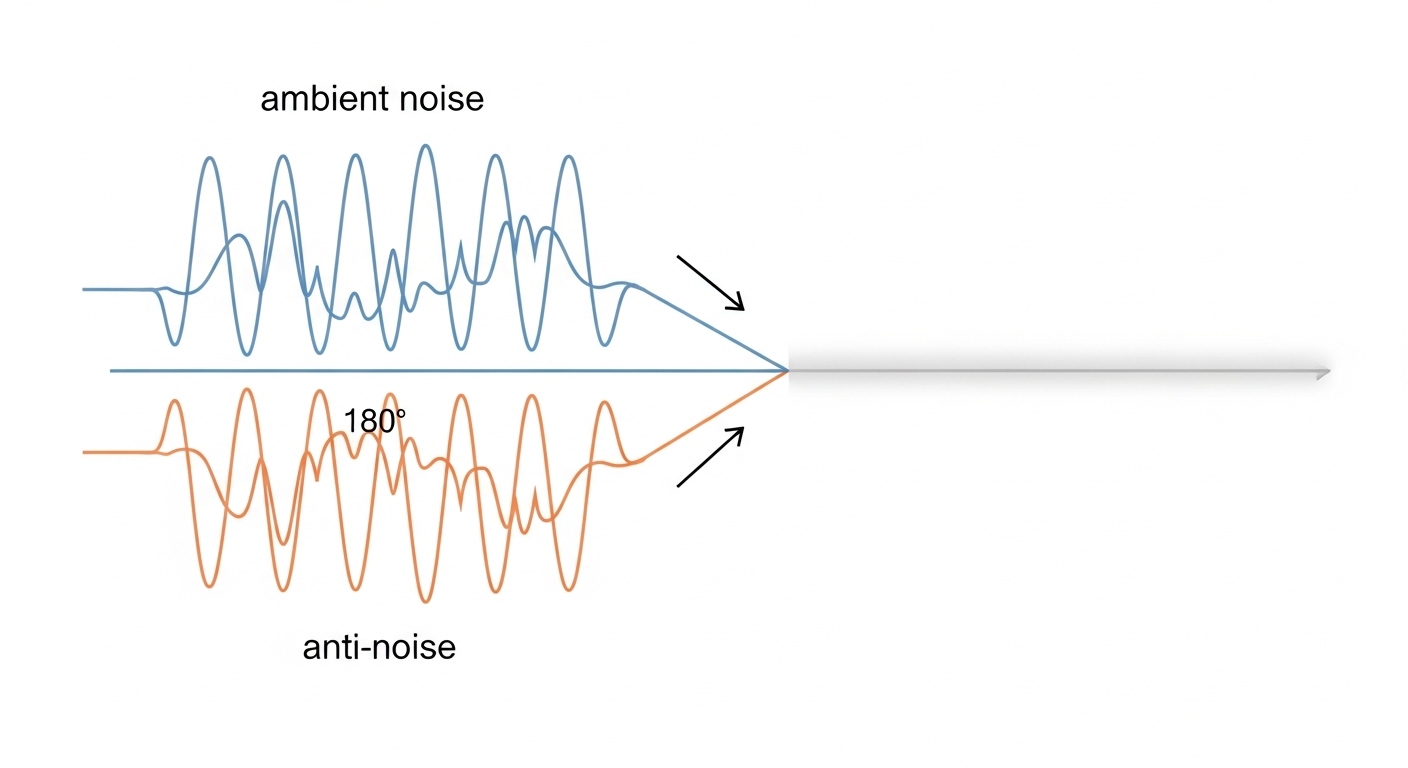
Sound is a pressure wave — a series of compressions and rarefactions moving through air. Every sound wave has a peak (high pressure) and a trough (low pressure). If you create a second wave that is an exact mirror image of the first — peaks aligned with troughs, troughs aligned with peaks — the two waves cancel each other out. This is called destructive interference, and it is the entire foundation of ANC.
The concept was first patented in the 1930s by Paul Lueg, a German physician and inventor. His idea was theoretically sound, but the electronics of the era could not execute it fast enough to be useful. It took decades of advances in microprocessors and signal processing before ANC became practical for consumer products.
What makes this tricky is timing. Sound travels at roughly 343 meters per second, which means the cancellation signal has to be generated and delivered to your ear canal within microseconds of the original noise arriving. Miss that window, and instead of silence, you get a muddled mess.
How Active Noise Cancellation Works — Step by Step
Feed-Forward vs. Feed-Back: Two Different Approaches
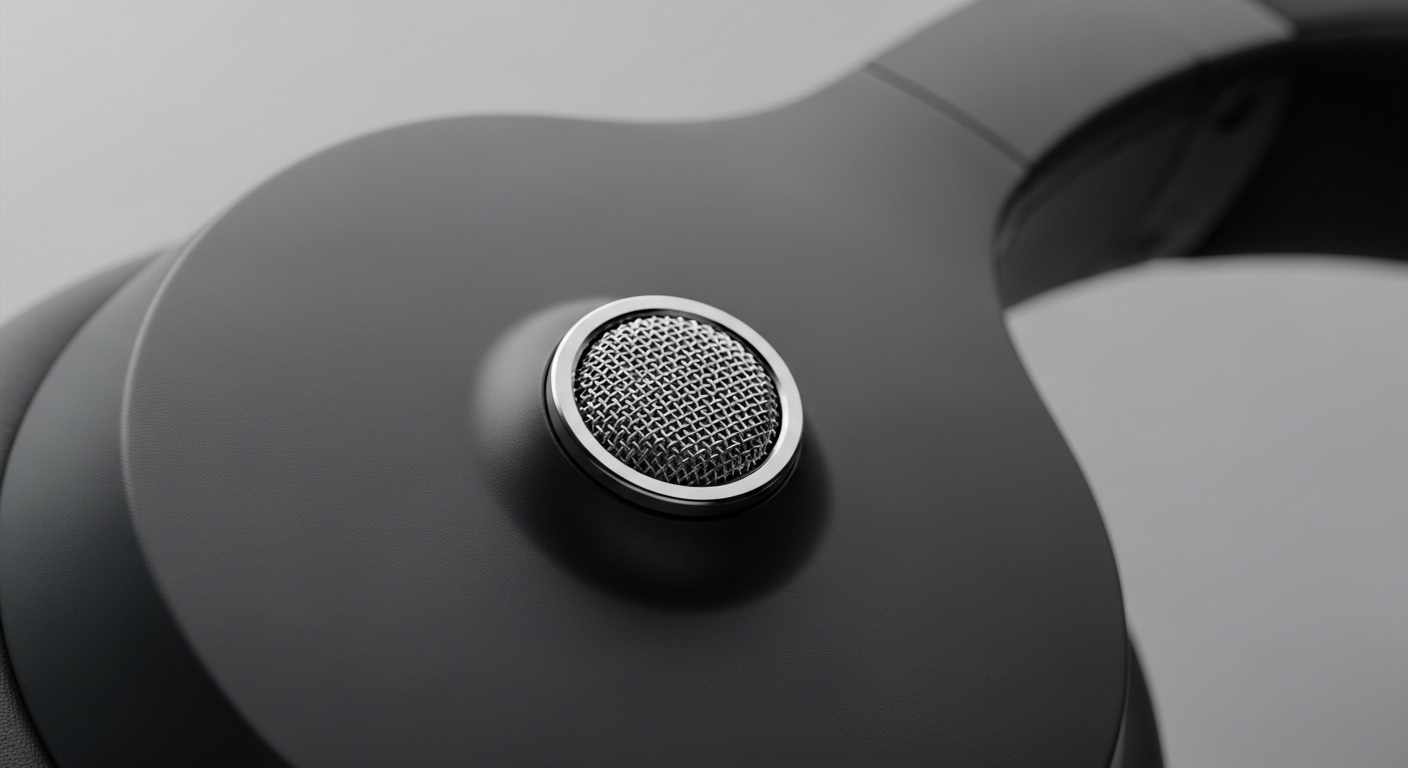
There are two main ANC architectures, and most premium headphones today use both at once. Feed-forward ANC places a microphone on the outside of the ear cup, facing the world. It picks up ambient noise before it reaches your ear, giving the processor a head start on generating the cancellation signal. The advantage is speed; the disadvantage is that the microphone is exposed to wind and other interference.
Feed-back ANC puts the microphone inside the ear cup, close to your ear. It listens to what sound is actually reaching you — including any imperfections in the cancellation — and continuously corrects. Think of it as a self-correcting loop. It is slower to react to sudden new sounds, but it is better at cleaning up residual noise.
Hybrid ANC combines both. The feed-forward mic catches incoming noise early; the feed-back mic monitors the result and fine-tunes it. This is why flagship headphones from well-known manufacturers tend to have multiple visible microphone ports on each ear cup — each one has a specific job.
The Digital Signal Processor: The Real Brain
The microphone captures the ambient sound and converts it into a digital signal. A dedicated digital signal processor (DSP) chip then analyzes that signal, calculates the inverse waveform, and sends it to the speaker driver in the ear cup — all in a loop that runs continuously. Modern ANC processors can complete this cycle thousands of times per second.
The DSP also handles a practical problem: the cancellation signal has to be delivered at exactly the right amplitude. Too weak, and noise bleeds through. Too strong, and you create new noise rather than eliminating it. Getting that balance right across a range of frequencies is where most of the engineering effort goes.
ANC does not block sound — it unmakes it. The headphone is not a wall; it is a counter-wave generator running faster than your ears can detect.
Why ANC Works Better on Some Sounds Than Others
The Frequency Problem
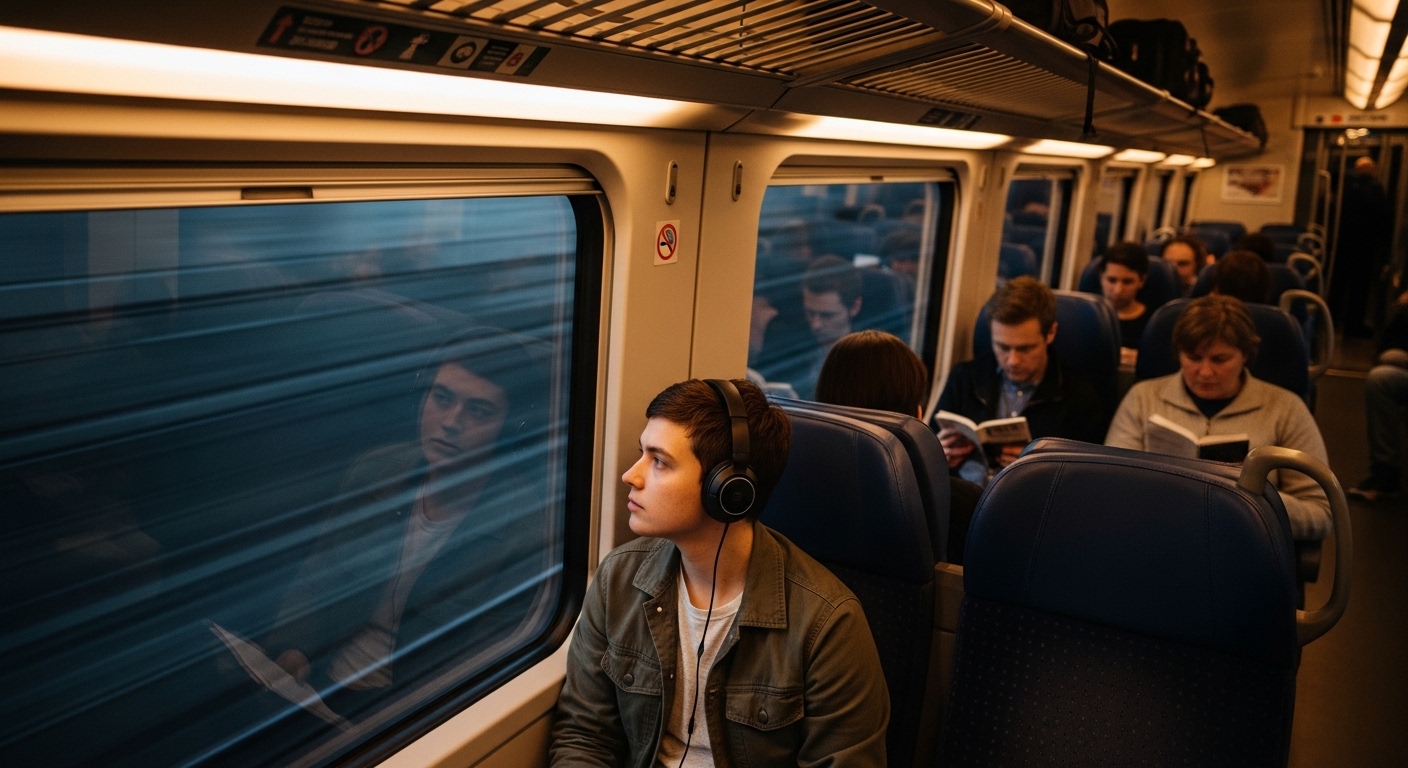
ANC is exceptionally good at low-frequency, steady-state noise — the deep rumble of a plane cabin, the drone of an air conditioning unit, the hum of a train. These sounds have long, predictable waveforms that are relatively easy to model and cancel. Anyone who has put on a good pair of ANC headphones on a long-haul flight knows the almost eerie sensation of that background roar simply vanishing.
High-frequency sounds are a different story. A sharp consonant in someone's speech, a sudden clap, or the clatter of a keyboard — these have short, fast waveforms. By the time the DSP has analyzed the incoming signal and generated a counter-wave, the original sound has already passed your eardrum. The physics simply do not allow enough reaction time at those frequencies.
This is why ANC headphones do not make you completely deaf to the world. Voices, high-pitched alerts, and sudden transient sounds still get through — which is actually a safety feature as much as a limitation. It is also why passive isolation (the physical seal of the ear cup against your head) still matters enormously, even in headphones with the best ANC chips available.
The Surprising Limit: Your Own Head
Here is something most ANC explainers skip over: the shape of your ear canal and how well the ear cup seals against your head directly affects ANC performance. The cancellation signal is optimized for a specific acoustic space — the small volume of air between the driver and your eardrum. If that seal is broken (say, by glasses arms or hair), outside air leaks in, the acoustic model breaks down, and the ANC performance drops noticeably. This is why some people find that the same headphones work dramatically better for them than for others.
Where ANC Technology Shows Up Beyond Headphones
Cars, Cockpits, and Industrial Spaces
Consumer headphones get most of the attention, but ANC has been embedded in car cabins for years. Several automakers use microphones placed throughout the interior to detect road and engine noise, then feed cancellation signals through the car's existing speaker system. The result is a quieter cabin without adding more sound-deadening material — which would add weight. It is a neat engineering trade-off.
Aviation has used ANC in pilot headsets since the 1980s, long before it appeared in consumer products. The cockpit environment is brutally loud, and protecting pilot hearing over a long career is a serious concern. Military aviation pushed the technology hard, and a lot of what ended up in commercial headphones traces back to that research.
Earbuds: A Harder Engineering Problem
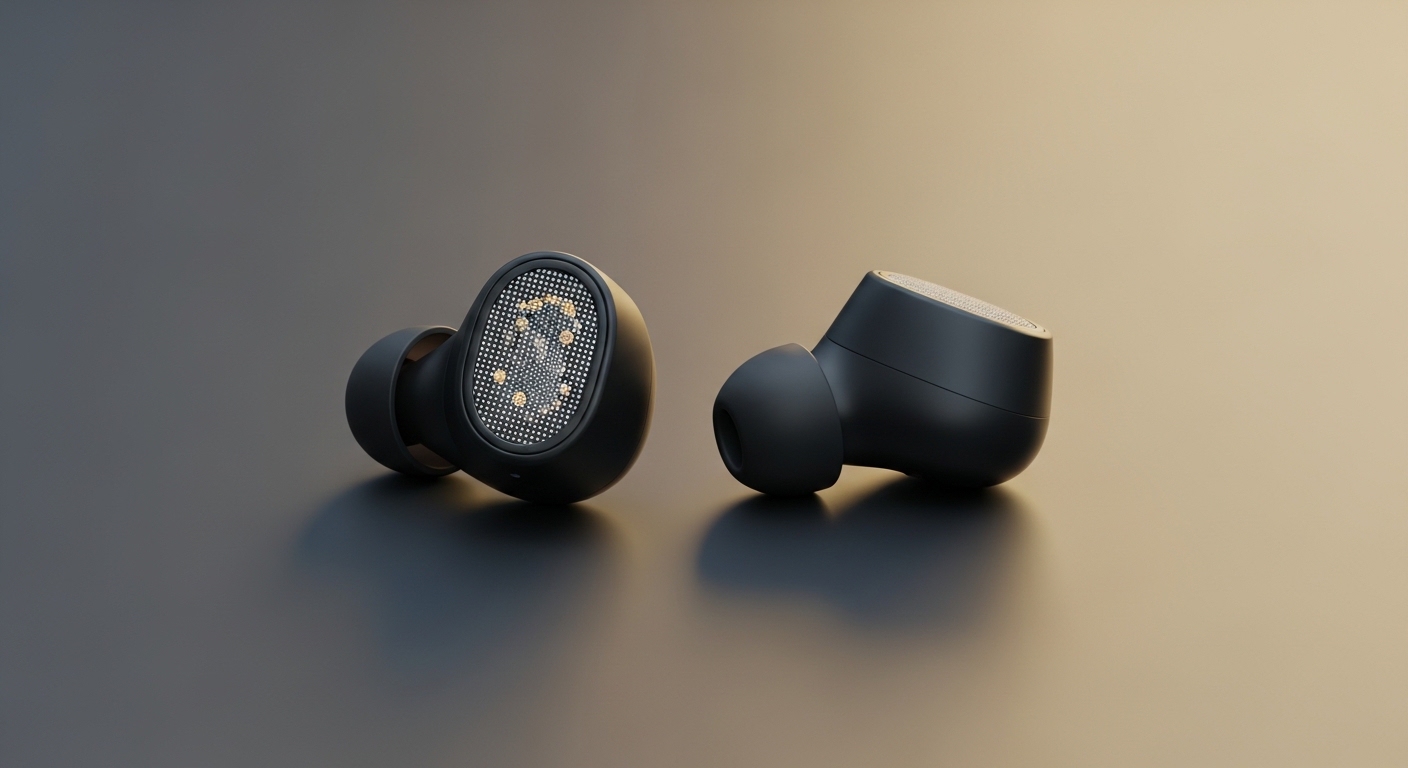
Fitting effective ANC into a true wireless earbud is significantly harder than building it into an over-ear headphone. The ear cup of a full-size headphone creates a relatively large, controlled acoustic space. An earbud sits in your ear canal with almost no room to work with, and the microphones are millimeters from each other. The DSP has to be miniaturized, power consumption has to be minimal (battery life is already a constant battle in earbuds), and the acoustic modeling has to be recalibrated for a much smaller space.
Fitting ANC into an earbud is like trying to run the same physics experiment in a thimble instead of a laboratory — the math is the same, but the tolerances become brutal.
Some earbuds now include a personalization step where the device plays test tones and measures how your specific ear canal responds, then adjusts the ANC algorithm accordingly. That is not a gimmick — it is a genuine attempt to solve the 'your head is not the same as the test dummy's head' problem.
Frequently Asked Questions
Does active noise cancellation damage your hearing?
Research suggests ANC itself does not harm hearing — in fact, it can protect it. By reducing background noise, you are less likely to crank up the volume to compensate, which is the actual hearing risk. The sensation some people describe as 'pressure' with ANC on is a real phenomenon caused by the brain interpreting the sudden absence of low-frequency sound as a pressure change, not actual physical pressure on the eardrum.
Why does ANC make some people feel dizzy or uncomfortable?
This is a documented response, though not universal. The leading explanation is that the brain uses low-frequency ambient sound as a kind of spatial anchor — a constant background reference. When ANC removes it abruptly, some people experience mild disorientation or unease, similar to the sensation of a room going suddenly silent. Turning ANC on gradually, or using a lower intensity setting, usually resolves it.
Can ANC cancel out voices and conversations?
Not effectively, and largely by design. As explained above, ANC struggles with the mid-to-high frequencies that make up human speech. Passive isolation from a good ear cup seal does more to muffle voices than the ANC circuitry itself. If you need to block out speech specifically, a combination of strong passive isolation and ANC together gives the best result — neither alone is fully sufficient.
The deeper you look at ANC, the more it reveals about how sound, perception, and engineering intersect in unexpected ways. A technology that started as a patent sketch in the 1930s now runs silently inside devices small enough to lose in a jacket pocket — recalculating the shape of silence thousands of times a second, just to give you a quiet commute. What is stranger is that your brain does half the work without you knowing it, filling in the gaps and deciding what counts as silence in the first place.



Comments
Post a Comment