Geoengineering Explained: How Scientists Propose to Tackle Climate Change
Spraying reflective particles into the stratosphere, painting rooftops white, or dumping iron filings into the ocean — these are not science fiction plots. They are actual proposals being debated in peer-reviewed journals and government policy rooms right now. Geoengineering is the deliberate, large-scale manipulation of Earth's systems to counteract climate change, and it sits at one of the most uncomfortable intersections in modern science: genuine promise tangled up with serious risk.

What Is Geoengineering? A Plain-Language Definition
Two Broad Families of Approaches
Scientists generally split geoengineering into two categories. The first is Solar Radiation Management (SRM) — techniques designed to reflect more sunlight away from Earth before it can warm the surface. The second is Carbon Dioxide Removal (CDR) — methods that pull CO2 directly out of the atmosphere and store it somewhere stable.
These two families work in fundamentally different ways. SRM is fast-acting but does nothing about the root cause — it is more like turning down a thermostat than fixing a broken furnace. CDR attacks the source, but most approaches work slowly, over decades, and at enormous scale.
The word 'geoengineering' itself sometimes causes confusion. Critics argue it implies a level of control and precision that does not yet exist. Supporters say the term accurately reflects the intentional, planetary-scale ambition of the work. Both sides have a point.
Why This Is Different From Normal Climate Policy
Reducing emissions is climate mitigation. Adapting to a warmer world — building sea walls, shifting crop varieties — is adaptation. Geoengineering is neither. It is an attempt to actively modify the climate system itself, which is why it generates such sharp disagreement even among scientists who fully accept the reality of climate change.

How the Main Geoengineering Techniques Actually Work
Stratospheric Aerosol Injection
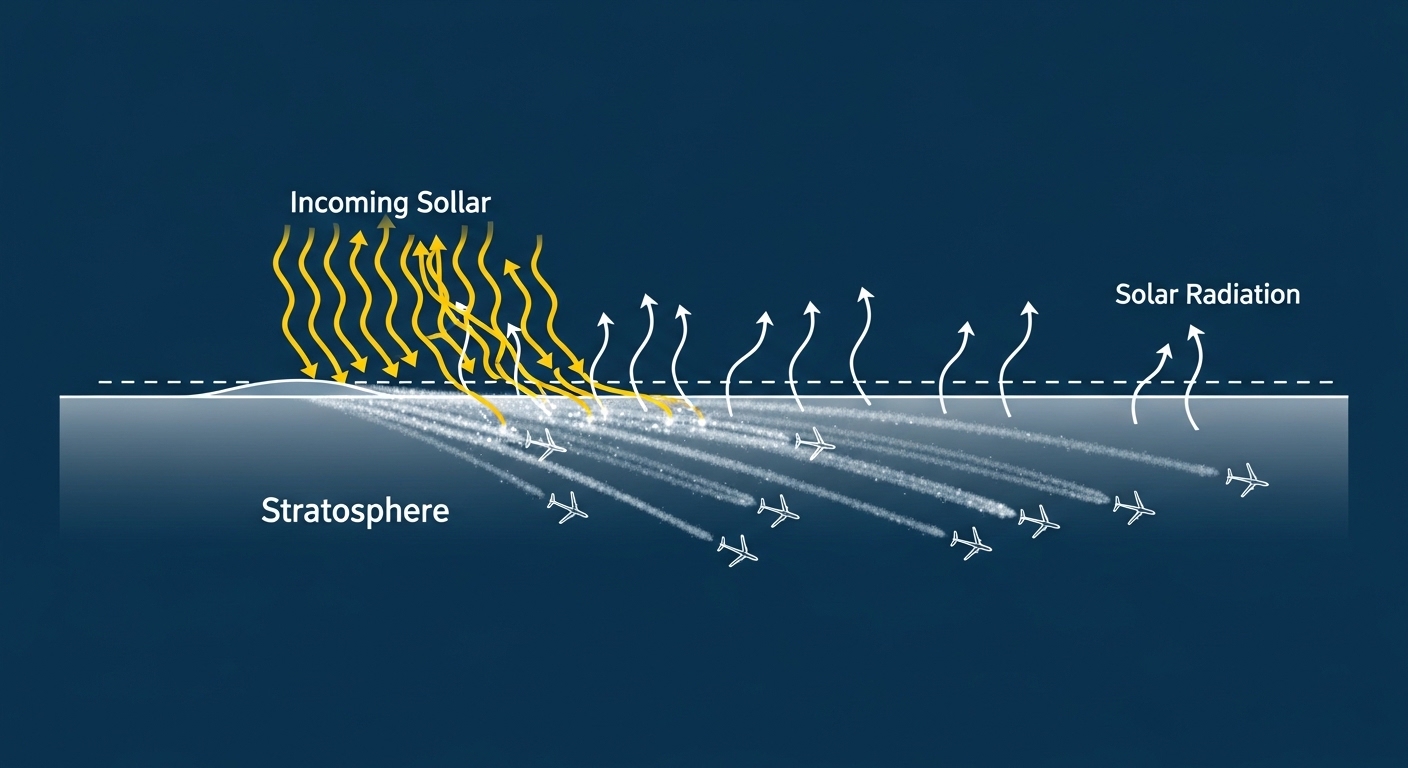
The most-discussed SRM approach is stratospheric aerosol injection (SAI). The idea is to release sulfur dioxide or calcium carbonate particles into the stratosphere — roughly 15 to 25 kilometers above the surface — where they scatter incoming solar radiation back into space. Nature has already run this experiment: the 1991 eruption of Mount Pinatubo in the Philippines injected roughly 20 million tonnes of sulfur dioxide into the stratosphere and cooled global average temperatures by an estimated 0.5°C for about 18 months.
The problem is that a volcanic eruption stops. A deliberate SAI program would need to continue indefinitely, because the particles fall out of the stratosphere within one to two years. Stop the injections abruptly — due to political conflict, funding collapse, or war — and temperatures could rebound at a rate far faster than the original warming. Researchers call this 'termination shock,' and it is one of the most serious objections to the whole approach.
Termination shock is the hidden trap in stratospheric aerosol injection: once you start, stopping suddenly could be more dangerous than never starting at all.
Marine Cloud Brightening
A more localized SRM technique involves spraying fine sea-salt particles into low-lying marine clouds to make them more reflective. Brighter clouds reflect more sunlight. The physics are straightforward; the logistics and side effects are not. Changing cloud cover in one region can shift rainfall patterns in another, which is why even small field trials have generated international controversy.
Direct Air Capture and Carbon Removal
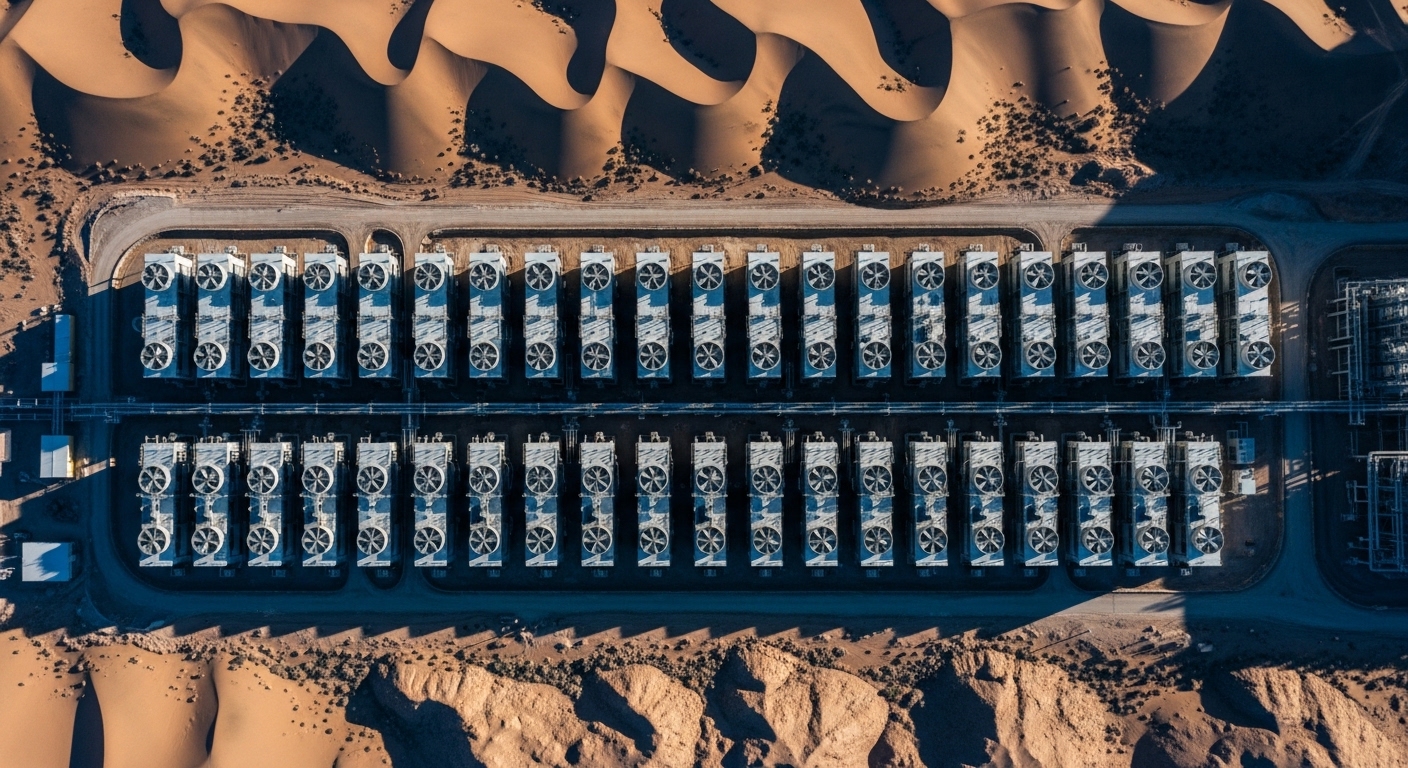
On the CDR side, Direct Air Capture (DAC) uses chemical processes to pull CO2 directly from ambient air and store it underground or convert it into useful materials. Facilities using this technology exist today — Iceland has hosted one of the more well-documented commercial-scale installations. The catch is energy and cost: current DAC processes are expensive and energy-intensive, though costs have been falling as the technology matures.
Other CDR approaches include ocean iron fertilization (adding iron to iron-limited ocean regions to stimulate phytoplankton growth, which absorbs CO2) and enhanced weathering (spreading crushed silicate rocks on agricultural land to accelerate natural carbon-absorbing chemical reactions). Both are real, both have been tested at small scale, and both carry ecological uncertainties that are not yet fully understood.
Where Geoengineering Has Already Been Tried
Field Experiments and Real-World Tests
Geoengineering is not purely theoretical. Researchers have conducted small-scale field experiments in several countries. The Harvard Solar Geoengineering Research Program proposed a stratospheric balloon experiment called SCoPEx, which attracted significant public debate before being paused. Meanwhile, marine cloud brightening trials have been conducted off the coasts of Australia and California, with researchers studying how artificially brightened clouds behave over time.
The results from these small trials are genuinely mixed. Some cloud brightening experiments showed the expected reflectivity increase; others produced unexpected results depending on local atmospheric conditions. This variability is exactly why scientists argue that more research is needed — and why critics argue that scaling up before understanding the system is reckless.
The Governance Gap Nobody Has Solved
Here is the uncomfortable reality: there is currently no international legal framework governing geoengineering. A single country — or even a wealthy private actor — could theoretically begin a unilateral SAI program. The effects would cross every border on the planet. Shifting monsoon patterns, altered growing seasons, changed precipitation — none of these respect national sovereignty.
This is not a hypothetical concern. Smaller nations that depend on predictable monsoon rainfall have already raised formal objections to SAI research, arguing that even experiments could affect their weather. The governance question may be harder to solve than the technical one.
No country can veto the sky. That is the governance problem geoengineering creates that no existing international treaty was designed to handle.

Why Geoengineering Is More Controversial Than It Looks
The Moral Hazard Problem
One of the sharpest objections to geoengineering has nothing to do with whether it works. Critics argue that the mere existence of a 'backup plan' reduces political and social pressure to cut emissions. If people believe scientists can fix the climate later, the argument goes, they will be less willing to accept the economic disruptions of rapid decarbonization now. This is the moral hazard argument, and it is taken seriously even by researchers who support geoengineering research.
Proponents counter that this logic, taken to its extreme, would mean we should avoid developing any treatment for lung cancer because it might make people less afraid of smoking. The analogy is imperfect, but it illustrates why the moral hazard debate rarely reaches a clean resolution.
Who Decides, and Who Bears the Risk?
SAI conducted over the northern hemisphere could alter rainfall in sub-Saharan Africa or South Asia. The populations most likely to be affected by geoengineering side effects are often the same populations least responsible for the emissions that made geoengineering seem necessary. That asymmetry is not a technical problem — it is an ethical one, and it does not have an engineering solution.
(Opinion: The governance gap feels like the most underreported part of this entire conversation. Technical feasibility gets most of the attention, but the harder question — who has the right to modify a shared planetary system — is one that scientists alone cannot answer, and politicians have been remarkably slow to engage with seriously.)The Counterintuitive Finding About Ocean Fertilization
Research suggests that ocean iron fertilization — once considered a relatively low-risk CDR option — may produce nitrous oxide as a byproduct in some conditions. Nitrous oxide is itself a potent greenhouse gas. Some studies have suggested that under certain ocean conditions, the warming effect of the nitrous oxide produced could partially offset the cooling benefit of the carbon absorbed. It is a reminder that in complex Earth systems, interventions rarely have only one effect.
Why Geoengineering Research Matters — Even If We Never Use It
Understanding Risk Requires Understanding the System
Even scientists who are deeply skeptical of ever deploying geoengineering at scale generally support continued research. The reason is straightforward: you cannot assess the risks of something you do not understand. If the world reaches a point where temperatures are rising fast enough to trigger catastrophic tipping points — ice sheet collapse, permafrost methane release — decision-makers will need accurate information about what geoengineering can and cannot do. Making that decision in a crisis, without prior research, would be far more dangerous than studying it now.
There is also a detection problem. If a country or actor begins a covert SAI program, the only way to identify it and model its effects is to have existing research infrastructure and baseline data. Ignorance is not a safety strategy.
CDR Is Already Part of Official Climate Targets
This is worth stating plainly: the emissions pathways modeled by the Intergovernmental Panel on Climate Change (IPCC) that limit warming to 1.5°C already assume significant carbon dioxide removal. The debate is not really whether CDR happens — under most serious climate scenarios, it has to. The debate is which methods, at what scale, governed by whom, and paid for by who.
Direct air capture, bioenergy with carbon capture, enhanced weathering, and reforestation all fall under the CDR umbrella. Some of these are far less controversial than stratospheric aerosol injection, but they share the same basic challenge: they need to happen at a scale the world has never attempted for any industrial process.
Frequently Asked Questions
Is geoengineering the same as weather modification?
Not exactly. Weather modification — like cloud seeding to produce rain — is localized and short-term. Geoengineering refers to planetary-scale interventions intended to affect the global climate system over years or decades. Cloud seeding has been practiced since the mid-20th century; geoengineering at the scale being discussed is still largely in the research and modeling phase.
Could geoengineering make climate change worse in some regions?
Research suggests yes, in some scenarios. Stratospheric aerosol injection, for example, could reduce global average temperatures while simultaneously altering monsoon patterns in ways that reduce rainfall in regions that depend on it. The effects would not be uniform across the planet, which is one of the central ethical and political objections to SRM approaches.
Why don't we just plant more trees instead of these high-tech approaches?
Reforestation and afforestation are legitimate carbon removal strategies, and they are already part of many national climate plans. The limitation is scale and land availability. Estimates suggest that even ambitious global reforestation programs could remove only a fraction of the CO2 that would need to be captured to meet the most aggressive climate targets. High-tech CDR approaches are being explored partly because natural land-based solutions alone are unlikely to be sufficient — not because trees are being dismissed.
The strangest thing about geoengineering is that the most important decisions about it will probably be made by people who have never heard the word 'termination shock.' The science is advancing faster than the political and ethical frameworks meant to govern it, and that gap is not closing. Whatever your view on whether these technologies should ever be deployed, the conversation is already happening — in research labs, in policy documents, and in quiet diplomatic channels. The question is whether the public gets a seat at that table before the decisions are made, or after.


Comments
Post a Comment