Boost Your Day: How to Fit Effective Micro-Workouts into Your Schedule
A 10-minute workout done consistently beats a 90-minute session you never actually get to. Research suggests that short, intense bouts of movement — sometimes called micro-workouts — can deliver meaningful cardiovascular and muscular benefits when accumulated across the day. The catch is that most people have no system for fitting them in, so they default to nothing. This guide fixes that.

What You Need Before You Start Micro-Workouts
The Right Mindset First
The biggest barrier to micro-workouts is not physical — it is the belief that exercise only 'counts' if it lasts at least 30 minutes. That idea is outdated. Studies on exercise snacking (short bursts of activity spread through the day) suggest cumulative movement time matters more than session length for general health outcomes.
You do not need a gym membership, special equipment, or workout clothes to start. What you do need is a rough map of your day and a willingness to treat 5–10 minute windows as legitimate training time.
Gear and Space Requirements
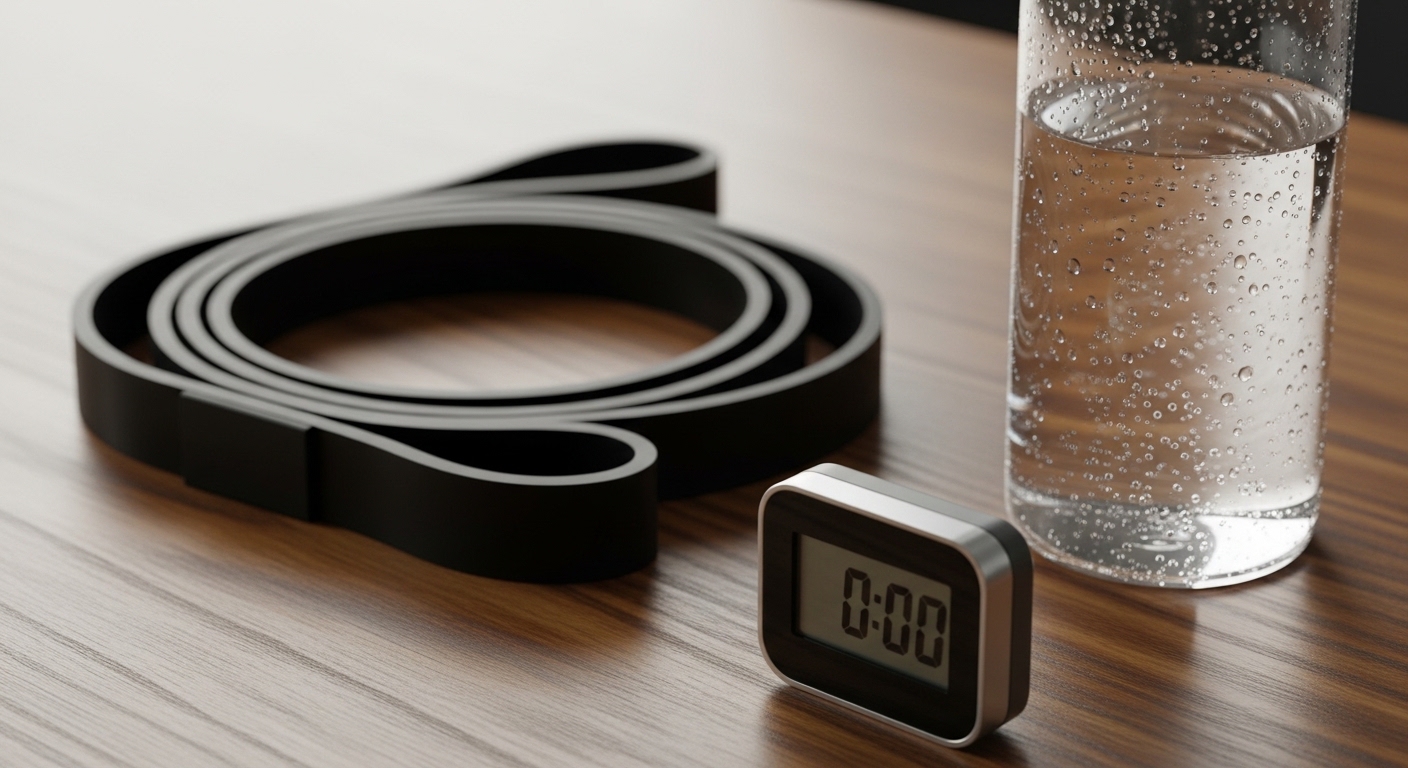
For most micro-workout formats, you need a floor space roughly the size of a yoga mat. A resistance band (inexpensive and easy to store in a desk drawer) expands your options significantly. A pull-up bar that fits a door frame is optional but useful if upper-body pulling movements are a priority.
Comfortable shoes help, but even that is negotiable. Anyone who has done a set of calf raises in dress shoes at a standing desk knows the bar for 'equipment' is genuinely low here.
Step-by-Step Instructions for Building Your Micro-Workout Routine
Step 1 — Audit Your Day for Dead Time
Open your calendar or just think through a typical weekday. You are looking for recurring windows of 5–15 minutes that are currently idle: the gap before a meeting starts, the time while coffee brews, the stretch between finishing lunch and returning to your desk. Write down at least three of these.
Most people find four to six such windows once they actually look. That is potentially 30–60 minutes of movement distributed across the day — without waking up earlier or sacrificing anything meaningful.
Step 2 — Assign a Movement Category to Each Window
Not every window suits the same type of exercise. A 5-minute slot before a video call is not the moment for burpees that leave you visibly sweating. Match intensity to context:
- Low-intensity windows (2–5 min): mobility drills, standing stretches, slow bodyweight squats, calf raises
- Moderate windows (5–10 min): push-up sets, resistance band rows, lunges, plank variations
- Higher-intensity windows (10–15 min): stair intervals, jump rope, kettlebell swings, a short HIIT circuit
The goal is to have a pre-decided movement ready for each slot so you never waste the window deciding what to do.
Step 3 — Use Habit Stacking to Anchor Each Micro-Workout
Habit stacking means attaching a new behavior to an existing one. 'After I pour my morning coffee, I do 3 sets of push-ups' is far more durable than 'I will exercise when I feel like it.' The existing habit acts as a trigger that fires automatically.
Identify one reliable daily anchor for each movement slot you found in Step 1. The more specific the trigger, the better it works. 'After I hang up any phone call lasting more than 10 minutes, I walk up and down the stairs twice' is more actionable than 'I will move more during calls.'
Habit stacking turns micro-workouts from good intentions into automatic behavior — the trigger does the motivational work so you do not have to.
Step 4 — Build a Simple Weekly Template
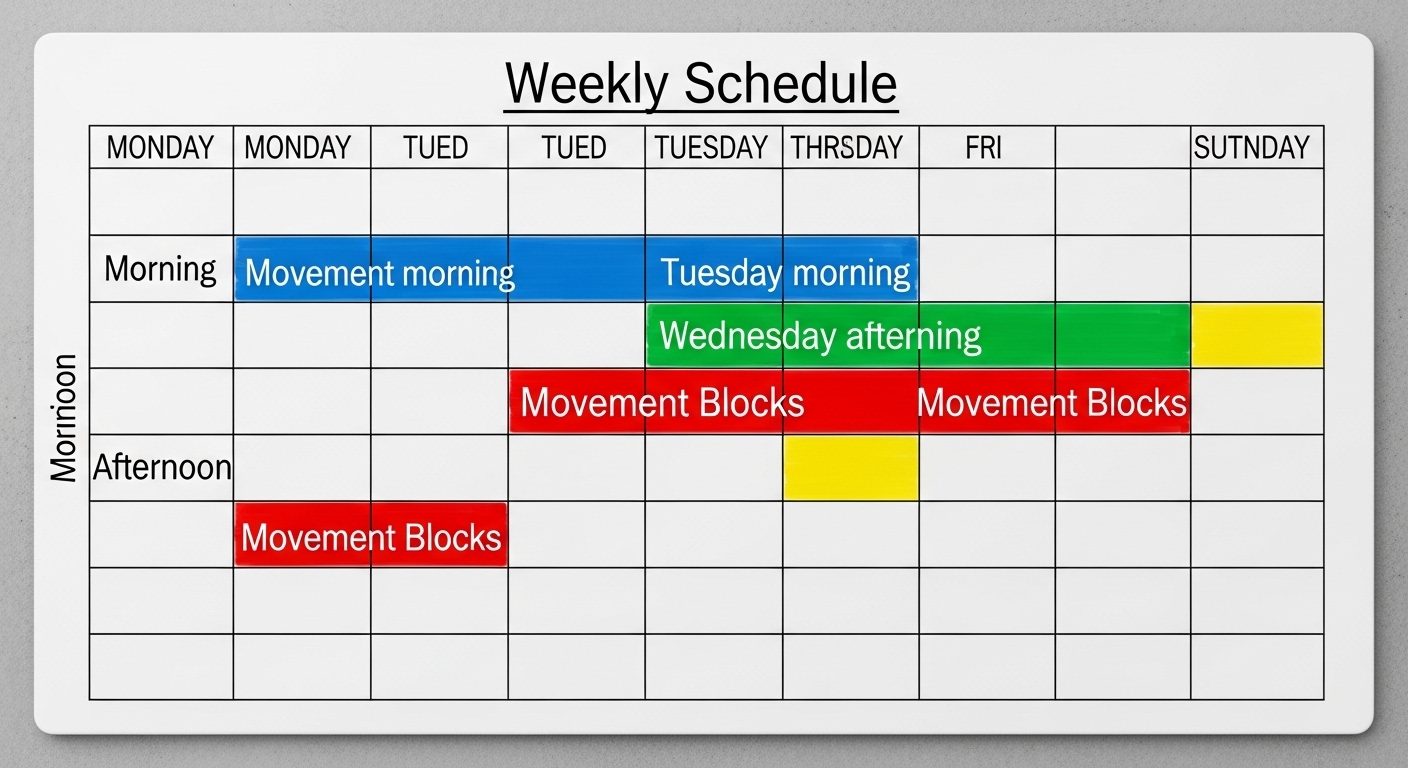
Variety matters, but not at the expense of consistency. Start with a repeating weekly template that rotates through three movement focuses: lower body, upper body, and core/mobility. A simple Monday-Wednesday-Friday lower/upper/core rotation works well, with the remaining days used for lighter movement like walking or stretching.
Here is a basic example for a desk-based worker:
- Monday/Thursday: Squat variations, lunges, glute bridges
- Tuesday/Friday: Push-ups, resistance band rows, shoulder press
- Wednesday/Weekend: Planks, dead bugs, hip flexor stretches, walking
Step 5 — Track Progress Without Obsessing Over It
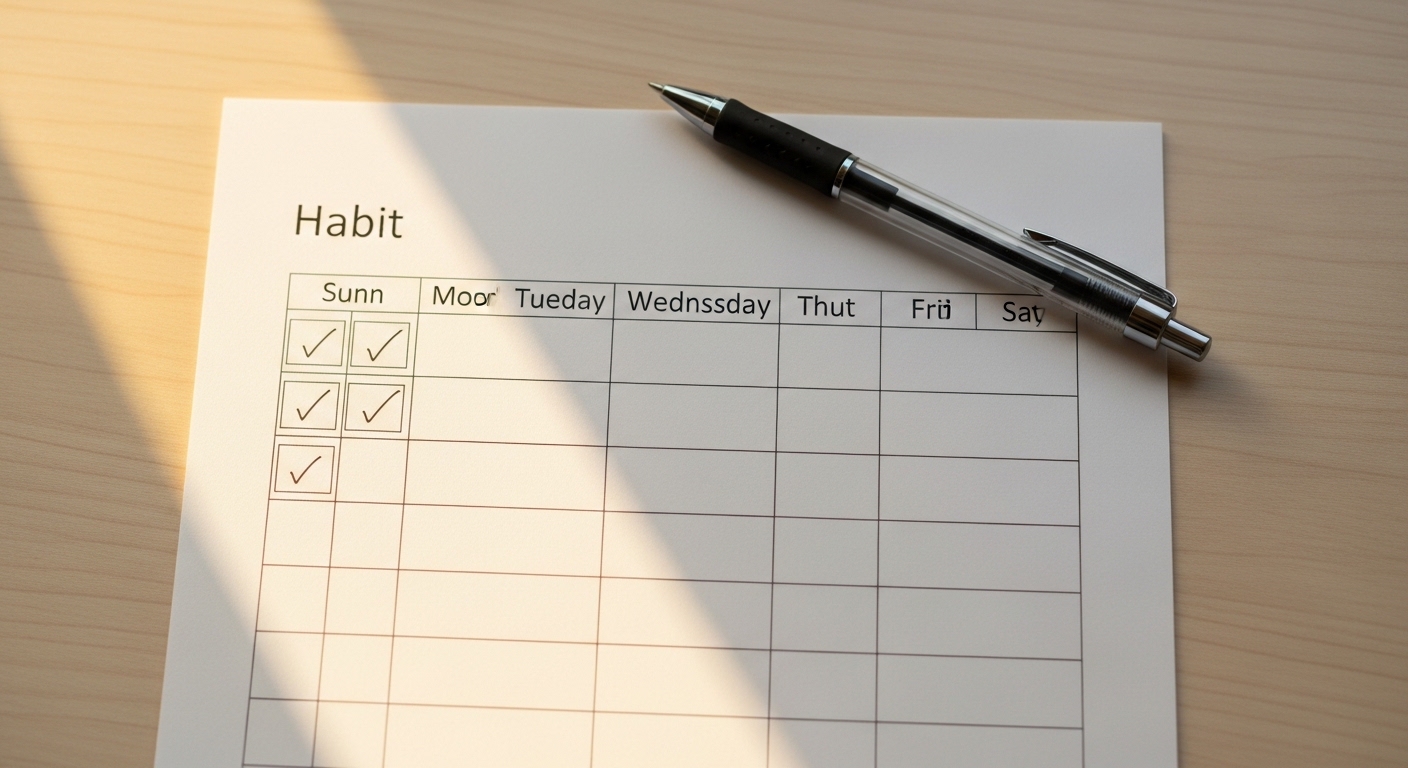
A simple tally in a notes app — just marking each completed micro-workout with a checkmark — is enough. Research on habit formation consistently shows that visible streaks increase follow-through. You are not tracking reps and sets with precision; you are just confirming that the behavior happened.
After two weeks, review which slots you actually hit and which you skipped. Adjust the template to protect the slots that worked and replace the ones that did not.
Common Pitfalls to Avoid With Micro-Workouts
Treating Every Session Like a Full Workout
The most common mistake is trying to cram a complete gym session into 8 minutes. That usually means rushing through movements with poor form, skipping warm-up entirely, and ending up sore in a way that discourages the next session. Micro-workouts are not compressed full workouts — they are targeted, focused, and deliberately incomplete.
Pick one or two movements per slot. Do them well. Move on.
Ignoring Recovery Between High-Intensity Slots
If you schedule three high-intensity micro-sessions back to back — say, stair sprints at 9am, a HIIT circuit at 11am, and kettlebell work at 1pm — you are effectively doing a long hard workout with rest breaks. That is fine occasionally, but as a daily pattern it leads to overtraining symptoms: persistent fatigue, elevated resting heart rate, and declining performance.
Alternate intensity levels across the day. High-intensity slots should be separated by at least a few hours and should not appear every single day.
More is not always better. Two well-executed micro-sessions beat five rushed ones that leave you too tired to move the next day.
Skipping the Transition Back to Work
A micro-workout that leaves you mentally scattered for the next 20 minutes is counterproductive. Build in a 60–90 second wind-down: slow your breathing, have a glass of water, and do a brief mental reset before returning to focused work. This is not wasted time — it is what makes the whole system sustainable without friction.

Pro Tips to Speed Things Up and Make Micro-Workouts Stick
Use a Countdown Timer, Not a Stopwatch
Watching time count up is psychologically harder than watching it count down. A countdown timer creates a defined endpoint, which makes it easier to push through the last 90 seconds of a plank or a final set of push-ups. Most phone timers work fine; there are also dedicated interval timer apps that handle work/rest cycles automatically.
Keep a 'Movement Menu' Posted Somewhere Visible
Decision fatigue is real. When you sit down after a meeting and try to remember what exercise you were supposed to do, the moment passes. A short printed or digital list — 10 movements you enjoy and can do anywhere — eliminates that friction entirely. Stick it on your monitor, your fridge, or the inside of a cabinet door.
Pair Micro-Workouts With Something You Already Enjoy
A podcast episode, a specific playlist, or even a short audiobook chapter can become a reward signal that makes the movement slot feel like something you get to do rather than something you have to do. The psychological framing matters more than most people expect.
(Opinion: The fitness industry has spent decades convincing people that exercise requires a dedicated block of time, a specific location, and the right gear. Micro-workouts expose that framing as largely commercial. The body does not care whether your squats happened in a gym or beside your kitchen counter — it just responds to the load.)
Reassess Monthly, Not Daily
Do not tweak your system every time you miss a session. Life interrupts routines — that is normal. A monthly review is enough to catch patterns worth changing. If you consistently skip Tuesday's upper-body slot, the question is not 'why am I so undisciplined?' but 'what is actually happening on Tuesday mornings that makes this slot unrealistic?'
Frequently Asked Questions
Can micro-workouts actually replace a traditional gym routine?
For general health, cardiovascular fitness, and maintaining muscle tone, research suggests accumulated daily movement can be highly effective. However, if your goal is significant muscle hypertrophy or sport-specific performance, micro-workouts alone are unlikely to get you there — they work best as a foundation or complement to structured training, not a complete replacement.
How many micro-workouts per day is too many?
There is no universal number, but most people do well with three to five short sessions spread across the day. The key variable is intensity: low-intensity movement (walking, stretching, light bodyweight work) can happen frequently without recovery concerns. High-intensity intervals need more spacing and should not be repeated more than once or twice daily.
Do micro-workouts count toward weekly exercise guidelines?
Yes — major health organizations have updated their guidance to reflect that exercise does not need to happen in continuous blocks to count toward weekly activity targets. Accumulated minutes of moderate-to-vigorous activity throughout the day are recognized as equivalent to the same time spent in a single session. This shift in guidance happened gradually over the past decade as evidence from shorter-bout studies accumulated.
The most counterintuitive thing about micro-workouts is not that they work — it is that they often work better for long-term adherence than traditional gym schedules. A 60-minute gym session requires coordination, commute, and a window of uninterrupted time that life regularly destroys. Five 10-minute slots distributed through the day are far harder for a busy schedule to eliminate entirely. You might lose one. You will rarely lose all five. And that consistency, compounded over months, is where the real results live.



Comments
Post a Comment