Cotton Candy Planets: Exploring the Low-Density Worlds of Our Galaxy
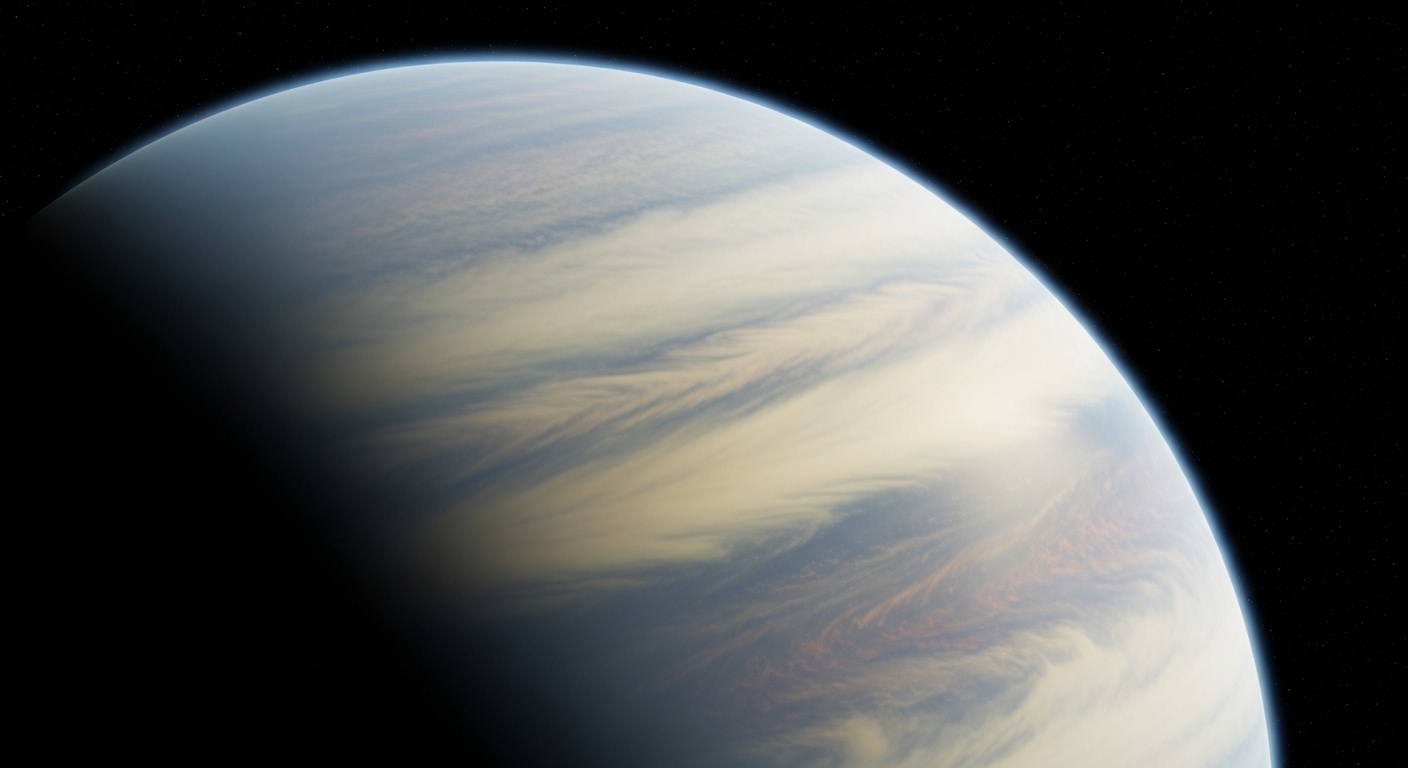
Some planets in our galaxy are so light they would float in water — if you could find a bathtub large enough to test them. These are the so-called 'cotton candy planets,' a nickname astronomers use for a class of exoplanets with densities so low they defy easy explanation. We are not talking about gas giants like Jupiter, which are already surprisingly light for their size. These worlds are something stranger: roughly the size of Saturn or larger, yet so puffy and diffuse that their average density is comparable to a handful of cotton candy or a marshmallow.

What Exactly Are Cotton Candy Planets?
The Density Problem in Plain Numbers
Density is mass divided by volume. Water has a density of roughly 1 gram per cubic centimeter. Saturn, the least dense planet in our solar system, comes in at about 0.69 grams per cubic centimeter — low enough that it would technically float in a large enough ocean. Cotton candy planets push this further, with some measured densities below 0.1 grams per cubic centimeter. A few confirmed examples sit closer to 0.03 to 0.06 grams per cubic centimeter.
To put that in perspective: styrofoam has a density of roughly 0.03 to 0.05 grams per cubic centimeter. These planets are, in a structural sense, barely there. They have the gravitational mass of a giant world but the physical substance of something you could crush between your fingers — if you could somehow hold a planet-sized object.
How Astronomers Detect and Measure Them
Finding these planets relies on two complementary methods. The transit method measures how much a planet dims its host star as it passes in front of it, which reveals the planet's physical size. Radial velocity measurements track tiny wobbles in the star's motion caused by the planet's gravitational pull, which reveals the planet's mass. Combine those two numbers and you get density. When the result comes back absurdly low, it is not a measurement error — it is a cotton candy planet.
One well-documented example is Kepler-7b, discovered using NASA's Kepler space telescope. It is roughly 1.6 times the radius of Jupiter but has less than half Jupiter's mass, giving it a density of around 0.17 grams per cubic centimeter. That was already shocking when it was confirmed. Since then, astronomers have found objects with even lower densities.
How Does a Planet Get This Puffy?
Extreme Heat From a Nearby Star
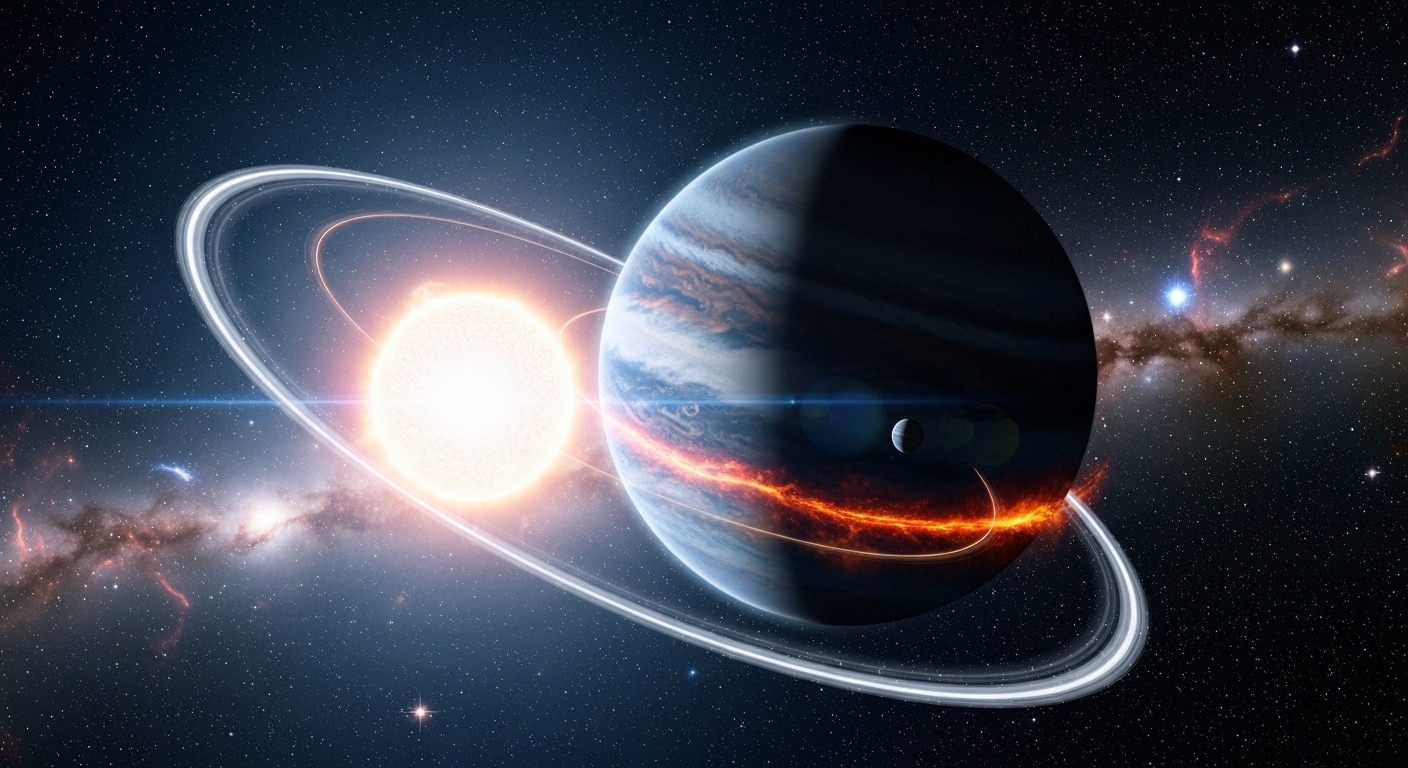
Almost every confirmed cotton candy planet orbits extremely close to its host star — often completing a full orbit in just a few Earth days. That proximity means the planet is being blasted with intense radiation continuously. The heat inflates the outer atmosphere, pushing gas outward and dramatically increasing the planet's volume without adding any mass. Think of it like heating a balloon: the air inside expands, the balloon gets bigger, but it does not get heavier.
This mechanism, called atmospheric inflation, is widely accepted as a major driver of low density. But it does not fully explain all the cases. Some cotton candy planets are puffier than even the most aggressive inflation models predict, which means something else is going on.
Atmospheric inflation explains a lot — but the puffiest planets are still outrunning the models, and nobody has a clean answer for why.
Internal Heat and Ohmic Dissipation
One leading hypothesis involves a process called ohmic dissipation. When a planet with a partially ionized atmosphere moves through its star's magnetic field, electrical currents can be induced inside the planet. Those currents generate heat, which gets deposited deep in the interior and slows the planet's natural cooling and contraction. A planet that cannot cool properly stays inflated longer.
Another factor may be tidal heating — the same process that drives volcanic activity on Jupiter's moon Io. If a planet's orbit is even slightly elliptical, gravitational flexing generates internal heat. For a gas-dominated world, that extra energy could keep the atmosphere puffed up for billions of years.
The Formation Mystery
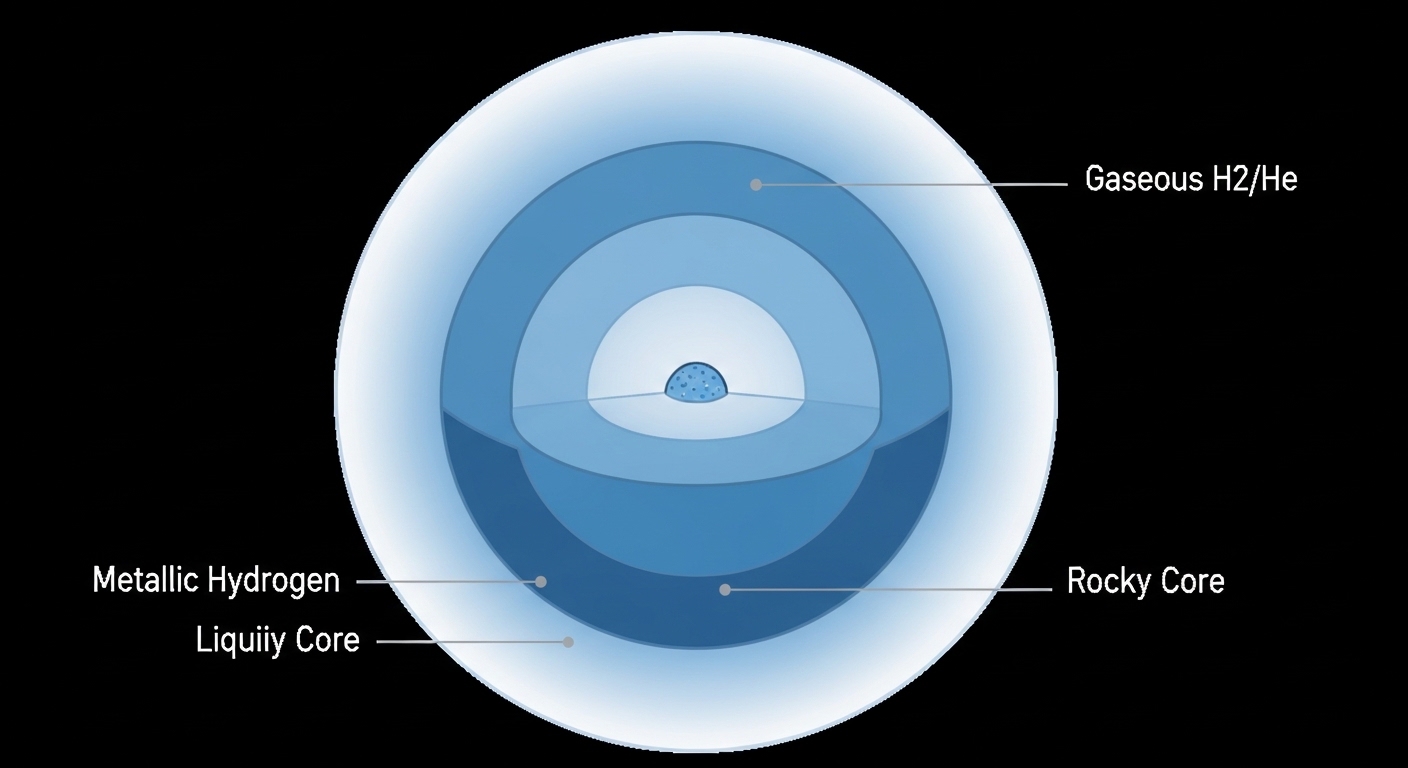
Some researchers think the composition itself matters. If a planet forms with an unusually high ratio of hydrogen and helium to heavier elements, it starts life less dense and stays that way. This is not just about what happens after formation — it is about what the planet was built from in the first place. The problem is that current planet formation models struggle to explain how some of these worlds ended up with such extreme compositions in the first place.
Real Examples That Pushed the Boundaries of Planet Science
Kepler-7b: The One That Started the Conversation
Kepler-7b became something of a poster child for inflated hot Jupiters when it was confirmed. Its density — roughly a quarter that of water — was so unexpected that early papers spent considerable space ruling out instrument error. It also turned out to have highly reflective clouds on one side of its atmosphere, making it one of the first exoplanets to have its cloud structure partially mapped. That detail came from the Spitzer Space Telescope and later Kepler photometry analysis, and it was genuinely surprising.
WASP-17b and the Retrograde Orbit Twist
WASP-17b is another heavily studied example, with a density estimated at roughly 0.06 grams per cubic centimeter in some analyses — placing it firmly in cotton candy territory. What makes it especially strange is that it orbits its star in the opposite direction to the star's rotation. That retrograde orbit suggests it was gravitationally scattered into its current position after forming elsewhere in the system. So not only is it improbably light, it got there through a chaotic gravitational history.
That combination — extreme puffiness plus a violent orbital past — raises interesting questions about whether the scattering event itself contributed to the inflation, perhaps through tidal interactions during the migration process.
WASP-17b orbits backwards relative to its star's spin — a detail that hints at a chaotic past, not a quiet formation.
Why Cotton Candy Planets Matter for Understanding Planetary Science
They Test the Limits of Our Models
Planetary science is largely built on models calibrated against our own solar system. Cotton candy planets are a stress test for those models. When a planet's density cannot be explained by known inflation mechanisms, it forces researchers to revisit assumptions about atmospheric physics, interior structure, and even the basic equations of state used to model gas behavior under extreme conditions.
The fact that these planets exist at all is a reminder that our solar system is not a template — it is one data point. The galaxy runs experiments we did not anticipate.
Atmospheric Escape and Planetary Lifespans
A planet with a very low density and a very close orbit is losing atmosphere constantly. High-energy radiation from the star strips gas away in a process called photoevaporation. For cotton candy planets, this is not a slow trickle — estimates suggest some of these worlds are losing mass at rates that could significantly alter their structure over astronomical timescales. Whether they eventually shrink down to denser remnant cores, or disperse entirely, is an open question.
This has practical implications for understanding the population of smaller exoplanets we observe. Some of the 'super-Earths' and 'mini-Neptunes' catalogued by Kepler and TESS may actually be the stripped cores of former cotton candy planets that lost their puffy envelopes long ago.
What They Tell Us About Habitability — Indirectly
Cotton candy planets themselves are not candidates for life as we understand it. They have no solid surface, they orbit in the scorching inner regions of their systems, and their atmospheres are being actively eroded. But studying how and why they inflate helps scientists understand atmospheric retention more broadly — which is directly relevant to figuring out which smaller, rocky planets can hold onto the atmospheres that make habitability possible.
(Opinion: There is something philosophically unsettling about a planet the size of Jupiter that weighs almost nothing. It challenges the intuition that size implies substance — and that intuition is baked into almost every mental model we use for understanding the physical world. Cotton candy planets are a good reminder that the universe is under no obligation to match our expectations.)
Frequently Asked Questions
Could a cotton candy planet ever have a solid surface?
Almost certainly not in any meaningful sense. These planets are dominated by hydrogen and helium gas, and while there may be a small rocky or icy core deep inside, the transition from gas to any denser material happens gradually under enormous pressure — there is no defined surface to stand on. The concept of a 'surface' simply does not apply the way it does for rocky planets like Earth or Mars.
Are cotton candy planets unique to hot Jupiter systems, or do they appear elsewhere?
The vast majority of confirmed ultra-low-density planets are hot Jupiters — gas giants in very close orbits. The proximity to their star appears to be a key driver of the inflation. That said, some researchers believe lower-density versions of Neptune-sized planets may also exist, and the boundary between 'inflated' and 'cotton candy' is not a hard line. The extreme cases cluster around close-in orbits, but the underlying physics may operate at smaller scales too.
Why do some cotton candy planets seem puffier than inflation models predict?
This is one of the genuinely open questions in exoplanet science. Stellar irradiation alone does not account for the most extreme cases. Proposed explanations include ohmic dissipation from magnetic interactions, residual heat from formation, and tidal heating from slightly elliptical orbits. It is likely a combination of factors, and the relative contribution of each probably varies from planet to planet. No single mechanism has been shown to explain all cases cleanly.
The stripped cores hypothesis is worth sitting with for a moment. If some of the small, dense planets we have catalogued are actually the remnants of former cotton candy worlds — deflated husks left behind after billions of years of atmospheric loss — then the galaxy's planetary population is more dynamic and more violent than it looks from the outside. Planets do not just form and stay put. They migrate, inflate, get stripped, and transform. What we see today is a snapshot of a process that started long before our solar system existed and will continue long after it is gone.


Comments
Post a Comment