Beyond Earth: What Makes an Exoplanet Habitable?
There are more planets in the Milky Way than there are grains of sand on all of Earth's beaches combined — and astronomers now estimate that a significant fraction of them sit in the right distance from their star to potentially host liquid water. That single fact reshaped the entire field of astrobiology. But 'potentially habitable' is doing a lot of heavy lifting in that sentence, and the real criteria for habitability are far stranger and more demanding than most people realize.
What Does 'Habitable' Actually Mean in Planetary Science?
The Liquid Water Baseline
When scientists say a planet is 'habitable,' they almost always mean one specific thing first: the surface conditions could allow liquid water to exist. Not ice, not steam — liquid water. Life as we understand it requires a solvent to facilitate chemistry, and water is extraordinarily good at that job. It stays liquid across a wide temperature range, it's a nearly universal solvent, and it's abundant across the cosmos.
The region around a star where this is theoretically possible is called the habitable zone, sometimes nicknamed the 'Goldilocks zone.' Too close and water boils off. Too far and it freezes solid. The boundaries shift depending on the star's luminosity, the planet's atmospheric pressure, and a handful of other variables that make the zone more of a fuzzy band than a sharp line.
Here's the counterintuitive part: some of the most promising candidates for life in our own solar system — Europa and Enceladus — sit well outside the classical habitable zone. They stay liquid because of tidal heating from gravitational squeezing, not sunlight. That means the habitable zone concept, while useful, is only one piece of a much larger puzzle.
Why 'Earth-Like' Is a Misleading Shortcut
Astronomers frequently describe exoplanets as 'Earth-like' when they mean roughly Earth-sized and rocky. That's a very low bar. Venus is Earth-like by that definition, and its surface temperature hovers around 465 degrees Celsius — hot enough to melt lead. Size and composition are necessary conditions, not sufficient ones.
How Does a Planet's Star Shape Its Chances for Life?
Stellar Type Changes Everything
The star a planet orbits matters almost as much as the planet itself. Sun-like stars (classified as G-type) are relatively stable and emit a broad spectrum of light that's friendly to photosynthesis-based life. But they're not the most common stars in the galaxy — that title belongs to red dwarfs, also called M-type stars, which make up roughly three-quarters of all stars.
Red dwarfs are smaller, cooler, and burn for far longer than our Sun — some could remain active for trillions of years. That sounds promising. The problem is that planets in a red dwarf's habitable zone have to orbit extremely close to stay warm, which often locks them into tidal locking: one side permanently facing the star, the other in perpetual darkness. Whether that kills habitability or just makes it weird is still actively debated.
There's also the flare problem. Young red dwarfs in particular are prone to violent stellar flares that can strip away a planet's atmosphere over geological time. TRAPPIST-1, a red dwarf about 40 light-years away, hosts seven rocky planets — three of them in the habitable zone — and has been one of the most intensely studied systems precisely because of this tension between promise and peril.
Radiation, Magnetic Fields, and Atmospheric Survival
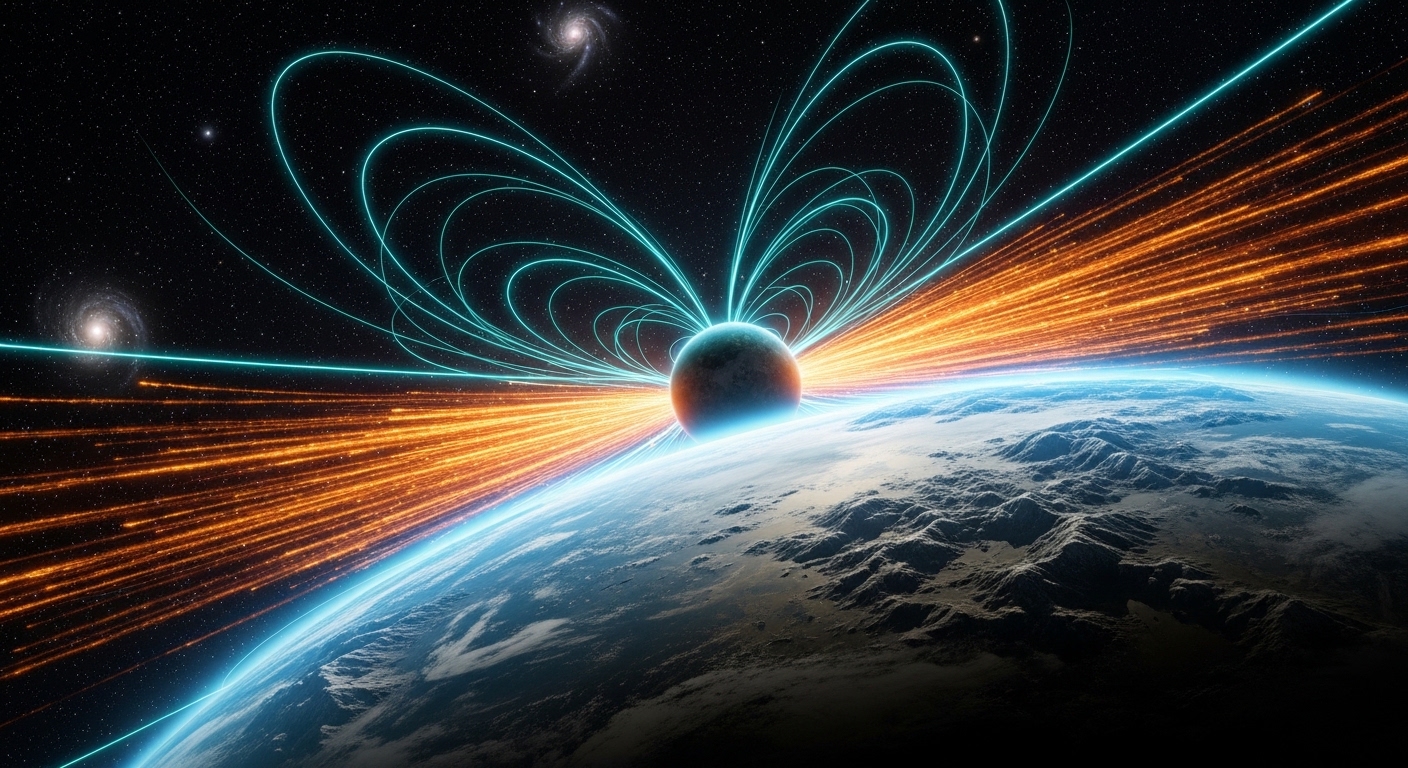
A planet without a magnetic field is essentially naked against stellar radiation. Earth's magnetic field, generated by its churning liquid iron outer core, deflects the solar wind and protects the atmosphere from being gradually eroded. Mars lost most of its magnetic field billions of years ago, and its once-thicker atmosphere followed. Today Mars is a cold, thin-aired desert.
A planet's magnetic field isn't a bonus feature — it's closer to a prerequisite. Without one, stellar wind can strip an atmosphere over millions of years, leaving a world that looks rocky and well-positioned but is fundamentally dead.
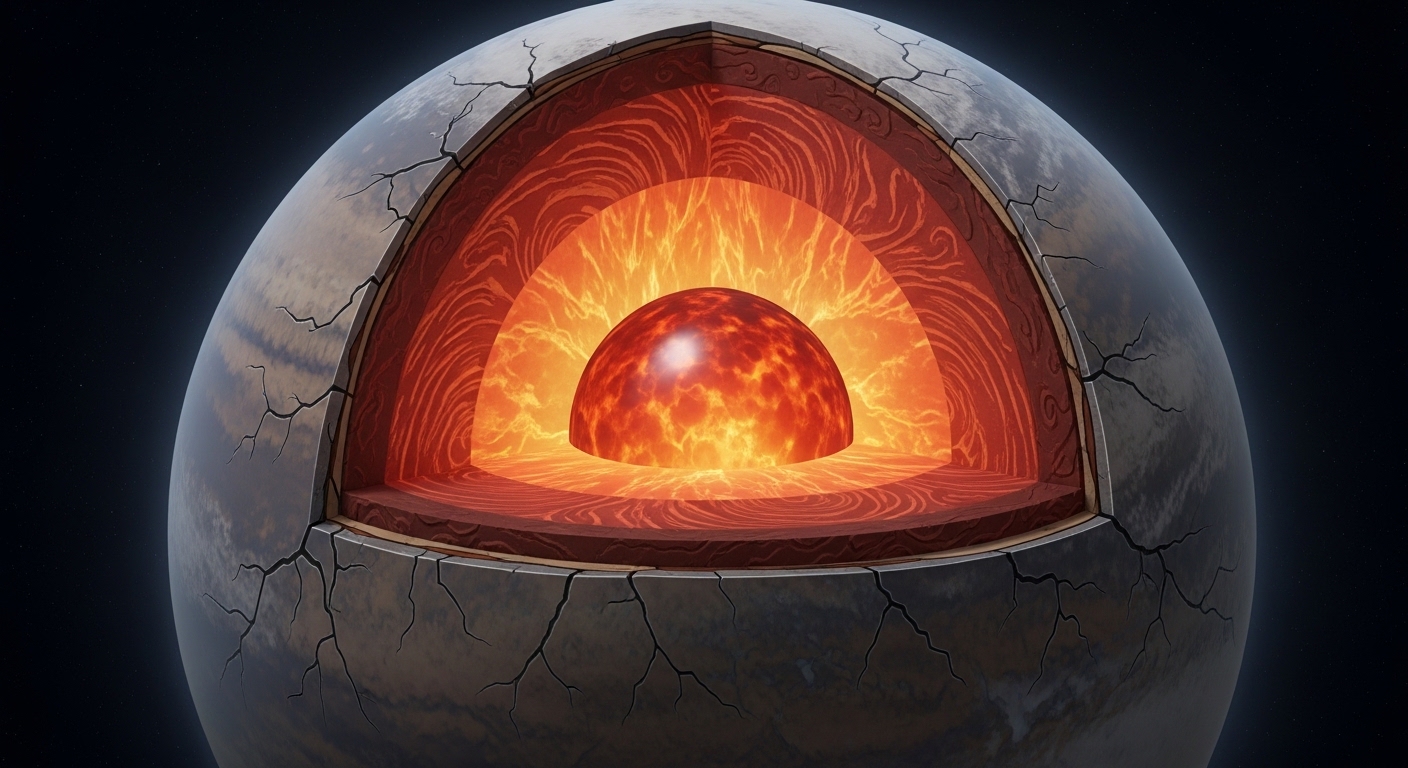
Generating a magnetic field requires a planet to have a metallic core that's still partially molten and actively convecting. That depends on the planet's size, composition, and age. Smaller rocky planets cool faster and lose their internal heat engines sooner. This is one reason why scientists pay close attention to a planet's mass — not just as a proxy for surface gravity, but as a clue about whether the interior is still geologically alive.
What Role Does Atmospheric Chemistry Play in Habitability?
The Greenhouse Effect as a Survival Tool
Atmosphere does two jobs that matter enormously for life: it regulates temperature and it provides pressure. Without sufficient atmospheric pressure, liquid water can't exist on a surface — it either boils or sublimates directly into vapor. The exact composition of that atmosphere determines how much of the star's heat gets trapped.
Carbon dioxide, water vapor, and methane are all greenhouse gases that can warm a planet above what its distance from the star would suggest. Early Earth was kept warm enough for liquid water despite the Sun being significantly fainter than it is today — a puzzle called the 'Faint Young Sun Paradox' — likely because of higher concentrations of greenhouse gases in the early atmosphere. Get the balance wrong in either direction and you end up with a snowball or a runaway greenhouse like Venus.
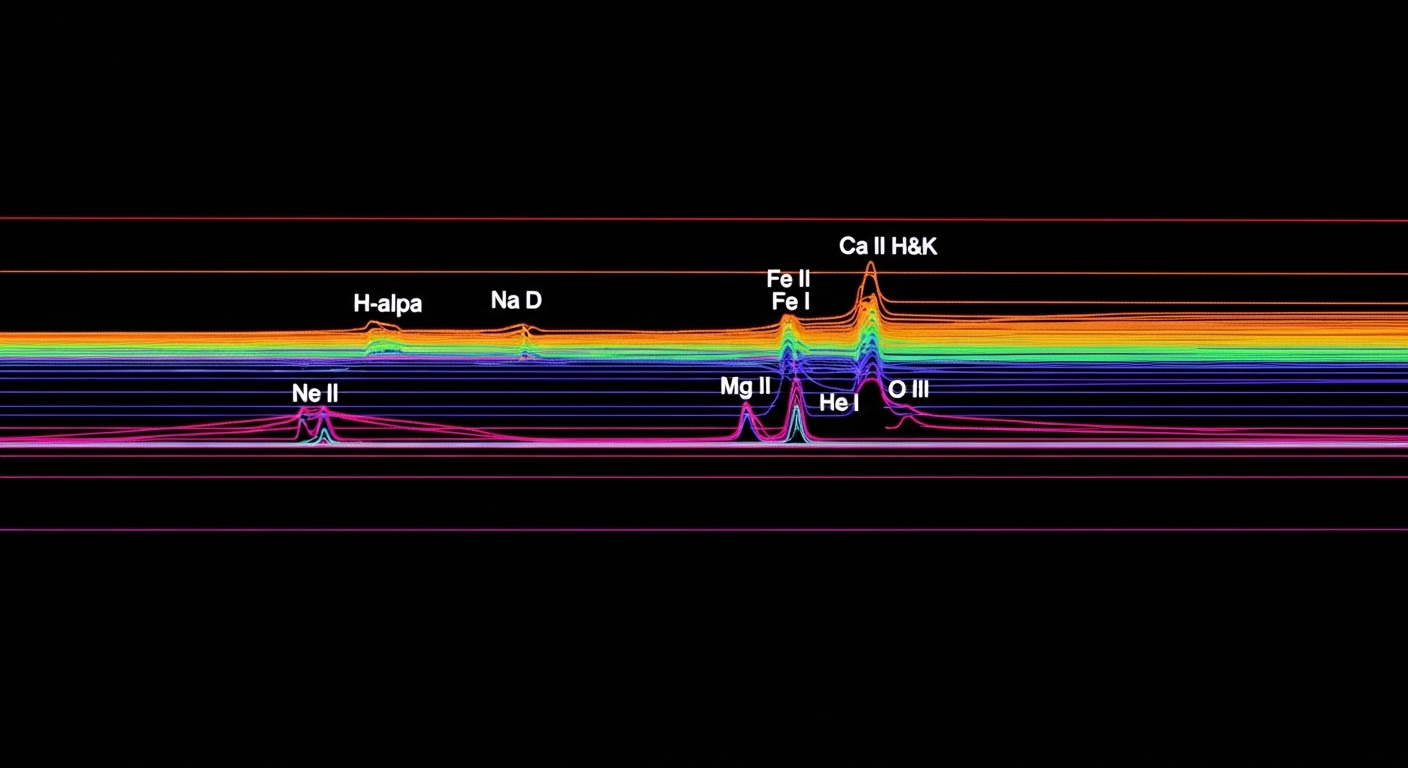
The detection of specific gases in an exoplanet's atmosphere is now one of the primary goals of modern telescopes. The James Webb Space Telescope has already begun analyzing atmospheric spectra of some TRAPPIST-1 planets, looking for signatures that might indicate geological activity or, more speculatively, biological processes.
Biosignatures — The Atmospheric Fingerprints of Life
Oxygen is the classic biosignature gas people point to, but it's trickier than it sounds. Oxygen can be produced abiotically — through photodissociation of water vapor, for instance. What scientists are really looking for is a combination of gases that shouldn't coexist without a biological explanation. Oxygen alongside methane is one such pair: in the absence of life, these two gases react and destroy each other relatively quickly. Finding both in significant quantities would be a serious flag.
Finding oxygen alone on an exoplanet proves almost nothing. Finding oxygen and methane together, in a stable ratio, is the kind of signal that would keep planetary scientists awake for a very long time.
Why Geology and Orbital Stability Matter More Than People Think
Plate Tectonics as a Life-Support System
Earth's plate tectonics do something that rarely gets mentioned in casual discussions of habitability: they act as a planetary thermostat. The carbon-silicate cycle, driven by volcanic activity and the subduction of ocean floor, regulates atmospheric CO2 over millions of years. When temperatures rise, more CO2 gets pulled out of the atmosphere through weathering. When temperatures fall, volcanic outgassing adds it back. Without this feedback loop, Earth's climate would likely have gone haywire long ago.
Whether plate tectonics is common on other rocky planets is genuinely unknown. It may require a specific combination of internal heat, water content in the mantle, and crustal thickness. Some researchers think it's rare; others think it's a natural outcome of rocky planet formation. This is one of those questions where the honest answer is: we don't know yet, and it matters enormously.
Orbital Stability and the Role of Giant Planets
A planet's orbit needs to stay reasonably stable over billions of years for life to have time to emerge and evolve. Highly elliptical orbits cause extreme seasonal temperature swings that could sterilize a surface. Jupiter's gravitational influence on Earth's orbit is subtle but real — and there's a long-running debate about whether Jupiter's presence has been mostly protective (deflecting incoming comets) or occasionally disruptive.
The presence of a large moon also matters. Earth's Moon stabilizes our axial tilt, keeping it from wobbling chaotically between extremes that would produce catastrophic climate swings. A planet without a stabilizing moon could still be habitable, but the conditions would be far more variable. Anyone who has watched a spinning top slow down and wobble has a rough intuition for what uncontrolled axial precession looks like.
(Opinion: The field has a tendency to anchor its definition of habitability too firmly to Earth-specific conditions. Life that uses a different solvent, thrives under radiation levels we'd consider lethal, or operates at temperatures near absolute zero isn't impossible — it's just inconvenient for our detection methods. The search for 'habitable' worlds is, in practice, a search for worlds habitable to us.)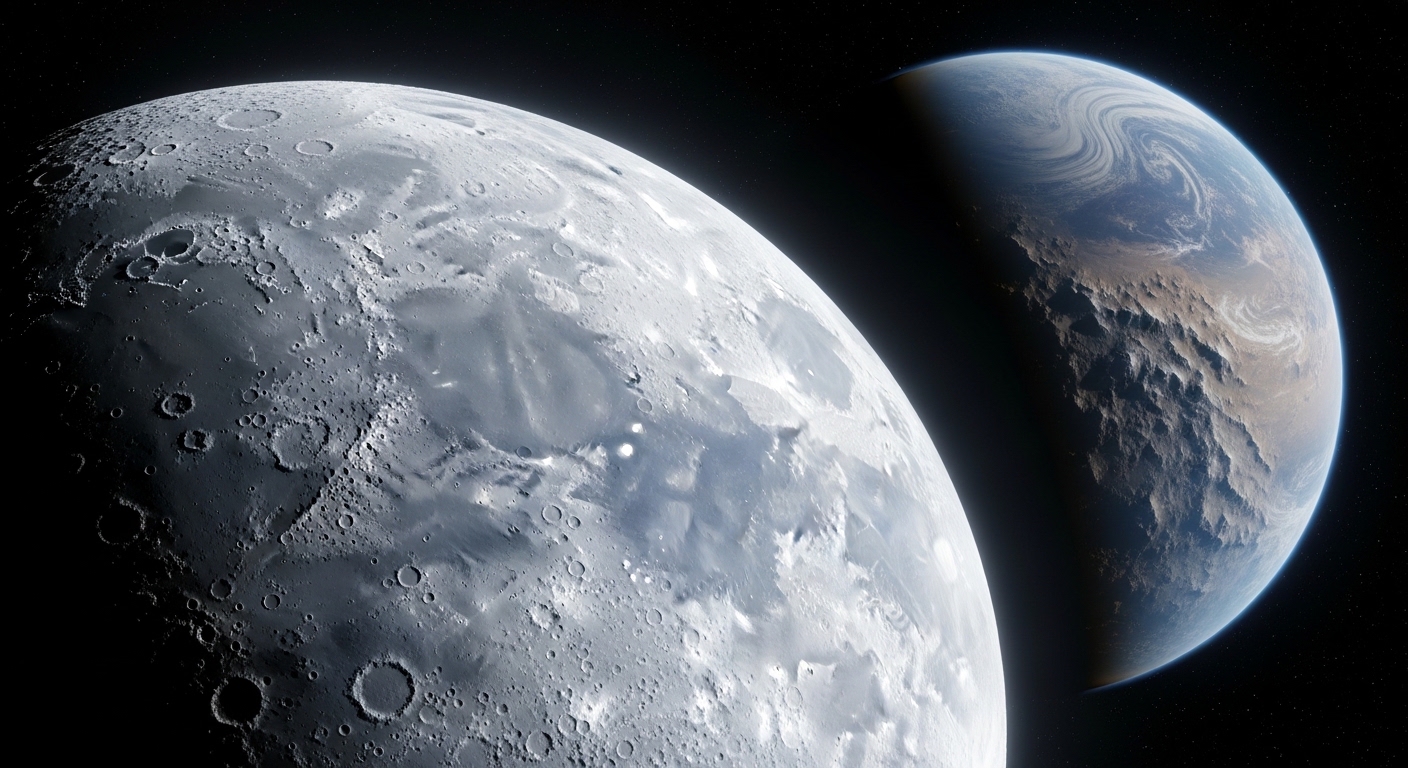
Frequently Asked Questions
How many potentially habitable exoplanets have been found so far?
Estimates vary depending on the criteria used, but databases tracking 'potentially habitable' candidates typically list several dozen planets that meet basic criteria — rocky, roughly Earth-sized, and within their star's habitable zone. The TRAPPIST-1 system alone contributes multiple candidates. That number will grow substantially as telescope sensitivity improves.
Could a moon orbiting a gas giant be habitable instead of a planet?
Yes, and this is a serious area of research. A large moon around a gas giant in the habitable zone could theoretically support liquid water, especially if tidal heating from the gas giant supplements solar warmth. The challenge is that such moons would also be exposed to intense radiation belts from their host planet, which could be a significant obstacle.
Why can't we just look at an exoplanet and see if it has oceans or continents?
Even with the most powerful telescopes currently operating, exoplanets appear as single points of light — we can't resolve surface features directly. What we can do is analyze the light that passes through or reflects off a planet's atmosphere to infer its composition. Direct imaging of Earth-like exoplanets at the resolution needed to see surface features is likely decades away, requiring telescope apertures far beyond anything currently built or funded.
The deeper you go into the habitability question, the more you realize how improbable Earth looks in retrospect — the right size, the right star, a giant moon, active tectonics, a magnetic field, a gas giant neighbor, an atmosphere that somehow stayed balanced for billions of years. That's not an argument for pessimism about life elsewhere. It's a reminder that when we do find a world that checks all those boxes, the implications will be almost impossible to overstate.
Related Posts
- 📄 What Are Biosignatures and How Do We Search for Them in Space?
- 📄 Red Planet Dreams: Is It Possible to Terraform Mars for Human Habitation?
- 📄 Organic Matter on Mars: What It Means for Life Beyond Earth
- 📄 Why Is Venus Hotter Than Mercury? The Surprising Science Explained
- 📄 Cotton Candy Planets: Exploring the Low-Density Worlds of Our Galaxy


Comments
Post a Comment