Organic Matter on Mars: What It Means for Life Beyond Earth
NASA's Curiosity rover has detected complex organic molecules preserved in ancient Martian rock — molecules that, on Earth, are the chemical building blocks of every living thing we have ever found. That discovery did not confirm life on Mars. But it did something almost as significant: it proved that Mars can hold onto organic chemistry across billions of years, which changes the entire search strategy for extraterrestrial life.

The Context You Need to Understand the Discovery
What 'Organic Molecules' Actually Means Here
The word 'organic' trips people up. In chemistry, it simply means carbon-containing compounds — it does not automatically mean biological. Organic molecules can form through purely geological or chemical processes, with no life involved whatsoever. What makes the Martian findings notable is not the molecules themselves, but their complexity and preservation.
Curiosity found thiophenic compounds, benzene, toluene, and small carbon chains in mudstone samples drilled from Gale Crater — a site that was once a lake. These are the kinds of molecules that, on Earth, show up in biological residues, fossil fuels, and hydrothermal systems. Mars had all three of those environments at some point in its history.
The samples came from rock estimated to be roughly 3.5 billion years old. The fact that any organic signal survived that long, through intense radiation and oxidizing surface chemistry, surprised researchers. Mars's thin atmosphere offers almost no UV protection, and the surface is laced with perchlorates — highly reactive chemicals that tend to destroy organics on contact.
Why Gale Crater Was the Right Place to Look
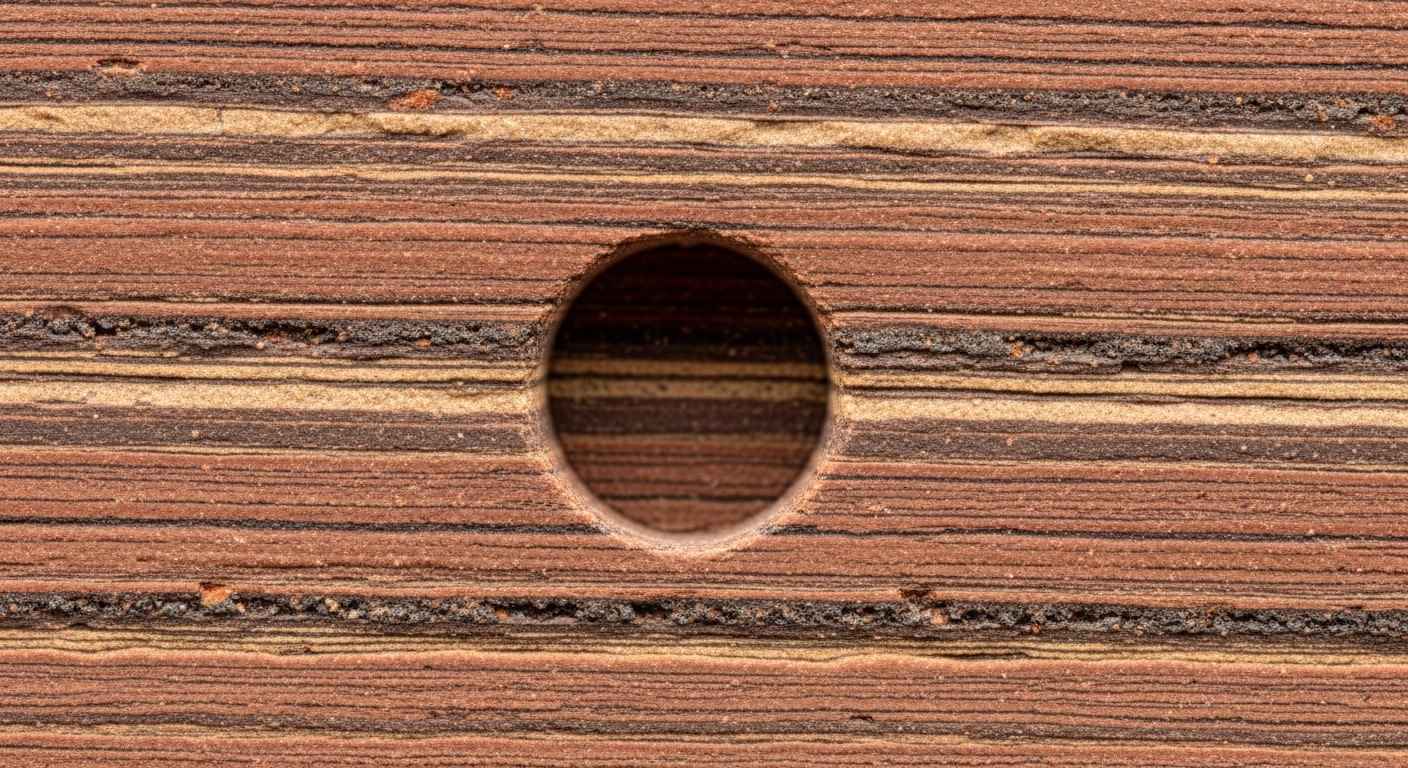
Gale Crater was chosen for Curiosity's landing in part because orbital data suggested it once held standing water. Layered sedimentary rock at the base of Mount Sharp — the central mound inside the crater — records hundreds of millions of years of Martian geology like pages in a book. Drilling into those layers is the closest thing we have to reading that history directly.
The mudstone where organics were found formed in what was likely a calm, shallow lake environment. On Earth, fine-grained lake sediments are excellent at trapping and preserving organic material precisely because they settle slowly and seal quickly. The same physics appears to have worked on Mars.
What Actually Happened — Breaking Down the Key Findings
The Seasonal Methane Signal
Alongside the solid organic detections, Curiosity has repeatedly measured methane in the Martian atmosphere — and the readings fluctuate with the seasons. That pattern matters. On Earth, most atmospheric methane comes from biological sources: microbes, decomposing organic matter, livestock. A smaller fraction comes from geological processes like serpentinization, where water reacts with certain rocks.
The seasonal variation on Mars is not yet explained. It could be that subsurface methane is released as surface temperatures rise and the ground expands slightly. It could be a purely chemical process. Researchers have been careful not to claim biology, but they have also not been able to rule it out. That ambiguity is exactly what keeps this story alive.
Methane in a planetary atmosphere has a short chemical lifespan — something on Mars is actively producing it, and we do not yet know what.
The Perseverance Rover Adds Another Layer
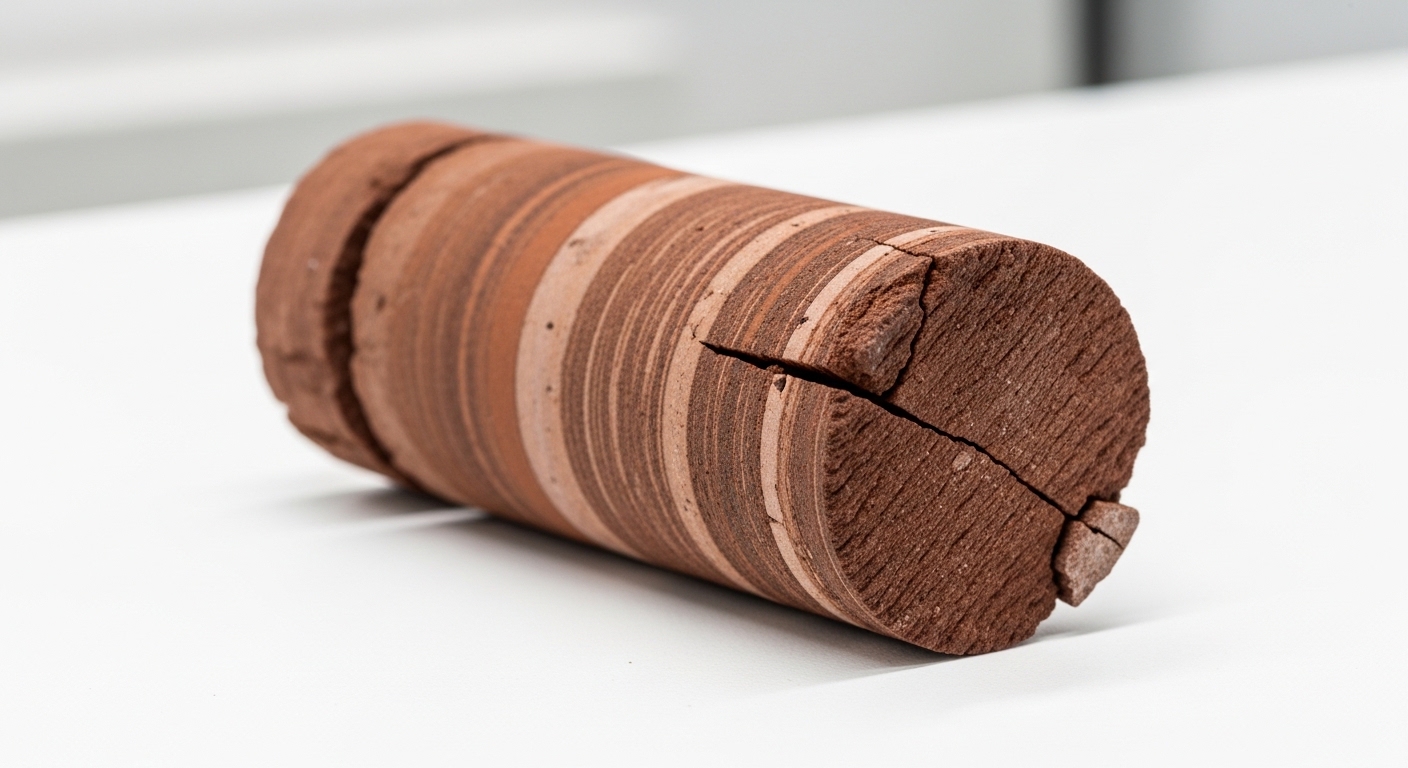
Curiosity's sibling rover, Perseverance, landed in Jezero Crater in 2021 — another ancient lake bed, this one with a preserved river delta. Perseverance carries more advanced instruments and has been caching rock core samples for eventual return to Earth. Those samples, if the planned Mars Sample Return mission succeeds, would allow analysis in terrestrial labs with equipment far more sensitive than anything a rover can carry.
Perseverance has also detected organic molecules in its target zone. The rover's SHERLOC instrument — a Raman spectrometer — has identified aromatic organics in several rock types, including in association with sulfate minerals that form in watery environments. The spatial correlation between organics and water-related minerals is exactly the pattern astrobiologists hoped to find.
Why This Matters — The Implications for Life Beyond Earth
It Shifts the Probability Calculation
Before these detections, a skeptic could reasonably argue that Mars was simply too harsh, too dry, and too radiation-blasted to have ever supported the chemistry that precedes life. That argument is now harder to make. Mars demonstrably had liquid water, a thicker atmosphere, and complex organic chemistry — simultaneously — during the same window when life was getting started on Earth.
That overlap is not proof of anything. But it does mean Mars clears what scientists sometimes call the 'prerequisites checklist.' Energy source? Yes — sunlight, geothermal activity, chemical gradients. Liquid water? Yes, for hundreds of millions of years. Organic building blocks? Confirmed. The question is no longer whether the ingredients were present. It is whether anything ever used them.
Mars did not fail the conditions test for life — it passed it. We just do not yet know if anything showed up to take the exam.
The Deeper Implication for the Rest of the Universe
Here is the counterintuitive part: if Mars — a planet that lost its magnetic field, most of its atmosphere, and all of its surface water — still preserves organic chemistry after 3.5 billion years, then the galaxy is almost certainly full of worlds with similar or better preservation conditions. Mars is not a special case. It is arguably a worst-case scenario for organic preservation, and it still worked.
That reframes the Fermi Paradox in an uncomfortable direction. The raw materials for life appear to be common, durable, and widespread. If life itself remains rare or absent despite that, the explanation has to lie somewhere in the gap between chemistry and biology — a gap we still do not understand at all.
(Opinion: The most honest reading of the Mars organic data is that it makes the absence of confirmed life more puzzling, not less. We keep finding the preconditions and not the product. Either life is extraordinarily hard to start even when conditions are right, or we are not looking in the right places — and possibly both.)
What Comes Next — The Search Enters a New Phase
Mars Sample Return and What It Could Settle
The Mars Sample Return mission — a joint NASA and ESA project — has faced significant budget and scheduling challenges. As of 2026, the timeline has been pushed back from earlier projections, and the mission architecture has been revised multiple times. But the scientific case for it has only grown stronger with each organic detection.
Bringing samples back to Earth matters because biosignatures — chemical or structural evidence of past life — require analysis at a level of precision that no rover instrument can match. Isotopic ratios of carbon, for instance, can distinguish biological from abiotic organic chemistry with high confidence in a terrestrial lab. A rover cannot do that. The samples Perseverance has cached are, in a real sense, waiting for the right tools to examine them.
The Subsurface as the Real Target
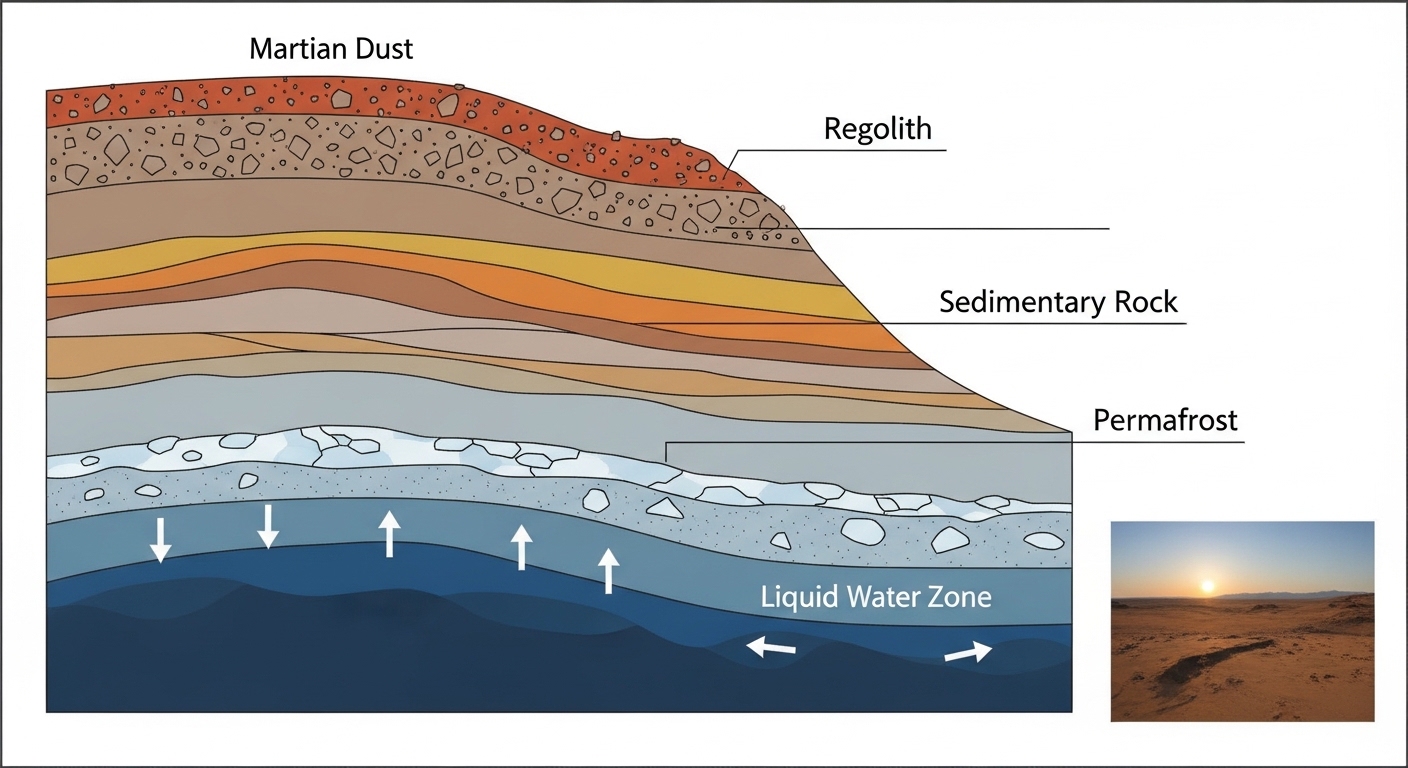
Most researchers now believe that if life ever existed on Mars — or still exists — it would be underground. The surface is too hostile: radiation, perchlorates, extreme temperature swings. But a few meters down, those conditions improve dramatically. Liquid water may persist in subsurface brines or near geothermal zones. Some Mars analog environments on Earth, like the deep subsurface mines of South Africa, host microbial communities with no sunlight and no surface connection whatsoever.
Current rovers cannot drill more than a few centimeters. Future missions designed specifically for deep drilling would be a genuine step change — but none are currently funded and scheduled for launch. That gap between what the science demands and what the mission budget allows is, frankly, the most frustrating part of this entire story for anyone following it closely.
Frequently Asked Questions
Does finding organic molecules on Mars mean life exists there?
No — organic molecules can form through purely geological and chemical processes without any biology involved. The detections confirm that Mars has the chemical building blocks associated with life, and that those molecules can survive for billions of years. They do not confirm that life ever existed or currently exists on Mars.
Why is the methane detection on Mars considered significant?
Methane breaks down relatively quickly in the Martian atmosphere through chemical reactions with sunlight. The fact that it keeps being detected — and that the levels change seasonally — means something is actively replenishing it. That source could be geological, chemical, or biological. Researchers have not been able to determine which, and that unresolved question is what makes it scientifically important.
Could the organic molecules have come from meteorites rather than Mars itself?
That is a genuinely live debate. Meteorites do carry organic compounds, and Mars gets hit regularly. Some of the simpler organics detected could plausibly have an extraterrestrial delivery origin. However, the complexity and distribution of some compounds — particularly those found in association with ancient lake sediments — is harder to explain purely by meteorite delivery. The honest answer is that both sources probably contributed, and separating them is part of what sample return analysis would help resolve.
The Mars organic story is not a headline that arrived and faded. Each new rover finding has added a layer of specificity that makes the question harder to dismiss and harder to answer. We now know Mars had the right chemistry, the right water, and the right timeframe. What we are left with is a planet that passed every prerequisite test for life — and a silence where the answer should be.



Comments
Post a Comment