Why Is Venus Hotter Than Mercury? The Surprising Science Explained
Mercury is the closest planet to the Sun — and yet it is not the hottest planet in our solar system. That title belongs to Venus, which sits nearly twice as far from the Sun but maintains a surface temperature of around 465 degrees Celsius (roughly 870 degrees Fahrenheit). That is hot enough to melt lead. The reason comes down to one of the most dramatic examples of atmospheric physics anywhere in the known solar system.
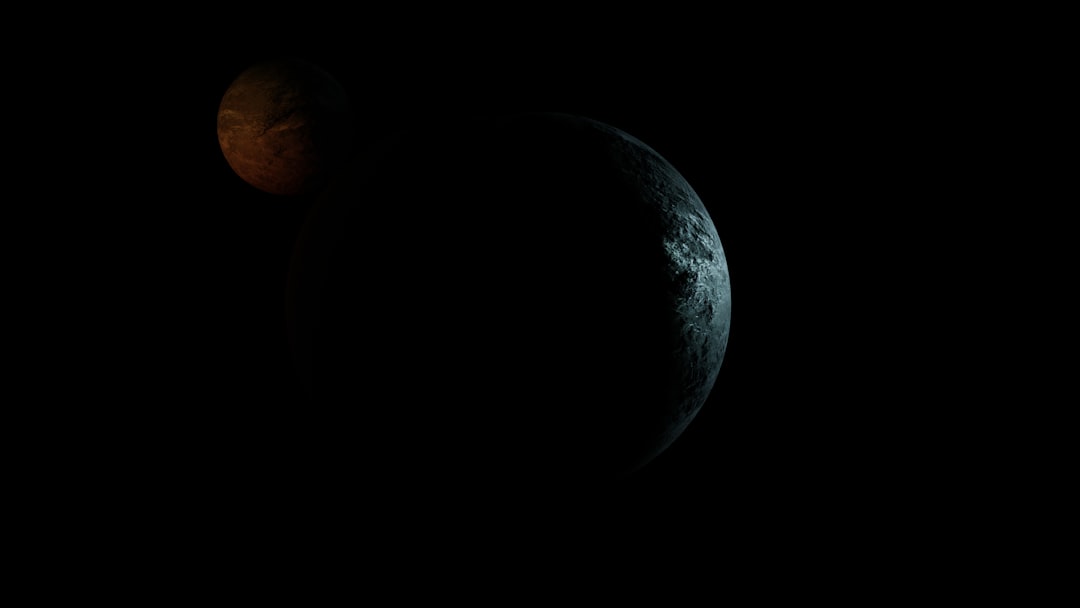
What Venus and Mercury Are Actually Like
Mercury: Close but Exposed
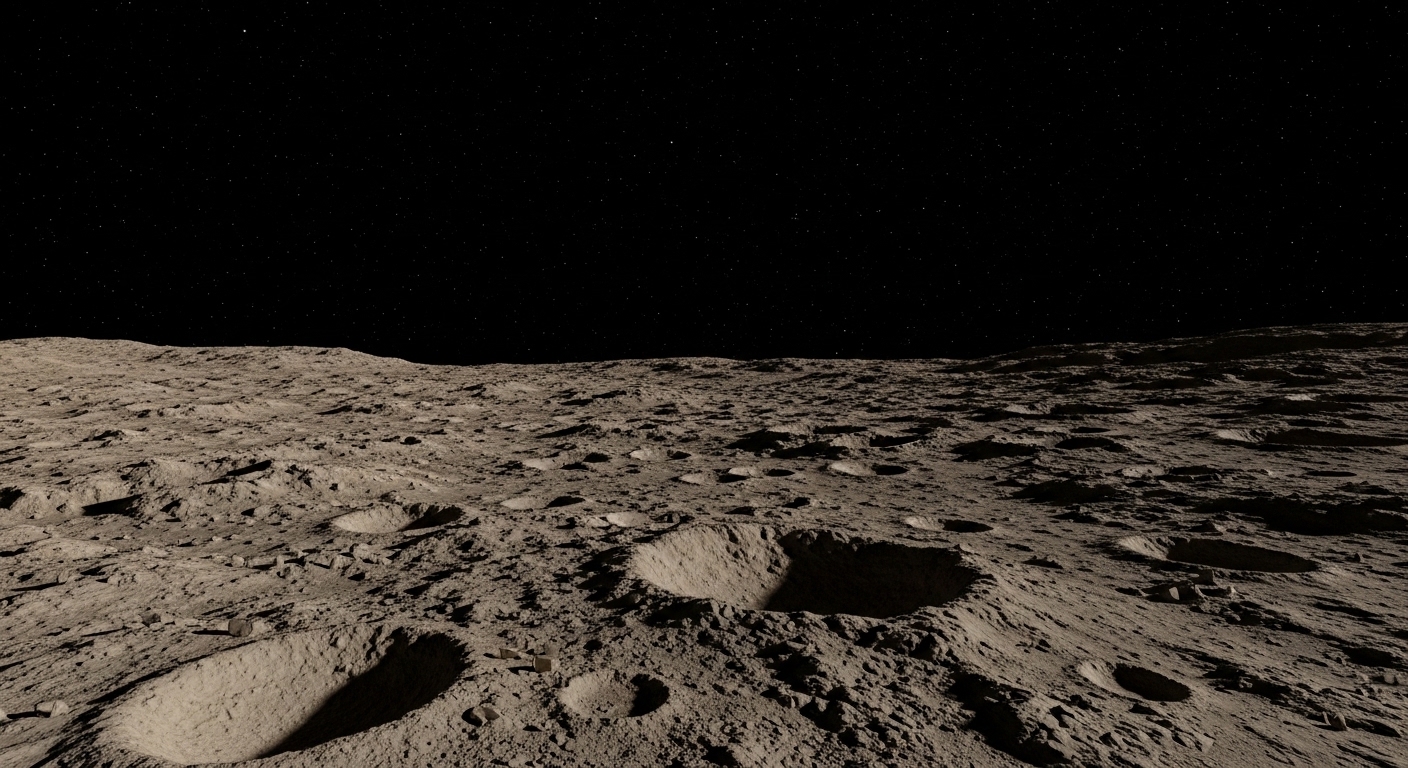
Mercury orbits at an average distance of about 58 million kilometers from the Sun. It has almost no atmosphere to speak of — just a thin, wispy exosphere made of atoms blasted off its surface by solar wind. Without a meaningful atmosphere, Mercury cannot trap heat. Its dayside can reach around 430 degrees Celsius, but the moment you move to the night side, temperatures plunge to roughly minus 180 degrees Celsius.
That swing — more than 600 degrees between day and night — tells you everything about what an atmosphere does (or does not do) for a planet. Mercury is essentially a bare rock with no thermal blanket.
Venus: Wrapped in a Pressure Cooker
Venus orbits at about 108 million kilometers from the Sun — nearly twice Mercury's distance. Its surface, however, never drops below around 460 degrees Celsius, day or night, pole or equator. The temperature barely varies across the entire planet. That kind of consistency is only possible when something is trapping heat with extraordinary efficiency.
That something is Venus's atmosphere: a dense, crushing layer of carbon dioxide roughly 90 times thicker than Earth's atmosphere at sea level. Standing on Venus would feel like being submerged 900 meters underwater — except the water is replaced with scorching, sulfuric-acid-laced gas.
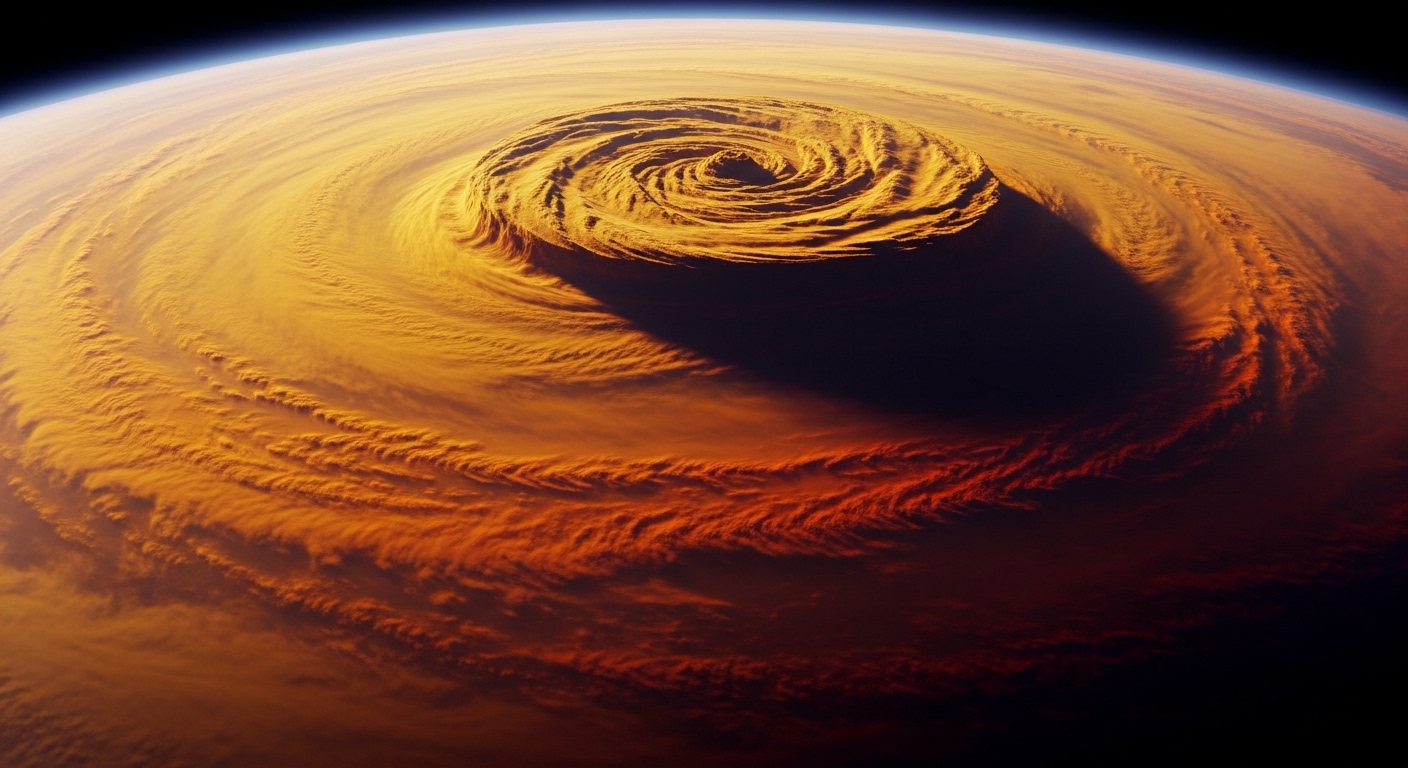
How the Greenhouse Effect Turns Venus Into a Furnace
The Basic Mechanism
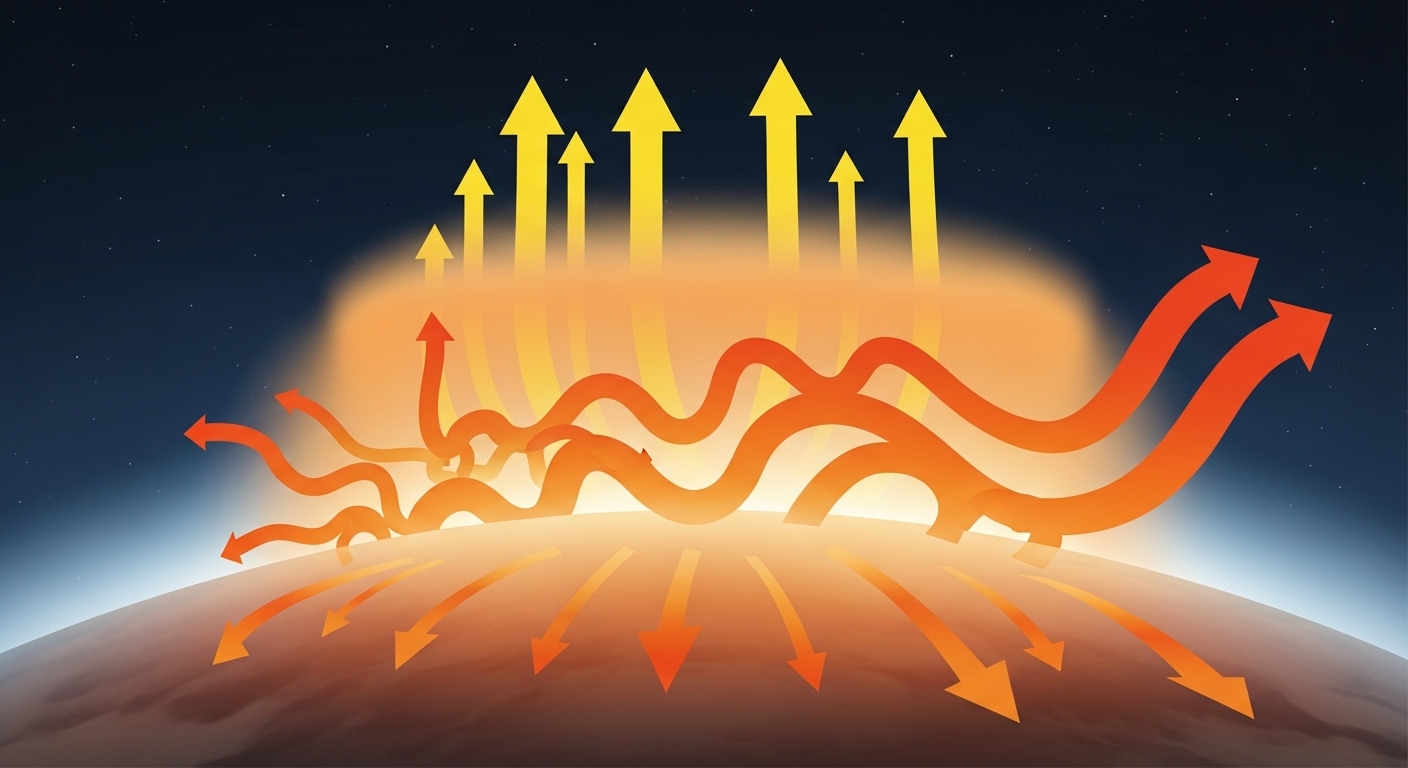
Sunlight passes through a planet's atmosphere and warms the surface. The surface then radiates that energy back outward as infrared radiation — essentially heat. Greenhouse gases like carbon dioxide absorb that outgoing infrared radiation and re-emit it in all directions, including back down toward the surface. The result is a planet that retains far more energy than it receives at any given moment.
On Earth, this effect is mild enough to make the planet habitable. On Venus, it has gone completely off the rails.
Venus does not just have a greenhouse effect — it has a runaway greenhouse effect that has been baking the planet for hundreds of millions of years, and it shows no signs of stopping.
Why Carbon Dioxide Is So Effective at This
Carbon dioxide molecules are particularly good at absorbing infrared wavelengths. Venus's atmosphere is about 96 percent CO2. At the atmospheric pressures found on Venus, that gas becomes an almost impenetrable thermal barrier. Sunlight gets in, but the heat essentially cannot get out fast enough to cool the surface.
There is also a layer of sulfuric acid clouds sitting between roughly 45 and 70 kilometers altitude. These clouds reflect about 70 percent of incoming sunlight back into space — which means Venus actually absorbs less solar energy than Earth does. And it is still hotter. That is how powerful the greenhouse trapping is.
The Runaway Feedback Loop
Scientists believe Venus may have once had liquid water oceans, possibly for up to 2 billion years. As the Sun gradually brightened over geological time, surface temperatures rose enough to start evaporating those oceans. Water vapor is itself a greenhouse gas, so more vapor meant more warming, which meant more evaporation. Eventually the oceans boiled away entirely, the water molecules in the upper atmosphere were broken apart by ultraviolet radiation, and the hydrogen escaped into space. What remained was a CO2-dominated atmosphere with no mechanism left to cool down.
Where Mercury Falls Short — Literally
No Atmosphere, No Heat Retention
The reason Mercury cannot compete with Venus in terms of sustained heat is simple: it has nowhere to store energy. Solar radiation hits the surface, warms it intensely, and then radiates back into space the moment the Sun sets. Mercury's rotation is also extremely slow — one Mercurian day lasts about 59 Earth days — so the night side has a very long time to cool down with nothing to stop it.
This is the counterintuitive core of the whole story. Proximity to the Sun matters far less than what you do with the energy once it arrives. A planet with a powerful enough atmosphere can outperform a planet twice as close to the star.
Distance from the Sun sets the budget. Atmosphere determines how much of that budget you actually keep.
An Engineering Analogy That Actually Helps
Think of it like insulation in a house. A house closer to a heat source but with no insulation will lose warmth the moment the source is turned off. A house farther away but wrapped in thick insulation stays warm for hours — or in Venus's case, essentially forever. Mercury is the uninsulated house. Venus is wrapped in the most extreme insulation imaginable.
Why This Matters Beyond a Fun Solar System Fact
Venus as a Warning for Exoplanet Research
When astronomers search for habitable exoplanets, they use something called the 'habitable zone' — the range of distances from a star where liquid water could theoretically exist on a surface. Venus sits just outside the inner edge of our Sun's habitable zone. But the Venus example shows that a planet's position alone tells you almost nothing about its actual surface conditions. Atmospheric composition is the deciding factor.
Several exoplanets discovered in recent years sit in their star's habitable zone but may have Venus-like atmospheres. The Venus comparison has become a critical reference point for researchers trying to distinguish genuinely habitable worlds from beautifully positioned ovens.
What Venus Tells Us About Earth's Future
The Sun will continue to brighten over billions of years. Some models suggest Earth could eventually undergo a similar runaway greenhouse process — though estimates on the timeline vary widely, with some placing it more than a billion years away. Venus may be showing us what that end state looks like. The surface of Venus has been mapped by radar (since optical cameras are useless through those clouds), and what scientists found was a geologically young surface, suggesting the planet was reshaped by volcanic activity relatively recently in geological terms. Whether that volcanism contributed to the current atmospheric state is still an open research question.
(Opinion: The Venus-Mercury comparison is one of the most effective teaching tools in all of planetary science, not because it is dramatic, but because it dismantles a deeply intuitive assumption — that being closer to a heat source automatically means being hotter. Once you understand why that assumption fails, you start seeing atmospheric physics everywhere, including in climate discussions much closer to home.)
Frequently Asked Questions
Is Venus always hotter than Mercury, even on Mercury's dayside?
Yes. Mercury's dayside can reach around 430 degrees Celsius at its hottest point, while Venus maintains a relatively constant 465 degrees Celsius across its entire surface. So even at Mercury's peak, Venus still edges it out — and Venus never cools down the way Mercury does at night.
Could Venus ever be cooled down to habitable temperatures?
Theoretically, yes — but the engineering challenge is almost incomprehensible. Some proposals involve deploying a large sunshade at the L1 Lagrange point between Venus and the Sun to reduce incoming solar radiation, then somehow removing most of the CO2 from the atmosphere over centuries. Even optimistic estimates suggest this would take hundreds of years at minimum, and no such technology currently exists at anywhere near the required scale.
Why does Venus rotate so slowly and in the wrong direction?
Venus rotates extremely slowly — one Venusian day is longer than one Venusian year — and it rotates in the opposite direction to most planets, meaning the Sun rises in the west and sets in the east. The leading explanation involves a combination of tidal forces from the Sun and the gravitational drag of its thick atmosphere, though the exact history of how Venus ended up this way is still debated among planetary scientists.
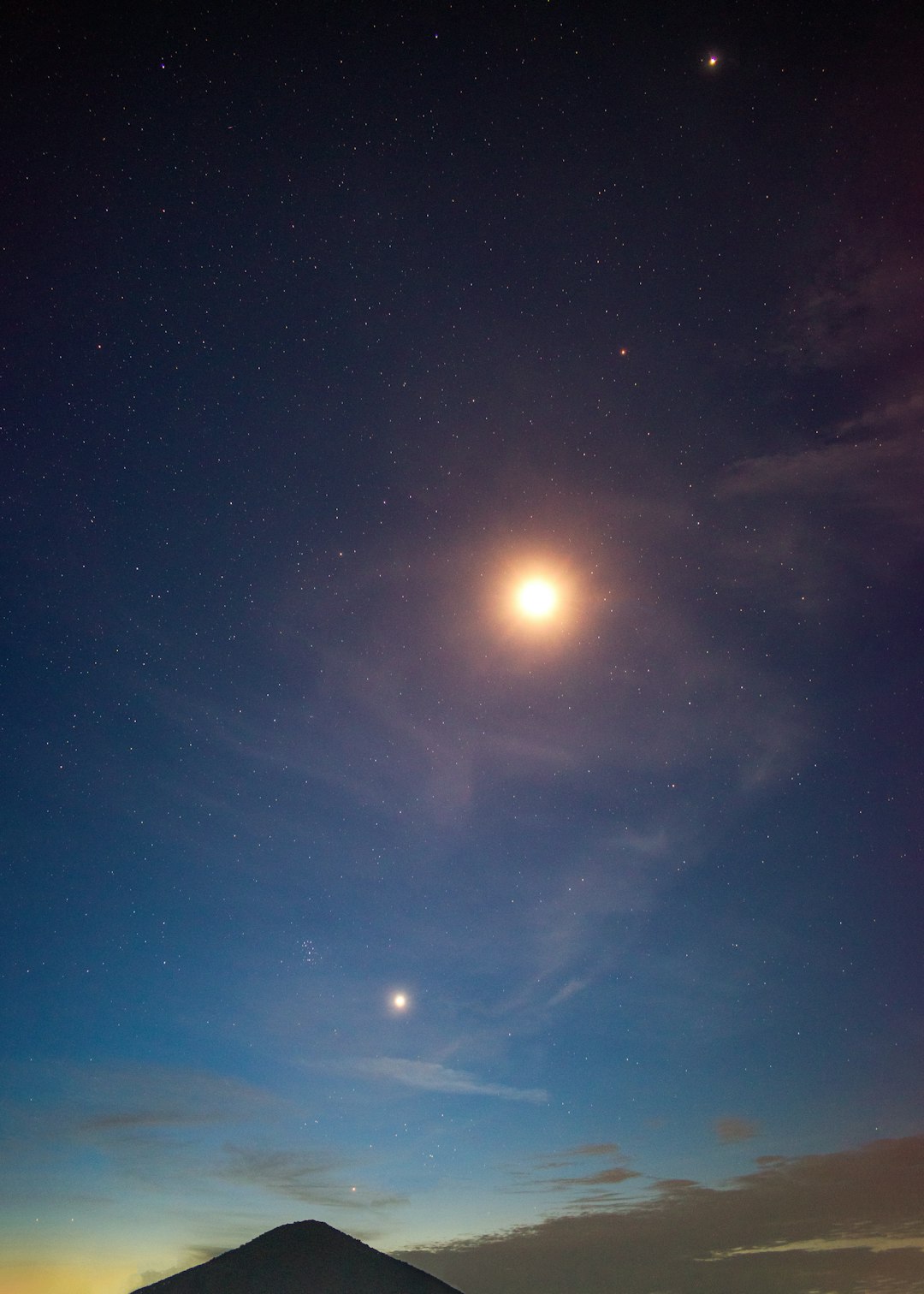
The strangest part of the Venus story is not the temperature itself — it is the sulfuric acid clouds that reflect most of the sunlight away, making Venus one of the brightest objects in our night sky. From Earth, it looks serene and luminous. From the surface, it is a place where Soviet landers in the 1970s and 1980s survived for only about an hour before being destroyed by heat and pressure. Beauty and lethality, separated by 90 atmospheres of CO2 and a few hundred kilometers of altitude. The gap between appearance and reality does not get much wider than that.


Comments
Post a Comment