The Science Behind Your Car Key Fob: How It Works
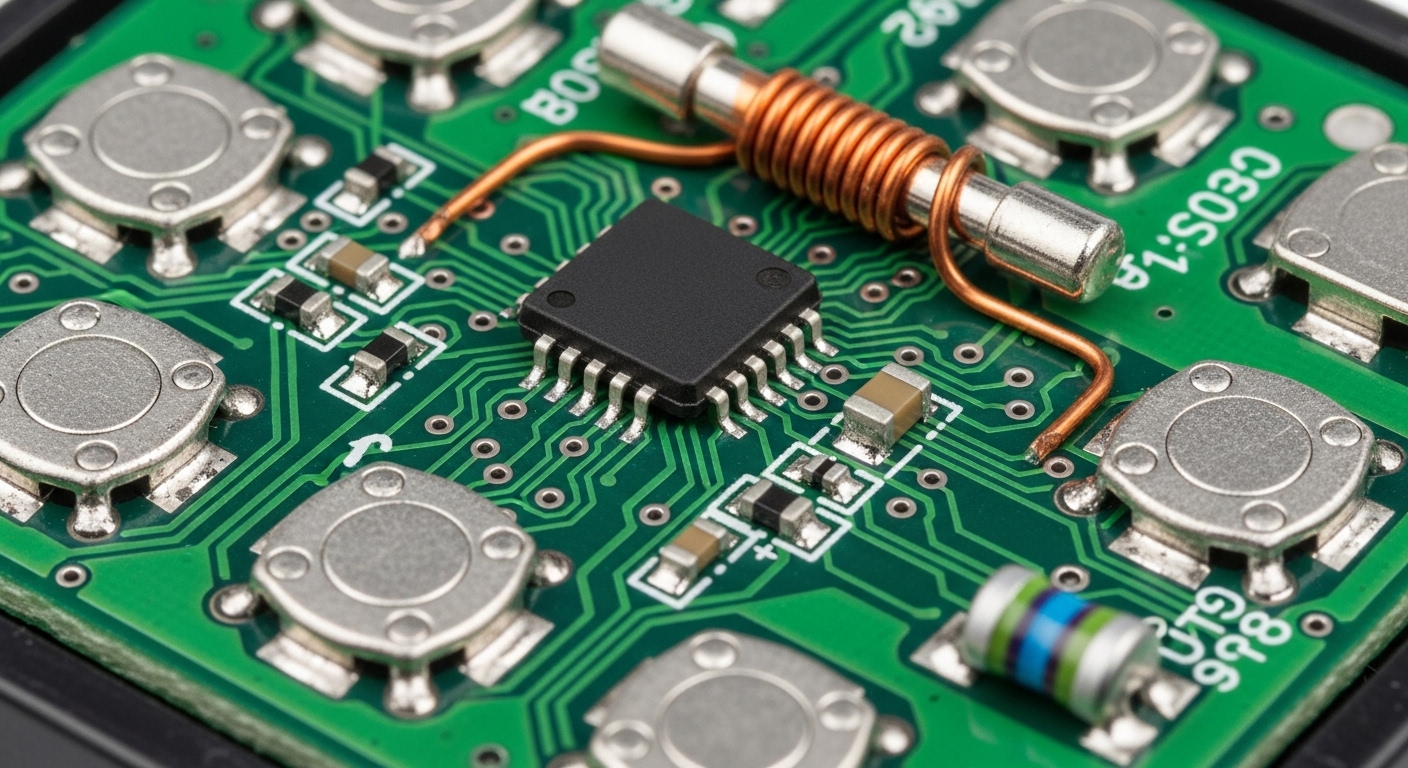
Every time you press that small button and hear your car chirp from across a parking lot, you're using a piece of radio engineering that took decades to miniaturize into something that fits on a keychain. The modern key fob is a one-way or two-way radio transmitter, a rolling-code cryptographic device, and a battery-powered microcontroller — all crammed into a plastic shell roughly the size of a matchbook. Most people treat it like a TV remote. It's considerably more sophisticated than that.
What Is a Car Key Fob, Really?
More Than a Wireless Button
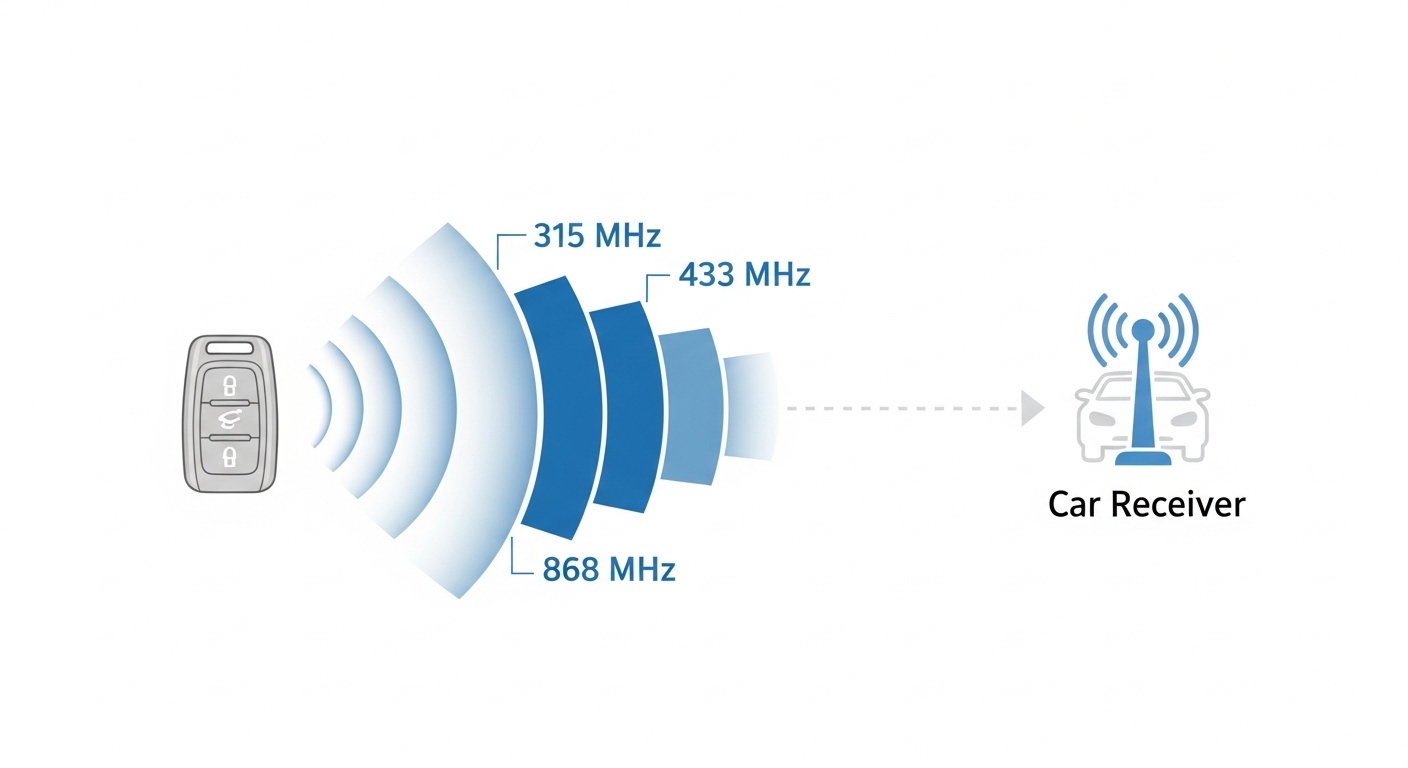
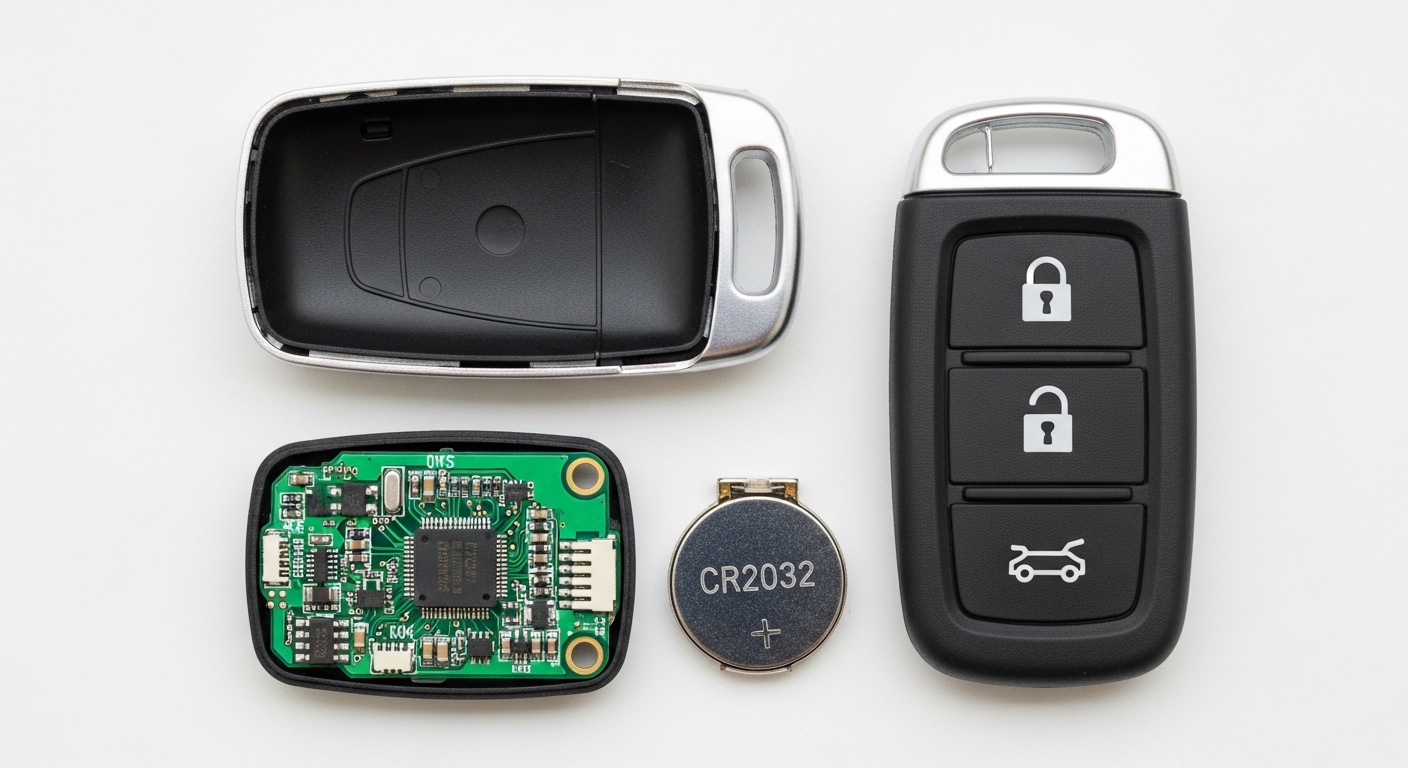
A key fob is a short-range radio frequency (RF) transmitter that communicates with a receiver module built into your vehicle. When you press a button, the fob sends a coded radio signal — typically in the 315 MHz band in North America or the 433.92 MHz band in Europe and Asia — and the car's receiver decodes it to trigger a specific action like unlocking the doors or popping the trunk.
The 'fob' part of the name is old. The word originally referred to a small pocket or ornament attached to a watch chain. Somewhere along the way, it got borrowed to describe any small device that dangles from a keyring. The technology inside, though, is anything but antique.
Early versions from the 1980s and early 1990s used a fixed code — the same signal every single time you pressed the button. That created an obvious security problem. A thief with a basic radio scanner could record your signal and replay it to unlock your car. Which is exactly what started happening.
How Rolling Code Encryption Keeps Your Car Secure
The Problem with Fixed Codes
The fixed-code vulnerability wasn't theoretical. By the mid-1990s, relay attacks and code-grabbing devices were a documented real-world problem in several countries. Manufacturers needed a solution that made each transmitted signal unique and useless the moment it was used.
The answer was rolling code technology, sometimes called hopping code. Here's how it works: both the fob and the car's receiver share a secret seed number and run the same algorithm — most commonly a variant of the KeeLoq cipher, developed in the 1980s and later licensed widely to automotive chipmakers. Every time you press the button, the fob generates a new code based on the previous one, and the car's receiver independently calculates what the next valid code should be.
Rolling code means the signal you just transmitted is already invalid by the time a thief tries to replay it. The window of vulnerability is measured in milliseconds.
What Happens When the Codes Fall Out of Sync?
Here's a quirk most people never think about: if you press your fob button many times while out of range of the car — say, it's in your pocket and you're squeezing it absentmindedly — the fob's counter advances but the car's counter doesn't. This creates a sync gap.
Most systems tolerate a window of roughly 256 button presses out of sync before they refuse to respond. Beyond that, you typically need to re-synchronize the fob by standing near the car and pressing the button a set number of times in a specific sequence. Anyone who has ever had a fob 'stop working' for no apparent reason has probably hit this limit.
Passive Keyless Entry vs. Remote Keyless Entry — What's the Difference?
Active vs. Passive Systems
Remote Keyless Entry (RKE) is the classic system: you press a button, the car responds. Passive Keyless Entry (PKE) — the kind that unlocks the car just because you walk up to it with the fob in your pocket — works differently. The car continuously broadcasts a low-frequency (LF) signal, typically around 125 kHz, that acts as a 'wake-up' ping. When your fob enters the field, it wakes up and responds with its UHF signal back to the car.
This is why passive entry systems drain fob batteries faster. The fob isn't just waiting passively — it's constantly listening for the car's LF field. The car is doing the same on its end, polling for nearby fobs every second or so.
Passive systems also introduced a new attack vector: relay attacks. Two thieves work as a team — one stands near the car, the other stands near your house where the key fob is sitting on a table. They use radio amplifiers to extend the car's LF field artificially, trick the fob into thinking it's next to the car, and drive away. This is a documented, real-world theft method that has affected numerous vehicle models globally.
Storing your key fob in a metal tin or a signal-blocking pouch at home isn't paranoia — it's a straightforward defense against relay attacks that cost nothing.
The Transponder Chip — A Separate Layer
Most modern car keys also contain a passive RFID transponder chip embedded in the key head itself, separate from the fob electronics. When you insert the key and turn the ignition, the car's antenna ring around the ignition cylinder energizes the chip, reads its unique code, and only then allows the engine to start. This is the immobilizer system. The fob can unlock the doors, but without the correct transponder response, the engine management system won't authorize fuel injection or ignition.
Why Your Fob Range Varies — and What Affects It
Physics, Interference, and Battery Chemistry
A typical key fob has a rated range of roughly 15 to 30 meters under ideal conditions. 'Ideal conditions' means open air, no competing radio sources, and a fresh battery. In a crowded urban environment, that range can drop significantly. Wi-Fi routers, other vehicles' fob systems, and even certain LED lighting systems can create interference in the relevant frequency bands.
There's a well-known trick that actually works: holding the fob against your chin and pressing the button. Your skull acts as a crude antenna extension — the fluid and tissue in your head conduct and re-radiate the RF signal, adding a few extra meters of range. It looks absurd, but the physics is real. Researchers have demonstrated it in controlled tests.
Battery voltage also matters more than people expect. A fob running on a battery at 2.5 volts instead of the nominal 3 volts isn't just 'a little weak' — the transmitted signal power drops nonlinearly, which is why range seems to fall off a cliff right before the battery dies rather than degrading gradually.
Temperature Effects
Cold weather hits fob range hard. Lithium coin cells — the CR2032 type found in most fobs — lose a measurable portion of their capacity below freezing. If your fob suddenly seems unreliable on a January morning, the battery chemistry is a likely culprit, not a failing fob.
What the Future of Key Fob Technology Looks Like
Digital Keys and UWB
Ultra-Wideband (UWB) radio technology is increasingly appearing in premium vehicles as a replacement for or supplement to traditional fob systems. Unlike the 315/433 MHz signals used in conventional fobs, UWB can measure the precise distance and angle between the key device and the car to within centimeters. That precision makes relay attacks essentially impossible — the system knows whether the key is 0.5 meters away or 50 meters away.
Smartphone-based digital keys using UWB are already in production vehicles from several major manufacturers. The phone replaces the fob entirely, using a secure enclave chip to store the cryptographic credentials. The convenience is real, but so is the dependency — a dead phone battery locks you out in a way a dead fob battery never quite did, since most cars retain a physical key slot as a backup.
The humble key fob, for all its apparent simplicity, turned out to be a surprisingly hard problem to solve securely. Decades of iteration produced something that works reliably billions of times a day worldwide — and the attacks against it have pushed the engineering forward in ways that will define how we authenticate with physical objects for years to come.
Frequently Asked Questions
Can someone clone my key fob and steal my car?
With modern rolling-code systems, simple cloning is not practical — each code is used only once. However, relay attacks on passive keyless entry systems are a real and documented threat. Using a signal-blocking pouch for storage and choosing vehicles with UWB-based systems or motion-sensing fobs reduces this risk substantially.
Why does my key fob work better when I hold it near my head?
Your body, particularly the fluid-rich tissue in your head, acts as a supplementary antenna that re-radiates the fob's signal. This can extend effective range by a few meters. It looks strange but it is grounded in basic RF physics and has been confirmed in informal testing by engineers and radio hobbyists alike.
If I replace my key fob battery, do I need to reprogram it?
In most cases, no. The cryptographic seed and counter values are stored in non-volatile memory inside the fob's microcontroller, which retains data without power. Simply swapping the battery restores full function. The exception is if the fob's counter has drifted far out of sync with the car, in which case a brief re-synchronization procedure — usually just pressing the button a few times near the vehicle — is all that's needed.
The real legacy of the key fob might not be convenience — it might be that it quietly introduced rolling cryptography to hundreds of millions of people who never knew they were using it. Every chirp from a parking lot is a tiny cryptographic handshake, completed in under a millisecond, that most of us perform a dozen times a day without a second thought. The next time your car doesn't respond on the first press, you're not dealing with a broken gadget. You're watching a security protocol negotiate.
Related Posts
- 📄 How Does End-to-End Encryption Actually Work? A Simple Explanation
- 📄 The Intricate World of Tourbillon Watches: How They Work
- 📄 How Do Smart Rings and Watches Actually Track Your Sleep?
- 📄 How Does GPS Work? The Science Behind Knowing Your Location
- 📄 How Do Self-Driving Cars Work? An Explainer for Curious Minds


Comments
Post a Comment