Beyond Venus Flytraps: How Carnivorous Plants Trap Their Prey
A single Nepenthes rajah pitcher plant can hold up to 3.5 liters of digestive fluid — enough to drown a small rat. That is not a metaphor. Researchers have documented vertebrates, including rodents and lizards, found dissolved inside wild pitchers in Borneo. The Venus flytrap gets all the fame, but it represents just one of at least six fundamentally different trapping mechanisms that carnivorous plants have independently evolved across the globe. Each one is a separate engineering solution to the same problem: how do you catch and digest an animal when you cannot move?
What Makes a Plant Carnivorous? The Plain-Language Definition
It Is Not Just About Eating Bugs
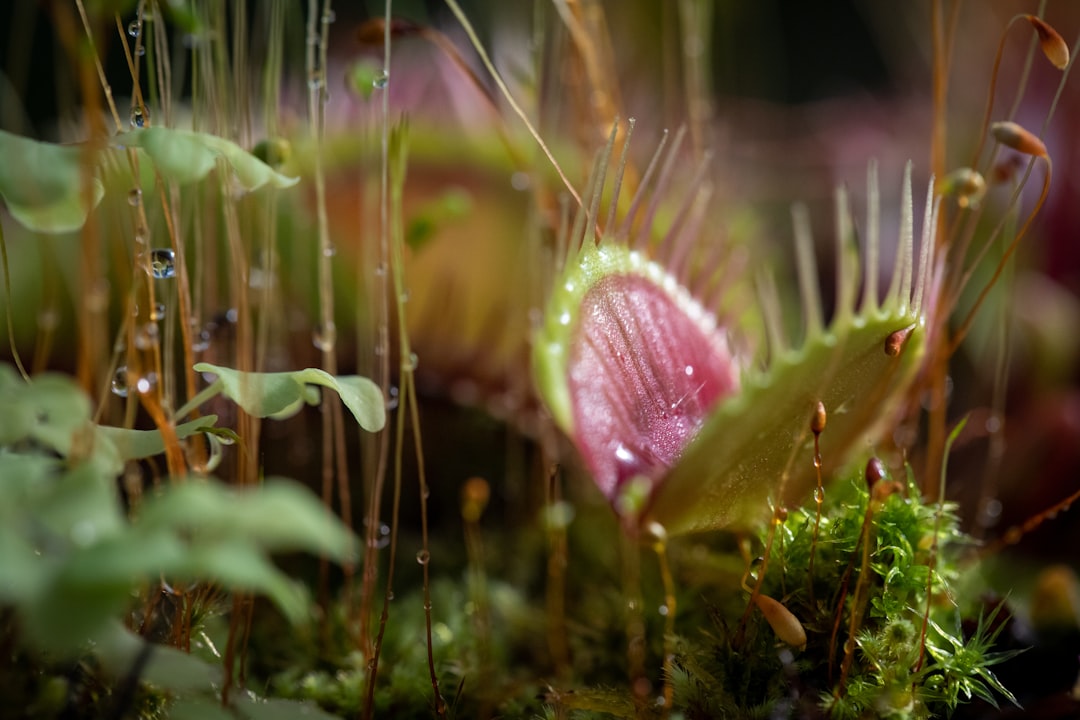
A plant qualifies as carnivorous when it can both attract and capture prey, and then absorb nutrients from the digested remains. All three parts matter. Plenty of plants are sticky or trap insects accidentally, but without the ability to actually absorb the nutrients, they do not make the cut. Botanists estimate there are roughly 600 to 800 confirmed carnivorous plant species, though the exact number shifts as new species are described and reclassified.
The reason these plants went down this evolutionary path is almost always the same: they live in nutrient-poor environments. Bogs, fens, rocky outcrops, and waterlogged soils where nitrogen and phosphorus are nearly absent. Photosynthesis still provides their energy, but animal prey fills the nutritional gap that the soil cannot. Think of it as a dietary supplement strategy, not a replacement for sunlight.
The Soil Problem That Started Everything
Sphagnum bogs — the classic habitat for many carnivorous plants — are acidic, waterlogged, and almost biologically sterile in terms of available nitrogen. Regular plants struggle there. Carnivorous plants thrive precisely because they found a workaround. The trade-off is real, though: building and maintaining traps is metabolically expensive, so these plants tend to grow slowly and do poorly in rich soil where competitors outgrow them.
How Passive Traps Work — Pitchers, Flypaper, and Lobster Pots
Pitcher Traps: The Drowning Pool
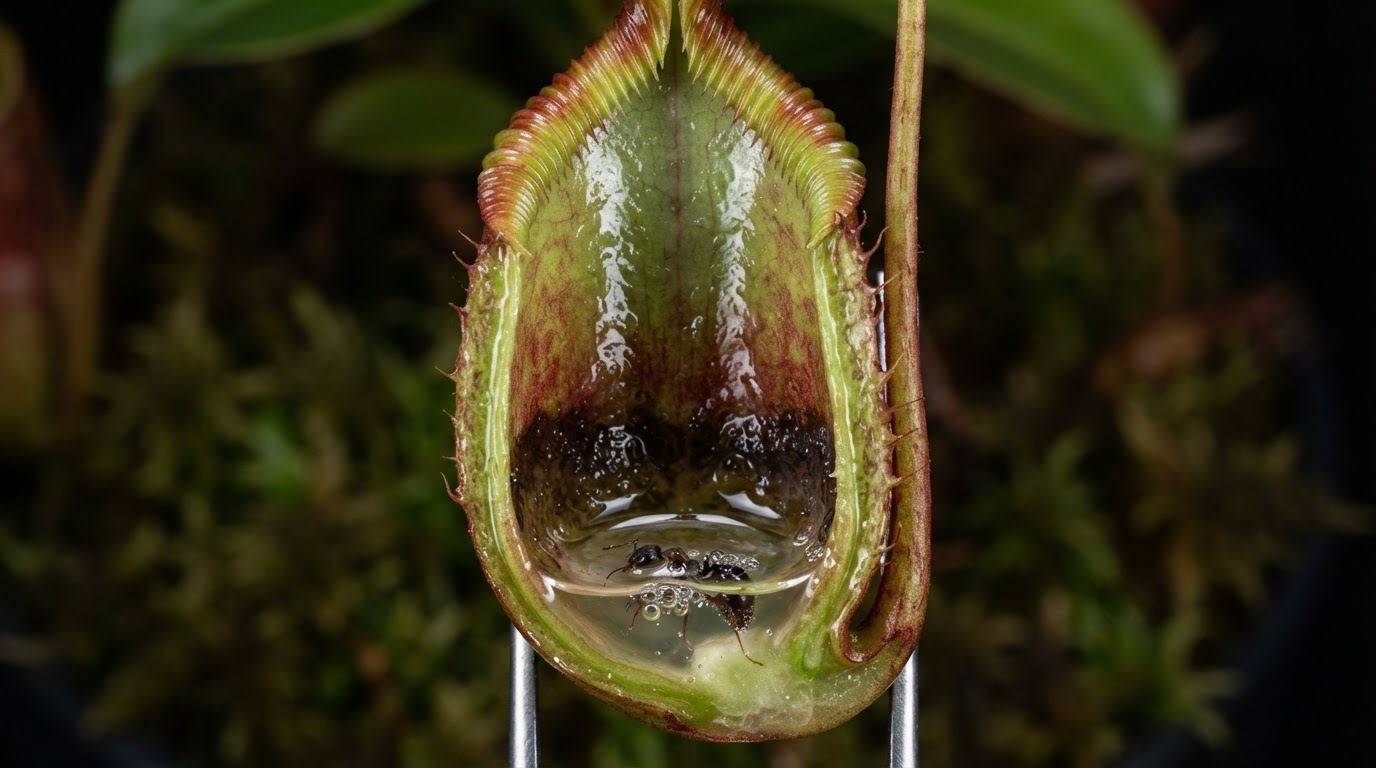
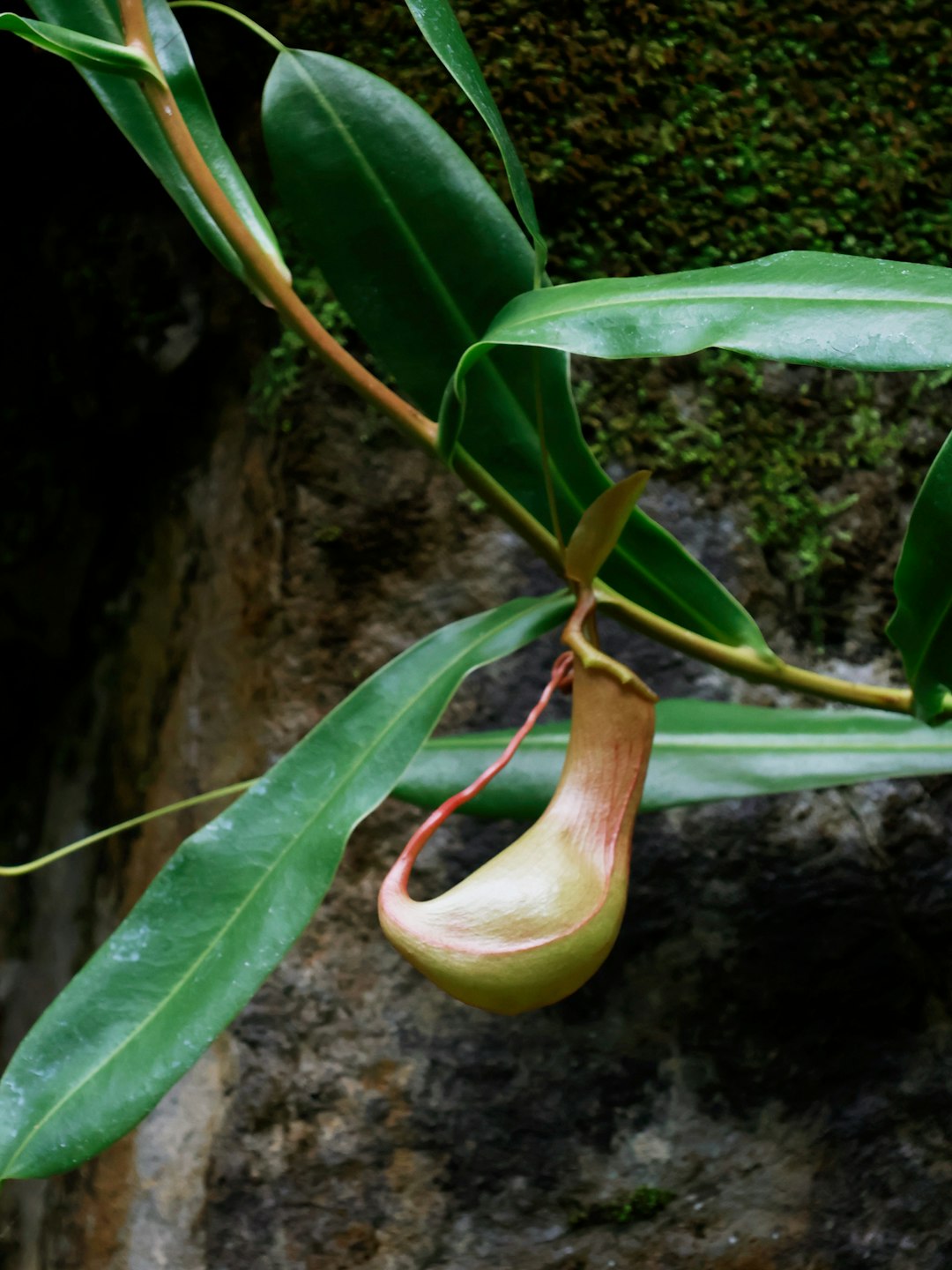
Pitcher plants — including Nepenthes from Southeast Asia and Sarracenia from North America — lure insects with nectar, bright colors, and sometimes ultraviolet patterns invisible to the human eye. Once an insect lands on the rim, the surface is either waxy, slippery, or covered in downward-pointing hairs. The prey falls into a pool of digestive enzymes and drowns. The plant then absorbs the nitrogen-rich soup.
What most people do not know is that some Nepenthes pitchers have evolved a mutualistic relationship with tree shrews and bats. The Nepenthes lowii in Borneo secretes a sugary exudate on its lid that tree shrews eat while perching over the pitcher — and then defecate directly into it. The plant gets nitrogen from the droppings. No insect required. It is a toilet that pays rent.
Flypaper Traps: Stuck in Place
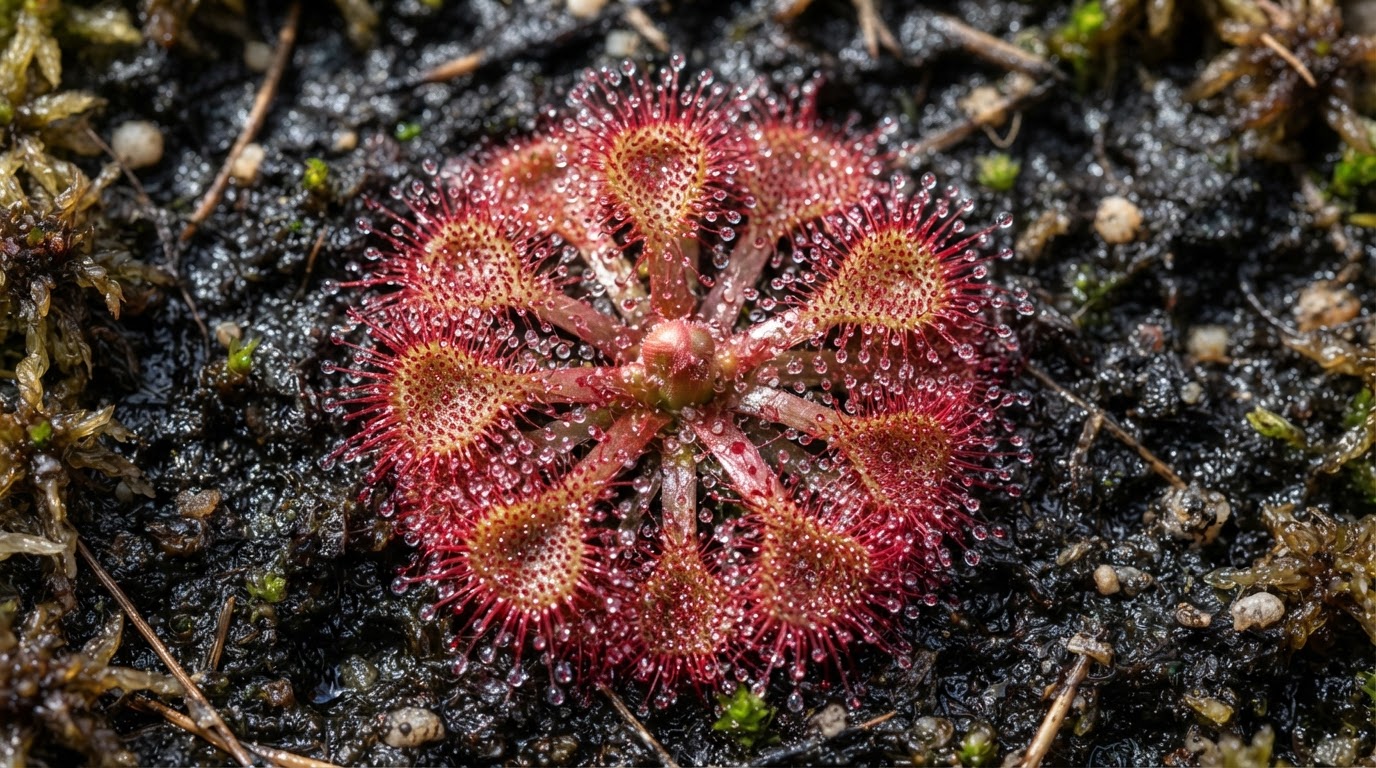
Sundews (Drosera) and butterworts (Pinguicula) use a completely different approach: sticky mucilage secreted from glands on their leaf surfaces. An insect lands, gets stuck, and the more it struggles, the more glands it contacts. In sundews, the tentacles themselves slowly curl inward over minutes or hours to maximize contact with the prey. Butterworts are more passive — their leaves are essentially living flypaper, and they mostly catch small flies and springtails.
Sundews are the most species-rich carnivorous genus on the planet, with well over 200 described species found on every continent except Antarctica. They range from tiny rosettes smaller than a coin to climbing vines over a meter long in Australia.
Lobster-Pot Traps: No Exit
Corkscrew plants (Genlisea) use one of the strangest passive mechanisms in the plant kingdom. They have underground Y-shaped leaves lined with inward-pointing hairs. Microorganisms swim in through the opening following chemical gradients — essentially following the smell of food — and the hairs prevent them from backing out. They are guided deeper and deeper until they reach the digestive zone. There is no snap, no sticky surface. Just an architectural maze with one-way walls.
Genlisea traps work like a lobster pot built from living tissue — prey enters following chemical signals and cannot reverse course because every surface pushes them forward.
How Active Traps Work — The Snap, the Suck, and the Twist
Snap Traps: The Venus Flytrap's Mechanism Explained
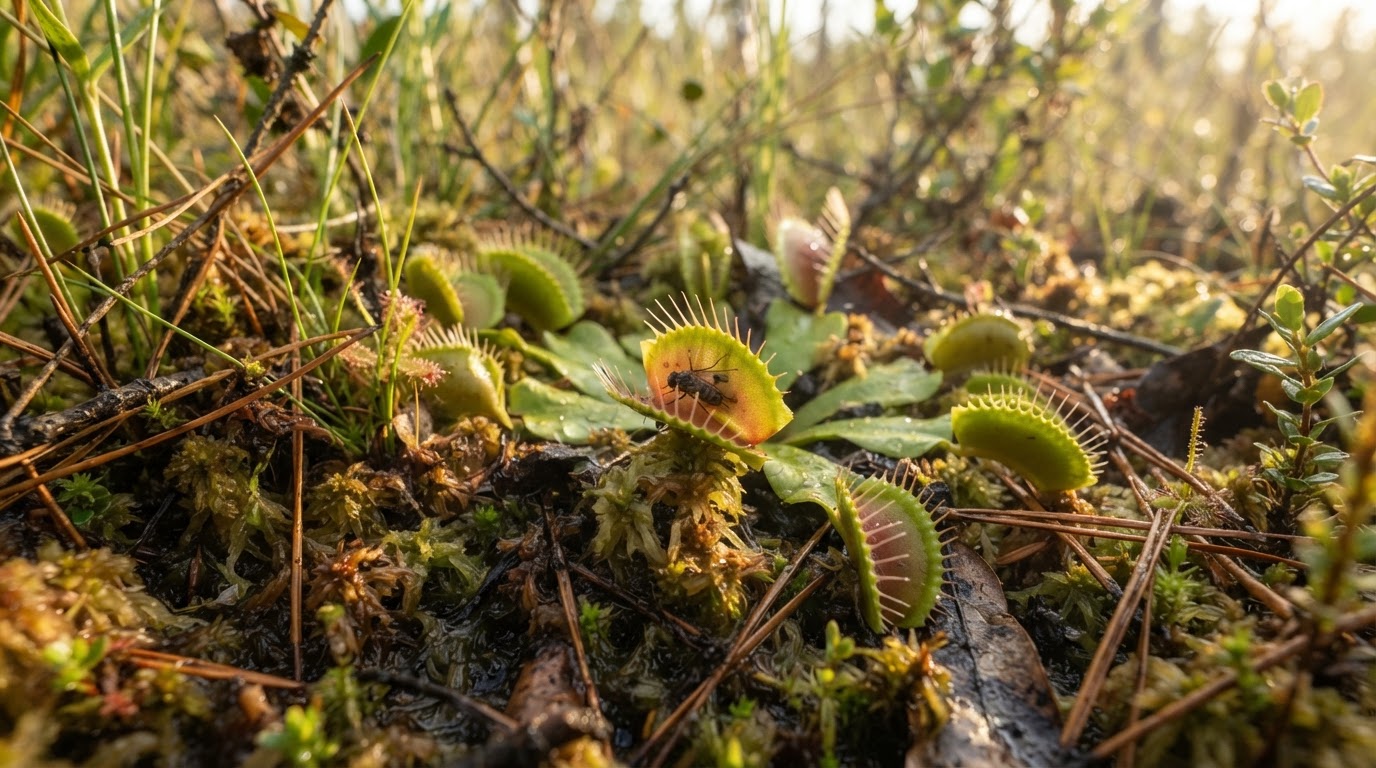
The Venus flytrap (Dionaea muscipula) is native to a remarkably small area — the coastal plain of North and South Carolina in the United States, within roughly a 100-mile radius. Its trap works through a two-trigger system: tiny hair-like mechanoreceptors on the inner surface of each lobe must be touched twice within about 20 seconds to trigger closure. This prevents the plant from wasting energy snapping shut on raindrops or falling debris.
The closure itself is driven by a hydraulic mechanism involving rapid changes in cell turgor pressure, not muscle contraction. The outer cells of the trap expand suddenly, causing the lobes to buckle inward — a process that takes less than a tenth of a second in a healthy plant. After closure, if the prey continues to move and trigger the hairs, the trap seals more tightly and begins secreting digestive enzymes. A trap that closes on a non-living object will reopen within about 12 hours, having 'decided' nothing edible is inside.
Suction Traps: The Fastest Trap in the Plant Kingdom
Bladderworts (Utricularia) are aquatic or semi-aquatic plants with tiny hollow bladders — some smaller than a millimeter — that maintain a partial vacuum inside. When a water flea or mosquito larva brushes against trigger hairs near the trapdoor, the door opens inward, water rushes in carrying the prey, and the door snaps shut. The entire sequence takes as little as a millisecond. That is faster than a blink, faster than most insect reflexes, and faster than any other known plant movement.
Bladderworts have no roots. They float freely or anchor lightly in wet soil, and their entire body is devoted to trapping and photosynthesis. Some species produce beautiful yellow, purple, or white flowers that look completely unrelated to the sinister machinery below the waterline. Anyone who has grown them in an aquarium has probably watched the bladders work without realizing what they were seeing.
A bladderwort bladder resets itself — pumping water back out and re-establishing its vacuum — in as little as 15 to 30 minutes, ready to fire again.
What About Aquatic Snap Traps?
Aldrovanda vesiculosa, sometimes called the waterwheel plant, is an aquatic relative of the Venus flytrap that uses the same snap-trap mechanism underwater. It is one of the rarest carnivorous plants in the world, now extinct in the wild across much of its former European range, surviving in scattered populations across parts of Asia, Africa, and Australia. Its traps are about 3 millimeters across and close in a fraction of a second to catch water fleas and small aquatic invertebrates.
Why Carnivorous Plants Matter Beyond the Novelty Factor
What They Reveal About Convergent Evolution
Pitcher traps have evolved independently at least six separate times across unrelated plant lineages. Snap traps evolved at least twice. Sticky flypaper traps appeared in multiple unrelated families. This pattern — called convergent evolution — tells biologists something important: when the environmental pressure is strong enough and the solution space is constrained, evolution finds the same answers repeatedly. Carnivorous plants are one of the clearest demonstrations of this principle in the botanical world.
The digestive enzymes these plants produce are also biochemically interesting. Some are remarkably similar to enzymes found in animal digestive systems, which evolved completely independently. Nepenthes pitchers, for instance, produce a protease called nepenthesin that functions at very low pH — similar to pepsin in the human stomach.
Conservation Status and Real-World Threats
Most carnivorous plants are legally protected in their native ranges, but habitat loss is the primary threat. The longleaf pine savannas and Carolina bays where Venus flytraps grow have been reduced to a fraction of their historical extent. Poaching remains a serious problem — wild Venus flytraps are a felony to steal in North Carolina, but enforcement is difficult across scattered bog habitats.
(Opinion: The obsession with Venus flytraps in popular culture has probably done more harm than good. It drives poaching, it makes people underestimate the rest of the carnivorous plant world, and it creates a distorted picture of what these plants actually are. The bladderwort, which most people have never heard of, is arguably a more impressive feat of biological engineering.)
Frequently Asked Questions
Can carnivorous plants survive without eating insects?
Yes — they photosynthesize like any other plant and can survive without prey, especially in lower-light conditions where their growth demands are reduced. However, without access to insect-derived nitrogen and phosphorus, they grow significantly more slowly and may struggle to flower or reproduce. In cultivation, growers sometimes supplement with diluted fertilizer applied to the leaves, though this requires care to avoid burning the traps.
Do carnivorous plants feel pain when they catch prey?
Plants do not have nervous systems or pain receptors, so the short answer is no. They do transmit electrical signals — the Venus flytrap's trigger mechanism involves action potentials that are structurally similar to nerve impulses in animals — but there is no evidence these signals involve anything like sensation or awareness. The similarity is a case of convergent biochemistry, not shared experience.
Why do Venus flytraps count to two before closing?
The two-touch requirement is an energy conservation strategy. Closing and reopening a trap costs the plant significant resources, and false triggers from raindrops, falling debris, or accidental contact would be wasteful. The plant retains a 'memory' of the first touch as an elevated electrical charge for roughly 20 to 30 seconds — if a second touch arrives within that window, the trap fires. This was one of the first documented examples of short-term electrical memory in a plant.
Six independent evolutionary origins of the pitcher trap. A plant that outwits insects with hydraulic snap mechanics. A millimeter-scale vacuum device faster than any insect reflex. The deeper you look at carnivorous plants, the less the Venus flytrap seems like the main event — and the more it looks like the one that happened to be easy to sell at a garden center.


Comments
Post a Comment