AI Agents Explained: How These Smart Programs Work
An AI agent booked a flight, filed an expense report, and sent a follow-up email — all without a human clicking a single button. That sentence would have sounded like science fiction five years ago. Today, it describes a Tuesday afternoon at companies already running production-grade AI agent systems. The technology is moving fast, and the gap between 'chatbot' and 'agent' is wider than most people realize.

What Is an AI Agent? A Plain-Language Definition
More Than a Chatbot
A regular AI chatbot responds to what you type. An AI agent does something fundamentally different: it pursues a goal across multiple steps, makes decisions along the way, and uses tools to act on the world. Think of a chatbot as a very smart answering machine. An agent is closer to a junior employee who can read your email, look things up, draft a response, and send it — without being told each step explicitly.
The formal definition used in AI research describes an agent as any system that perceives its environment, processes that information, and takes actions to achieve a specified objective. That definition is broad enough to include a thermostat, technically. But modern AI agents are distinguished by their use of large language models (LLMs) as the reasoning core, combined with the ability to call external tools and maintain memory across steps.
The Four Core Properties
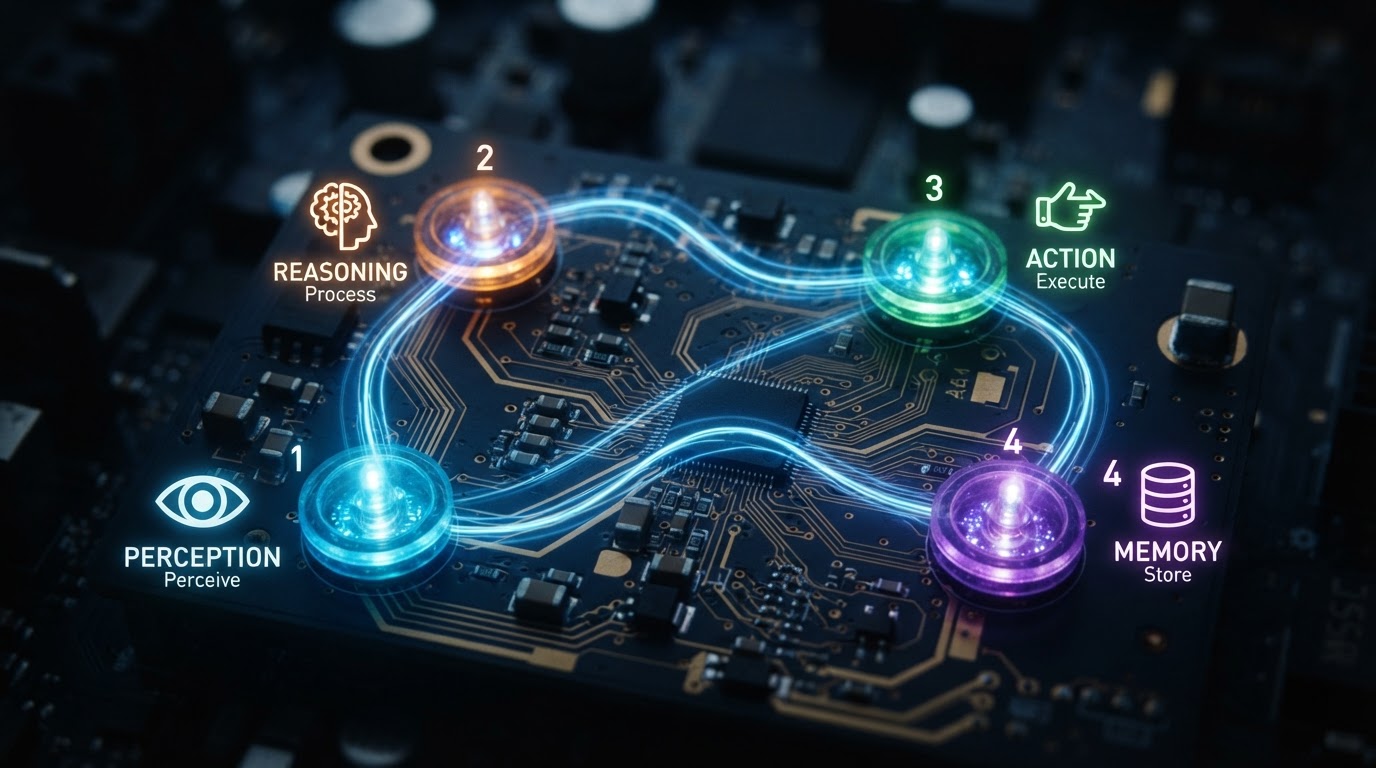
Most researchers agree that a true AI agent has four properties: perception (it takes in information), reasoning (it decides what to do), action (it executes something in the world), and memory (it retains context across steps). Strip out any one of these and you get something less capable — a classifier, a script, or a plain chatbot. Put them together and you get a system that can handle tasks with genuine complexity.
How AI Agents Actually Work — The Mechanism Behind the Magic
The Reasoning Loop
At the heart of every AI agent is a loop. The agent receives a goal, breaks it into sub-tasks, executes one step, observes the result, and then decides what to do next. This cycle — often called a 'plan-act-observe' loop — repeats until the goal is complete or the agent determines it cannot proceed. The LLM acts as the planner and decision-maker at each turn of the loop.
One of the more surprising engineering details: the agent's 'memory' between steps is often just a growing text document — a running log of what it has done and seen so far, fed back into the language model at each iteration. This is sometimes called the agent's context window. It sounds almost too simple, but it works remarkably well for tasks that fit within the model's token limit.
The agent's memory is often just a long text log fed back into the model at each step — which means the agent's ability to handle complex tasks is directly constrained by how much text the model can read at once.
Tools: How Agents Reach Into the Real World
An LLM alone can only generate text. What makes an agent powerful is its access to tools — external functions it can call to actually do things. Common tools include web search, code execution, file reading and writing, API calls to external services, and database queries. When the agent decides it needs information, it calls the search tool. When it needs to send an email, it calls the email API. The LLM decides which tool to use and what to pass to it.
This tool-calling architecture is where most of the real engineering complexity lives. Defining which tools an agent can access, what permissions it has, and how errors are handled is the difference between a useful agent and one that confidently does the wrong thing at scale. Anyone who has watched an early autonomous agent loop endlessly on a failed API call knows exactly how quickly this goes sideways.
Single-Agent vs. Multi-Agent Systems
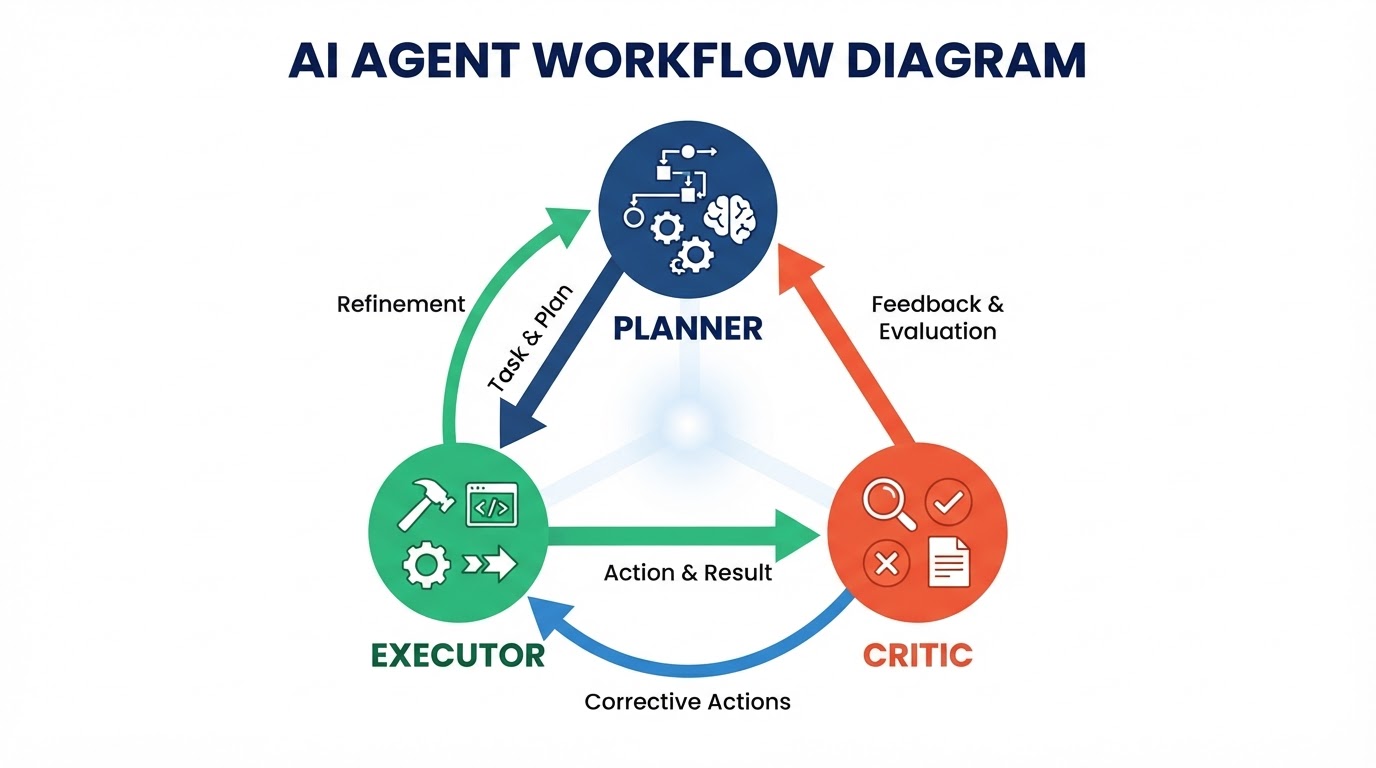
A single agent handles one thread of work. Multi-agent systems assign different agents to different roles — one agent plans, another executes code, a third checks the output for errors. This mirrors how human teams work, and it allows for specialization. A 'critic' agent reviewing another agent's output catches mistakes that the original agent might rationalize away. Multi-agent architectures are increasingly common in production systems because they're more robust, though they're also significantly harder to debug.
Where AI Agents Are Already Doing Real Work
Software Development
Coding agents are probably the most mature real-world deployment right now. Systems like those used internally at major software companies can take a bug report, locate the relevant code, write a fix, run the tests, and submit a pull request — all autonomously. The human engineer reviews the output rather than doing the work from scratch. Research suggests this can meaningfully compress the time between identifying a bug and shipping a fix, though estimates of the exact speedup vary widely depending on task complexity.
Customer Operations
Large e-commerce and financial services companies have deployed agents that handle customer inquiries end-to-end: looking up account information, processing refunds, escalating edge cases to humans, and logging the interaction. The key difference from older chatbot systems is that these agents can handle novel situations — ones not explicitly scripted — by reasoning through the problem. That said, the failure modes are also less predictable, which is why most deployments keep a human-in-the-loop for high-stakes decisions.
Research and Data Analysis
Agents that can browse the web, pull data from APIs, run statistical analysis in a code sandbox, and produce a structured report are already being used in finance, journalism, and scientific research contexts. For example, imagine a scenario where an analyst asks an agent to 'summarize all earnings call transcripts from the last quarter and flag any unusual language around supply chain risk.' A capable agent can execute that multi-step task in minutes rather than days.
The most valuable agents aren't the ones that replace human judgment — they're the ones that compress the time between a question and the information needed to answer it.

Why AI Agents Matter — and What's Still Genuinely Unsolved
The Autonomy Problem
The more autonomous an agent is, the more useful it becomes — and the more damage it can do when it goes wrong. An agent with access to your email, calendar, and file system can accomplish a lot. It can also delete the wrong files, send a draft email prematurely, or misinterpret an ambiguous instruction in ways that are hard to reverse. This is not a hypothetical concern. Early public deployments of autonomous agents have produced exactly these kinds of errors.
The field is actively working on 'alignment' techniques for agents — ways to ensure the agent's actions stay within intended boundaries even as it reasons autonomously. Sandboxing (limiting what tools the agent can access), confirmation steps for irreversible actions, and audit logs are the practical solutions most teams use today. None of them are fully satisfying.
Reliability at Scale
A task that requires 20 sequential steps, each with a 95% success rate, has roughly a 36% chance of completing without any errors. That math is brutal for complex agent workflows. Improving per-step reliability is one of the central research challenges, and it's why multi-agent systems with built-in checking mechanisms have become popular — redundancy compensates for individual step failures.
The Cost Question
Running an LLM at every step of a multi-step task is expensive compared to a simple script. For tasks that are well-defined and repetitive, a traditional software solution is often faster and cheaper. Agents earn their cost when the task is ambiguous, variable, or requires judgment that can't be pre-programmed. Getting that cost-benefit calculation right is something most organizations are still figuring out.
(Opinion: The hype around AI agents is real, but so is the tendency to deploy them before the reliability bar is high enough. The organizations that will get the most value from this technology are the ones treating agent deployments like infrastructure — with proper monitoring, fallback systems, and a clear-eyed view of where autonomous decision-making should stop and human judgment should begin.)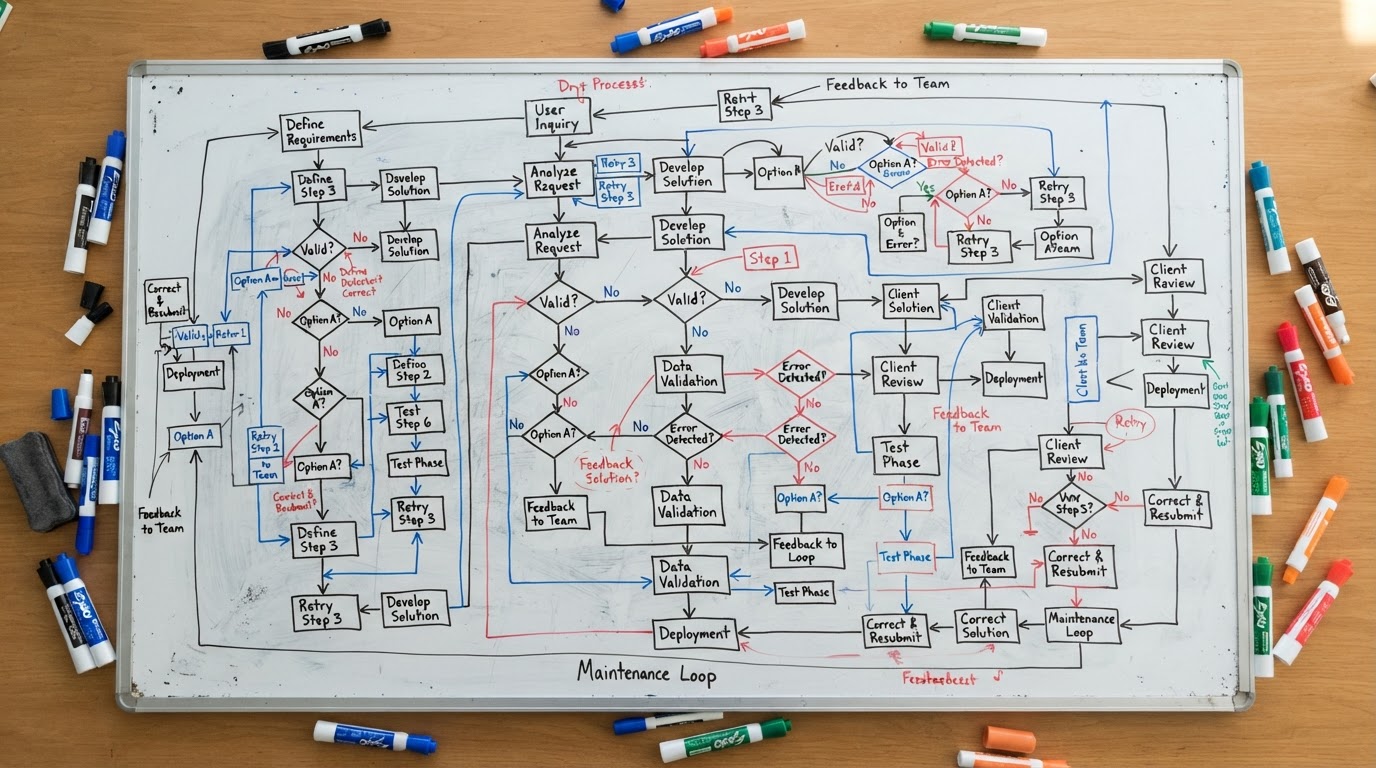
Frequently Asked Questions
What is the difference between an AI agent and a regular AI chatbot?
A chatbot responds to a single prompt and stops. An AI agent pursues a goal across multiple steps, uses tools to take real-world actions (like searching the web or sending an email), and adjusts its approach based on what it observes along the way. The key distinction is autonomy over a sequence of actions, not just generating a single response.
Can AI agents make mistakes that are hard to undo?
Yes, and this is one of the most serious practical concerns with current agent systems. An agent with access to email, file systems, or financial APIs can take actions that are difficult or impossible to reverse. Most responsible deployments include confirmation steps for irreversible actions and audit logs to trace what the agent did and why. The field is actively developing better safeguards, but no fully reliable solution exists yet.
Do AI agents actually 'think' or are they just following a script?
Neither description is quite right. AI agents use a language model to reason through problems dynamically — they are not following a pre-written script. But they are also not 'thinking' in any human sense. They generate statistically likely next steps based on their training and the context they have been given. The reasoning can look remarkably flexible and intelligent, while still being fundamentally a pattern-matching process operating at very large scale.
The most unsettling thing about AI agents is not that they might become too powerful — it is that they are already capable enough to cause real problems in the wrong hands, while still being unreliable enough to fail on tasks that seem straightforward. That gap between impressive and trustworthy is where the next few years of this technology will be decided.



Comments
Post a Comment